
Nonfiction Book Study Worksheets
These 7th Grade reading nonfiction book study worksheets help students examine how real events, people, evidence, and author choices shape meaningful books. Each resource is Free, Ready-to-print, supplied in PDF format, and easy to use for Immediate classroom use. Students build literacy skills in citing evidence, analyzing perspective, and evaluating how ideas develop across longer texts.
About This Collection of Worksheets
This collection gives 7th graders a deeper way to study nonfiction books than simply answering recall questions. Students examine how authors develop arguments, present historical events, shape tone, reveal perspective, and select evidence. The featured books include The 57 Bus, Hidden Figures Young Readers Edition, A Long Walk to Water, Brown Girl Dreaming, An American Plague, Flesh and Blood So Cheap, Bomb, and I Am Malala Young Readers Edition.
The activities ask students to do something different with each book. One page may have them judge the strength of interviews, legal records, or statistics, while another asks them to sort facts from interpretations or trace a disaster from its causes to later reforms. Students also work with objective summaries, rhetorical appeals, author purpose, theme development, counterclaims, domain-specific vocabulary, and questions of ethical responsibility.
These worksheets are especially useful for whole-class book studies, literature circles, independent reading projects, social studies connections, writing preparation, and end-of-unit review. The collection supports Common Core expectations for analyzing evidence, tracing arguments, explaining cause and effect, studying point of view, determining theme, and writing clear analytical responses. Because the tasks are tied to complete books, students must connect ideas across chapters instead of relying on one short passage.
Paul’s Teacher Tip
Before students begin one of these pages, ask them to mark two or three places in the book that may help answer the main question. This prevents them from writing from memory and encourages them to return to the text. When a question asks for an opinion or judgment, remind students that the strongest answer still needs evidence from the book. It also helps to let students explain their thinking aloud before they write, especially when the topic involves justice, responsibility, bias, or reform. A short conversation can help them move from a quick reaction to a more balanced and thoughtful response.
Worksheet Collection Skill Spotlights
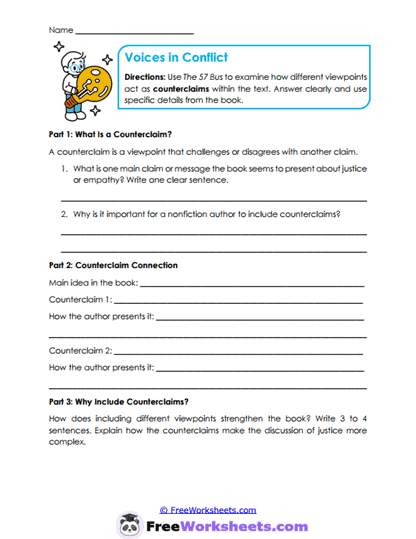
Counterclaim Voices
What Kids Do: Students return to The 57 Bus and identify voices that disagree about justice, punishment, harm, and empathy. They explain how those opposing ideas challenge the book’s larger message and consider why Dashka Slater includes conflicting viewpoints instead of presenting only one side.
Target Skill: This activity strengthens students’ ability to identify counterclaims and analyze how competing perspectives deepen a nonfiction discussion. It supports Common Core work with argument, point of view, and the way authors use disagreement to make a complicated issue more complete.
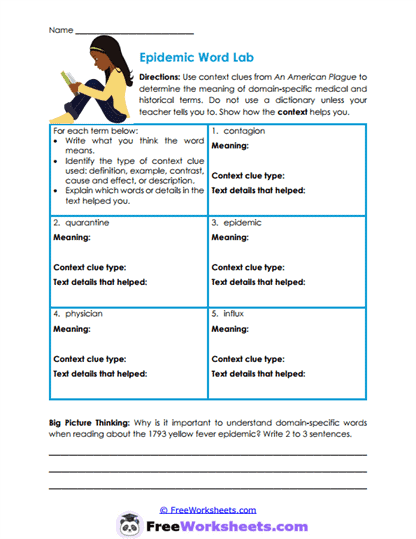
Epidemic Vocabulary
What Kids Do: Students use An American Plague to determine the meanings of medical and historical terms such as contagion, quarantine, epidemic, physician, and influx. For each word, they identify the context clue, explain how it works, and restate the meaning in clear everyday language.
Target Skill: Learners practice using definitions, examples, contrasts, descriptions, and cause-and-effect clues to unlock difficult vocabulary. The task supports Common Core expectations for determining domain-specific word meanings and explaining which parts of a passage provide the needed clues.
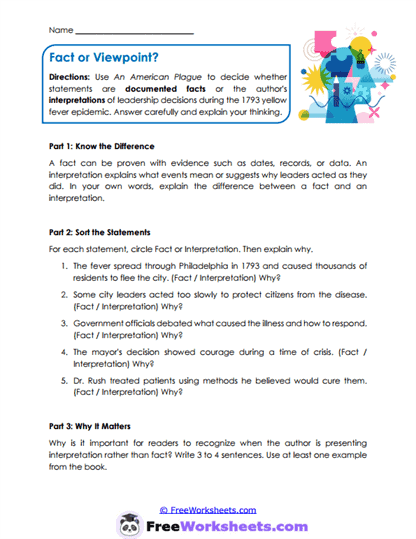
Fact Sorting
What Kids Do: Students examine statements from An American Plague and decide whether each one is a documented fact or an interpretation of events. They look closely at judgment words and explain why some statements can be verified while others express a conclusion about what happened.
Target Skill: This worksheet develops careful reading of historical nonfiction by helping students separate evidence from interpretation. It supports Common Core analysis of claims and textual support while showing that an interpretation may be reasonable even when it cannot be proven like a date or record.
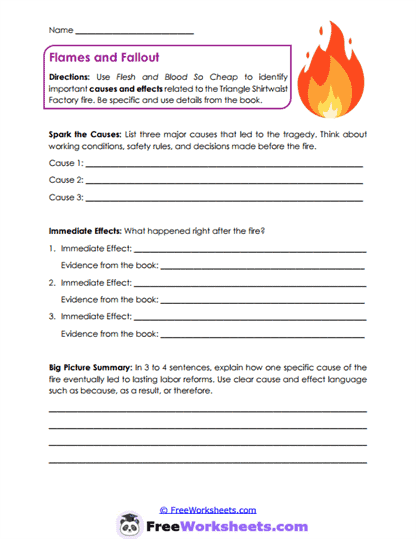
Fire Causes
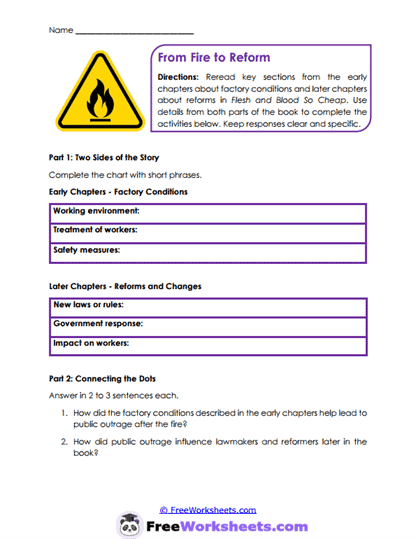
What Kids Do: Students trace the Triangle Shirtwaist Factory fire in Flesh and Blood So Cheap by organizing the unsafe conditions that existed beforehand, the immediate results of the tragedy, and the labor reforms that followed. They then explain how one earlier problem led to later change.
Target Skill: Readers analyze several connected causes and effects across a full nonfiction text. The activity supports Common Core work with interactions among events, people, and ideas while helping students distinguish immediate consequences from long-term social and political outcomes.
Justice Evidence
What Kids Do: Students use The 57 Bus to state an implied argument about justice and the people involved in the case. They identify different types of support, including interviews, legal documents, and statistics, then rate how strongly each one contributes to the author’s larger message.
Target Skill: Students practice tracing an argument that develops gradually rather than appearing as one direct claim. The page supports Common Core evaluation of evidence by asking readers to judge relevance, strength, and the connection between source type and author purpose.
Perspective Search
What Kids Do: Students study A Long Walk to Water and sort information into local Sudanese, outside, or shared perspectives. They also examine whether the nonfiction sections remain neutral or lean toward support for clean-water organizations and aid efforts.
Target Skill: This activity helps students analyze how location, experience, culture, and purpose shape perspective. It supports Common Core work with point of view and bias while showing that even factual writing reflects choices about what information receives attention.
Persuasive Appeals
What Kids Do: Students explore how Malala Yousafzai uses personal experience, emotional storytelling, and firsthand knowledge in I Am Malala Young Readers Edition. They decide whether specific details mainly build emotion, credibility, or both, then explain how each detail affects the reader.
Target Skill: Learners compare pathos and ethos within a nonfiction argument. The worksheet supports Common Core analysis of purpose, point of view, and persuasion by asking students to explain how emotional connection and trustworthy experience strengthen Malala’s message about girls’ education.
Purpose Tones
What Kids Do: Students analyze why Margot Lee Shetterly wrote Hidden Figures Young Readers Edition and why she adapted the story for a younger audience. They choose tone words that describe her attitude toward the women in the book and support those choices with scenes or details.
Target Skill: Readers connect author purpose with tone, audience, and the selection of information. This Common Core-aligned task helps students distinguish a book’s subject from the reason it was written and explain how admiration, seriousness, or inspiration develops across the text.
Reform Connections
What Kids Do: Students compare factory life before the Triangle Shirtwaist Factory fire with the laws and protections that followed in Flesh and Blood So Cheap. They organize evidence about working conditions, safety failures, government action, and the effect of reform on workers.
Target Skill: Students analyze how information from different chapters connects through a before-and-after structure. The worksheet supports Common Core study of cause and effect, text organization, and the development of historical change across a longer nonfiction work.
Science Accountability
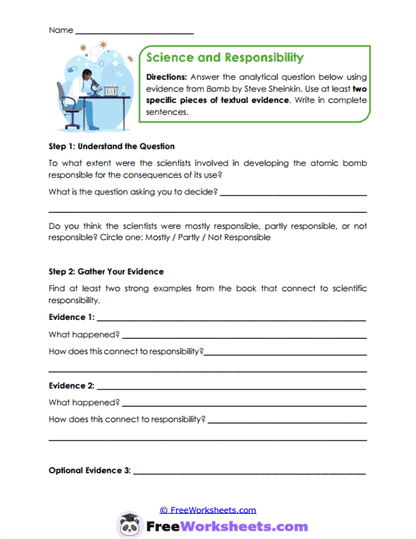
What Kids Do: Students use Bomb to judge how responsible scientists were for the creation and later consequences of the atomic bomb. They choose a position, gather several examples, and explain how responsibility may be shared among scientists, political leaders, and military decision-makers.
Target Skill: This page develops evidence-based judgment and careful reasoning about a complex ethical question. It supports Common Core expectations for citing multiple pieces of evidence, evaluating competing ideas, and explaining why a balanced conclusion may be stronger than an extreme answer.
Summary Builder
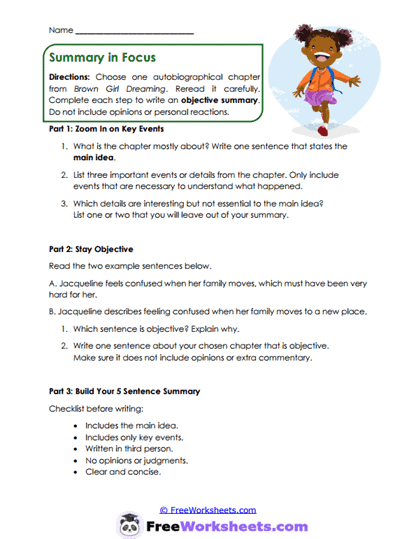
What Kids Do: Students choose a chapter from Brown Girl Dreaming, identify its main idea, select three essential events, and remove details that do not belong in a short summary. They then write a five-sentence response that stays accurate, neutral, and focused.
Target Skill: Learners practice writing an objective summary without adding personal opinion or retelling every event. The activity supports Common Core work with central idea, theme, paraphrasing, and the selection of details that truly help explain the chapter.
Theme Planning
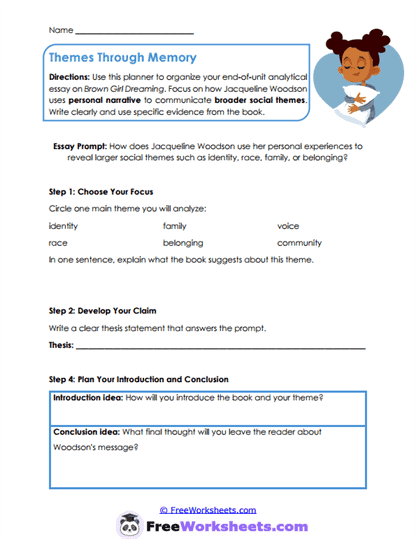
What Kids Do: Students select a major idea from Brown Girl Dreaming, such as identity, family, race, voice, belonging, or community. They turn that topic into a theme statement, build a focused thesis, and sketch an introduction and conclusion for an analytical essay.
Target Skill: This worksheet helps students move from identifying a broad topic to explaining what the book says about it. The task supports Common Core theme analysis and explanatory writing by guiding students to connect personal experiences, textual evidence, and a clear interpretive claim.