
Analyzing Arguments Worksheets
These 7th Grade Reading Analyzing Arguments worksheets help students examine how writers use claims, evidence, reasoning, and opposing viewpoints. Each activity is Free, Ready-to-print, provided in PDF format, and designed for immediate classroom use. Students strengthen literacy skills in tracing arguments, evaluating supporting evidence, and judging whether an author's reasoning is sound.
About This Collection of Worksheets
This collection gives seventh graders guided practice with the many parts that make an argument convincing. Instead of asking students to find only the main claim, the worksheets invite them to look closely at supporting reasons, relevant evidence, counterclaims, rebuttals, assumptions, source credibility, bias, persuasive appeals, and logical fallacies. The reading selections use familiar topics such as school calendars, homework, uniforms, social media, public parks, and cafeteria meals, allowing students to concentrate on the author’s thinking without getting lost in unfamiliar background information.
The activities gradually move from identifying basic argument parts to making thoughtful judgments about quality and effectiveness. Students may sort statements by purpose, map the structure of a passage, uncover an unstated assumption, repair a weak rebuttal, compare sources, or score an argument with a simple rubric. Several pages also ask students to explain their choices in writing, which encourages them to support their own conclusions with details from the text instead of relying on quick personal opinions.
These printable resources work well during informational reading units, persuasive writing lessons, test preparation, tutoring, homework, or small-group instruction. Teachers can use individual pages to introduce one skill at a time or combine several worksheets into a broader argument-analysis unit. The collection closely supports Common Core expectations for tracing claims, evaluating evidence and reasoning, studying word choice, examining text structure, and responding fairly to opposing positions.
Paul’s Teacher Tip
Teach students to begin every argument analysis by asking one simple question: “What does the author want me to believe or do?” Once they can state the claim clearly, have them draw a line from every reason or fact back to that claim. If a detail does not strengthen, explain, or challenge the claim, it may be background information or irrelevant evidence. Encourage students to judge the writing separately from their personal opinion about the topic, since a well-built argument can support a position they disagree with. During review, ask students to point to the exact sentence that shaped their answer so their explanations remain grounded in the text.
Worksheet Collection Skill Spotlights
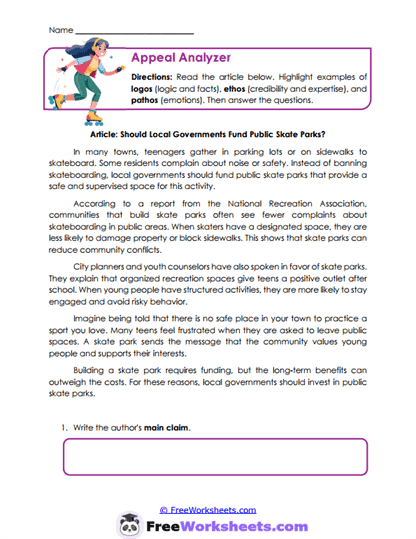
Appeal Breakdown
What Kids Do: Students read an argument supporting public skate parks and search for examples of logos, ethos, and pathos. They explain how facts, expert voices, and emotionally meaningful language work together to make the author’s request sound reasonable, trustworthy, and important.
Target Skill: This activity builds the ability to analyze persuasive techniques and evaluate how an author shapes a reader’s response. It supports Common Core work with author’s purpose, point of view, argument development, and the relationship between evidence, credibility, and emotional appeal.
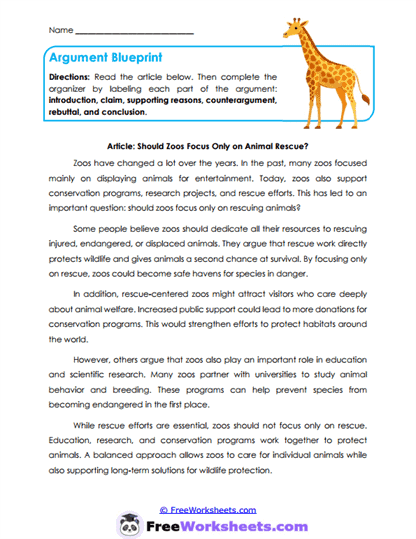
Argument Map
What Kids Do: Students break a passage about the purpose of modern zoos into its major sections, including the introduction, claim, supporting reasons, counterargument, rebuttal, and conclusion. They place each idea into a graphic organizer and trace how the author moves from one part to the next.
Target Skill: Learners strengthen their understanding of informational text structure while tracing the development of a complete argument. The activity supports Common Core expectations for distinguishing claims from reasons, following relationships among ideas, and evaluating how organization contributes to meaning.
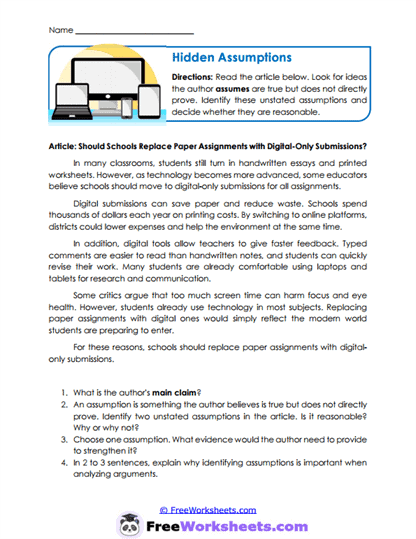
Assumption Check
What Kids Do: Students examine an argument proposing digital-only school assignments and identify an idea the writer expects readers to accept without directly proving it. They decide whether that hidden belief is reasonable, explain why it matters, and suggest evidence that could support it.
Target Skill: This page develops deeper evaluation of an author’s reasoning by helping students uncover unstated assumptions. It aligns with Common Core analysis of whether claims are supported by sound logic, sufficient evidence, and realistic ideas that can withstand careful questioning.
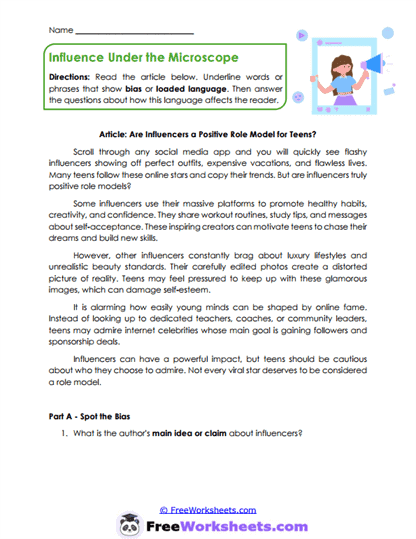
Bias Signals
What Kids Do: Students read about social media influencers as possible role models and underline words that create approval, criticism, excitement, or concern. They explain how loaded language can guide the reader’s feelings and decide whether the author presents the issue in a balanced way.
Target Skill: Students practice interpreting word choice and recognizing how language reveals point of view or bias. The work supports Common Core standards involving connotation, tone, author perspective, and evaluation of how particular words influence the presentation of an argument.
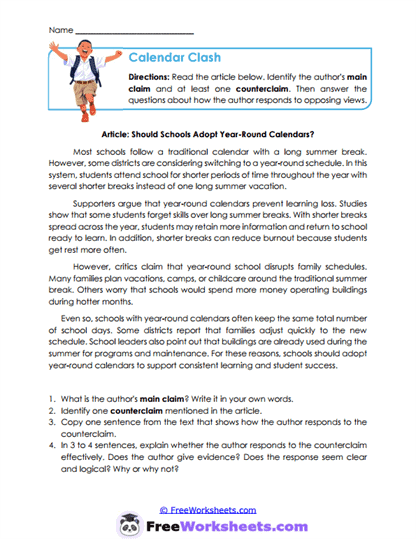
Calendar Debate
What Kids Do: Students study an argument about year-round school calendars, restate the author’s main claim, locate an opposing position, and identify the response to that concern. They then judge whether the rebuttal directly answers the counterclaim with clear reasoning and useful support.
Target Skill: This worksheet strengthens students’ ability to trace an argument across multiple viewpoints. It supports Common Core expectations for identifying claims and counterclaims, evaluating the effectiveness of rebuttals, and determining whether an author responds fairly and logically to disagreement.
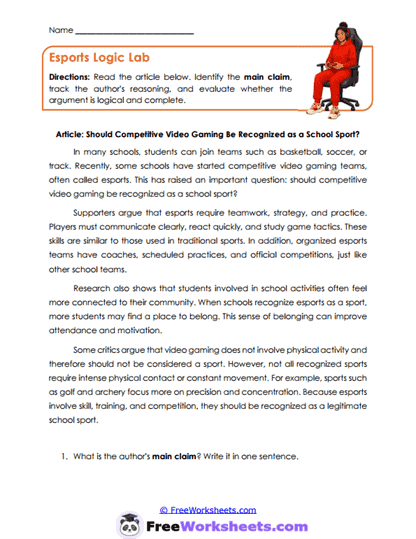
Esports Reasoning
What Kids Do: Students analyze a passage arguing that competitive video gaming should count as a school sport. They trace the comparison between esports and traditional activities, examine the reasons offered, and decide whether the author fully answers concerns about physical movement and athletic demands.
Target Skill: Learners evaluate whether comparisons, reasons, and conclusions form a logical and complete argument. The activity supports Common Core analysis of sound reasoning, relevant evidence, unanswered objections, and the strength of connections between an author’s claim and supporting ideas.
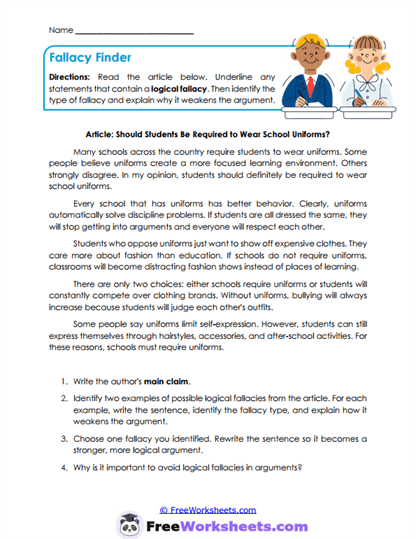
Fallacy Hunt
What Kids Do: Students search an argument about required school uniforms for statements that exaggerate, oversimplify, or claim results without enough proof. They identify the reasoning problem, explain how it weakens the author’s case, and rewrite one questionable sentence in a more careful form.
Target Skill: This page builds recognition of logical fallacies and unsupported generalizations. It aligns with Common Core expectations for evaluating whether reasoning is valid, detecting claims that go beyond the evidence, and revising weak statements so they become more accurate and persuasive.
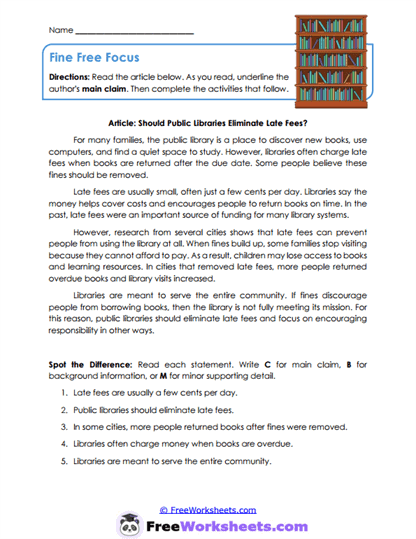
Fee Findings
What Kids Do: Students read about removing overdue-book fines from public libraries and sort statements into three roles: main claim, background information, or supporting evidence. They must consider what each sentence contributes instead of treating every true or interesting detail as proof.
Target Skill: Students learn to distinguish an author’s central position from facts that explain the topic or directly support the argument. The worksheet supports Common Core practice in tracing claims, classifying evidence by purpose, and recognizing the different jobs sentences perform within informational text.
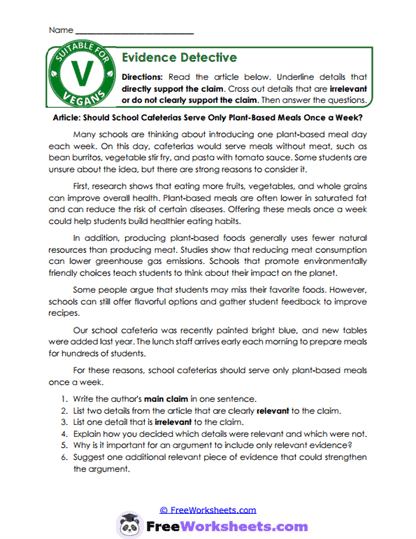
Meal Evidence
What Kids Do: Students investigate an argument for serving plant-based school meals once each week. They identify the claim, select two details that truly support it, locate an unrelated fact, explain why that information does not belong, and propose another useful piece of evidence.
Target Skill: This activity develops the ability to judge evidence for relevance, usefulness, and direct connection to a claim. It supports Common Core expectations for separating strong support from distracting information and explaining how carefully selected facts improve an author’s argument.
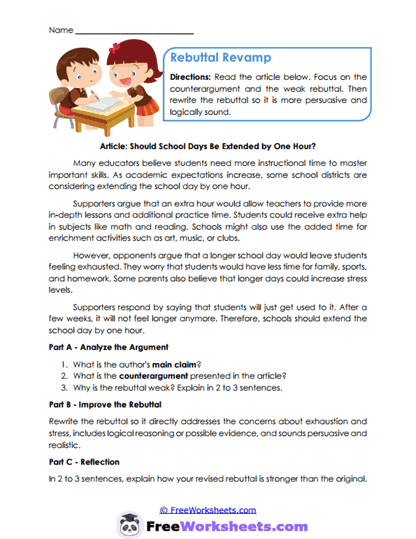
Rebuttal Repair
What Kids Do: Students examine a weak response to concerns about lengthening the school day. After identifying the claim and counterargument, they explain what the original rebuttal ignores and rewrite it so it responds directly to fatigue, stress, family time, and possible scheduling solutions.
Target Skill: Learners practice evaluating and improving responses to opposing claims. The worksheet aligns with Common Core reading and writing standards that require students to address alternate positions respectfully, use relevant reasoning, and build rebuttals that answer the actual concern instead of dismissing it.
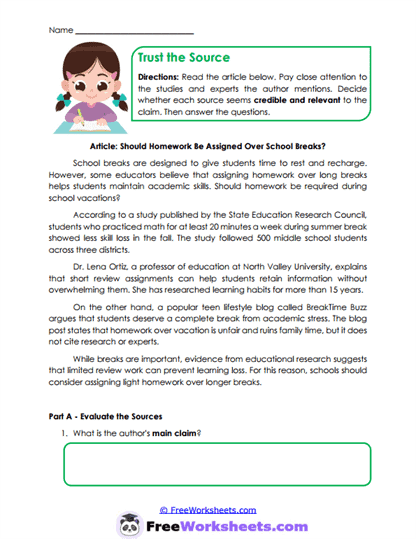
Source Check
What Kids Do: Students compare information from a research council, a professor, and an online blogger within an argument about vacation homework. They consider each source’s expertise, evidence, possible limitations, and connection to the topic before deciding which information deserves the most trust.
Target Skill: Students strengthen media-literacy and research skills by judging sources for credibility and relevance. The activity supports Common Core expectations for gathering dependable information, evaluating qualifications and evidence, and recognizing that a confident or professional tone does not guarantee reliability.
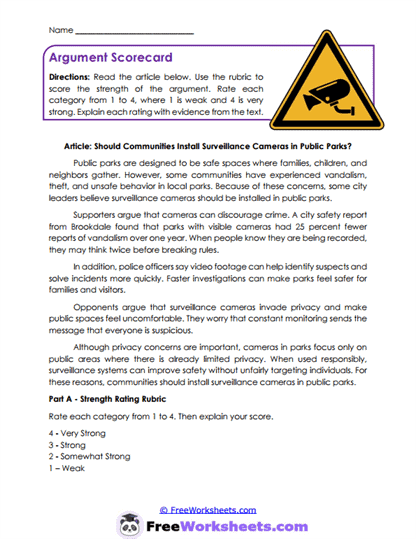
Strength Score
What Kids Do: Students use a four-point rubric to rate an argument about surveillance cameras in public parks. They examine the clarity of the claim, quality of evidence, logic of the reasons, treatment of privacy concerns, and strength of the conclusion before defending their score with text details.
Target Skill: This worksheet asks students to evaluate an argument as a complete piece rather than reviewing its parts separately. It supports Common Core analysis of claims, evidence, counterarguments, and reasoning while requiring students to justify an academic judgment with specific support from the passage.