
7th Grade Reading Fluency Worksheets
7th Grade Reading Fluency Practice worksheets help students strengthen reading accuracy, pacing, and expression through structured fluency activities. These free, ready-to-print PDF format worksheets are designed for immediate classroom use and easy at-home practice. Students build key skills like phrasing, repeated reading, and tone awareness to support deeper comprehension and confident reading.
About This Collection of Worksheets
This collection is designed to help students become more confident and expressive readers by focusing on how reading should sound and feel. Each worksheet gives students a clear purpose for reading, whether it is improving pacing, practicing expression, or understanding how sentences flow together. The goal is to move students beyond just reading words and into truly understanding how language works in context.
Students will work with engaging passages connected to science, history, and real-world topics, which helps keep them interested while building important skills. Many activities use repeated reading, chunking, and sentence revision so students can see their progress over time. These strategies are especially helpful for middle school learners who are transitioning into more complex texts.
This set also supports students in connecting fluency to comprehension. As they practice reading smoothly and accurately, they begin to better understand tone, meaning, and structure. The worksheets are flexible for both classroom instruction and independent practice, making them a strong addition to any reading routine.
Paul’s Teacher Tip
Fluency is one of those skills that really grows with consistency, not just one lesson. I always encourage teachers and parents to think of fluency like practice for a sport-it needs repetition and small improvements over time. Have students read aloud often, even if it’s just for a few minutes each day. Modeling expressive reading makes a big difference, especially when students hear how tone and pacing change meaning. You can also let students track their own progress, which builds motivation and confidence. Keep it low pressure and focused on growth, not perfection.
Worksheet Collection Skill Spotlights
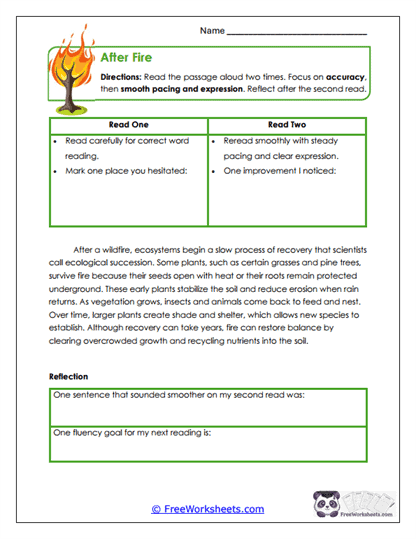
After Fire
- What Kids Do:
Students read an informational passage about what happens after a wildfire and complete two focused readings. They first concentrate on accuracy, then shift to smoother pacing and expression while reflecting on how their reading improves with practice. - Target Skill:
Students develop stronger fluency through repeated reading while building confidence with complex informational text. They learn how accuracy, pacing, and expression work together to support better comprehension and clearer understanding.
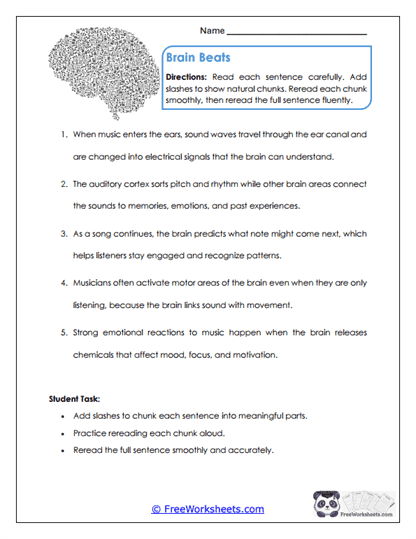
Brain Beats
- What Kids Do:
Students break sentences into meaningful chunks using slashes to show natural pauses. They then reread the sentences aloud, focusing on smooth phrasing and clearer delivery that matches how language is spoken. - Target Skill:
This activity strengthens phrasing and helps students understand how grouping words improves comprehension. Learners begin to recognize natural rhythm in sentences and apply it to more complex reading tasks.
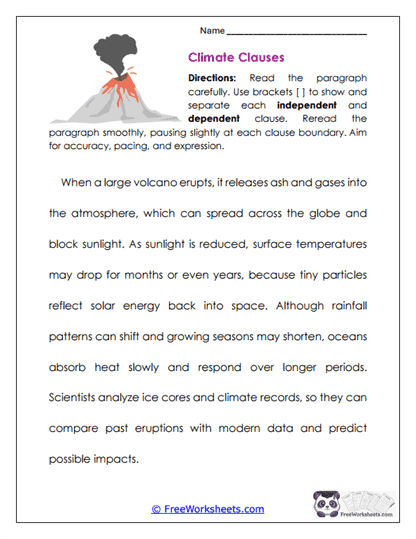
Climate Clauses
- What Kids Do:
Students read a paragraph about climate and identify independent and dependent clauses using brackets. They reread the passage aloud, pausing at logical points to improve both understanding and flow. - Target Skill:
Students build awareness of sentence structure and how clauses affect reading fluency. This helps them read more complex sentences smoothly while improving both grammar understanding and comprehension.
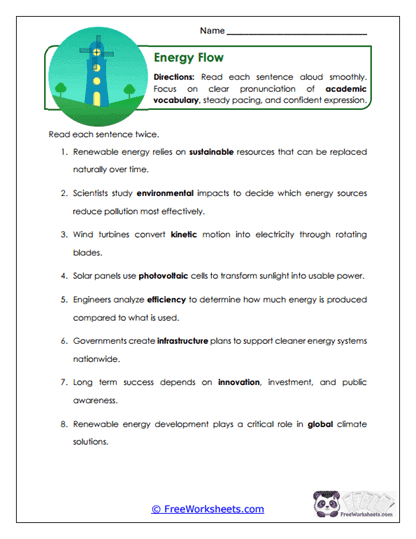
Energy Flow
- What Kids Do:
Students read science-based sentences aloud multiple times, focusing on correctly pronouncing academic vocabulary. They practice maintaining steady pacing while improving clarity and confidence. - Target Skill:
Students strengthen fluency with academic language and technical vocabulary. This supports clearer reading across subjects and helps students feel more confident tackling complex informational texts.
Fact Flow
- What Kids Do:
Students organize a group of related sentences into a logical order, then read the completed paragraph aloud. They focus on how ideas connect and how smooth reading supports understanding. - Target Skill:
This activity builds both fluency and comprehension by connecting sequencing with reading flow. Students learn that organization and phrasing work together to improve clarity and meaning.
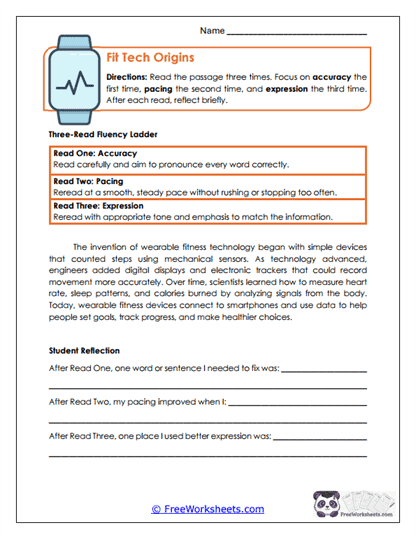
Fit Tech Origins
- What Kids Do:
Students read the same passage three times with different goals, starting with accuracy, then pacing, and finally expression. They reflect on how their reading improves with each attempt. - Target Skill:
Students develop fluency through structured repeated reading. They learn how to adjust their reading purposefully, improving overall performance and understanding of informational text.
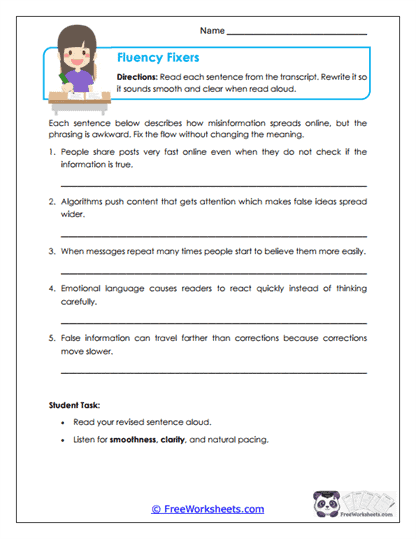
Fluency Fixers
- What Kids Do:
Students read awkward or unclear sentences and rewrite them to improve flow and clarity. After revising, they read their sentences aloud to check for smoothness and natural phrasing. - Target Skill:
Students strengthen sentence-level fluency by improving clarity and structure. This builds both reading and writing skills, helping learners recognize what makes language sound natural.
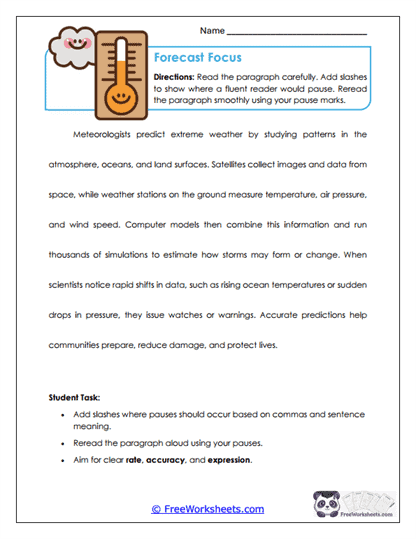
Forecast Focus
- What Kids Do:
Students read a paragraph about weather and mark natural pauses using slashes. They then reread the text aloud, focusing on pacing and expression to improve fluency. - Target Skill:
Students develop the ability to combine punctuation and meaning when reading. This improves phrasing and helps students better understand how pauses contribute to clarity and comprehension.
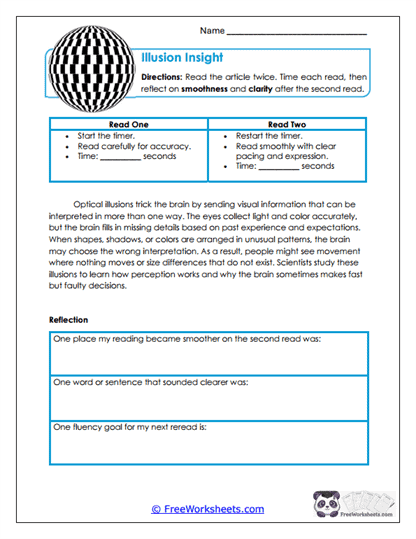
Illusion Insight
- What Kids Do:
Students read a passage about optical illusions twice while timing themselves. They compare their performance and reflect on improvements in speed, accuracy, and expression. - Target Skill:
Students build fluency through repeated reading and self-monitoring. They learn to balance speed with accuracy and develop awareness of how practice improves reading performance.
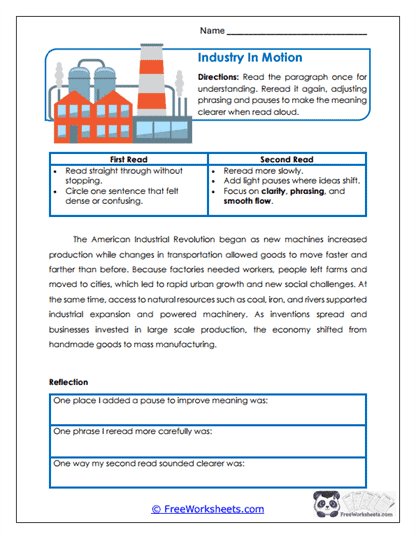
Industry In Motion
- What Kids Do:
Students read a historical passage about the Industrial Revolution, then reread it with added focus on phrasing and pauses. They reflect on how the second reading improves clarity. - Target Skill:
Students connect fluency with comprehension by refining how they read complex informational text. This helps them better understand dense material and improve overall reading confidence.
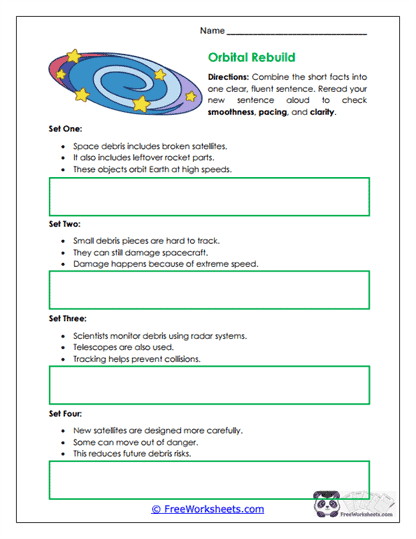
Orbital Rebuild
- What Kids Do:
Students combine short facts into complete, fluent sentences and then read them aloud. They focus on making their sentences clear, smooth, and easy to understand. - Target Skill:
Students improve sentence construction and reading fluency at the same time. This strengthens both writing and reading skills by focusing on clarity, structure, and flow.
Tone Tracker
- What Kids Do:
Students read sentences and identify the tone, then practice reading aloud with matching expression. They adjust their voice to reflect meaning and emotion in the text. - Target Skill:
Students build expressive reading skills by connecting tone to delivery. This improves comprehension and helps students understand how voice and meaning work together.