
Visual Elements Worksheets
These 7th Grade Reading Visual Elements worksheets show students how images can add information, shape mood, support claims, and sometimes challenge what a written passage says. Each activity is Free, Ready-to-print, available in PDF format, and suitable for Immediate classroom use. Students practice foundational literacy skills involving visual evidence, inference, tone, symbolism, and comparisons between images and written text.
About This Collection of Worksheets
This collection helps 7th graders treat photographs and illustrations as meaningful sources rather than simple decorations. Students look closely at expressions, body language, color, lighting, objects, setting, and movement to decide what an image communicates. They then use those observations to explain mood, support a claim, infer what happened, determine a word’s meaning, or compare visual information with a written passage.
The tasks cover a wide mix of visual-reading situations. Students may study a beach cleanup, crowded city street, flooded neighborhood, modern classroom, foggy forest, race finish, untidy bedroom, or busy public park. Some pages ask them to match or write captions, while others focus on symbolism, visual vocabulary, image-based inference, or correcting a claim that does not match the evidence.
Teachers can use these printable pages during close-reading lessons, media literacy units, writing warm-ups, intervention groups, homework, or test preparation. The collection supports Common Core expectations for interpreting visual information, citing evidence, comparing media, analyzing tone, and drawing logical conclusions. Since each worksheet uses a different kind of image and task, students gain broad visual-literacy practice without repeating the same response pattern.
Paul’s Teacher Tip
Give students quiet observation time before they begin writing. Even thirty seconds of careful looking can help them notice details they would otherwise miss. Ask them to separate what they can actually see from what they infer, since those are not the same thing. When they make a claim about mood, meaning, or character, require them to point to the exact visual clue that supports it. Using phrases such as “The image shows,” “This suggests,” and “The detail may mean” can help students write more accurate and thoughtful responses.
Worksheet Collection Skill Spotlights
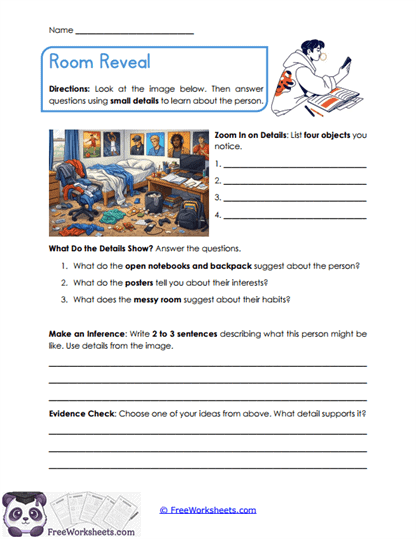
Bedroom Inference
What Kids Do: Students examine an untidy bedroom filled with notebooks, clothing, posters, a backpack, and personal belongings. They list visible objects, suggest what those details may reveal about the unseen person, and write a careful inference about possible habits, interests, or daily routines.
Target Skill: This activity helps students distinguish observation from interpretation while making evidence-based inferences. It supports Common Core work with visual information by requiring cautious language and a direct connection between each conclusion and a specific detail in the room.
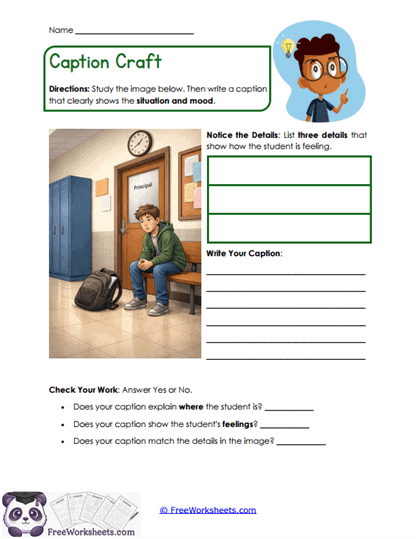
Caption Creation
What Kids Do: Students study an image of a worried student waiting outside the principal’s office. They identify visual details that reveal the setting and emotion, then write a concise caption that explains the situation while matching the mood shown in the image.
Target Skill: Learners combine visual evidence, tone, and precise word choice in a short piece of writing. The task supports Common Core expectations for interpreting images and producing clear language that communicates both factual information and emotional meaning.
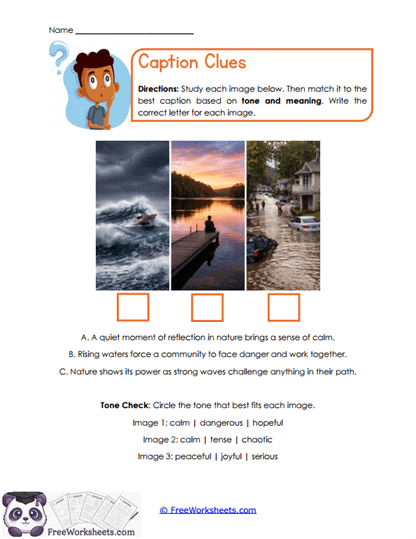
Caption Matching
What Kids Do: Students compare photographs of a stormy ocean, quiet sunset, and flooded neighborhood with three possible captions. They match each caption to the most fitting scene and use color, weather, movement, and setting to identify the tone.
Target Skill: Students analyze how visual details and language work together to create meaning. This activity builds understanding of tone, connotation, and caption purpose while requiring readers to consider the complete image rather than relying on one shared object or clue.
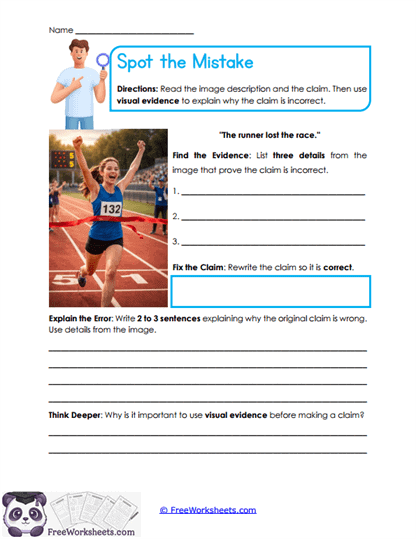
Claim Correction
What Kids Do: Students inspect a photograph of a runner crossing the finish line and test it against an inaccurate statement saying she lost. They gather several strong visual details, rewrite the claim correctly, and explain why the original wording does not match the evidence.
Target Skill: This worksheet develops the ability to evaluate and revise claims using observable proof. It supports Common Core work with evidence and argument by helping students recognize that some visual details are more direct and convincing than others.
Classroom Comparison
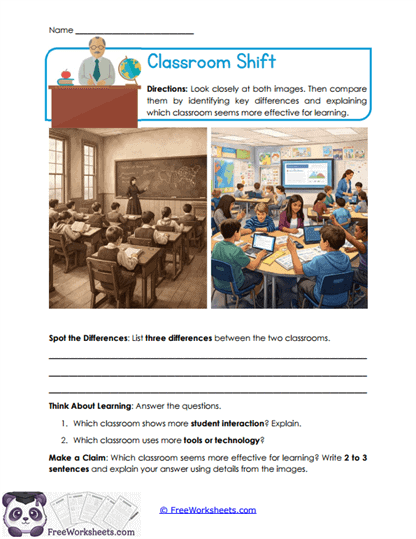
What Kids Do: Students compare a traditional classroom with a modern room featuring grouped seating, laptops, and collaborative work. They list differences, examine interaction and technology, and make a supported claim about which environment may work better for a particular kind of learning.
Target Skill: Readers practice comparing visual sources and turning observations into an evidence-based argument. The activity supports Common Core analysis by asking students to explain how layout, tools, teacher role, and student behavior may influence participation and instruction.
Cleanup Connections
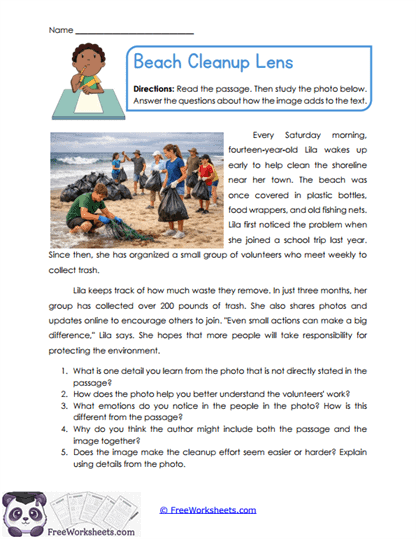
What Kids Do: Students read about a teenager organizing weekly beach cleanups and compare the passage with a photograph of volunteers working along the shoreline. They identify information added by the image and explain how it changes their understanding of effort, mood, and difficulty.
Target Skill: This page strengthens comparison between written and visual information. Students analyze how a photograph can extend, clarify, or deepen a passage, supporting Common Core expectations for integrating details across different forms of media.
Crowd Evidence
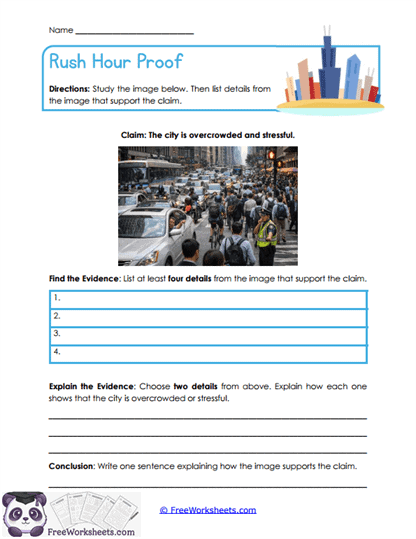
What Kids Do: Students study a crowded city scene and gather details supporting the claim that the area feels stressful and overcrowded. They select their strongest observations and explain how traffic, packed sidewalks, limited space, and constant movement contribute to that impression.
Target Skill: Learners practice citing visual evidence and explaining how each detail supports a claim. The task develops Common Core reasoning by moving students from simple description to a clear connection between visible information and a broader conclusion.
Event Inference
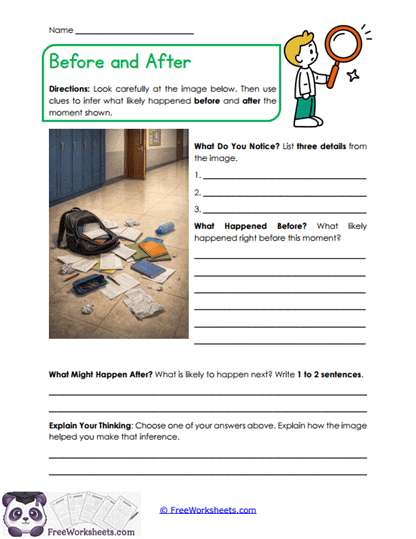
What Kids Do: Students inspect a school hallway where books, papers, and an open backpack are scattered across the floor. They infer what may have happened beforehand, predict what could happen next, and identify the visual clues that make their explanation believable.
Target Skill: This activity develops logical inference from nonverbal evidence. Students combine several visible details with careful reasoning, supporting Common Core expectations for drawing conclusions while avoiding dramatic guesses that go beyond what the image can support.
Meaning Clues
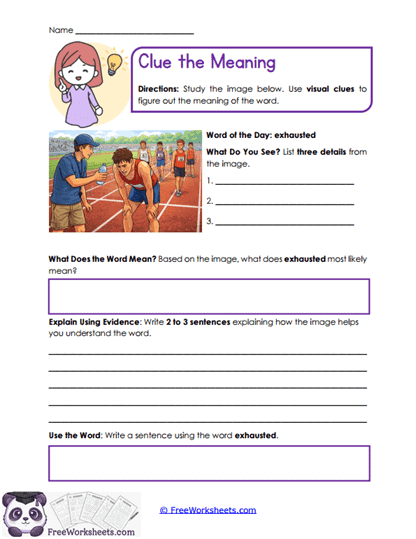
What Kids Do: Students use a photograph of a tired runner receiving help to determine the meaning of the word “exhausted.” They identify posture, facial expression, physical effort, and other clues before explaining the definition and using the word in a new sentence.
Target Skill: Readers learn that images can provide context clues just as written passages do. The worksheet supports Common Core vocabulary development by asking students to infer meaning, justify the definition with evidence, and apply the word correctly in a fresh context.
Mood Details
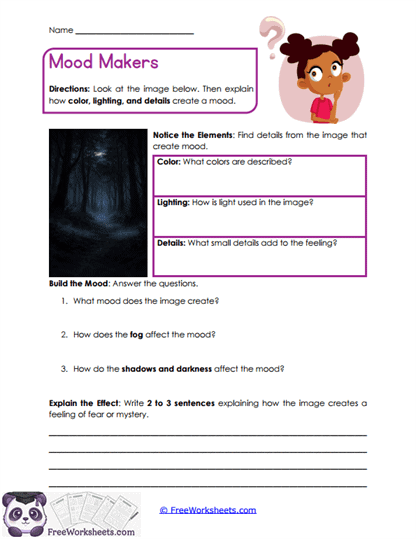
What Kids Do: Students study a foggy forest scene and identify the colors, lighting, shadows, and small details that create its atmosphere. They name the overall mood and explain how several artistic choices combine to make the setting feel mysterious, tense, or frightening.
Target Skill: Students analyze how visual elements create an emotional response. The activity supports Common Core work with mood and imagery by requiring them to connect specific artistic choices with the feeling produced for the viewer.
Park Contrast
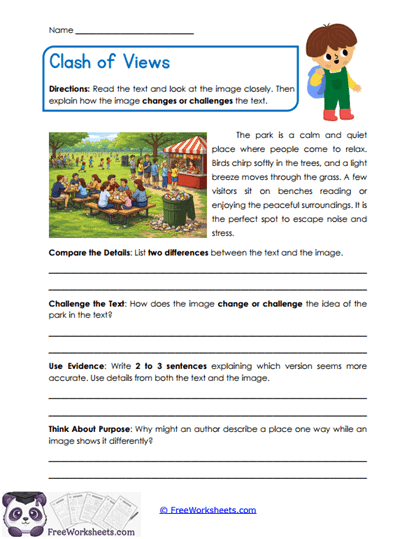
What Kids Do: Students compare a written description of a calm, quiet park with an image showing a crowded and active public space. They identify clear differences, explain how the photograph challenges the wording, and consider why both versions might still be possible.
Target Skill: This worksheet develops evaluation of conflicting or incomplete sources. Students compare written and visual evidence, assess accuracy, and consider time, viewpoint, and purpose before deciding how the image changes the meaning of the text.
Symbol Meaning
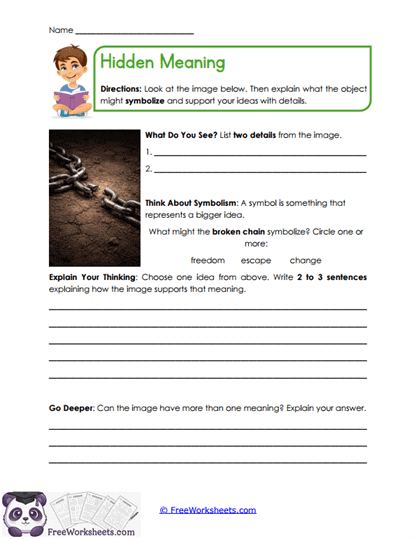
What Kids Do: Students examine an image of a broken chain on cracked ground and move from literal observation to symbolic interpretation. They consider ideas such as freedom, escape, and change, then explain how the snapped links support one or more deeper meanings.
Target Skill: Learners analyze how a visual object can represent an abstract idea. The activity supports Common Core interpretation of symbolism by requiring students to defend a meaning with visible evidence rather than simply naming an idea without explanation.