
Grade 1 Worksheets
These free, ready-to-print PDF 1st grade worksheets are designed for immediate classroom use in centers, small groups, homework, or independent practice. Students build phonological awareness, decoding fluency, comparison vocabulary, and subtraction reasoning within 10.
Language Arts
Math
-
Compare Numbers
-
Comparison Word Problems Up to 10
-
Count Forward and Backward
-
Counting to 100
-
Even and Odd Numbers
-
Number Bonds
-
Number Patterns
-
One-step Word Problems
-
Order Numbers
-
Patterns and Algebraic Thinking
-
Place Value (Tens and Ones)
-
Read and Write Numbers to 120
-
Subtraction Word Problems up to 10
-
Understand Addition
-
Understand Subtraction
About This Collection of Worksheets
1st Grade is where students begin turning early learning skills into real academic independence. Children move beyond basic recognition and start reading with fluency, solving structured math problems, writing complete sentences, and explaining their thinking more clearly.
This collection focuses on the skills students practice most throughout the 1st Grade year: phonics, reading comprehension, sight words, sentence writing, place value, addition, subtraction, telling time, and problem-solving. The worksheets are designed to provide repeated practice with the core concepts students need to master before entering 2nd Grade.
Students strengthen reading fluency, math confidence, written expression, listening skills, and independent learning habits through structured daily review. These printable worksheets support classroom instruction while helping students build accuracy, consistency, and confidence across all major subjects.
Why Teachers Use This Collection
- Daily phonics review practice
- Reading fluency skill building
- Sight word mastery activities
- Addition and subtraction review
- Place value reinforcement practice
- Printable morning work pages
- Independent seatwork assignments
- Reading comprehension skill support
- Small group intervention practice
- Low-prep classroom resources
Why Homeschoolers & Parents Use This Collection
- 1st Grade reading support
- Simple daily math review
- Sentence writing skill practice
- Easy printable learning pages
- Extra phonics reinforcement activities
- Independent learning skill building
- Confidence-building academic practice
- Screen-free educational learning
- Homework and review support
- 2nd Grade readiness preparation
A Look At The Grade 1 Categories
Language Arts
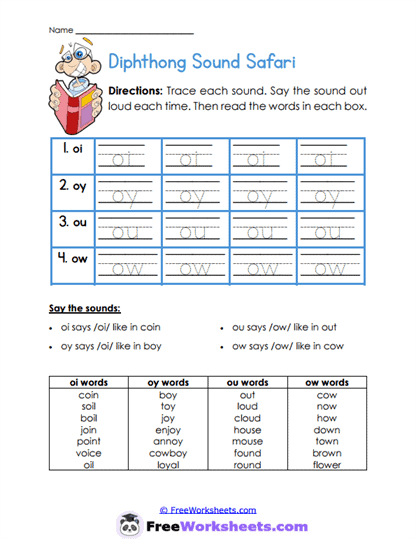
Diphthongs oi, oy, ou, ow
Learning diphthongs like “oi,” “oy,” “ou,” and “ow” helps children hear and read more complex word patterns with confidence. A great way to practice is by saying words out loud together and stretching the vowel sounds so your child can hear how the sounds blend together. These activities strengthen phonics skills, decoding, and pronunciation.
Grade 1 Listening & Speaking
Good listening and speaking skills help children follow directions, share ideas clearly, and feel more confident in the classroom. Try giving simple multi-step directions at home like “Pick up your shoes and put them by the door” to make practice feel natural. These activities support language development, communication skills, and listening comprehension.
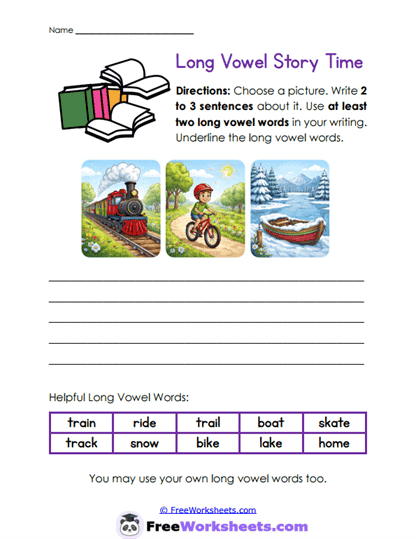
Long Vowel Patterns
Recognizing long vowel patterns helps children read unfamiliar words more easily and smoothly. Encourage your child to look for vowel teams like “ai” or “oa” while reading books together to help the patterns stick. These worksheets strengthen phonics, decoding, and spelling skills.
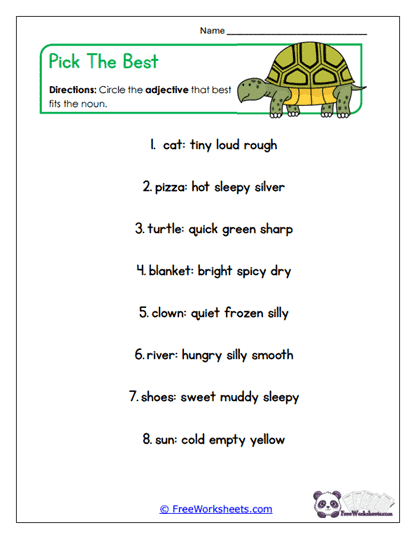
Nouns and Adjectives
Understanding nouns and adjectives helps children build stronger sentences and describe ideas more clearly. A fun way to practice is by asking your child to describe objects around the house using color, size, or shape words. These activities support grammar development, vocabulary growth, and early writing skills.
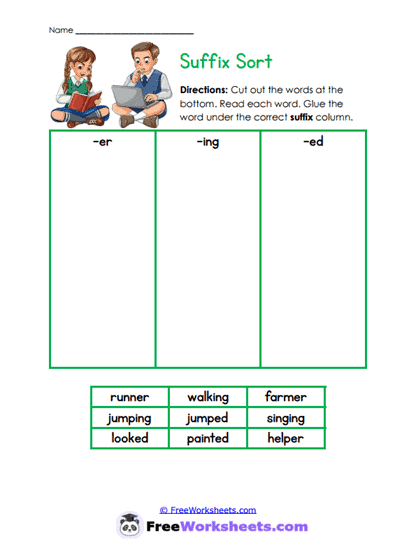
Prefixes and Suffixes
Learning common prefixes and suffixes helps children understand how small word parts can change a word’s meaning. Try using simple examples like “happy” and “unhappy” or “help” and “helpful” so your child can see how the added part changes the word. These activities strengthen vocabulary, word recognition, decoding, and early spelling skills.
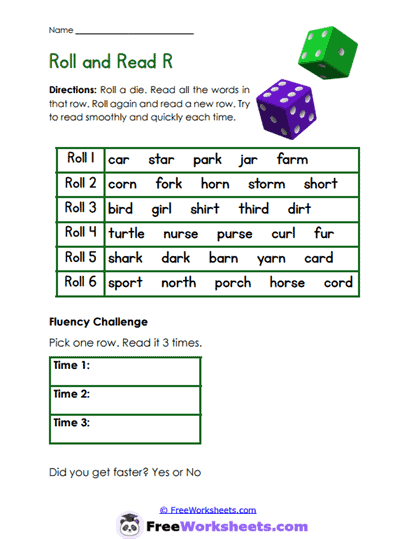
R-controlled Vowels
R-controlled vowels can be confusing because the “r” changes the vowel sound in words like “car,” “bird,” and “fork.” Try practicing by grouping similar sounds together and reading them aloud so your child can hear the patterns more clearly. These worksheets strengthen decoding, spelling, and phonics fluency.
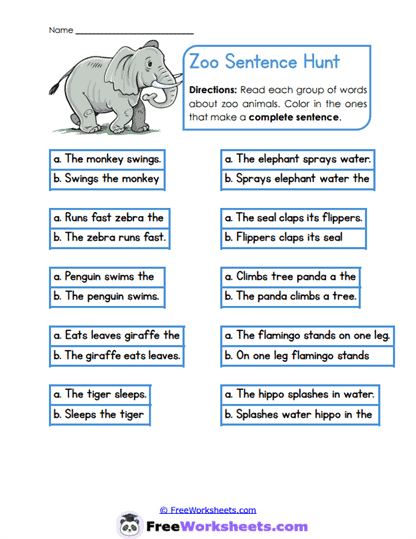
Sentences
Understanding how sentences are built helps children communicate ideas clearly in both reading and writing. Encourage your child to practice turning short thoughts into complete sentences with a capital letter, clear word order, and ending punctuation. These worksheets support grammar, sentence structure, writing fluency, and reading comprehension.
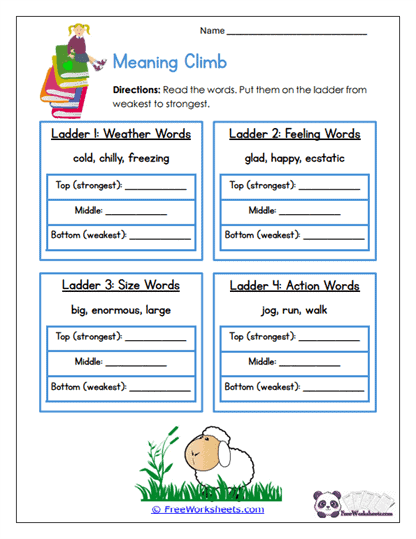
Shades of Meaning
Learning shades of meaning helps children understand that similar words can express slightly different ideas or levels of feeling. A helpful way to practice is by comparing words like “walk,” “stroll,” and “march” and talking about how each one feels a little different. These activities build vocabulary, word choice, reading comprehension, and stronger writing skills.
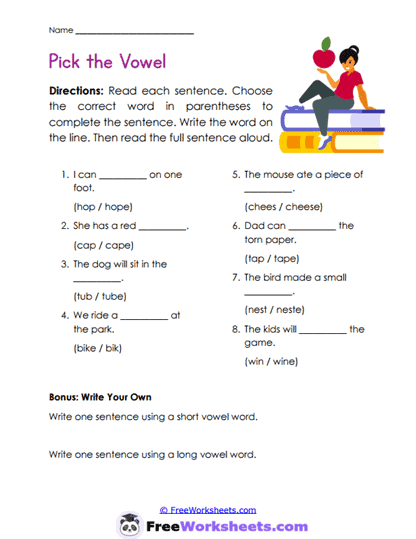
Short and Long Vowel Patterns
Learning the difference between short and long vowel sounds helps children become stronger and more accurate readers. A helpful strategy is to say pairs of words like “cap” and “cape” out loud so your child can hear how the vowel changes the word. These activities build phonemic awareness, decoding skills, and reading fluency.
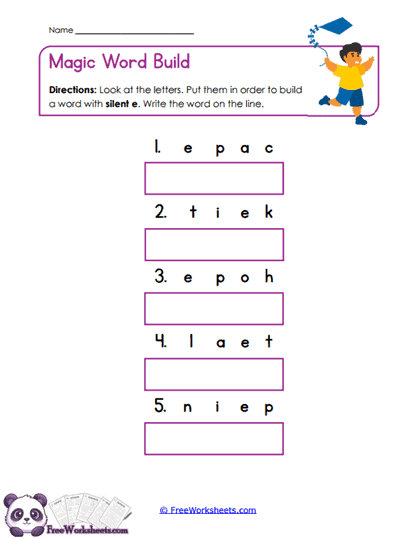
Silent E
Silent “e” helps children recognize how one letter can change the vowel sound in a word. Try comparing word pairs like “cap” and “cape” or “kit” and “kite” so your child can hear the difference clearly. These worksheets strengthen phonics, decoding, spelling, and long vowel recognition.
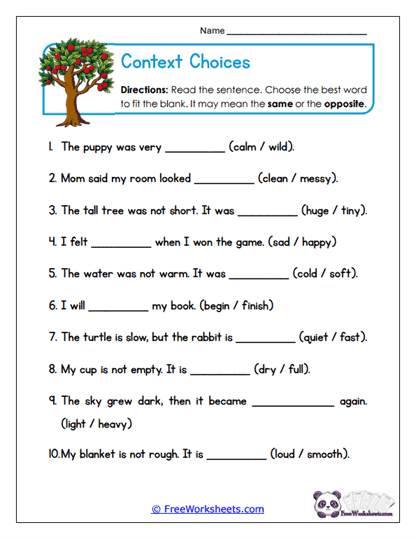
Synonyms and Antonyms
Understanding synonyms and antonyms helps children expand their vocabulary and make stronger word choices when reading and writing. Try naming a familiar word and asking your child to think of a word that means the same thing or the opposite. These activities support vocabulary growth, comprehension, grammar, and expressive language skills.
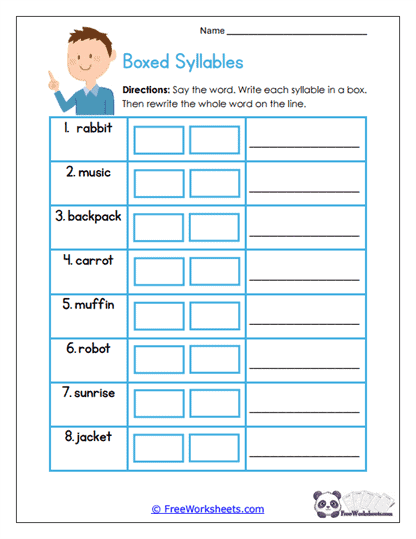
Two-Syllable Words
Reading two-syllable words helps children transition from simple beginner words to longer, more challenging vocabulary. Teach your child to clap out each syllable before reading the word to make longer words feel less overwhelming. These worksheets strengthen decoding, fluency, and word attack skills.
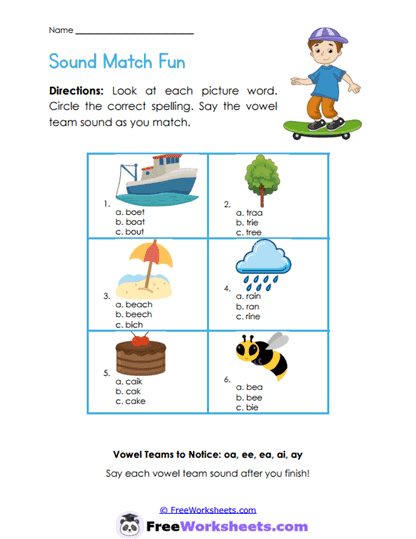
Vowel Teams
Vowel teams help children recognize that two vowels can work together to make one sound in words like “rain,” “boat,” and “seed.” Encourage your child to look for these vowel pairs while reading and say the words aloud to notice the repeating patterns. These worksheets strengthen phonics, decoding, spelling, and reading fluency.
Math
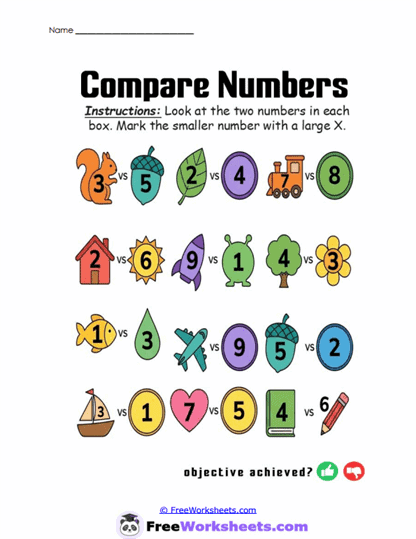
Compare Numbers
Comparing numbers helps children understand which amounts are greater, less, or equal. Try placing two groups of small objects side by side and asking your child which group has more or fewer before comparing the written numbers. These activities strengthen number sense, quantity recognition, and early mathematical reasoning.
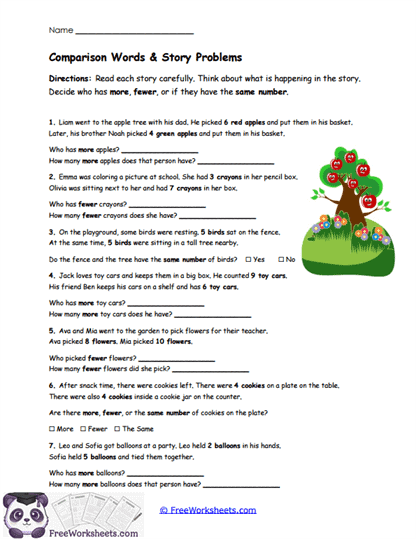
Comparison Word Problems Up to 10
Learning to compare numbers helps children understand how amounts relate to each other in everyday situations. Try using small objects like snacks or toys to act out the word problems before solving them on paper. These activities build number sense, problem-solving skills, and early mathematical reasoning.
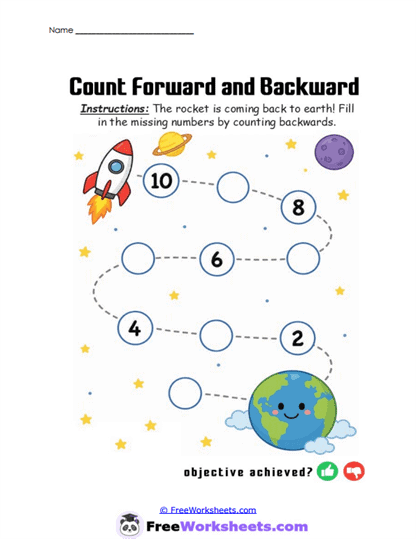
Count Forward and Backward
Counting forward and backward helps children understand number order and how numbers increase or decrease. Practice by choosing a starting number and taking turns counting up or down while walking, riding in the car, or cleaning up toys. These worksheets build counting fluency, sequencing, and number sense.
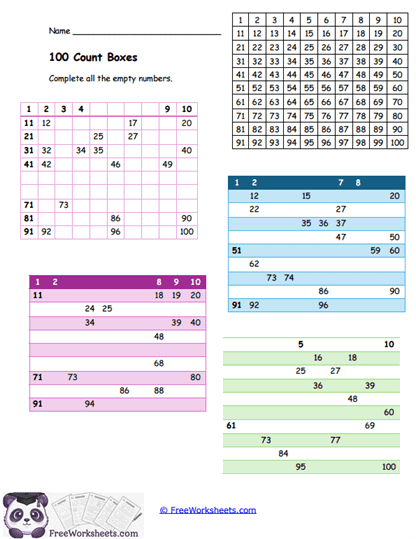
Counting to 100
Counting to 100 helps children recognize number patterns and build confidence working with larger numbers. A simple way to practice is by counting by 10s together during everyday routines like climbing stairs or cleaning up toys. These worksheets strengthen number sense, sequencing, and counting fluency.
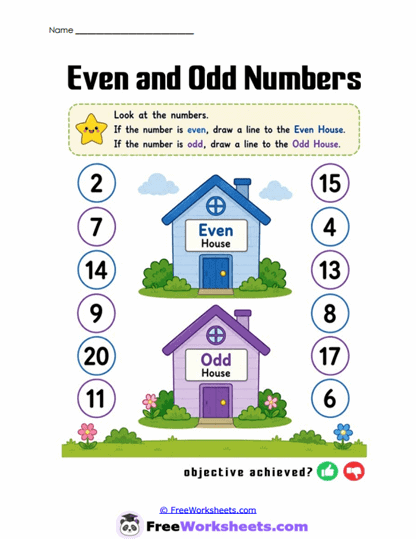
Even and Odd Numbers
Learning about even and odd numbers helps children notice important patterns in how numbers can be grouped. Try pairing small objects like buttons or blocks and seeing whether every object has a partner or whether one is left over. These activities strengthen number sense, grouping skills, and pattern recognition.
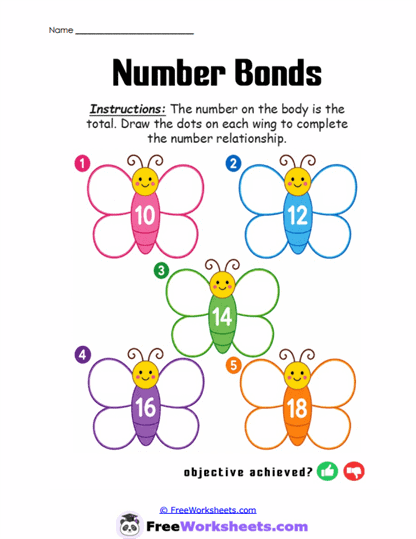
Number Bonds
Number bonds help children see how smaller numbers can be combined to make a larger number. Use counters, blocks, or snacks to break a group into two smaller parts and then put them back together again. These worksheets strengthen addition and subtraction understanding, part-whole relationships, and mental math skills.
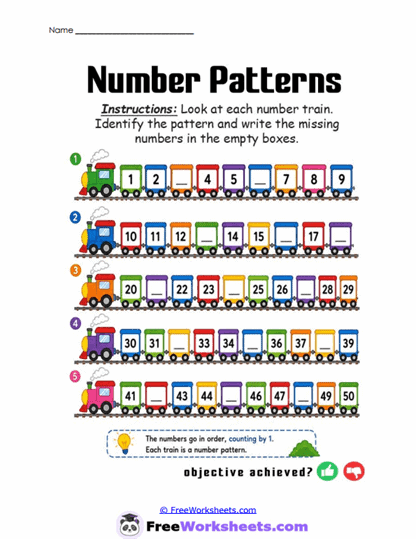
Number Patterns
Recognizing number patterns helps children predict what comes next and understand how numbers relate to one another. Try counting by 2s, 5s, or 10s together and asking your child what number should come next. These activities build sequencing, number sense, skip-counting skills, and early mathematical reasoning.
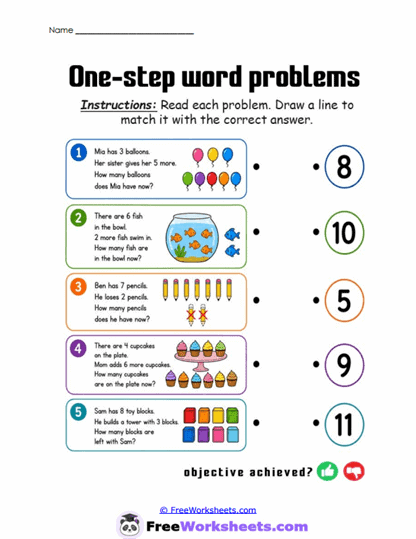
One-step Word Problems
One-step word problems help children decide which math operation to use in everyday situations. Encourage your child to draw a picture, act out the problem, or use small objects before writing an equation. These worksheets strengthen addition and subtraction skills, problem-solving, and mathematical reasoning.
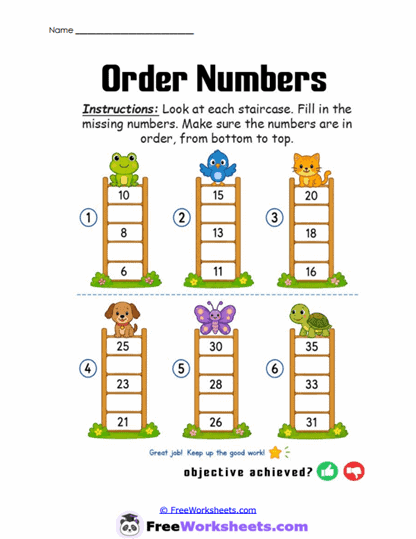
Order Numbers
Putting numbers in order helps children understand where each number belongs and how quantities compare. Write a few numbers on cards and have your child arrange them from smallest to largest or largest to smallest. These activities strengthen number sense, comparison skills, and understanding of numerical order.
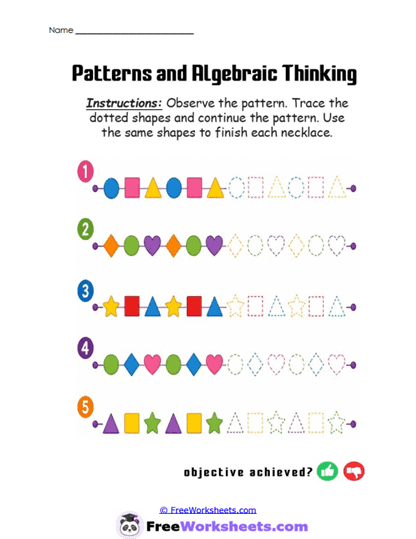
Patterns and Algebraic Thinking
Exploring patterns helps children notice rules, relationships, and repeated sequences in numbers, shapes, and objects. Try creating a simple pattern with blocks, colors, or household items and asking your child to continue it or explain what repeats. These worksheets build logical thinking, pattern recognition, and early algebraic reasoning.
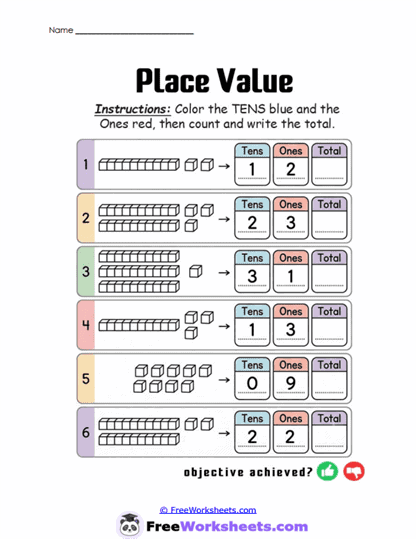
Place Value (Tens and Ones)
Understanding tens and ones helps children see that the position of a digit determines its value. Try grouping small objects into sets of ten and leaving the extras as ones so your child can physically see how a two-digit number is built. These activities strengthen place value, number sense, and understanding of two-digit numbers.
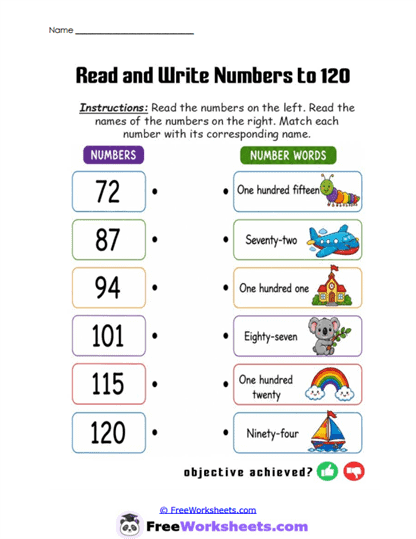
Read and Write Numbers to 120
Reading and writing numbers to 120 helps children connect spoken number words with written numerals and their correct order. Practice by calling out a number and having your child write it, or point to numbers you see on calendars, signs, and books. These worksheets strengthen number recognition, counting fluency, and written number skills.
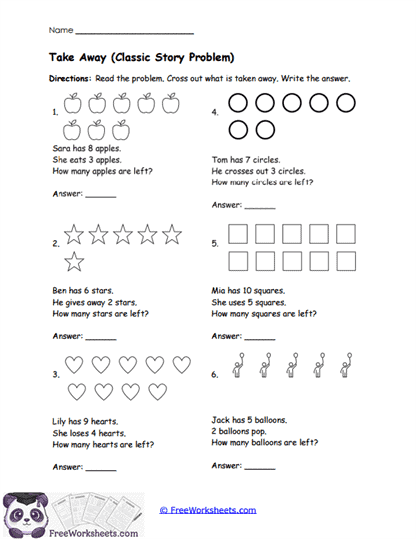
Subtraction Word Problems up to 10
Solving subtraction word problems helps children connect math to real-life situations they understand. Encourage your child to draw pictures or use small objects to act out each problem before finding the answer. These activities strengthen problem-solving, number sense, and early subtraction skills.
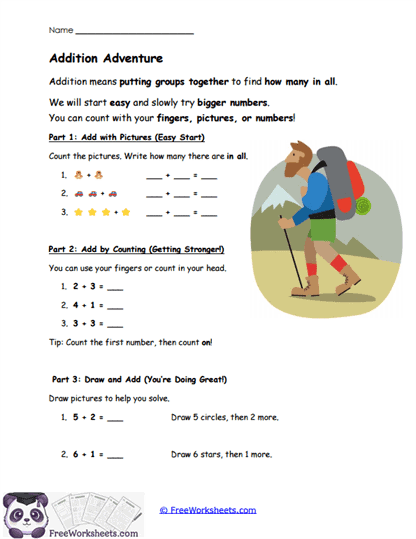
Understand Addition
Understanding addition helps children see how numbers work together to make larger amounts. A great strategy is to use everyday objects like blocks or crackers so your child can physically combine groups while solving problems. These worksheets build number relationships, addition fluency, and early math confidence.
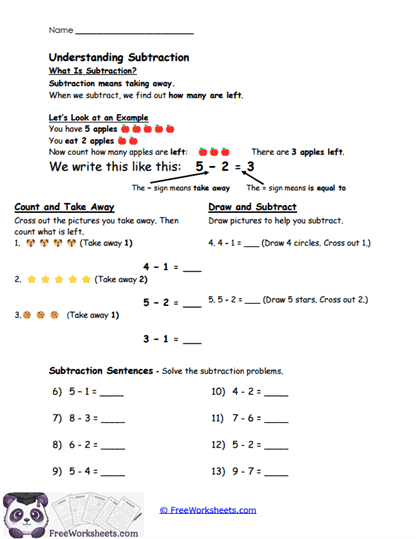
Understand Subtraction
Learning subtraction helps children understand how numbers change when items are taken away. Try practicing with toys or snacks so your child can physically remove objects and see the difference for themselves. These activities strengthen number sense, problem-solving, and early subtraction understanding.
Reading
Grade 1 Reading Comprehension
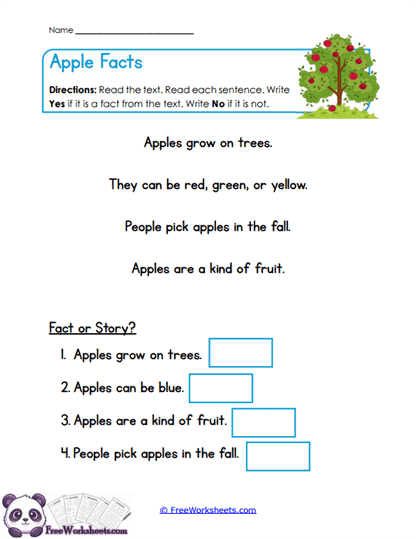
Developing reading comprehension helps children understand what they read, remember important details, and make connections between ideas. Try asking simple questions like “Who was the story about?” or “What happened at the end?” after reading a short story together. These activities strengthen understanding, critical thinking, story recall, and early literacy skills.
Grade 1 Reading Fluency Practice
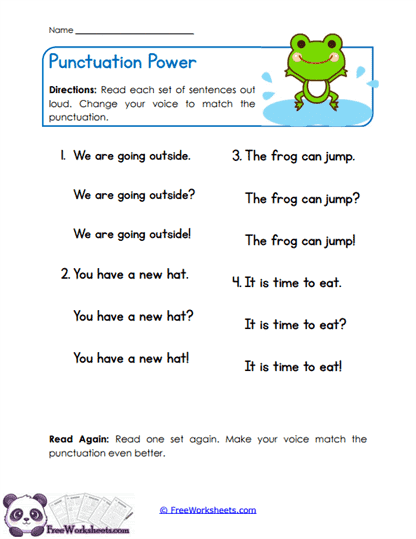
Building reading fluency helps children read words more smoothly, accurately, and with natural expression. A helpful way to practice is by reading a short passage together, then encouraging your child to read it again while focusing on making the words sound more natural. These worksheets strengthen word recognition, reading accuracy, comprehension, and confidence with independent reading.
Grade 1 Reading Passages
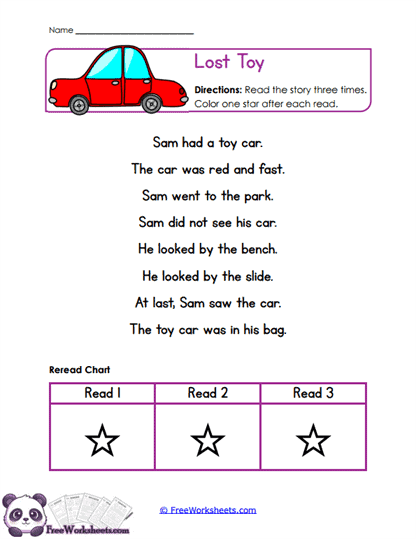
Reading short passages helps children build confidence as they move from recognizing individual words to understanding complete stories and informational texts. Encourage your child to read a passage aloud and then explain what it was about in their own words to reinforce understanding. These worksheets support reading fluency, vocabulary development, comprehension, and independent reading skills.
Inference
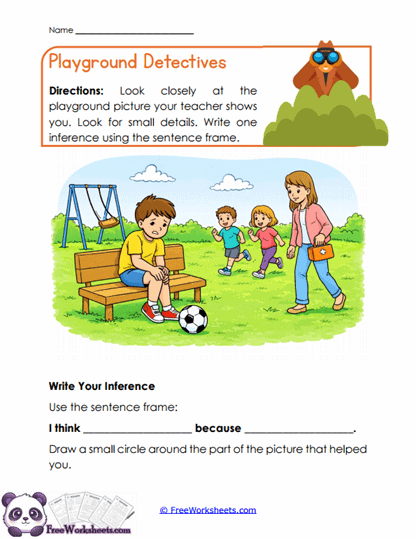
Learning to make inferences helps children use clues from a story and what they already know to understand ideas that aren’t directly stated. A fun way to practice is by reading a short story and asking questions like “How do you think the character feels?” or “What clues helped you figure that out?” These activities strengthen critical thinking, reading comprehension, and the ability to draw conclusions from text.
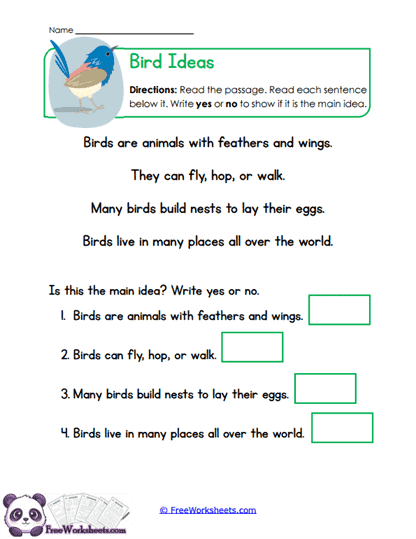
Main Idea
Identifying the main idea helps children recognize what a story or passage is mostly about instead of focusing only on small details. After reading together, ask your child to explain the most important thing the author wanted them to understand and name a detail that supports it. These worksheets strengthen reading comprehension, identifying key details, summarizing, and early analytical thinking skills.
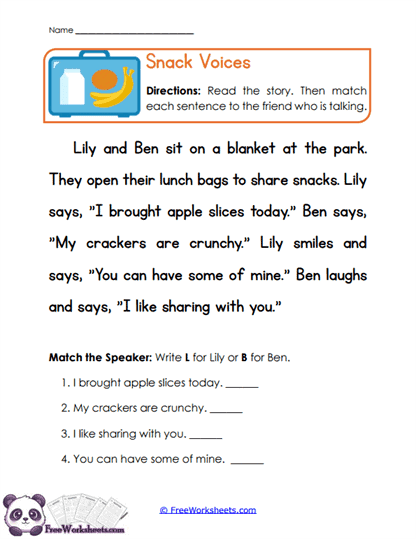
Point of View
Understanding point of view helps children recognize who is telling a story and how different characters might see the same situation differently. Try reading a familiar story together and asking your child how the story might change if another character were telling it. These activities strengthen perspective-taking, reading comprehension, storytelling, and critical thinking skills.