
Order Numbers Worksheets
Putting numbers in order is much more than learning which one comes first or last. It's one of the skills that helps children make sense of how our number system works. These free Grade 1 Order Numbers worksheets give students plenty of opportunities to arrange numbers, finish counting sequences, compare values, and recognize where numbers belong. Through colorful trains, balloons, staircases, and other engaging activities, children build confidence while developing a stronger understanding of number relationships.
About This Collection of Worksheets
As children become comfortable ordering numbers, they begin seeing math as something that follows predictable rules instead of something they simply memorize. Finding the smallest number in a group, arranging numbers from least to greatest, or continuing a counting pattern all require students to slow down, compare values, and think carefully about how numbers relate to one another. Those skills become the foundation for place value, estimation, addition, subtraction, and many future math concepts.
One thing that makes this collection especially useful is its variety. Some pages have students organize mixed-up trains or balloons, while others challenge them to identify the smallest or largest number in a group. Several worksheets ask children to finish counting staircases or continue number patterns. Even though every page focuses on ordering numbers, each activity approaches the skill in a slightly different way so practice stays interesting from beginning to end.
Whether you’re introducing number order for the first time or reinforcing classroom lessons, these printable worksheets fit naturally into independent practice, math centers, homework, small-group instruction, or homeschool lessons. As students complete the collection, they’ll become quicker at comparing numbers and more confident trusting what they already know.

Paul’s Teacher Tip
Whenever children are ordering several numbers, encourage them to find the smallest one first and set it aside before looking for the next smallest. Breaking the task into smaller steps feels much less overwhelming than trying to organize every number at once. If students get stuck, a simple number line can be a great reminder that every number already has its own place. Before long, many children stop needing the visual support because they’ve started building a mental picture of where numbers belong.
Worksheet Collection Skill Spotlights
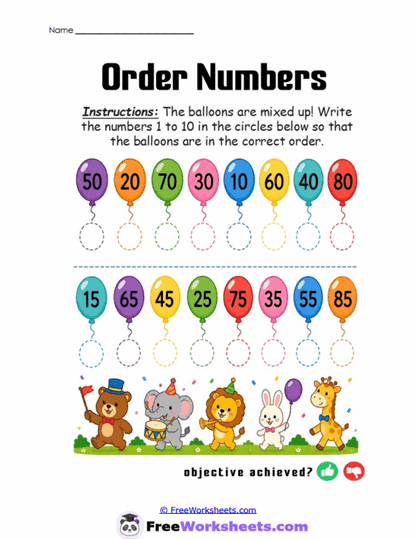
Balloon Order
What Kids Do:
A bunch of balloons are floating around out of order, and it’s up to students to straighten everything out. They compare each number, decide which balloon belongs first, and rebuild the group from the smallest value to the largest.
Target Skill:
Children practice comparing two-digit numbers while learning that organizing numbers becomes much easier when they work from the smallest value upward.
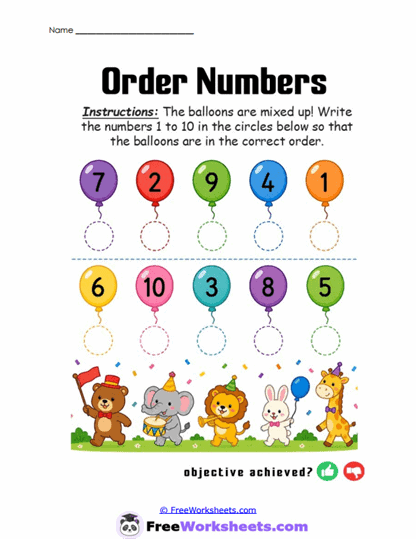
Balloon Sequence
What Kids Do:
This page feels a little like solving a party puzzle. Students study the numbered balloons and figure out exactly where each one belongs in the counting order before filling in the answer circles below.
Target Skill:
Rebuilding a complete counting sequence helps students strengthen both number recognition and confidence with ordering numbers from beginning to end.
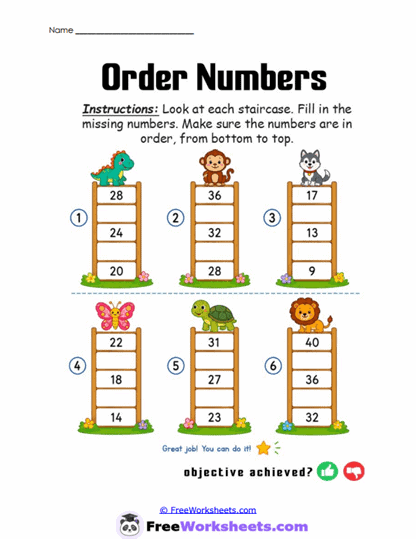
Climbing Order
What Kids Do:
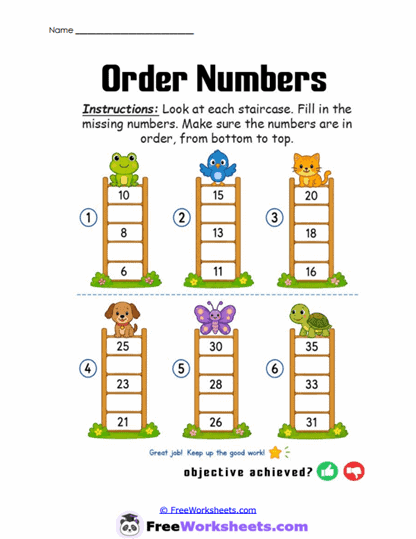
Each staircase is missing a few important steps. Students study the pattern, figure out what belongs in the empty spaces, and help the climb continue all the way to the top without breaking the sequence.
Target Skill:
Instead of simply counting, children learn to recognize how numbers grow by following a consistent pattern, an important skill for skip counting later on.
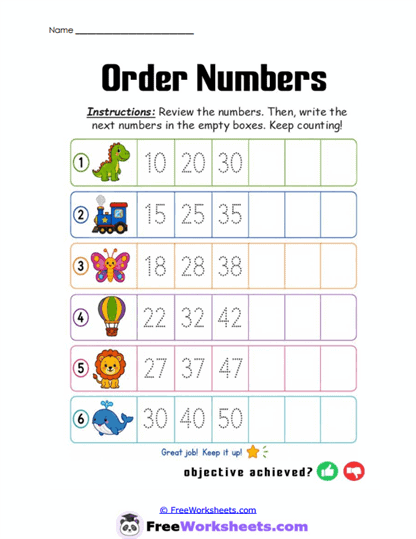
Count Ahead
What Kids Do:
Every row begins a counting pattern, but it doesn’t finish it. Students look for the rule, continue the sequence, and fill in the empty boxes with the numbers that naturally come next.
Target Skill:
This activity encourages children to search for patterns before writing answers, helping them become stronger mathematical thinkers.
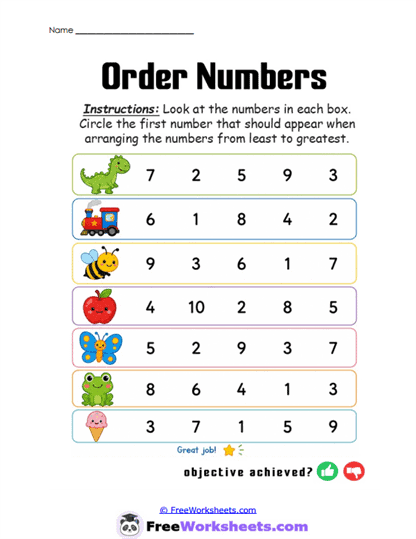
First Choice
What Kids Do:
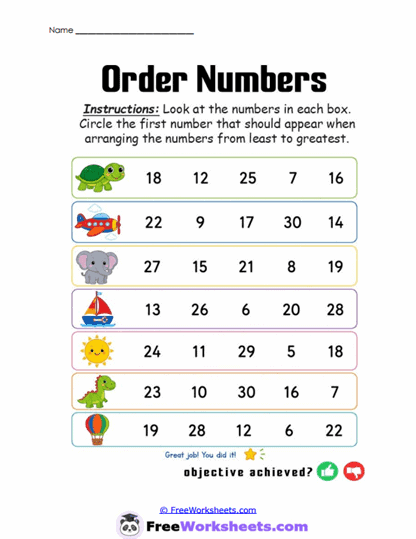
Rather than putting every number in order, students focus on one important question: Which number comes first? They compare each group carefully before circling the smallest value.
Target Skill:
Learning to quickly recognize the smallest number makes full number-ordering activities much easier and builds stronger comparison skills.
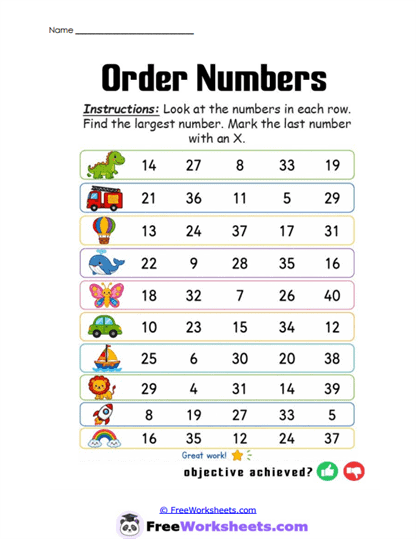
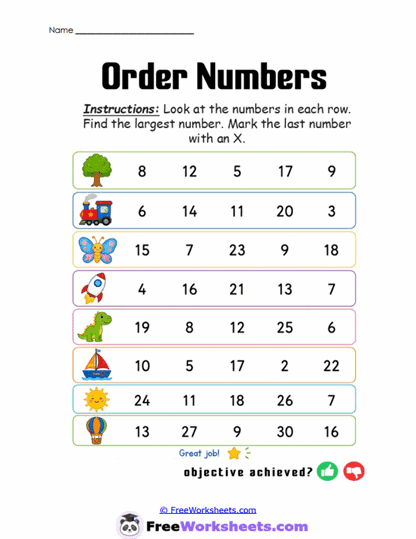
Greatest Value
What Kids Do:
Some numbers naturally stand out, but not always for the right reason. Students compare every choice before marking the greatest number in each group, making sure they don’t overlook a larger value hiding later in the row.
Target Skill:
Repeated comparisons help children become more comfortable evaluating larger numbers without relying on guessing.
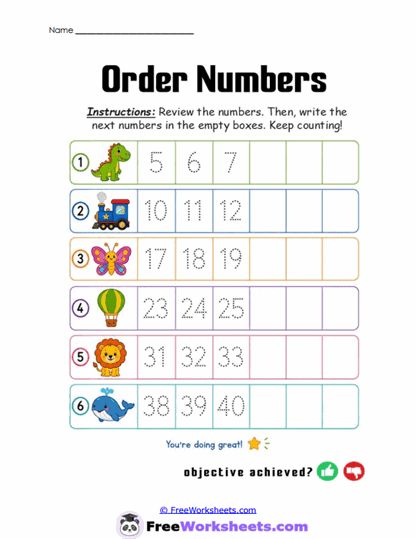
Keep Counting
What Kids Do:
The counting has already started-students simply keep it moving. By writing the next few numbers in every row, they help each sequence continue without missing a beat.
Target Skill:
Continuing number sequences builds fluency and helps students trust that numbers always follow a predictable order.
Largest Number
What Kids Do:
Every row hides one champion. Students compare several numbers before placing an X on the greatest value, taking care to check every option before making their choice.
Target Skill:
Finding the largest number strengthens comparison skills and encourages children to think carefully instead of stopping at the first big number they notice.
Number Journey
What Kids Do:
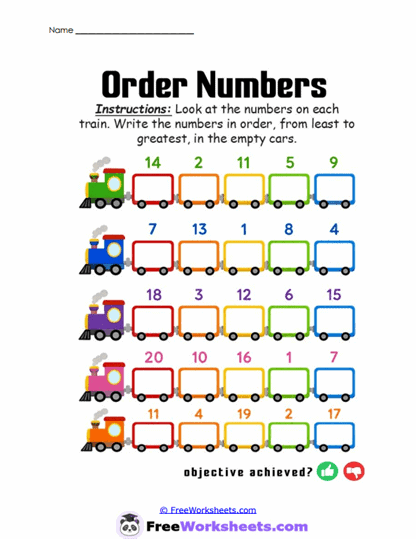
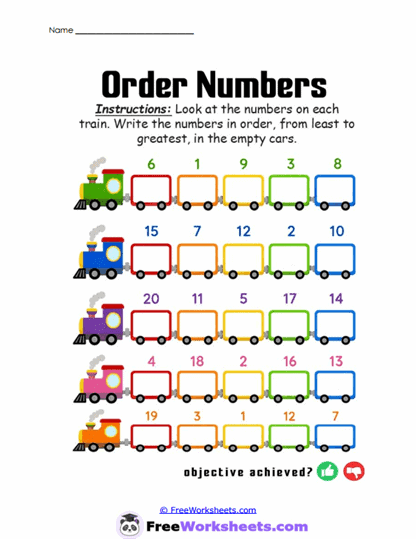
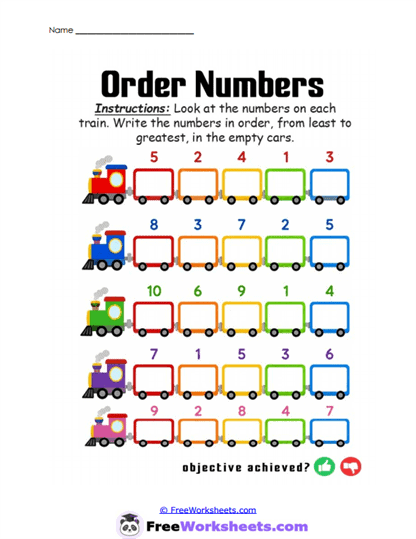
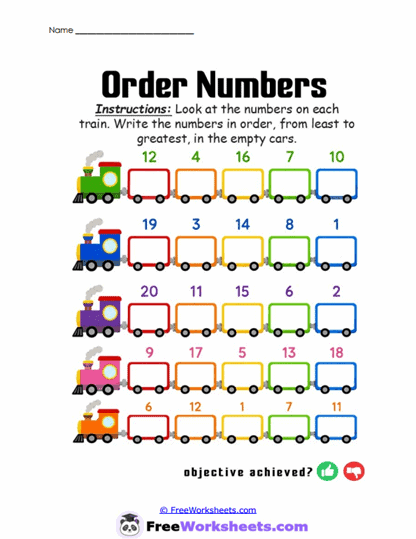
Each train is ready to leave the station, but its cars are out of order. Students reorganize the numbers from least to greatest so every journey begins with the smallest passenger and ends with the largest.
Target Skill:
Ordering complete groups of numbers helps children build confidence with sequencing while reinforcing place value understanding.
Number Lineup
What Kids Do:
Think of this worksheet like organizing a team before a class picture. Students decide exactly where each number belongs so the lineup runs smoothly from smallest to largest.
Target Skill:
The more students practice arranging mixed numbers, the faster they become at spotting where each value belongs.
Simple Sorting
What Kids Do:
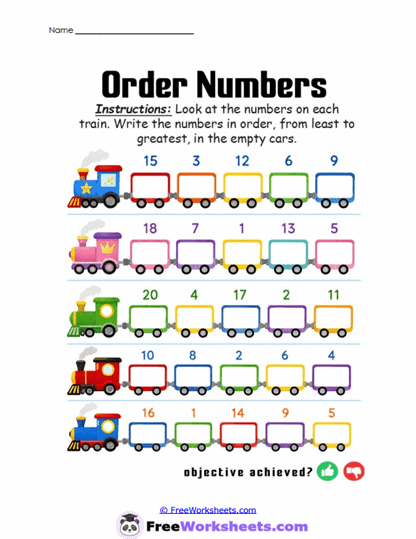
Students sort groups of mixed numbers into their proper order by filling empty train cars one at a time. Every completed train becomes a visual reminder that numbers always have a logical place.
Target Skill:
Breaking ordering into small steps helps children organize information more confidently while strengthening number sense.
Smallest First
What Kids Do:
This page asks students to slow down before making a choice. Instead of racing through each row, they compare every number carefully to find the one that belongs at the very beginning of an ordered list.
Target Skill:
Developing the habit of comparing every option leads to greater accuracy when working with larger groups of numbers.
Sorting Numbers
What Kids Do:
Every train arrives with its passengers mixed up. Students rearrange the numbers from least to greatest, checking each one carefully before moving on to the next train.
Target Skill:
Repeated ordering practice helps students become quicker at recognizing numerical relationships instead of counting through every possibility.
Stair Steps
What Kids Do:
Some of the stairs are missing their numbers, and students complete the climb by filling in the empty spaces. Every new step helps the counting pattern continue smoothly toward the top.
Target Skill:
Completing sequences reinforces the idea that every number has one specific place within an ordered pattern.
Train Order
What Kids Do:
The train won’t leave until every car is in the correct position. Students compare the numbers above each train and carefully arrange them from the smallest value to the largest before sending it down the track.
Target Skill:
This activity brings together several important early math skills, including comparing numbers, recognizing order, and organizing information in a logical sequence.