
Nouns and Adjectives Worksheets
These worksheets help students recognize naming and describing words in meaningful context. These free, ready-to-print PDF worksheets are designed for immediate classroom use during grammar and writing instruction. Students practice identifying nouns, selecting adjectives, sorting parts of speech, and expanding sentences with descriptive detail.
About This Collection of Worksheets
In Grade 1, students move from informal language awareness to formal grammar understanding aligned with Common Core Language standards. Recognizing nouns as naming words and adjectives as describing words lays the groundwork for sentence construction, reading comprehension, and stronger writing. These worksheets support that developmental shift by presenting grammar concepts within simple, familiar sentences that emphasize meaning and function.
This collection can be used during whole-group grammar lessons, literacy centers, small-group reteaching, or writing mini-lessons. Activities range from circling and underlining to sorting, matching, sentence expansion, and revision tasks. Teachers can use the structured formats for formative assessment, guided practice, or independent reinforcement of noun and adjective skills.
Each printable PDF features clear directions, uncluttered layouts, and developmentally appropriate vocabulary. Visual supports such as color-coding, matching lines, and structured sentence frames make grammar concepts concrete and accessible. With minimal preparation required, these worksheets integrate seamlessly into daily Language Arts instruction.
Paul’s Teacher Tip
To make grammar stick, connect it to real speaking and writing instead of treating it as isolated practice. After each worksheet, have students say their sentences out loud and listen for how the adjective adds detail. Try quick classroom games like “add one more word” where students take turns improving a plain sentence together. For students who need support, provide a small bank of familiar adjectives they can reuse confidently. Over time, encourage students to notice adjectives in books you read aloud-this helps them see how describing words bring sentences to life.
Worksheet Collection Skill Spotlights
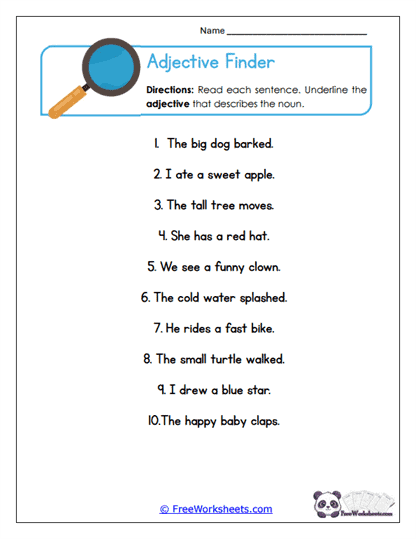
Adjective Finder
• What Kids Do – Students read sentences and underline the describing words in each one.
• Target Skill – Builds identification of adjectives within sentence context.
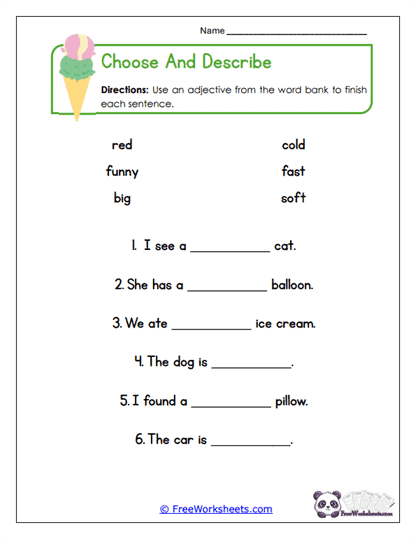
Choose and Describe
• What Kids Do – Students choose the best adjective from a word bank to complete each sentence.
• Target Skill – Develops accurate adjective use based on meaning and context.
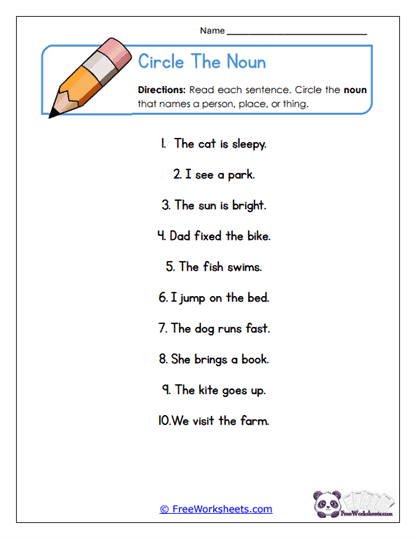
Circle the Noun
• What Kids Do – Students read sentences and circle the word that names a person, place, or thing.
• Target Skill – Builds noun recognition and understanding of sentence roles.
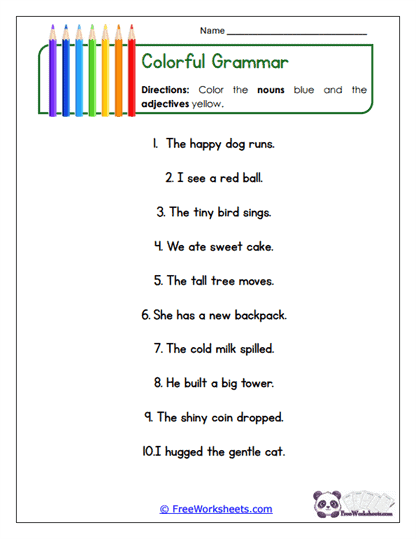
Colorful Grammar
• What Kids Do – Students color-code nouns and adjectives in each sentence using different colors.
• Target Skill – Strengthens differentiation between nouns and adjectives.
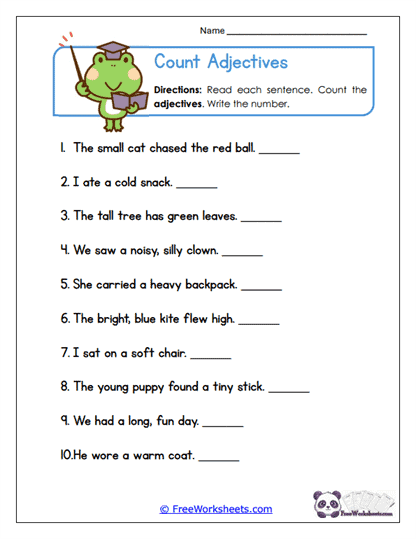
Count Adjectives
• What Kids Do – Students read sentences and count how many describing words are used.
• Target Skill – Builds attention to multiple adjectives and descriptive detail.
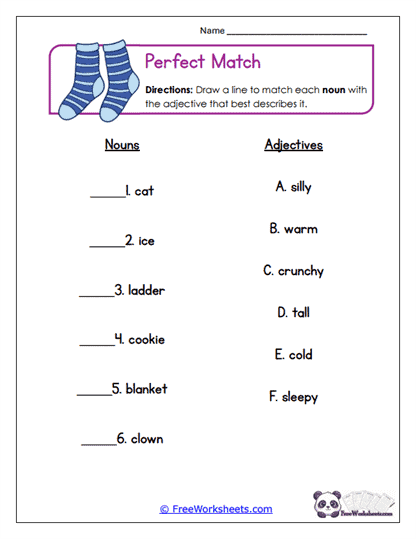
Perfect Match
• What Kids Do – Students match nouns with adjectives that logically describe them.
• Target Skill – Develops semantic connections between nouns and descriptive words.
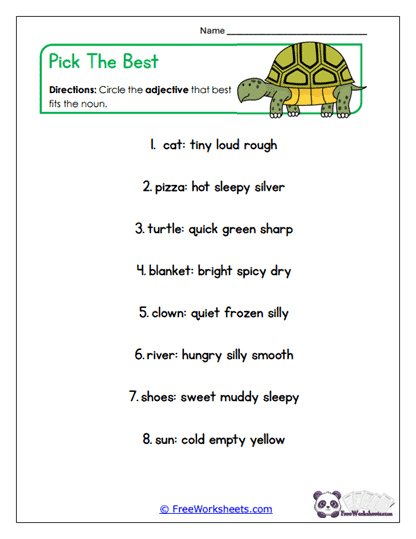
Pick the Best
• What Kids Do – Students choose the most accurate adjective from multiple options for each noun.
• Target Skill – Strengthens precise word choice and vocabulary understanding.
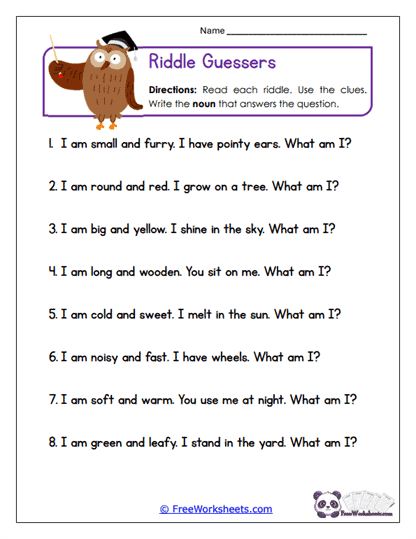
Riddle Guessers
• What Kids Do – Students read clues with describing words and guess the correct noun.
• Target Skill – Builds inference skills using adjective clues.
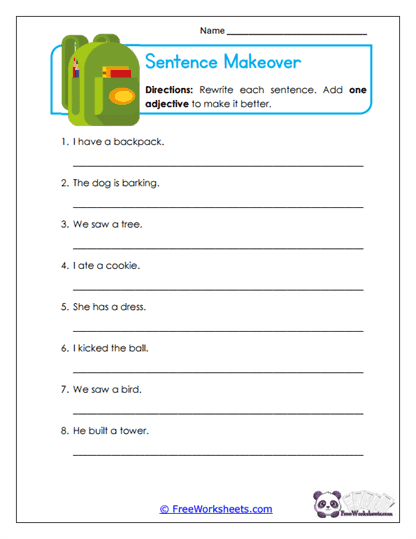
Sentence Makeover
• What Kids Do – Students rewrite simple sentences by adding one descriptive word.
• Target Skill – Develops sentence expansion and descriptive writing.
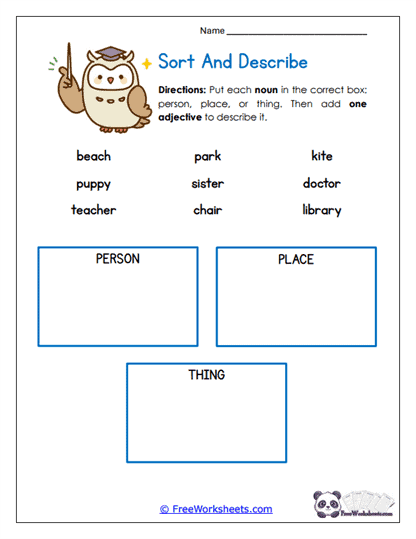
Sort and Describe
• What Kids Do – Students sort nouns into categories and add an adjective to describe each one.
• Target Skill – Builds noun classification and applied adjective use.
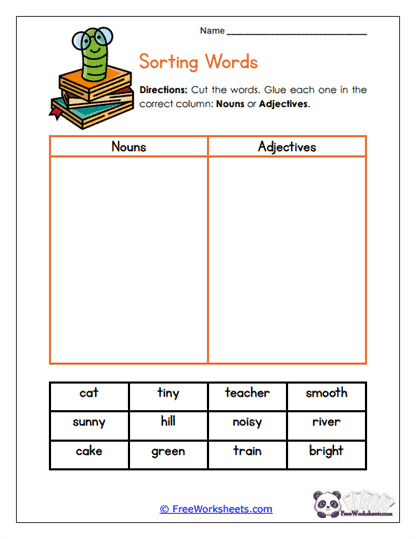
Sorting Words
• What Kids Do – Students sort a mix of words into nouns and adjectives using a cut-and-paste format.
• Target Skill – Strengthens part-of-speech classification.
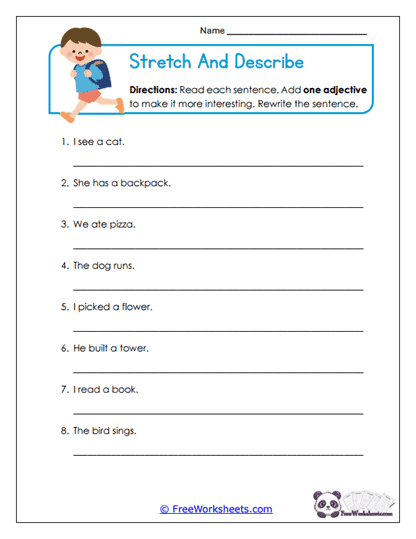
Stretch and Describe
• What Kids Do – Students expand basic sentences by adding a meaningful adjective.
• Target Skill – Builds expressive writing and descriptive sentence development.