
Read and Write Numbers to 120 Worksheets
Learning to read and write numbers is one of those skills children use long after math class is over. Whether they're reading a page number, recognizing a house address, checking a scoreboard, or counting money, being comfortable with numbers opens the door to everyday problem-solving. These free Grade 1 Read and Write Numbers to 120 worksheets give students meaningful practice reading numerals, matching number words, and comparing values while building confidence one page at a time.
About This Collection of Worksheets
As numbers grow larger, many first graders begin noticing that reading them isn’t quite as automatic as counting to twenty. That’s perfectly normal. This collection helps bridge that gap by giving students repeated opportunities to connect numerals with written number words and compare numbers using what they know about place value. Instead of memorizing isolated facts, children begin recognizing that every number has a name, a value, and a place within the counting sequence.
You’ll also notice that the activities aren’t all built the same way. Some worksheets have students draw lines between numerals and number words, while others ask them to read written numbers before choosing the correct numeral. Several pages shift the focus to comparing groups of numbers and finding the greatest value, giving students another chance to apply their understanding in a different setting. That variety keeps practice engaging while reinforcing the same essential concepts.
These printable worksheets are a great fit for classroom lessons, independent practice, math centers, homework, intervention groups, or homeschool instruction. By the end of the collection, students won’t just recognize more numbers-they’ll read them more confidently, compare them more accurately, and begin using place value naturally instead of relying on guesswork.
Paul’s Teacher Tip
If your child hesitates when reading larger numbers, don’t rush to correct them. Instead, cover part of the number with your finger and ask, “What do you notice first?” Breaking a number into smaller pieces often makes it much less intimidating. You can also turn everyday moments into quick practice by reading page numbers in books, house addresses on walks, or aisle numbers at the grocery store. Those real-world examples remind children that numbers aren’t just something found on worksheets-they’re everywhere.
Worksheet Collection Skill Spotlights
Biggest Pick
What Kids Do:
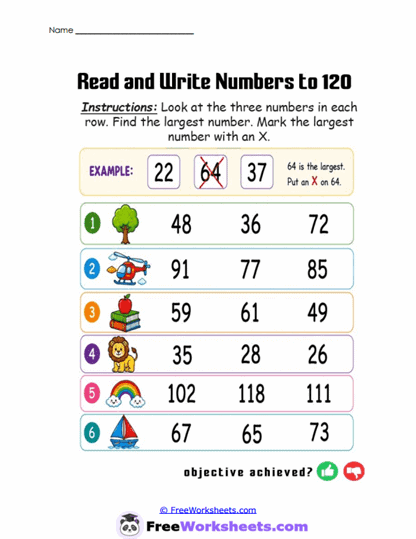
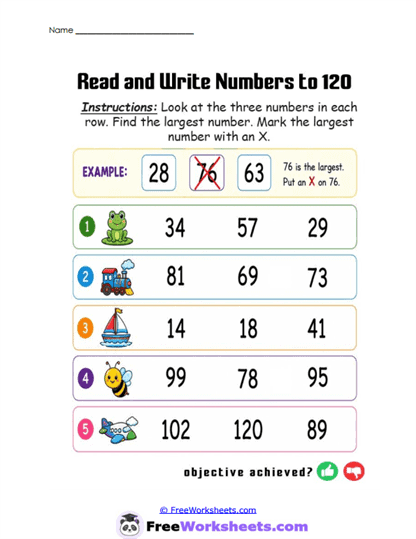
Three numbers step onto the page, but only one can claim the top spot. Students compare each choice carefully before marking the greatest value with an X. Some rows are easy, while others encourage children to slow down and really think about which number is the largest.
Target Skill:
Comparing groups of numbers helps students rely on place value instead of guessing, making larger numbers feel much less overwhelming.
Greatest Choice
What Kids Do:
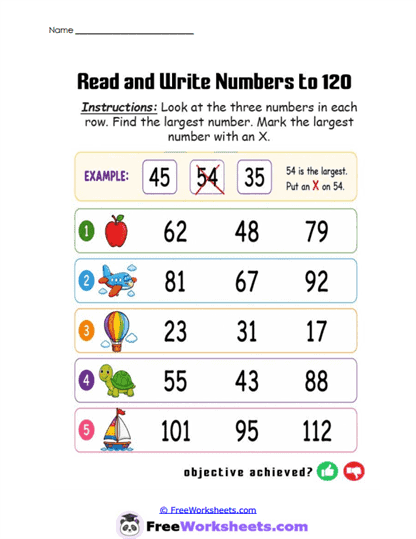
Every row presents a new challenge as students search for the biggest number among three choices. Rather than looking at only the last digit, children learn to compare the entire number before making their decision.
Target Skill:
This activity strengthens number sense by helping students recognize that every digit contributes to a number’s overall value.
Greatest Value
What Kids Do:
Students work their way through sets of numbers, choosing the greatest value one row at a time. As they continue, many begin spotting the answer more quickly because they’re learning what to look for first.
Target Skill:
Repeated comparison practice builds confidence with place value and prepares students for ordering numbers later on.
Highest Number
What Kids Do:
Some numbers are close together, making the choice a little trickier than it first appears. Students compare carefully before deciding which one belongs at the top of the group.
Target Skill:
Children strengthen logical thinking by comparing numbers systematically rather than making quick guesses.
Largest Number
What Kids Do:
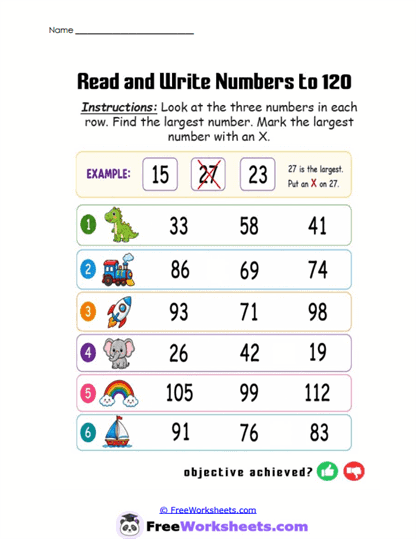
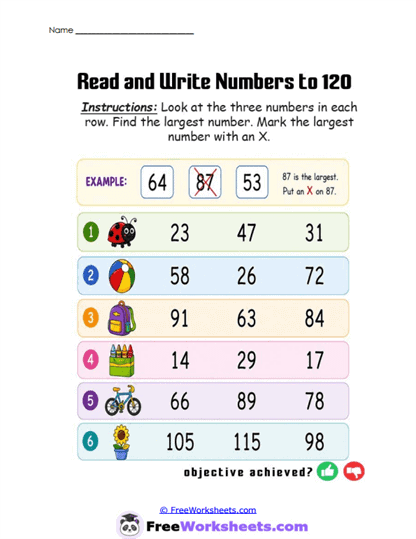
Every problem is like a mini competition where only one number comes out on top. Students examine all three choices before placing an X on the winner.
Target Skill:
Learning to compare larger values helps children build stronger place value understanding and greater confidence with numbers beyond 100.
Largest Value
What Kids Do:
Students continue practicing with groups of numbers that become a little more challenging as they work down the page. Careful comparisons help them discover that bigger numbers aren’t nearly as confusing once they know where to look.
Target Skill:
This worksheet encourages thoughtful decision-making while reinforcing how hundreds, tens, and ones work together.
Number Match
What Kids Do:
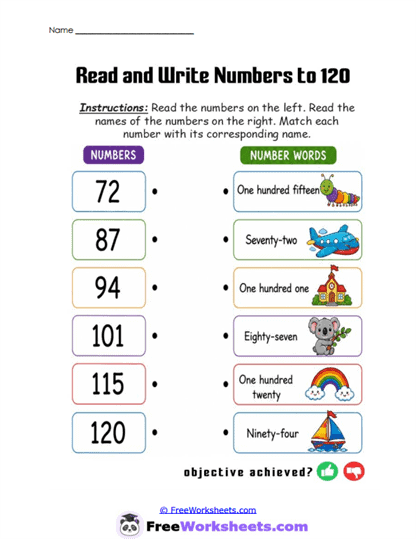
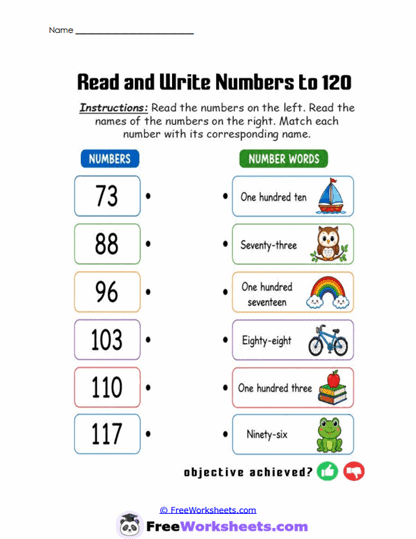
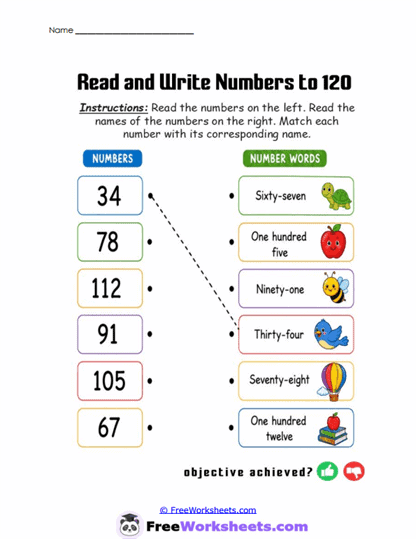
This page turns number reading into a matching game. Students connect each numeral with its written name, building bridges between the numbers they see and the words they read.
Target Skill:
Matching numerals and number words strengthens both math vocabulary and reading confidence at the same time.
Number Reading
What Kids Do:
Instead of hunting for the largest number, students become careful readers. They study each numeral before finding the matching number word, creating connections that become stronger with every pair.
Target Skill:
Moving easily between numerals and written words helps children become more fluent readers of mathematical language.
Number Words
What Kids Do:
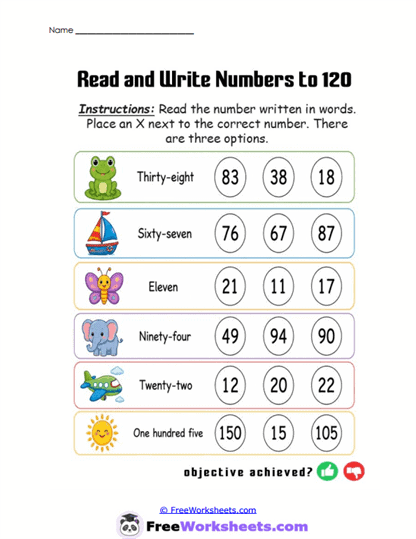
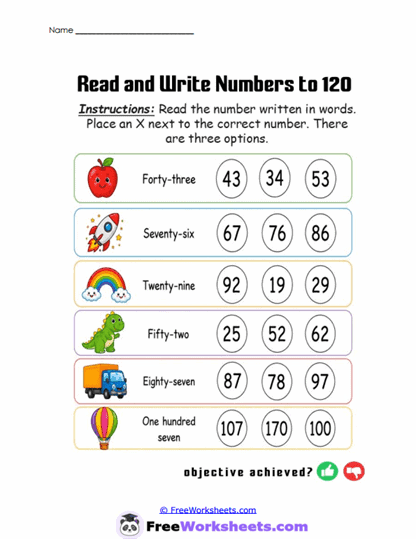
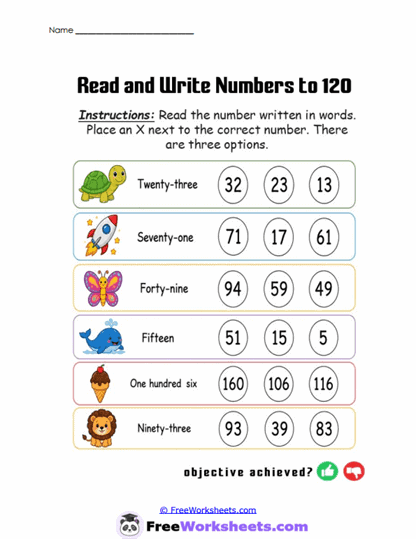
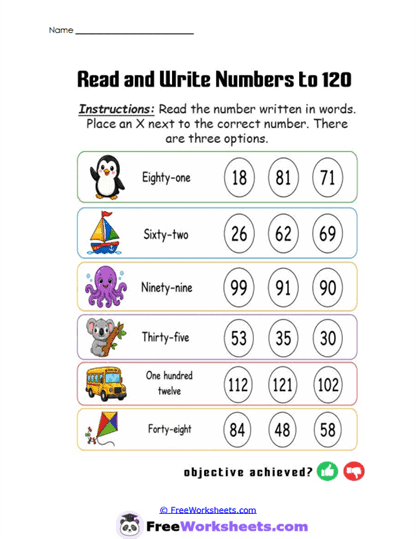
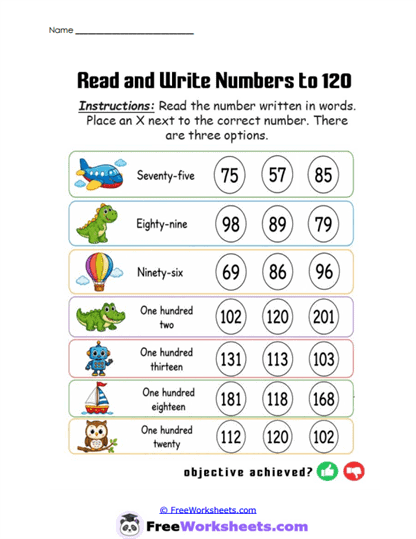
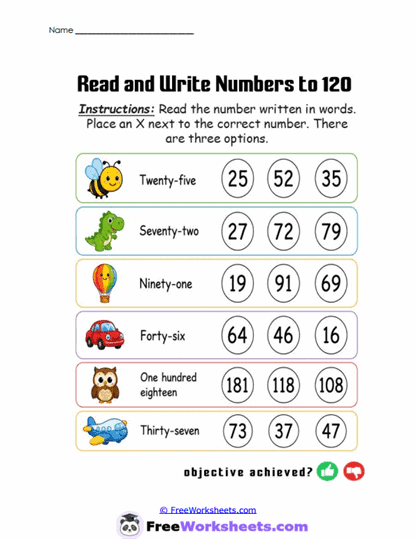
Students read each number written in words before choosing the correct numeral from several answers. It feels a little like solving a multiple-choice puzzle, but every correct choice builds reading confidence.
Target Skill:
Recognizing number words quickly makes classroom math activities feel much easier because students spend less time decoding and more time thinking.
Numeral Finder
What Kids Do:
Every written number hides its matching numeral somewhere nearby. Students read carefully before making their selection, learning that one small word can completely change the value.
Target Skill:
Children practice moving comfortably between spoken language and mathematical symbols, an important skill they’ll use throughout elementary school.
Reading Values
What Kids Do:
Students read number words one at a time and choose the matching numeral from several possibilities. The steady rhythm of reading and choosing helps many children become noticeably faster by the end of the page.
Target Skill:
Frequent exposure to number words builds automatic recognition and strengthens overall number fluency.
Value Words
What Kids Do:
This worksheet gives students another chance to practice reading larger number words without feeling rushed. Each correct match helps them realize that even longer numbers become manageable when they’re read carefully.
Target Skill:
Reading number words confidently supports both mathematical understanding and everyday literacy skills.
Word Choices
What Kids Do:
Children read a written number, compare several numeral choices, and decide which one tells the same story. Some answers look similar at first glance, making careful reading especially important.
Target Skill:
This activity encourages students to pay attention to every word instead of relying on familiar-looking numbers.
Word Connections
What Kids Do:
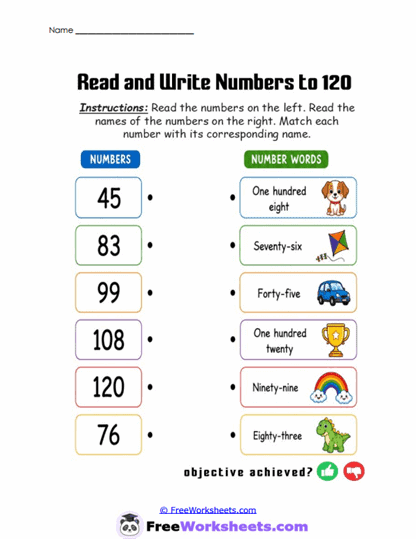
Students draw lines to connect numerals with their matching number words, creating a page full of successful connections by the time they’re finished. The matching format keeps the activity moving at a comfortable pace.
Target Skill:
Repeated matching helps students build lasting connections between written numbers and the words that represent them.
Word Reading
What Kids Do:
Students become number readers first and mathematicians second. They carefully read each number word before selecting the numeral that matches it, proving that strong reading skills play an important role in math, too.
Target Skill:
Connecting written language with mathematical symbols helps children develop confidence that carries into every future math lesson.