
Diphthongs oi, oy, ou, ow Worksheets
Build strong phonics skills with Grade 1 Language Arts diphthongs oi, oy, ou, ow worksheets in printable PDFs. Browse free, ready-to-print PDF format worksheets designed for immediate classroom use and easy at-home practice. These activities support decoding, phonemic awareness, and early reading fluency aligned to curriculum standards.
About This Collection of Worksheets
This collection focuses on helping first grade learners master diphthongs by blending sound recognition with reading and writing practice. Students work through a variety of engaging formats such as matching, sentence building, puzzles, and short reading passages. Each activity reinforces how vowel teams like oi, oy, ou, and ow create one smooth sound, building confidence in early decoding.
The worksheets are designed to move from simple to more complex tasks. Students begin by identifying and reading diphthong sounds, then apply those skills in sentences and short stories. This gradual progression helps learners connect phonics skills to real reading situations. Activities also integrate speaking, listening, and writing for a well-rounded literacy experience.
Teachers and parents will find these worksheets easy to use in small groups, centers, or independent practice. The clear layout and consistent structure allow students to focus on learning without distractions. Each worksheet supports repeated exposure to vowel patterns, which is key to building reading accuracy and fluency.
Paul’s Teacher Tip
When teaching diphthongs, always model the sound slowly so students can hear the glide between vowels. Have students repeat words aloud often, since hearing the sound is just as important as seeing it. Use hand motions or visual cues to show how the sound moves from one vowel to another. Encourage students to sort and compare similar patterns like oi and oy to build clarity. Revisit these sounds regularly in reading time so students see them in real context. Finally, celebrate small wins-confidence with vowel teams grows through repetition and encouragement.
Worksheet Collection Skill Spotlights
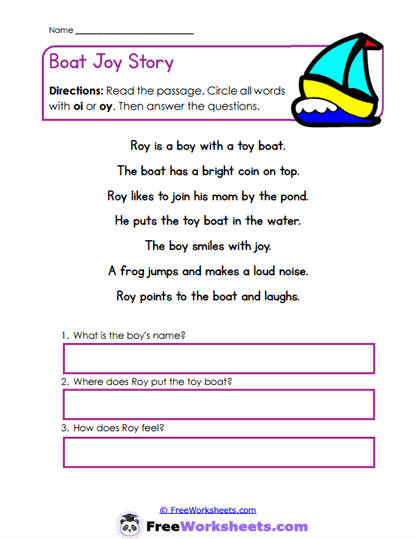
Boat Joy Story
- What Kids Do:
Students read a short, engaging story and actively search for words that include diphthongs like oi and oy. They circle these words as they read, then answer simple comprehension questions to show understanding. This combines sound recognition with meaning-making, helping students connect phonics to real reading. - Target Skill:
This activity builds decoding accuracy and reading comprehension by requiring students to identify vowel teams within connected text. It strengthens the ability to apply phonics knowledge during reading while supporting understanding of key details and basic story structure.
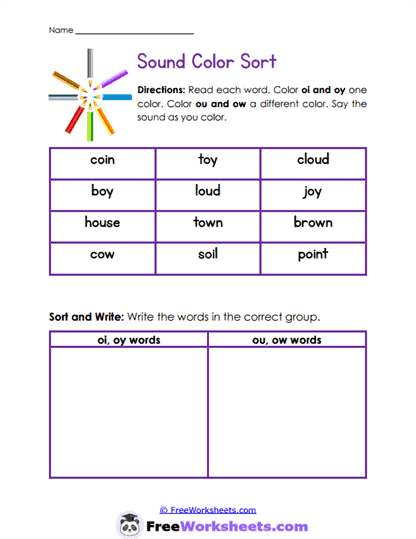
Cut and Sort Sounds
- What Kids Do:
Students cut out word cards and sort them into categories based on their diphthong sounds. They read each word carefully, decide which vowel pattern it contains, and place it in the correct column. This hands-on activity encourages movement, decision-making, and repeated reading. - Target Skill:
Learners develop strong word analysis skills by categorizing vowel patterns. This helps them clearly distinguish between similar sounds and builds confidence in recognizing patterns quickly during reading tasks.
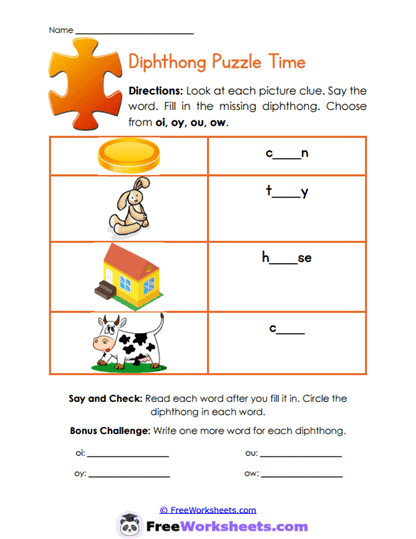
Diphthong Puzzle Time
- What Kids Do:
Students use picture clues to complete words by filling in the missing diphthong. They carefully think about both the image and the sound before choosing the correct vowel team. After completing each word, they read it aloud and identify the diphthong used. - Target Skill:
This worksheet strengthens phonics application and vocabulary development by combining visual clues with sound recognition. Students learn to apply known vowel patterns to decode unfamiliar words accurately and with greater independence.
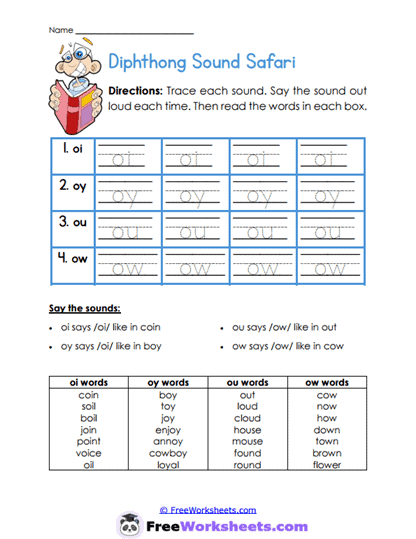
Diphthong Sound Safari
- What Kids Do:
Students trace diphthong patterns and practice reading words that contain oi, oy, ou, and ow. They repeat sounds aloud, focusing on blending the vowels smoothly. The structured format allows them to concentrate on one sound at a time. - Target Skill:
This activity builds foundational phonics skills by reinforcing sound-symbol relationships. It supports early decoding development and helps students recognize common vowel teams in simple words.
Diphthong Word Hunt
- What Kids Do:
Students search for hidden words in a puzzle grid and identify those that contain diphthongs. After finding each word, they write it down and highlight the vowel pattern. This combines visual scanning with phonics practice in an engaging format. - Target Skill:
Learners improve visual recognition and decoding speed by identifying vowel teams in different contexts. This strengthens pattern recognition and helps students become more efficient readers over time.
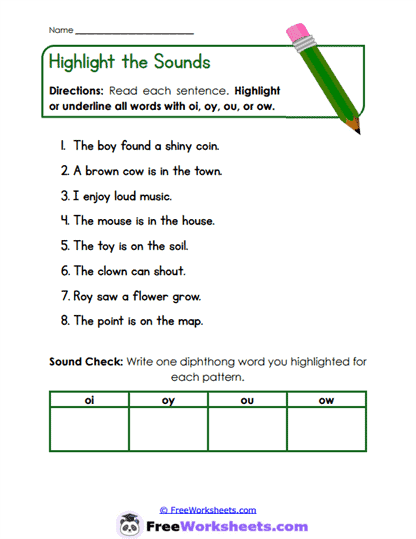
Highlight the Sounds
- What Kids Do:
Students read simple sentences and highlight words that contain diphthongs. They then sort or list the words based on their vowel patterns. This helps them focus on sound patterns within meaningful text instead of isolated words. - Target Skill:
This worksheet develops fluency and phonics integration by encouraging students to apply decoding skills in sentences. It supports accurate reading while reinforcing recognition of vowel combinations in context.
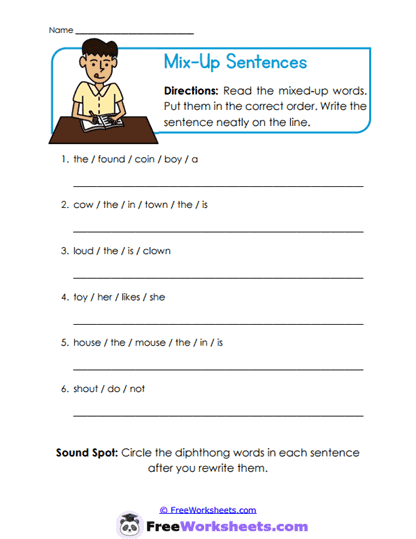
Mix-Up Sentences
- What Kids Do:
Students rearrange scrambled words to form complete sentences, then rewrite them correctly. After building each sentence, they identify and circle words with diphthongs. This blends grammar practice with phonics awareness. - Target Skill:
This activity supports sentence structure and decoding skills. Students strengthen their understanding of word order while applying phonics knowledge to identify vowel patterns within meaningful text.
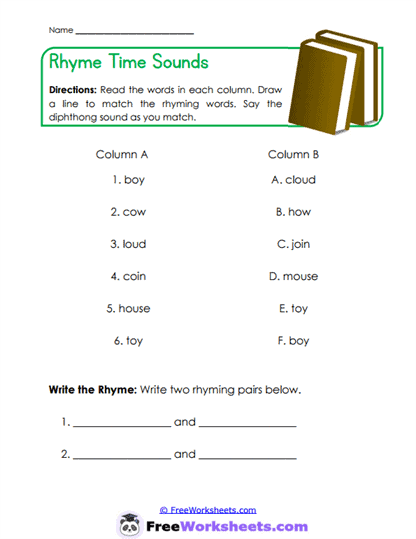
Rhyme Time Sounds
- What Kids Do:
Students match rhyming words that share the same diphthong sound by drawing lines between pairs. They say each pair aloud and then create their own rhyming examples. This builds listening and speaking skills alongside reading. - Target Skill:
This worksheet enhances phonological awareness and sound recognition. Students learn to identify and produce rhyming words while recognizing how vowel teams influence pronunciation patterns.
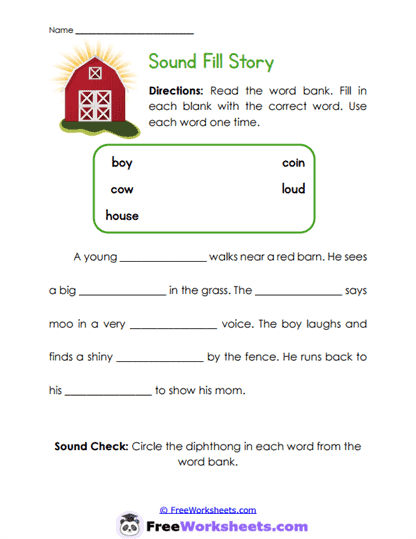
Sound Fill Story
- What Kids Do:
Students complete a short story by choosing the correct words from a word bank. They focus on selecting words that fit both the meaning and the diphthong sound. Afterward, they reread the story and identify the vowel patterns used. - Target Skill:
This activity strengthens comprehension and decoding by requiring students to apply phonics knowledge in context. It helps students connect sound patterns to fluent reading and accurate word choice.
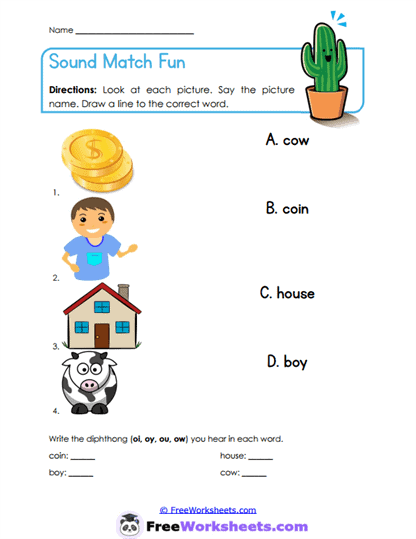
Sound Match Fun
- What Kids Do:
Students look at pictures and match each one to the correct word that contains a diphthong. They then write the vowel team used in each word. This combines visual recognition, reading, and writing practice. - Target Skill:
This worksheet builds connections between spoken sounds and printed words. Students improve decoding skills while strengthening vocabulary and phonemic awareness through multi-step practice.
Spin and Write
- What Kids Do:
Students spin a wheel to select a diphthong and then write a word that matches the pattern. They repeat this several times, reading each word aloud after writing. This adds a playful element to phonics practice. - Target Skill:
This activity supports encoding and decoding skills by encouraging independent word generation. It helps students apply vowel patterns in writing while reinforcing sound recognition and spelling accuracy.
Write the Sound
- What Kids Do:
Students look at pictures and fill in the missing diphthong to complete each word. They say the word aloud, listen for the vowel sound, and write the correct pattern. This reinforces both spelling and pronunciation. - Target Skill:
This worksheet builds strong sound-to-symbol connections, supporting early spelling and phonics development. Students practice identifying vowel teams and applying them in writing with increased confidence.