
One-step Word Problems Worksheets
One-step word problems are often where young learners discover that math isn't just about numbers on a page-it's about solving everyday situations. These free Grade 1 One-Step Word Problems worksheets help children practice simple addition and subtraction by using familiar objects, short stories, and colorful illustrations that make every problem feel approachable. Whether they're adding apples, subtracting balloons, or figuring out how many toys are left, students learn to connect reading, thinking, and math in meaningful ways.
About This Collection of Worksheets
Many first graders know how to add or subtract when they see an equation. Word problems ask them to take one more step by deciding which operation to use before they begin solving. That’s an important skill because it teaches children to think through a situation instead of automatically reaching for a calculation. As students work through these activities, they learn to pay attention to clues in the story and picture what is happening before finding the answer.
This collection offers plenty of variety to keep practice interesting. Some worksheets have students draw missing apples into baskets before finding the total. Others ask them to cross out balloons or cookies that disappear, while several pages have students match completed story problems to the correct answer. Each activity approaches the same skill from a different angle, helping children build confidence without feeling like they’re completing the same worksheet again and again.
These printable worksheets are perfect for classroom lessons, math centers, independent practice, homework, intervention groups, or homeschool learning. More importantly, they encourage children to slow down, understand the story first, and trust their own thinking. That’s a habit that will serve them well long after first grade.
Paul’s Teacher Tip
One of the best questions you can ask before your child starts solving is, “What’s happening in the story?” If they answer, “She’s getting more apples,” they already know they’re probably adding. If they say, “Some balloons floated away,” subtraction usually makes sense. Helping children tell the story in their own words often leads them to the correct operation without any extra hints. As they become more confident, they’ll spend less time guessing and more time reasoning through each problem.
Worksheet Collection Skill Spotlights
Answer Lines
What Kids Do:
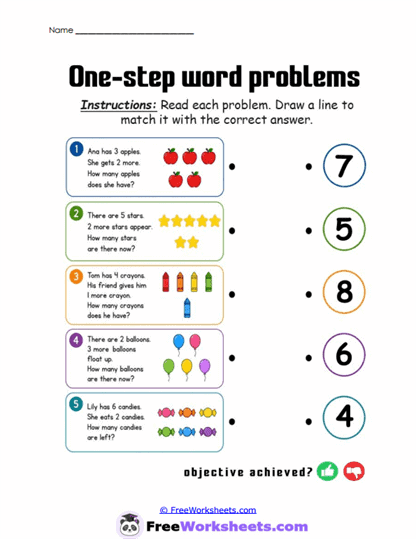
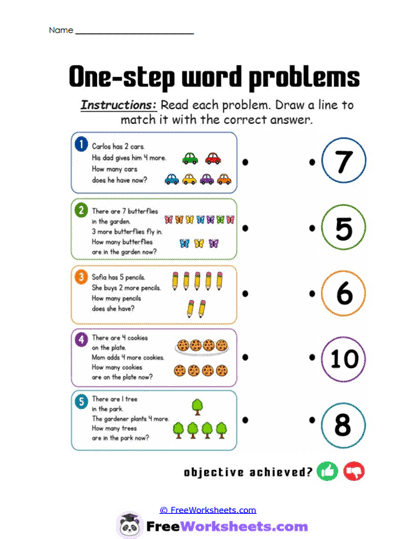
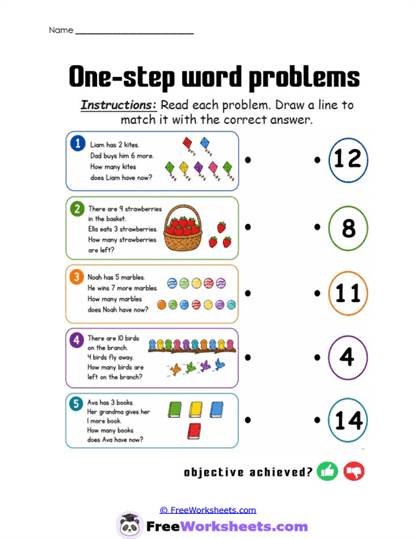
Every short story has an answer waiting somewhere else on the page. Students read each problem, solve it, and then draw a line to the matching number. It feels a little like connecting puzzle pieces, except every match depends on solving the math correctly first.
Target Skill:
Children practice choosing the correct operation before solving, an important step that helps them become thoughtful problem solvers instead of simply looking for numbers to combine.
Answer Paths
What Kids Do:
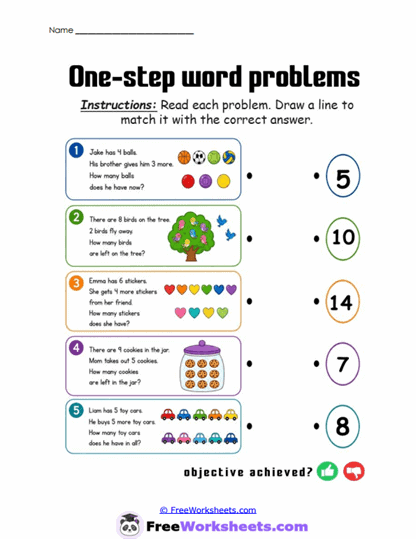
Each story leads students down its own little math path. After figuring out the answer, they connect it to the correct number, creating a page full of completed journeys from problem to solution.
Target Skill:
Matching answers encourages students to double-check their thinking before committing to a choice, building both confidence and accuracy.
Apple Stories
What Kids Do:
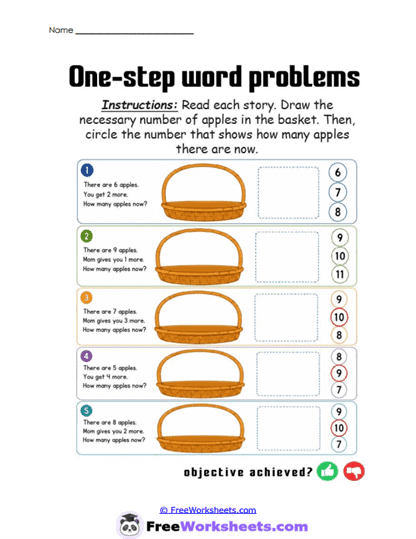
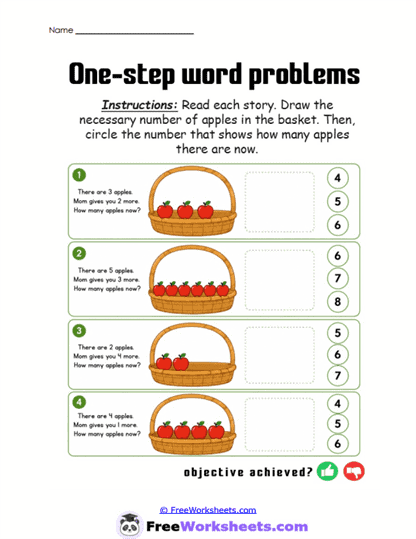
Students read simple stories about apples, draw the missing fruit into each basket, and then count everything to find the total. The drawing step helps bring each story to life before any math is done.
Target Skill:
Creating a picture of the story helps children understand that addition is about putting groups together, not just writing an equation.
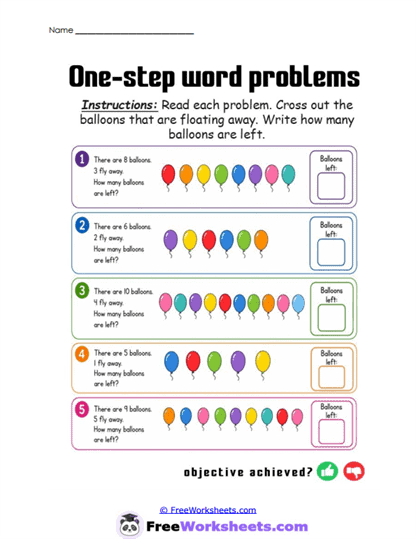
Balloon Counting
What Kids Do:
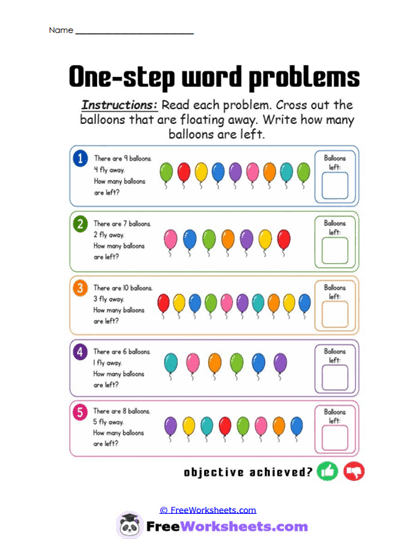
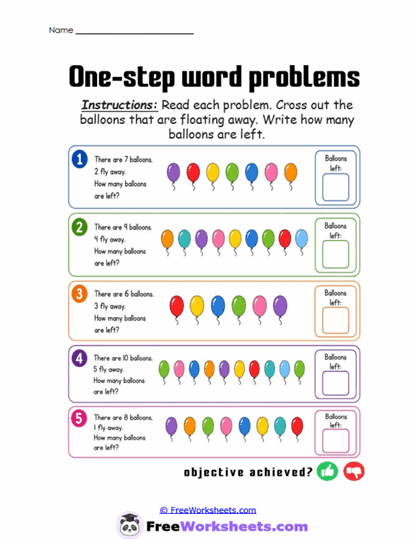
Some balloons float away, and students show exactly what happened by crossing them out before counting the balloons that remain. Watching the group shrink makes subtraction much easier to understand.
Target Skill:
Children begin seeing subtraction as “taking away” instead of simply memorizing subtraction facts.
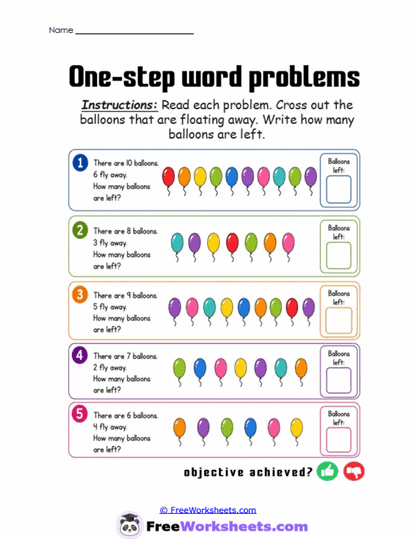
Balloon Leftovers
What Kids Do:
Each balloon story asks students to imagine what happens after a few balloons drift into the sky. Once they’ve crossed out the balloons that leave, the answer is waiting right in front of them.
Target Skill:
This activity strengthens subtraction by helping students connect the written story with a visual model they can count.
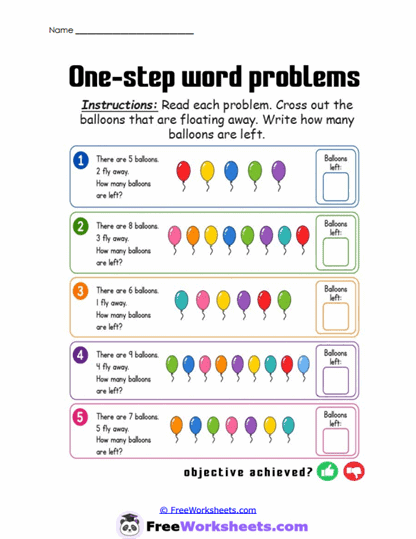
Balloon Subtraction
What Kids Do:
Instead of solving everything in their heads, students physically cross out balloons as they disappear from each story. It’s a simple step, but it helps make subtraction feel concrete and easy to follow.
Target Skill:
Visual subtraction models give beginning learners a stronger understanding of what it actually means to remove part of a group.
Basket Math
What Kids Do:
Every basket starts with a few apples already inside. Students finish each picture by drawing the apples mentioned in the story before counting the full basket to find the answer.
Target Skill:
Drawing before solving encourages children to think through the situation instead of rushing straight to the numbers.
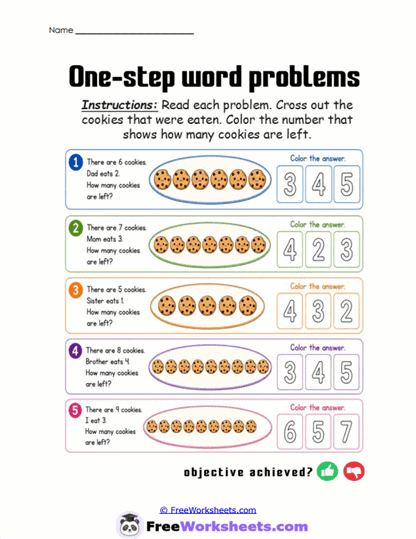
Cookie Counts
What Kids Do:
Who doesn’t notice when cookies disappear? Students cross out the cookies that get eaten, then count the treats left on the plate to solve each story problem. The familiar setting makes subtraction easy to picture.
Target Skill:
Children strengthen subtraction by acting out each problem on paper, helping abstract numbers become something they can actually see.
Math Matches
What Kids Do:
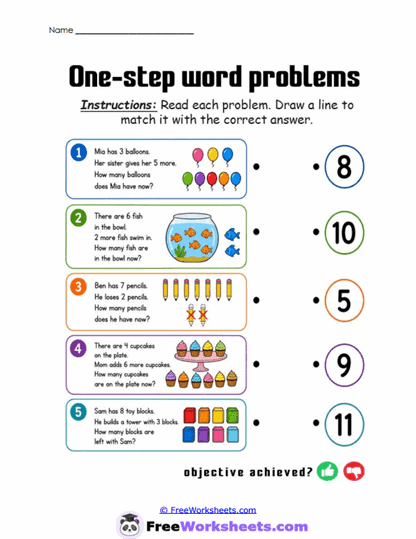
Some stories grow, while others get smaller. Students decide whether each situation calls for addition or subtraction before matching it to the correct answer. Every problem asks them to think first and calculate second.
Target Skill:
This worksheet develops the important habit of identifying the operation before trying to solve the problem.
Mixed Stories
What Kids Do:
No two pages feel quite the same because some stories involve getting more while others involve taking away. Students read carefully, decide what’s happening, and connect each story to its correct answer.
Target Skill:
Switching between addition and subtraction helps children become flexible thinkers who pay attention to the meaning of the story rather than looking for shortcuts.
Number Stories
What Kids Do:
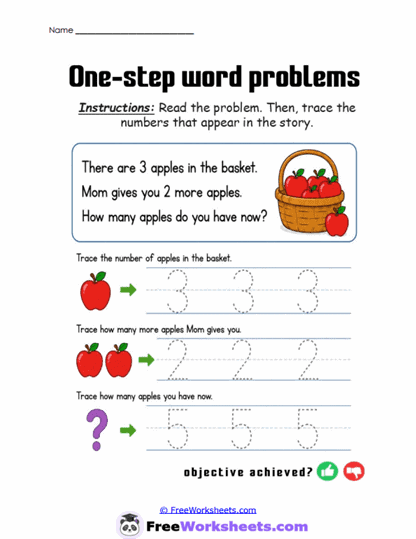
This worksheet combines handwriting with problem solving. Students trace the important numbers in the story before finding the answer, giving them extra practice recognizing and writing numerals while solving the problem.
Target Skill:
Blending writing and math strengthens number recognition while reinforcing the connection between the story and its solution.
Picture Match
What Kids Do:
Pictures provide helpful clues, but students still need to read the story carefully before deciding on the answer. Once they solve it, they connect the problem to the correct number with a line.
Target Skill:
Learners practice using both words and pictures together, an important reading and math strategy that carries across many subjects.
Story Solutions
What Kids Do:
Everyday situations involving books, birds, marbles, kites, and other familiar objects challenge students to decide what kind of math each story needs. Solving each one feels a little like helping the characters finish their day.
Target Skill:
Students become more comfortable recognizing whether a situation is growing or shrinking before choosing an operation.
Subtract Balloons
What Kids Do:
More balloon adventures give students another chance to practice subtraction by crossing out the balloons that float away. By the end of the page, many children naturally begin checking their work without being reminded.
Target Skill:
Repeated visual practice helps subtraction become more intuitive while encouraging careful counting habits.
Toy Totals
What Kids Do:
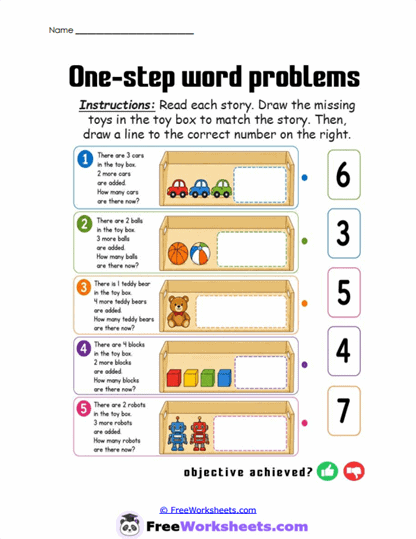
Using familiar toys, students finish each picture by drawing the missing objects before finding the total and matching it to the correct answer. It feels more like playing than completing a traditional math worksheet.
Target Skill:
Representing word problems with drawings helps children build lasting mental models for addition that they’ll continue using as math becomes more challenging.