
Shades of Meaning Worksheets
This collection of worksheets will help young learners compare related words and understand differences in meaning strength. These free, ready-to-print worksheets come in PDF format for immediate classroom use during vocabulary lessons, literacy centers, or intervention practice. Students strengthen curriculum aligned skills in vocabulary development, descriptive language, reading comprehension, word relationships, and critical thinking.
About This Collection of Worksheets
This collection of shades of meaning worksheets gives first grade students engaging practice with comparing related vocabulary words by intensity and strength. Learners explore how words with similar meanings can describe feelings, actions, weather, size, and emotions in different ways. Through sorting, sequencing, coloring, ranking, and matching activities, students develop a deeper understanding of descriptive language and stronger vocabulary choices.
The worksheets provide a wide variety of hands-on and visual vocabulary activities designed specifically for young learners. Students organize words from weakest to strongest, complete vocabulary ladders, compare emotional language, and sequence action verbs by speed or intensity. These activities help children think critically about word meaning while strengthening reading comprehension and expressive language skills.
Teachers and parents can easily use these printable worksheets for small-group instruction, literacy stations, intervention review, independent practice, or homeschool learning. The familiar vocabulary and structured layouts support confidence while encouraging deeper language discussions. Repeated exposure to shades of meaning helps students become more thoughtful readers, stronger writers, and more precise communicators during everyday literacy instruction.
Paul’s Teacher Tip
When teaching shades of meaning, encourage students to explain their thinking aloud instead of simply choosing an answer quickly. Young learners build stronger vocabulary understanding when they discuss why one word sounds stronger, weaker, louder, faster, or more emotional than another. Acting out action words, using facial expressions for feeling words, or connecting vocabulary to real-life examples can make subtle differences easier to understand. During read-alouds, pause occasionally to compare descriptive words and ask students which word feels more powerful or intense. Visual supports such as ladders, towers, meters, and arrows can also help children recognize progression from weak meanings to strong meanings more clearly. Short daily vocabulary conversations often improve both reading comprehension and expressive language confidence.
Worksheet Collection Skill Spotlights
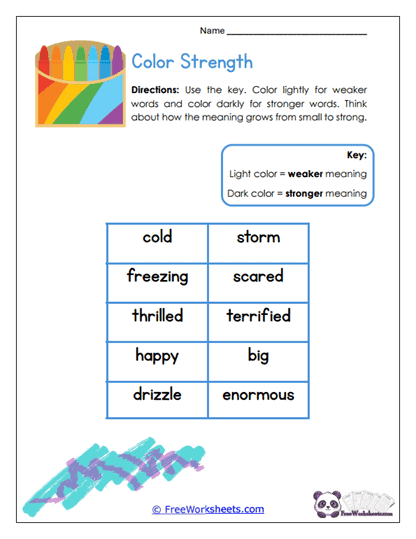
Color Strength
- What Kids Do:
Students read descriptive vocabulary words and use light or dark coloring to show weaker and stronger meanings. Learners compare words related to weather, feelings, and size while connecting meaning intensity to visual shading and practicing thoughtful vocabulary analysis skills. - Target Skill:
This worksheet strengthens shades of meaning and descriptive-language understanding by helping students compare vocabulary based on intensity. Learners improve word-analysis skills, reading comprehension, and vocabulary development while practicing meaningful language comparisons aligned with Common Core standards.
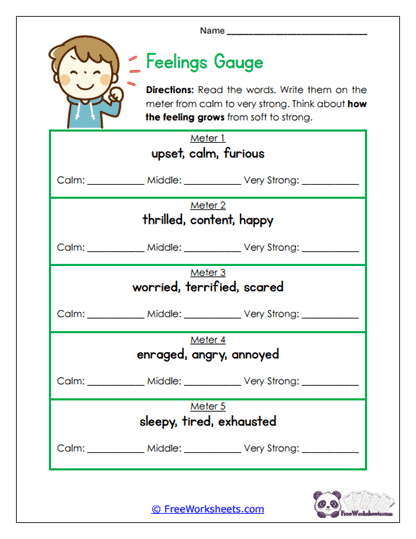
Feelings Gauge
- What Kids Do:
Students organize feeling words onto emotion meters from calmest to strongest feelings. Learners compare emotional vocabulary such as worried, upset, and furious while thinking carefully about intensity, emotional awareness, and descriptive language during vocabulary instruction. - Target Skill:
This activity supports emotional-language development and shades of meaning by helping students compare and sequence feeling words accurately. Learners strengthen vocabulary comprehension, social-emotional awareness, and critical-thinking skills while building stronger descriptive-language understanding.
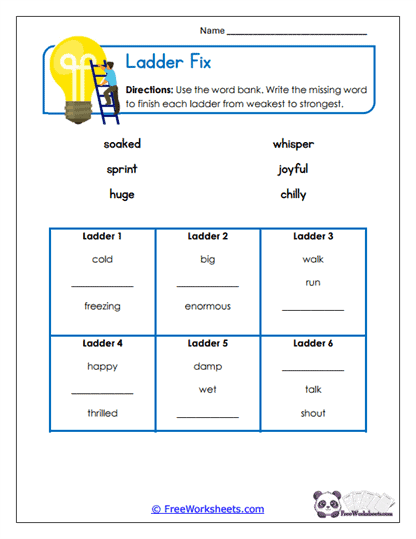
Ladder Fix
- What Kids Do:
Students complete vocabulary ladders by choosing missing words from a word bank to fit between weaker and stronger meanings. Learners compare related words about size, weather, feelings, and movement while practicing sequencing and logical word analysis. - Target Skill:
This worksheet develops vocabulary sequencing and shades-of-meaning skills by helping students recognize gradual changes in meaning intensity. Learners improve descriptive-language understanding, reading comprehension, and reasoning abilities while practicing Common Core aligned vocabulary development.
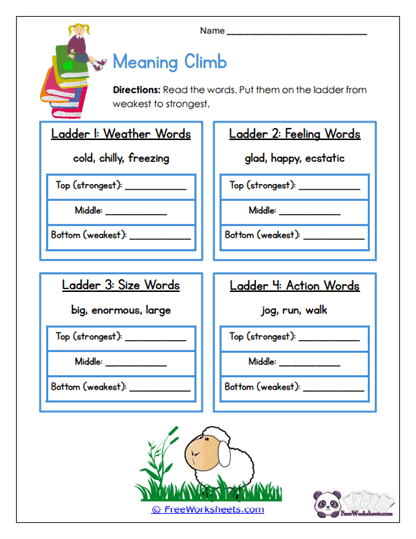
Meaning Climb
- What Kids Do:
Students place related words onto ladders from weakest meaning at the bottom to strongest meaning at the top. Learners compare vocabulary groups connected to feelings, weather, and actions while practicing sequencing, discussion, and critical-thinking skills during literacy instruction. - Target Skill:
This activity strengthens vocabulary relationships and shades-of-meaning understanding by teaching students how descriptive words vary in strength. Learners improve comprehension, word-analysis abilities, and expressive-language skills while practicing meaningful vocabulary comparisons.
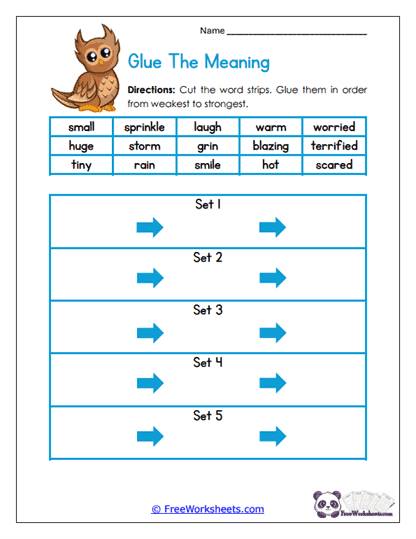
Meaning Glue
- What Kids Do:
Students cut apart vocabulary strips and glue related words into the correct order from weakest meaning to strongest meaning. Learners sort weather, action, and feeling words while engaging in hands-on sequencing and vocabulary comparison activities. - Target Skill:
This worksheet supports descriptive-language development and shades-of-meaning instruction through interactive vocabulary sorting practice. Learners strengthen comprehension, reasoning skills, and word-sequencing abilities while developing stronger understanding of vocabulary intensity relationships.
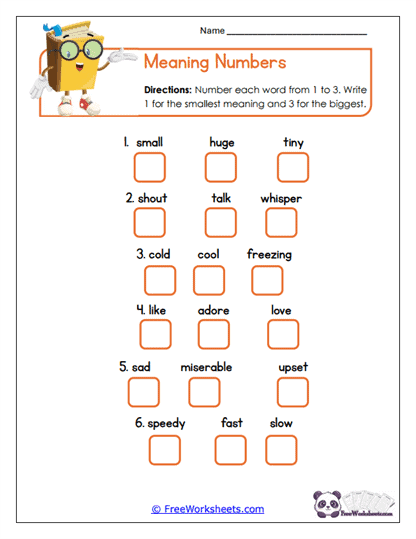
Meaning Numbers
- What Kids Do:
Students assign the numbers 1 through 3 to related words based on meaning intensity. Learners compare descriptive vocabulary such as cool, cold, and freezing while deciding which word has the weakest, middle, or strongest meaning in each set. - Target Skill:
This activity develops vocabulary-analysis and sequencing skills by helping students compare words according to strength and intensity. Learners strengthen descriptive-language understanding, critical-thinking abilities, and reading comprehension while practicing meaningful vocabulary organization tasks.
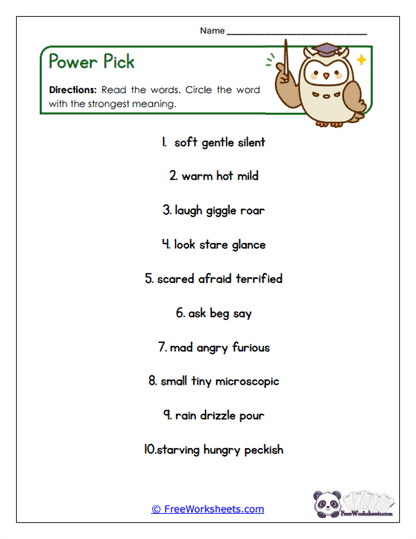
Power Pick
- What Kids Do:
Students read groups of related vocabulary words and circle the word with the strongest meaning. Learners compare feeling, weather, sound, and movement words while practicing close reading, reasoning, and descriptive-language analysis during literacy instruction. - Target Skill:
This worksheet strengthens shades-of-meaning and vocabulary-comparison skills by teaching students to recognize the most powerful descriptive words. Learners improve reading comprehension, expressive-language understanding, and critical-thinking abilities through repeated word-analysis practice.
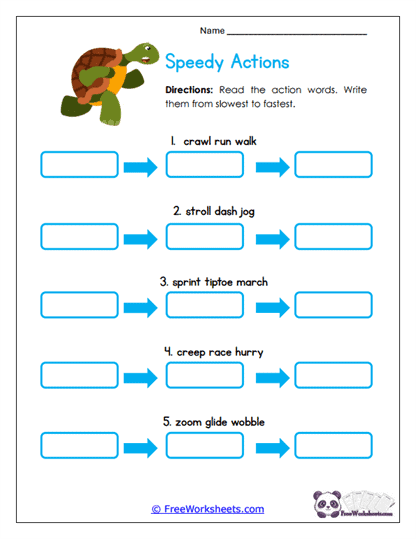
Speedy Actions
- What Kids Do:
Students organize movement words such as crawl, walk, and run from slowest action to fastest action. Learners compare action verbs carefully while practicing sequencing, vocabulary development, and understanding how movement words change in intensity and speed. - Target Skill:
This activity supports action-verb understanding and shades-of-meaning development by helping students compare words according to movement intensity. Learners strengthen sequencing skills, vocabulary comprehension, and descriptive-language awareness aligned with foundational literacy standards.
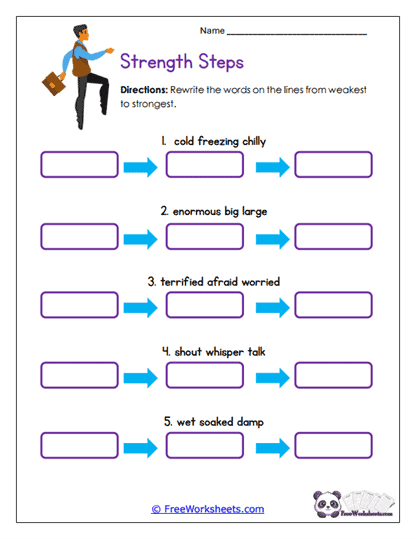
Strength Steps
- What Kids Do:
Students rewrite groups of related words in order from weakest meaning to strongest meaning. Learners compare vocabulary connected to sound, feelings, weather, and size while practicing sequencing, word analysis, and thoughtful descriptive-language comparison skills. - Target Skill:
This worksheet develops vocabulary-sequencing and shades-of-meaning understanding by helping students identify gradual changes in word intensity. Learners improve reasoning, reading comprehension, and expressive-language abilities while practicing Common Core aligned vocabulary instruction.
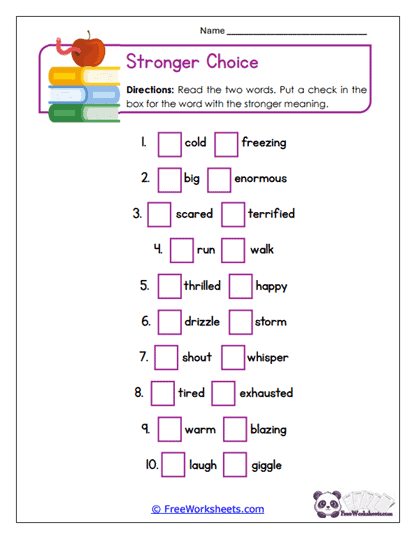
Stronger Choice
- What Kids Do:
Students compare pairs of related words and place a check mark beside the word with the stronger meaning. Learners study descriptive vocabulary such as tired and exhausted while practicing close comparison, reasoning, and vocabulary-analysis skills independently. - Target Skill:
This activity strengthens descriptive-language understanding and vocabulary comparison skills by teaching students to recognize stronger meanings accurately. Learners improve reading comprehension, shades-of-meaning awareness, and word-analysis confidence during foundational literacy instruction.
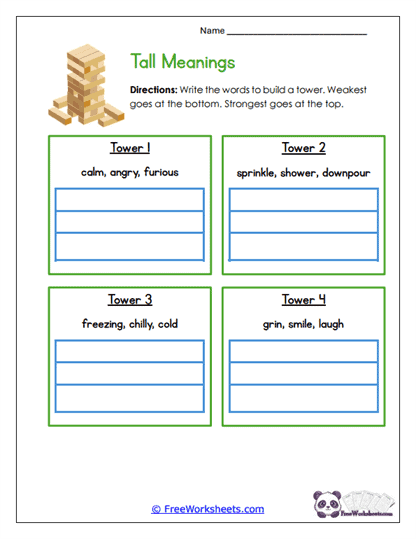
Tall Meanings
- What Kids Do:
Students build vocabulary towers by arranging related words from weakest meaning at the bottom to strongest meaning at the top. Learners compare emotions, temperature words, and action vocabulary while practicing sequencing and descriptive-language reasoning skills. - Target Skill:
This worksheet supports vocabulary development and shades-of-meaning instruction by helping students organize words according to intensity. Learners strengthen comprehension, sequencing abilities, and expressive-language understanding while practicing meaningful vocabulary comparison activities.
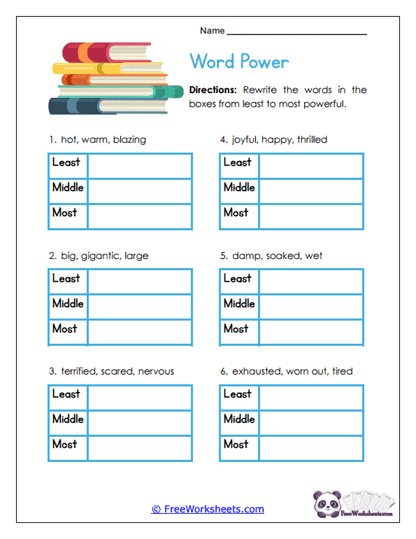
Word Power
- What Kids Do:
Students rank groups of related words from least powerful to most powerful using organized charts labeled Least, Middle, and Most. Learners compare weather, feeling, and size vocabulary while practicing sequencing and thoughtful word-analysis skills during literacy instruction. - Target Skill:
This activity develops vocabulary relationships and shades-of-meaning understanding by teaching students how similar words differ in intensity. Learners strengthen descriptive-language awareness, reading comprehension, and reasoning abilities while practicing Common Core aligned vocabulary skills.