
Vowel Teams Worksheets
These worksheets help young readers recognize long vowel spelling patterns while building stronger decoding skills. These free, ready-to-print worksheets come in PDF format for immediate classroom use during phonics lessons, literacy centers, homework, or intervention practice. Students strengthen decoding, spelling, fluency, reading comprehension, sentence writing, and phonics pattern recognition aligned to important early literacy standards.
About This Collection of Worksheets
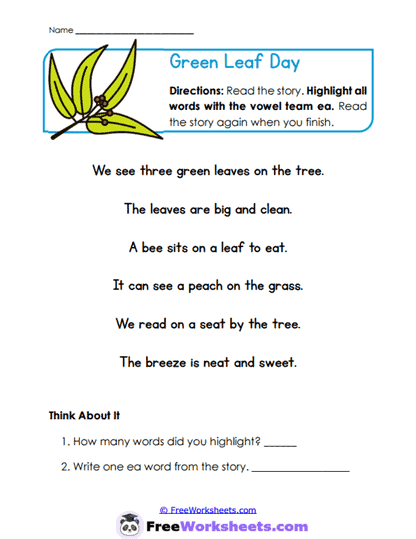
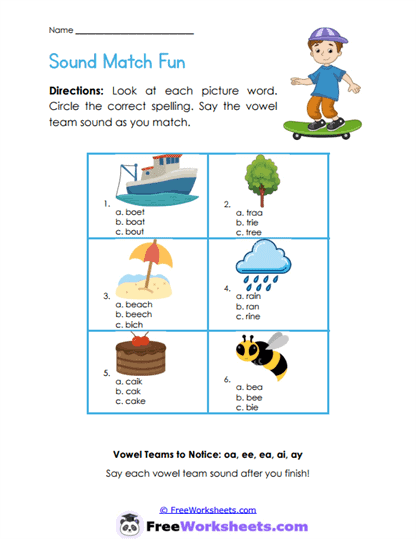
This collection of vowel teams worksheets gives first grade students repeated practice reading, spelling, sorting, matching, and writing words with common vowel team patterns. Learners work with familiar long vowel combinations such as ai, ay, ee, ea, oa, and ow through engaging activities that support both foundational phonics instruction and meaningful reading practice. The worksheets encourage children to notice spelling patterns inside words while improving reading confidence and fluency.
The activities in this collection move beyond isolated word drills by helping students apply vowel team knowledge in stories, sentences, comprehension passages, editing tasks, and writing exercises. Students practice hearing vowel sounds, identifying patterns visually, decoding words in context, and using vowel team words during independent writing. These connected literacy experiences help strengthen reading accuracy while supporting vocabulary growth and comprehension development.
Teachers and parents can use these printable worksheets in small-group instruction, literacy centers, intervention settings, independent practice, or at-home review. The simple layouts and predictable directions make the activities accessible for young learners while still providing strong phonics reinforcement. Because students repeatedly interact with common vowel teams in multiple formats, they build stronger long vowel recognition, spelling confidence, and reading fluency over time.
Paul’s Teacher Tip
When teaching vowel teams, encourage students to say the word aloud slowly while visually tracking the vowel pattern with their finger or pencil. Young readers often recognize the sound before they fully remember the spelling, so repeated visual exposure is important for retention. Highlighting or underlining vowel teams during reading activities can help students focus on the spelling pattern instead of guessing words from pictures or context clues alone. It is also helpful to group words by shared vowel teams so children can compare spelling similarities and differences side by side. During small-group instruction, ask students to explain why words belong together because verbalizing phonics patterns strengthens understanding. Short daily review sessions with vowel team words are often more effective than one long lesson because repeated exposure builds stronger decoding habits.
Worksheet Collection Skill Spotlights
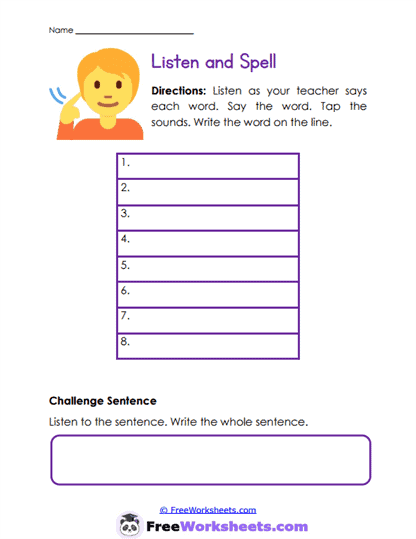
Listen and Spell
- What Kids Do:
Students listen carefully to vowel team words read aloud and write each word independently on numbered lines. Learners tap sounds, stretch words slowly, and practice spelling long vowel patterns while also completing a challenge sentence with correct spacing, capitalization, and punctuation. - Target Skill:
This activity strengthens phonics awareness, spelling accuracy, listening comprehension, and sound-symbol correspondence through repeated practice with common vowel team spellings. Students apply early literacy skills connected to decoding, phonemic awareness, and standard language conventions while improving independent writing confidence.
Long Sound Match
- What Kids Do:
Students read groups of words and connect matching pairs that share the same vowel team sound and spelling pattern. Learners compare words visually and orally while identifying common long vowel combinations such as ai, ee, oa, and ow through repeated matching practice. - Target Skill:
This worksheet develops phonics fluency, visual discrimination, decoding accuracy, and long vowel recognition by helping students compare spelling structures within related word pairs. Learners strengthen foundational reading skills tied to vowel pattern recognition and early word analysis standards.
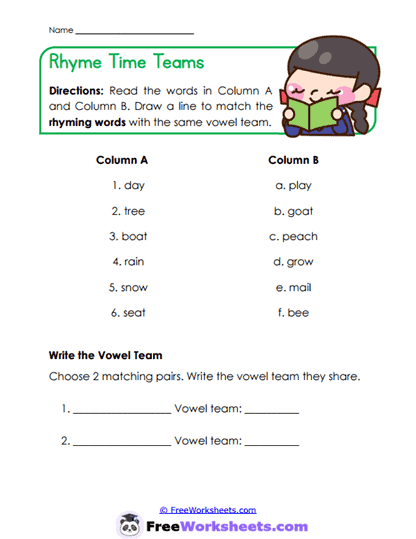
Rhyme Time Teams
- What Kids Do:
Students examine two columns of words and draw lines to connect rhyming pairs that share the same vowel team spelling pattern. Learners read each word carefully, compare vowel sounds, and identify the matching vowel team used in both words. - Target Skill:
The activity builds phonological awareness, rhyme recognition, phonics fluency, and spelling pattern understanding through repeated comparison of vowel team words. Students strengthen sound-symbol relationships and develop greater awareness of how vowel patterns support accurate decoding and reading fluency.
Team Sentence Fix
- What Kids Do:
Students read sentences that contain mistakes involving capitalization, punctuation, and vowel team spelling patterns. Learners rewrite each sentence correctly while carefully checking sentence structure, spelling accuracy, and grammar conventions during the editing process. - Target Skill:
This worksheet supports language conventions, proofreading skills, spelling development, and phonics application by combining sentence editing with long vowel review. Students strengthen early writing habits connected to capitalization, punctuation, sentence fluency, and correct vowel team usage.
Team Word Stories
- What Kids Do:
Students complete short story sentences by choosing vowel team words that fit the meaning of the text. Learners reread completed sentences aloud to confirm comprehension while practicing decoding, vocabulary development, and sentence fluency within connected reading passages. - Target Skill:
The activity strengthens contextual reading skills, decoding fluency, vocabulary application, and phonics recognition through meaningful sentence-level practice. Students apply comprehension strategies and vowel team knowledge together while developing stronger reading accuracy and word-selection skills.
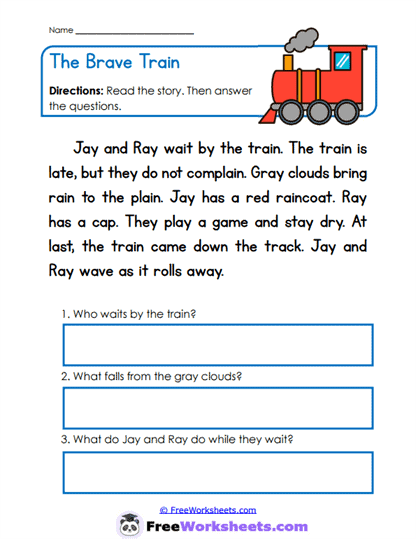
The Brave Train
- What Kids Do:
Students read a short story filled with vowel team words and answer comprehension questions using details from the passage. Learners practice rereading, locating information, and identifying important events while improving fluency and confidence with connected text reading. - Target Skill:
This worksheet develops reading comprehension, decoding fluency, phonics recognition, and evidence-based questioning skills through repeated interaction with vowel team patterns. Students strengthen foundational literacy abilities connected to close reading, word recognition, and comprehension monitoring.
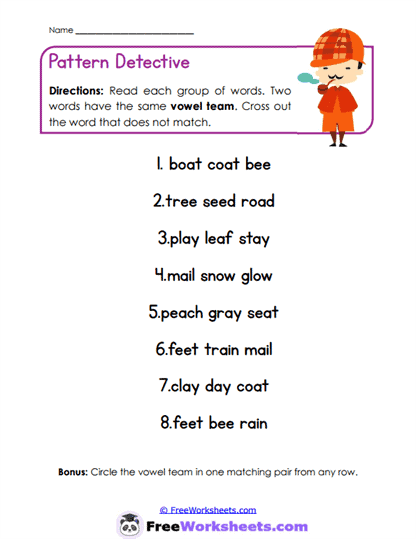
Vowel Team Detectives
- What Kids Do:
Students act as detectives by reading groups of words and identifying the word that does not belong with the shared vowel team pattern. Learners compare spelling structures carefully while scanning words visually and saying them aloud to check vowel sounds. - Target Skill:
This activity strengthens phonics analysis, pattern recognition, decoding accuracy, and spelling awareness through repeated comparison of vowel team structures. Students build flexible word-analysis habits while improving attention to spelling details and long vowel sound identification.
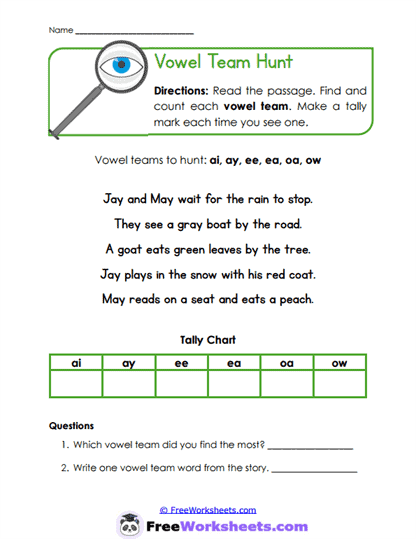
Vowel Team Hunt
- What Kids Do:
Students read a short passage and search for vowel team words hidden throughout the text. Learners tally each vowel team pattern they find, answer follow-up questions, and reread the passage carefully while practicing visual scanning and close reading skills. - Target Skill:
The worksheet supports phonics fluency, decoding accuracy, spelling pattern recognition, and reading comprehension through connected text analysis. Students strengthen word recognition and repeated reading habits while building familiarity with common vowel team spellings used in authentic reading contexts.
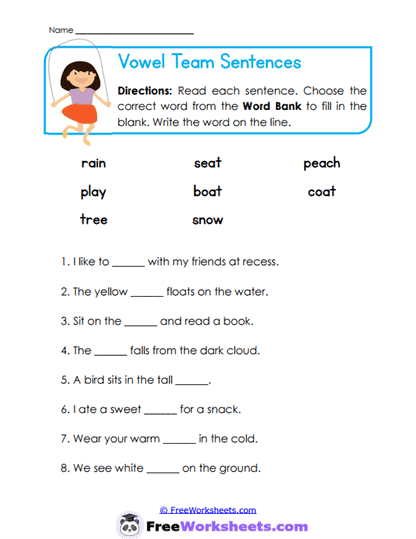
Vowel Team Sentences
- What Kids Do:
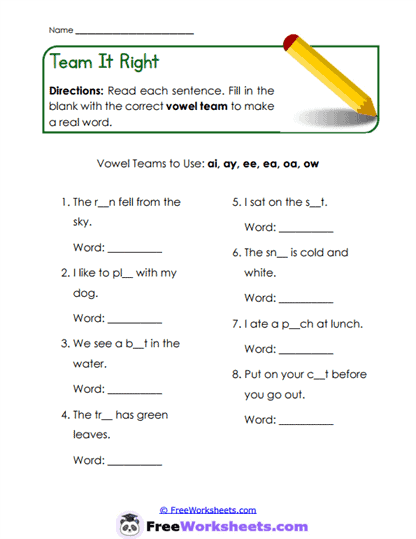
Students complete sentences by choosing the correct vowel team word from a word bank. Learners read each sentence carefully, consider meaning clues, and write the word that best completes the sentence before rereading for accuracy and fluency. - Target Skill:
This activity strengthens sentence comprehension, vocabulary development, decoding fluency, and phonics application through meaningful context-based reading practice. Students build confidence with long vowel patterns while improving reading accuracy and word-selection strategies.
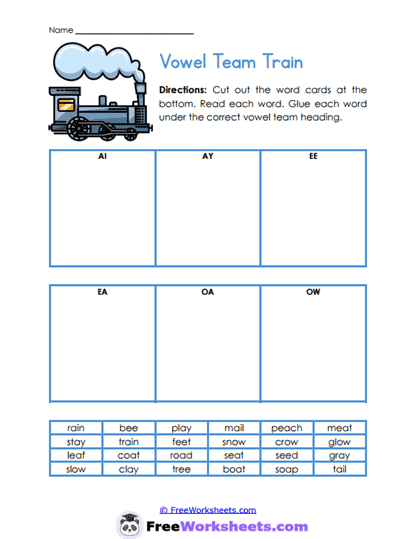
Vowel Team Sort
- What Kids Do:
Students read lists of words containing different vowel teams and organize them into matching categories. Learners compare spelling patterns, sort words into groups, and say the words aloud while practicing careful phonics analysis and word classification. - Target Skill:
The worksheet builds phonics fluency, spelling awareness, visual word recognition, and pattern classification skills through repeated sorting practice. Students strengthen their understanding of common vowel team structures while developing stronger decoding and spelling habits.
Vowel Team Writing
- What Kids Do:
Students choose vowel team words and use them to write original complete sentences with correct capitalization and punctuation. Learners reread their writing aloud while checking spelling, sentence meaning, and overall fluency during independent writing practice. - Target Skill:
This activity supports sentence construction, spelling development, phonics application, and grammar conventions by combining writing instruction with vowel team review. Students strengthen early composition skills while practicing accurate use of long vowel spelling patterns.
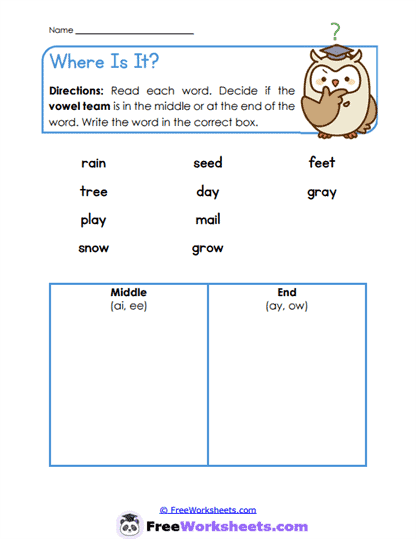
Where Is It?
- What Kids Do:
Students sort vowel team words based on where the vowel team appears within each word. Learners decide whether the vowel pattern belongs in the middle or at the end while carefully examining spelling placement and reading each word aloud. - Target Skill:
This worksheet develops phonics analysis, spelling awareness, visual scanning, and word structure understanding through categorization practice. Students improve their ability to recognize vowel team placement patterns while strengthening decoding flexibility and reading fluency.