
Even and Odd Numbers Worksheets
Grade 1 Math Even and Odd Numbers worksheets introduce young learners to one of the first number patterns they'll discover as they grow in confidence with math. These free, ready-to-print worksheets are available in PDF format for immediate classroom use, homework, math centers, or homeschool lessons. Through coloring, matching, sorting, and simple problem-solving, children build number sense, pattern recognition, and logical thinking that prepares them for future math success.
About This Collection of Worksheets
One of the most exciting moments for first graders is realizing that numbers follow patterns. Even and odd numbers are often one of the first patterns children notice, and once they understand the idea, they begin spotting it everywhere-from calendar dates and jersey numbers to the number of crayons in a box. This collection helps students make those discoveries through engaging activities that feel more like games than worksheets.
Rather than practicing the same skill in the same way over and over, these pages mix things up. Children might color balloons, sort numbers into houses, search through apple trees, or choose the correct answer from a group of numbers. As the collection progresses, the numbers gradually become larger, helping students see that the rules for even and odd numbers never change. Whether they’re working with 8 or 88, the same simple thinking applies.
These printable worksheets fit naturally into almost any Grade 1 math lesson. They’re useful for introducing the concept, reinforcing classroom instruction, providing extra practice in small groups, or giving parents an easy way to support learning at home. Most importantly, they help children move beyond memorizing which numbers are even or odd and begin recognizing the patterns for themselves.
Paul’s Teacher Tip
Before handing out these worksheets, grab a handful of counters, linking cubes, or even crayons and let students build groups of two. When every object finds a partner, the number is even. If one object is left standing by itself, it’s odd. Once children physically experience the idea a few times, they’ll begin recognizing the pattern much faster on paper. As students become more confident, encourage them to explain how they knew a number was even or odd instead of simply giving the answer. Those conversations often reveal a much deeper understanding than the worksheet alone.
Worksheet Collection Skill Spotlights
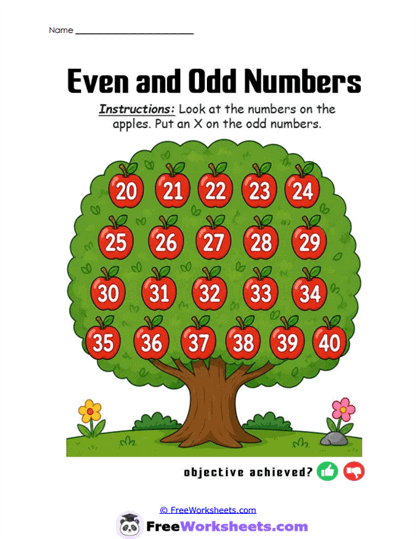
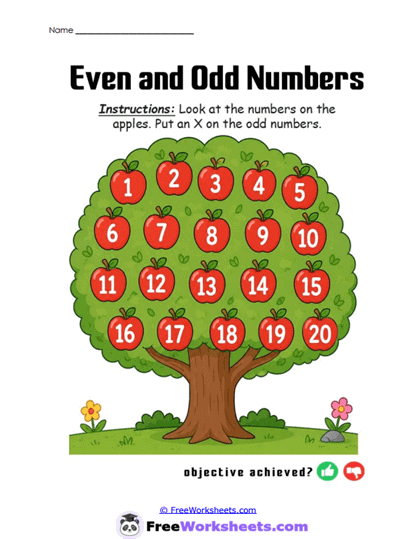
Apple Marks
What Kids Do:
Children become number detectives as they search through a tree full of apples looking for odd numbers. Every apple asks them to stop, think, and decide whether it belongs in the “pick me” group before marking it with an X. The tree fills up little by little as students grow more confident spotting odd numbers without second-guessing themselves.
Target Skill:
This activity helps children recognize that odd numbers follow a predictable pattern, even when the numbers get larger. Instead of memorizing answers, they begin noticing that the last digit provides the clue every single time.
Apple Pick
What Kids Do:
There’s something satisfying about searching through a tree full of apples looking for hidden odd numbers. Students carefully examine each apple, marking only those that belong to the odd-number family while leaving the others untouched. The activity feels like a treasure hunt while quietly reinforcing an important math idea.
Target Skill:
Learners begin separating numbers into meaningful groups instead of simply reading them. That simple act of classifying numbers lays the groundwork for future work with patterns, multiplication, and problem solving.
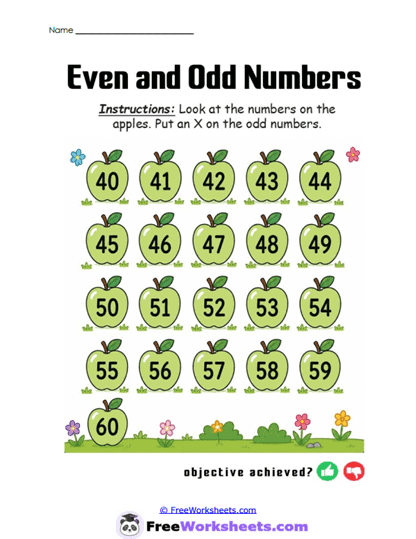
Apple Search
What Kids Do:
Students work through a larger collection of two-digit numbers as they search the tree for odd-numbered apples. Even though the numbers are bigger, the task quickly becomes familiar, helping children realize the same rule still works every time.
Target Skill:
Working with numbers beyond 20 builds confidence and helps students trust mathematical patterns instead of relying on counting by ones for every answer.
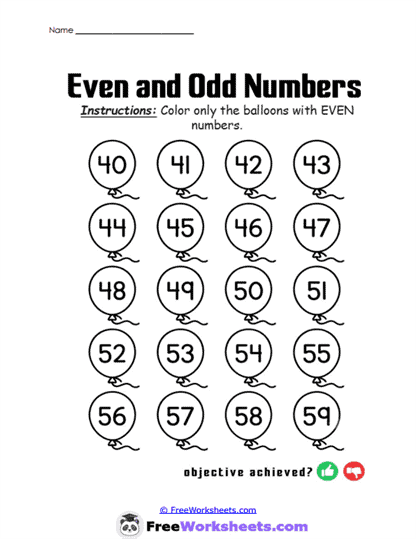
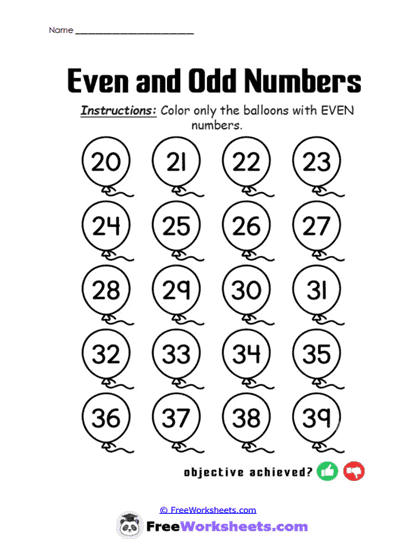
Balloon Bundle
What Kids Do:
Instead of coloring every balloon they see, children slow down and make a decision before each crayon touches the page. Only balloons with even numbers earn a splash of color, creating an easy-to-see pattern by the time the page is finished.
Target Skill:
Students strengthen their ability to recognize even numbers quickly while building confidence with larger two-digit values that might have seemed intimidating at first.
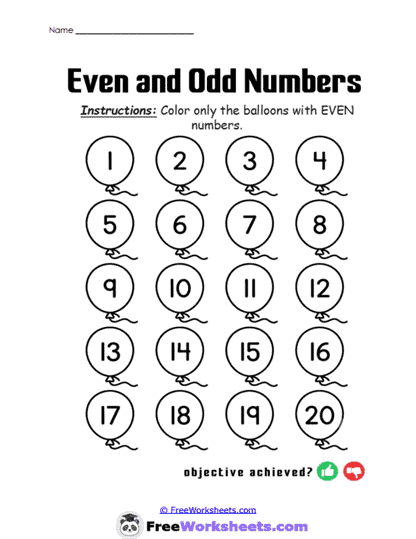
Balloon Colors
What Kids Do:
Every balloon becomes a quick thinking challenge. Children scan the numbers, decide whether each one belongs to the even-number club, and color only the correct choices. The repeated decisions help build confidence without feeling repetitive.
Target Skill:
This worksheet encourages children to recognize even numbers automatically instead of working each one out from scratch, improving both speed and accuracy.
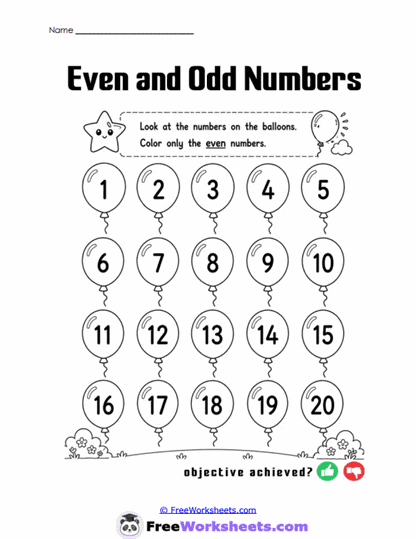
Balloon Hunt
What Kids Do:
Kids love coloring, and this page gives them a reason to slow down and think before reaching for a crayon. Each balloon hides a number, and only the even ones deserve to be colored. By the end, the finished page creates its own colorful number pattern.
Target Skill:
Students begin noticing that every other number belongs to the even family. Recognizing this repeating pattern helps build strong number sense that supports many future math concepts.
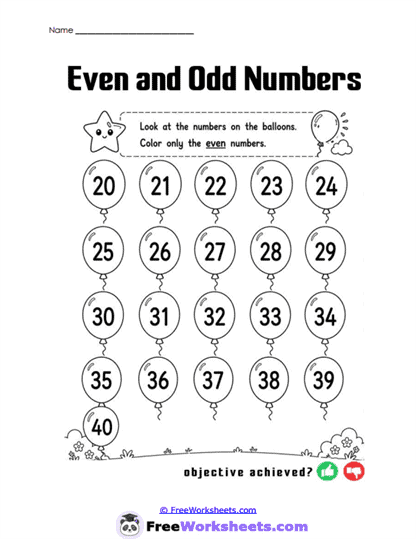
Balloon Pattern
What Kids Do:
This worksheet turns simple coloring into a pattern-finding challenge. Children compare each balloon one at a time, deciding whether it belongs with the even numbers before adding color. The finished page makes the pattern easy to see at a glance.
Target Skill:
Repeated exposure helps students recognize even numbers naturally instead of depending on memorization, making later number work feel much easier.
Balloon Review
What Kids Do:
As students move into larger numbers, they discover that nothing really changes. They continue coloring only the balloons with even numbers, building confidence that the same thinking works whether the number is 8, 28, or 38.
Target Skill:
Children reinforce an important mathematical habit: looking for patterns that stay true no matter how large the numbers become.
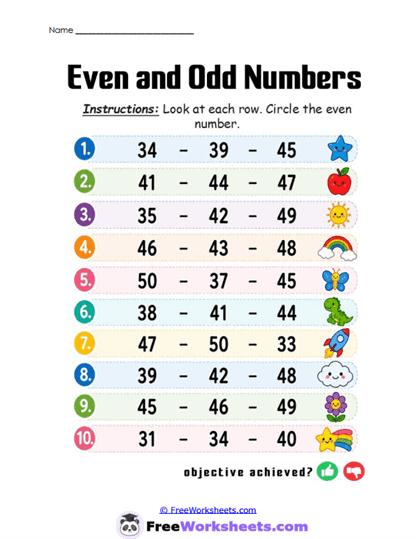
Circle Choice
What Kids Do:
Rather than searching an entire page, students compare three numbers at a time and circle the only even choice. Each row feels like a quick puzzle that asks children to think before making a decision.
Target Skill:
Choosing between multiple answers strengthens careful observation and encourages students to compare numbers instead of making quick guesses.
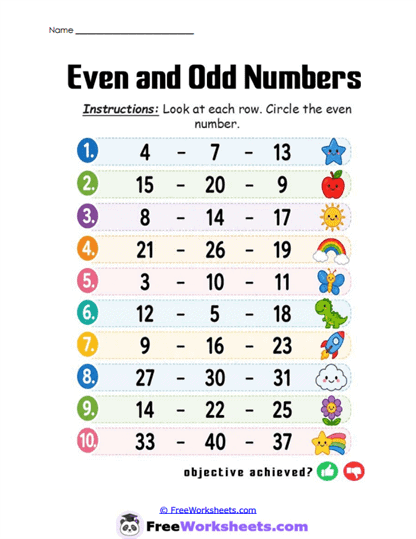
Even Picks
What Kids Do:
Every row presents a small challenge with three possible answers. Students weigh their options before circling the even number, practicing thoughtful decision-making from the first problem to the last.
Target Skill:
This activity builds confidence applying even-and-odd rules in different situations while helping children become more flexible mathematical thinkers.
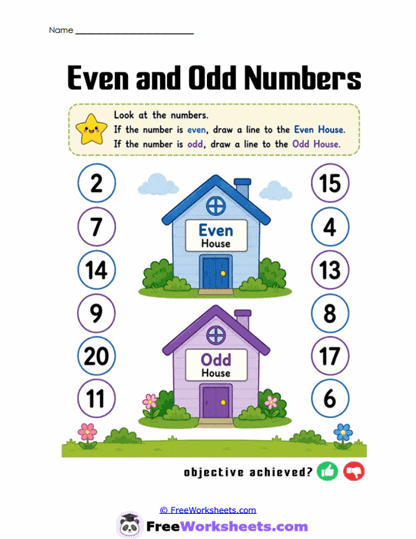
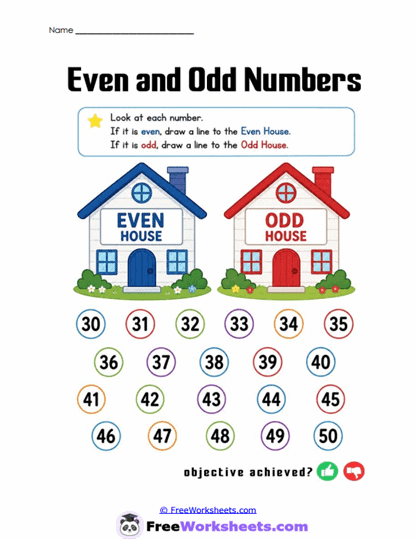
House Match
What Kids Do:
Instead of simply labeling numbers, children decide where each one “lives.” Every number finds its home by traveling to either the Even House or the Odd House, making classification feel more like storytelling than traditional math practice.
Target Skill:
Sorting numbers into groups helps students organize mathematical ideas in their minds and understand that numbers can be classified by shared characteristics.
House Routes
What Kids Do:
Children guide each number to its proper house by drawing connecting lines across the page. As the houses fill with the correct residents, students can easily see how even and odd numbers form two separate families.
Target Skill:
The matching format reinforces logical thinking while helping students become more confident identifying even and odd numbers without relying on trial and error.
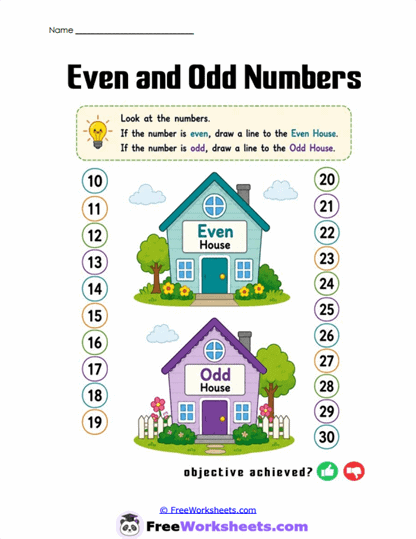
Number Neighborhood
What Kids Do:
The neighborhood has grown, and now the houses welcome larger two-digit numbers. Students discover that even when the numbers climb higher, every one still belongs in only one of two places.
Target Skill:
Learners extend what they already know into a larger number range, helping them understand that mathematical patterns stay consistent regardless of size.
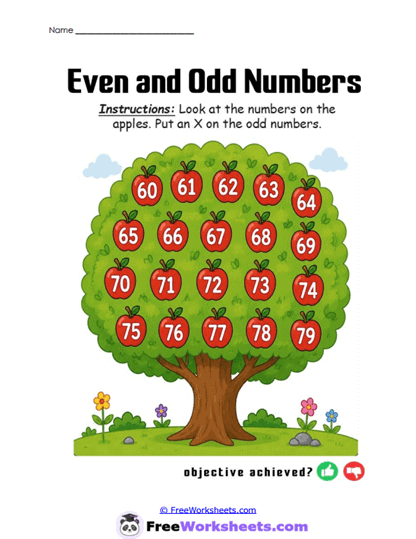
Orchard Odds
What Kids Do:
Students explore an orchard filled with bigger numbers, searching carefully for every odd apple before marking it. The activity encourages slow, thoughtful work while showing that odd numbers never stop following the same predictable rule.
Target Skill:
Working with numbers into the seventies helps children build confidence applying familiar ideas in new situations instead of seeing larger numbers as something completely different.
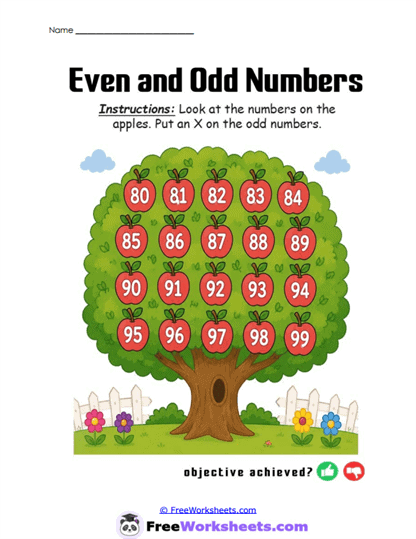
Tree Patterns
What Kids Do:
This final tree challenges students with numbers all the way into the nineties. As they search for odd apples, many children begin noticing they hardly need to think anymore because the pattern has become so familiar.
Target Skill:
The worksheet reinforces one of the biggest mathematical discoveries students make at this age: patterns continue forever, and understanding those patterns makes math much easier.