
Synonyms and Antonyms Worksheets
These worksheets help young learners compare words with similar and opposite meanings to build vocabulary skills. These free, ready-to-print worksheets come in PDF format for immediate classroom use during literacy lessons, vocabulary centers, or independent review. Students strengthen language arts curriculum aligned skills in vocabulary development, reading comprehension, word relationships, language analysis, and context clue understanding.
About This Collection of Worksheets
This collection of synonyms and antonyms worksheets gives first grade students meaningful practice with comparing word meanings and understanding vocabulary relationships. Learners discover how some words mean nearly the same thing while others have completely opposite meanings. Through matching, sorting, tracing, sentence-completion, and context-clue activities, students strengthen reading comprehension and develop more flexible language skills.
The worksheets provide a wide variety of engaging literacy activities designed specifically for young learners. Students identify synonym pairs, match antonyms, decide whether words mean the same or the opposite, and use vocabulary words correctly within sentences. These activities encourage children to think critically about word meanings while improving speaking, reading, and writing confidence during everyday literacy instruction.
Teachers and parents can easily use these printable worksheets for literacy stations, intervention review, independent practice, small-group vocabulary instruction, homework, or homeschool learning. The familiar vocabulary and structured formats help students focus clearly on word relationships without becoming overwhelmed. Repeated exposure to synonyms and antonyms strengthens comprehension, expands vocabulary knowledge, and supports future success with more advanced reading and language concepts.
Paul’s Teacher Tip
When teaching synonyms and antonyms, encourage students to use the words aloud in simple spoken sentences instead of only matching answers on paper. Hearing vocabulary in context helps children understand subtle meaning differences more naturally. Acting out opposite words such as fast and slow or hot and cold can also make vocabulary relationships easier for first grade learners to remember. During read-alouds, pause occasionally to point out interesting synonyms or antonyms and ask students to think of related words. Visual supports, gestures, and sentence examples often help struggling readers connect unfamiliar vocabulary to real experiences. Frequent short vocabulary discussions throughout the week can greatly improve reading comprehension and speaking confidence over time.
Worksheet Collection Skill Spotlights
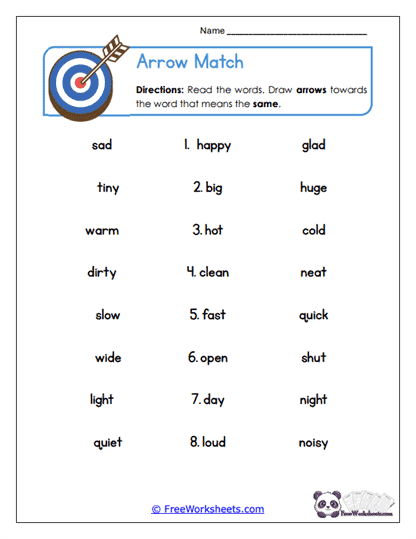
Arrow Match
- What Kids Do:
Students read vocabulary words and draw arrows connecting each word to a synonym with the same meaning. Learners compare several answer choices carefully while practicing vocabulary recognition, visual scanning, and thoughtful word-analysis skills during literacy instruction. - Target Skill:
This worksheet strengthens synonym recognition and vocabulary development by helping students identify words with similar meanings accurately. Learners improve reading comprehension, language understanding, and word-relationship skills aligned with foundational Common Core vocabulary standards.
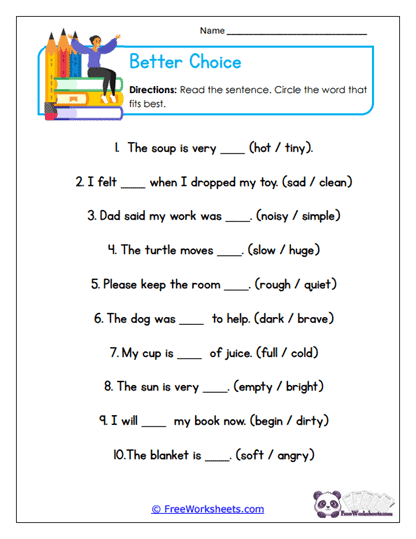
Better Choice
- What Kids Do:
Students read complete sentences and circle the vocabulary word that best fits the sentence meaning. Learners use context clues and careful reading strategies while comparing synonyms and antonyms during meaningful sentence-comprehension practice. - Target Skill:
This activity develops vocabulary-analysis and reading-comprehension skills by teaching students how to use context clues to choose appropriate words. Learners strengthen language understanding, sentence fluency, and comprehension strategies during structured vocabulary practice.
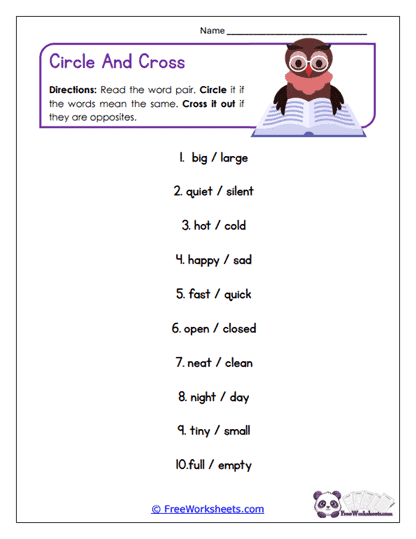
Circle Cross
- What Kids Do:
Students read pairs of vocabulary words and decide whether to circle the pair for synonyms or cross it out for antonyms. Learners compare meanings carefully while practicing quick recognition of word relationships and vocabulary-analysis skills. - Target Skill:
This worksheet supports synonym and antonym understanding by helping students recognize similar and opposite meanings accurately. Learners strengthen vocabulary retention, reading comprehension, and language-analysis skills through repeated comparison practice.
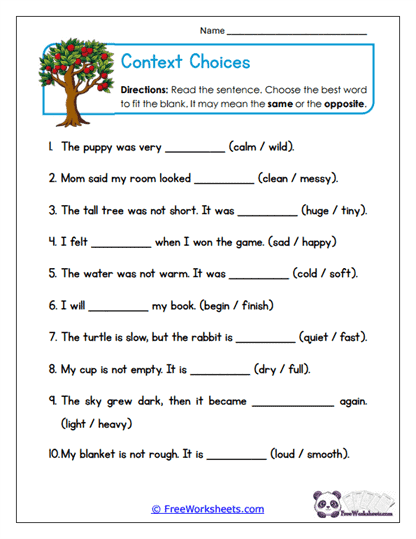
Context Choices
- What Kids Do:
Students read sentences with missing words and choose the correct synonym or antonym to complete the sentence meaningfully. Learners think carefully about context clues, vocabulary meaning, and sentence comprehension while practicing close reading skills. - Target Skill:
This activity strengthens vocabulary comprehension and context-clue strategies by teaching students to use sentence meaning when selecting words. Learners improve language understanding, critical thinking, and reading fluency during meaningful vocabulary instruction.
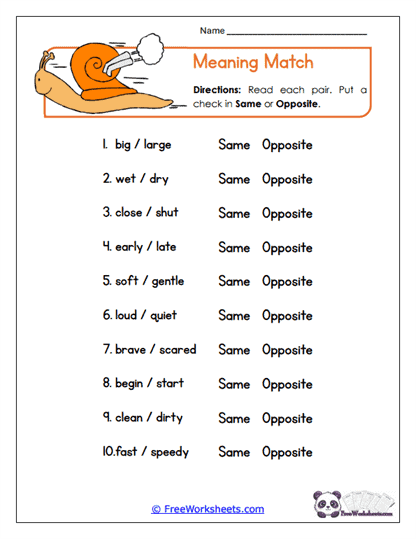
Meaning Match
- What Kids Do:
Students read word pairs and decide whether the words are synonyms or antonyms by checking the correct answer choice. Learners compare meanings closely while practicing vocabulary relationships and careful word-analysis skills during literacy instruction. - Target Skill:
This worksheet develops understanding of vocabulary relationships by helping students distinguish between similar and opposite meanings. Learners strengthen reading comprehension, language-analysis abilities, and Common Core aligned vocabulary skills through repeated practice.
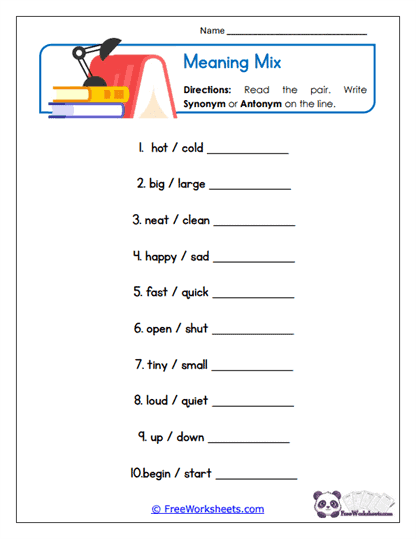
Meaning Mix
- What Kids Do:
Students read pairs of words and write whether the words are synonyms or antonyms. Learners compare meanings thoughtfully while practicing vocabulary classification, reading fluency, and careful word-analysis skills during literacy instruction. - Target Skill:
This activity strengthens vocabulary understanding and language-analysis skills by helping students identify different types of word relationships accurately. Learners improve comprehension, critical thinking, and flexible vocabulary use through repeated comparison practice.
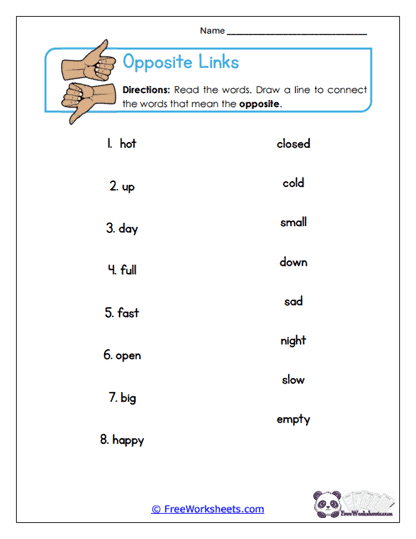
Opposite Links
- What Kids Do:
Students read vocabulary words and draw lines connecting each word to its antonym with the opposite meaning. Learners compare descriptive vocabulary carefully while practicing visual matching and thoughtful vocabulary-analysis skills during literacy instruction. - Target Skill:
This worksheet supports antonym recognition and vocabulary development by teaching students to identify opposite meanings accurately. Learners strengthen reading comprehension, word-relationship understanding, and language-analysis skills through repeated matching activities.
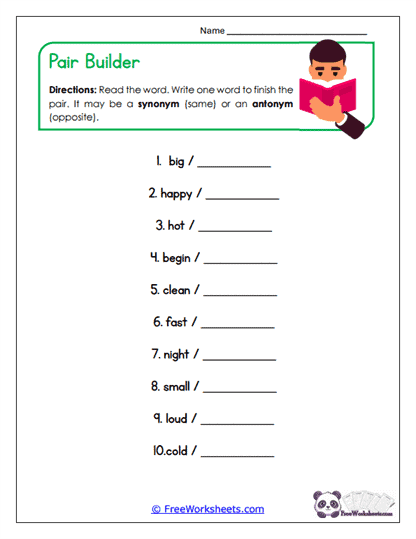
Pair Builder
- What Kids Do:
Students read vocabulary words and independently write a synonym or antonym that matches the given word. Learners generate their own vocabulary responses while practicing word retrieval, flexible thinking, and language-development skills. - Target Skill:
This activity develops vocabulary flexibility and independent language use by helping students create synonym and antonym pairs from memory. Learners strengthen comprehension, word-analysis abilities, and expressive-language confidence during meaningful writing practice.
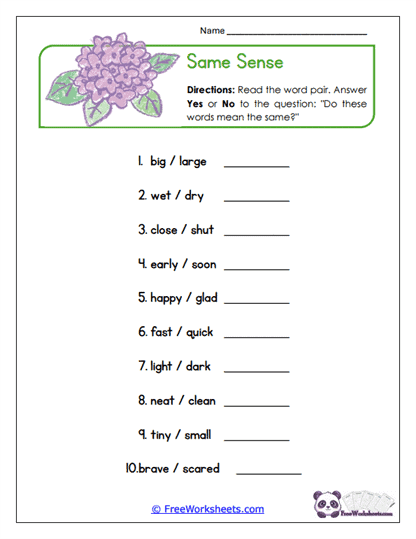
Same Sense
- What Kids Do:
Students read word pairs and answer Yes or No to decide whether the words mean nearly the same thing. Learners compare vocabulary carefully while practicing synonym recognition and close reading skills during independent literacy review. - Target Skill:
This worksheet strengthens synonym understanding and vocabulary-analysis skills by helping students recognize words with matching meanings. Learners improve reading comprehension, language development, and Common Core aligned word-relationship skills through repeated practice.
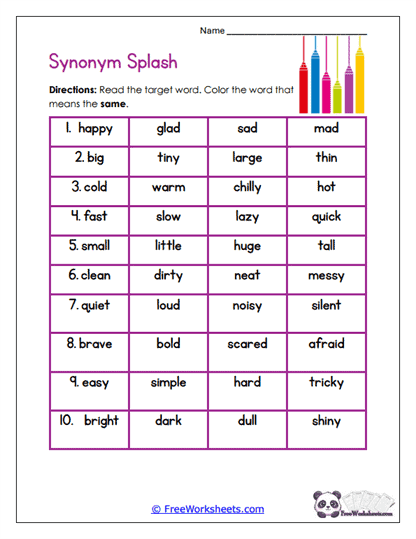
Synonym Splash
- What Kids Do:
Students read a target vocabulary word and color the matching synonym inside a word grid. Learners compare multiple answer choices carefully while practicing visual scanning, vocabulary recognition, and thoughtful word-analysis skills. - Target Skill:
This activity supports synonym recognition and vocabulary retention by helping students identify words with similar meanings accurately. Learners strengthen reading comprehension, language understanding, and visual word-analysis abilities through repeated comparison tasks.
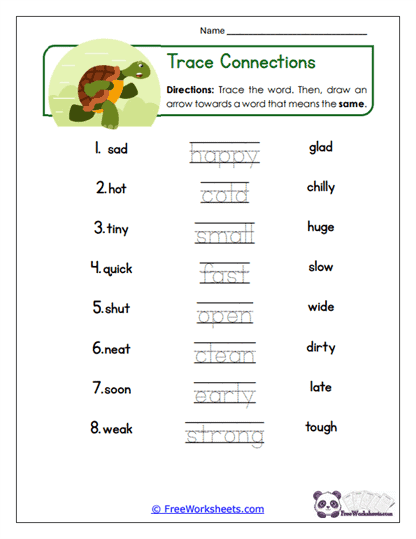
Trace Links
- What Kids Do:
Students trace vocabulary words and then connect them to matching synonyms or antonyms. Learners strengthen handwriting, vocabulary recognition, and careful word-analysis skills while comparing meaning relationships during engaging literacy practice. - Target Skill:
This worksheet develops vocabulary comprehension and word-relationship understanding through combined tracing and matching activities. Learners improve reading fluency, handwriting control, and synonym-antonym recognition during structured literacy instruction.
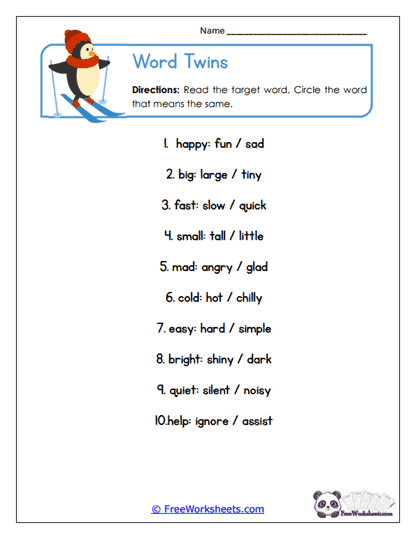
Word Twins
- What Kids Do:
Students read a target vocabulary word and circle the synonym that means nearly the same thing. Learners compare answer choices carefully while practicing vocabulary recognition, reading fluency, and thoughtful word-analysis skills during literacy instruction. - Target Skill:
This activity strengthens synonym recognition and vocabulary development by teaching students to identify similar meanings accurately. Learners improve reading comprehension, language understanding, and foundational vocabulary-analysis abilities aligned with Common Core standards.