
About This Worksheet
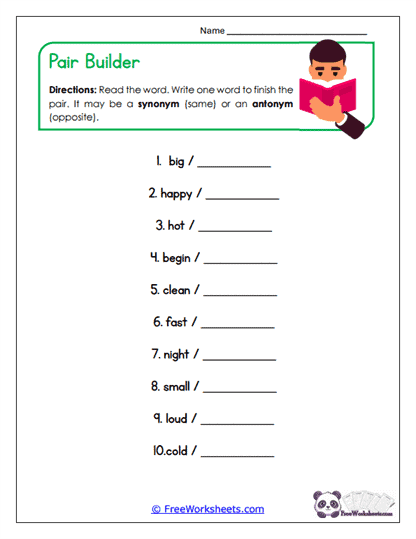
This worksheet helps first grade students build synonym and antonym word pairs independently. Vocabulary-building activities help children better understand how words can connect through similar or opposite meanings. Students read a word and write another word that either means the same or the opposite. For example, students may pair hot with cold or big with large. This activity supports vocabulary growth, language comprehension, and word-analysis skills.
Curriculum and Grade Alignment
This grade 1 language arts worksheet focuses on vocabulary acquisition, word relationships, and reading comprehension. Students practice creating both synonym and antonym pairs using familiar vocabulary words. Before beginning this worksheet, learners should understand common descriptive words and simple word relationships. Future literacy learning may include shades of meaning, figurative language, and advanced vocabulary study. This worksheet aligns with CCSS.ELA-LITERACY.L.1.5 and TEKS standards related to vocabulary development.
Student Tasks
On this worksheet, students will read a vocabulary word on each line. Learners write a matching word that could be a synonym or an antonym for the given word. Children think carefully about meaning relationships while generating their own vocabulary responses. Students strengthen reading comprehension and vocabulary flexibility through repeated practice. The activity also encourages independent thinking and word retrieval skills.
Common Challenges and Misconceptions
Some first grade students may write unrelated words that fit the topic but not the meaning relationship. Children can also confuse whether they should write a synonym or an antonym if they do not reread the directions carefully. A few learners may struggle to think of vocabulary independently without a word bank. Others may spell vocabulary words incorrectly while writing their answers. Teachers can help by brainstorming several example pairs together before independent work begins.
Implementation Guidance
Teachers can use this worksheet during vocabulary lessons, writing activities, or literacy centers. Parents may also use the activity at home while practicing word meanings through conversation and reading. Encouraging children to explain why they chose each answer can strengthen vocabulary understanding and speaking confidence. Adults can ask questions like “Does your word mean the same or the opposite?” to guide learning. This worksheet also works well for intervention support or independent vocabulary review.
Details and Features
The worksheet provides open-ended vocabulary practice that encourages flexible thinking and independent participation. Simple word prompts keep first grade learners focused on meaning relationships without overwhelming reading demands. Writing responses support vocabulary retention and spelling practice at the same time. Repeated synonym and antonym generation strengthens language comprehension and fluency. The worksheet prints clearly for classroom instruction, homeschool use, or intervention support.