
Prefixes and Suffixes Worksheets
These worksheets help young readers understand how word parts change meaning and strengthen vocabulary. These free, ready-to-print worksheets come in PDF format for immediate classroom use during literacy centers, phonics lessons, or independent practice. Students build foundational language arts skills in decoding, word analysis, spelling patterns, vocabulary development, and reading fluency.
About This Collection of Worksheets
This collection of prefixes and suffixes worksheets gives young learners meaningful practice with important word-building skills. Students explore how prefixes like re- and un- change the meaning of base words while suffixes such as -ing, -ed, -er, and -ful create new forms and meanings. The activities encourage children to look closely at words, recognize familiar spelling patterns, and connect vocabulary understanding to reading fluency.
The worksheets include a wide variety of engaging literacy tasks designed specifically for first grade learners. Students trace and write words, match base words to completed words, sort vocabulary into categories, underline prefixes and suffixes in stories, and identify word parts in isolation and context. These activities support phonics instruction while helping children build confidence with reading and spelling patterns they will encounter throughout elementary literacy instruction.
Teachers and parents can easily use these printable worksheets for whole-group lessons, literacy centers, intervention practice, homework review, or homeschool instruction. The simple layouts, familiar vocabulary, and hands-on practice make the activities approachable for developing readers and writers. Repeated exposure to prefixes, suffixes, and base words helps students strengthen decoding strategies while improving vocabulary knowledge and comprehension skills.

Paul’s Teacher Tip
When teaching prefixes and suffixes, focus first on meaning before asking students to complete written tasks. Young learners benefit from hearing and discussing words aloud so they can connect the added word part to the new word meaning. Model several examples together and encourage students to identify the base word before adding or removing prefixes and suffixes independently. During reading instruction, pause occasionally to point out familiar word parts students already know from these worksheets. Small-group word building with magnetic letters or index cards can also help struggling readers visually break apart larger words. Repeated practice with the same prefixes and suffixes across different activities strengthens retention and reading confidence.
Worksheet Collection Skill Spotlights
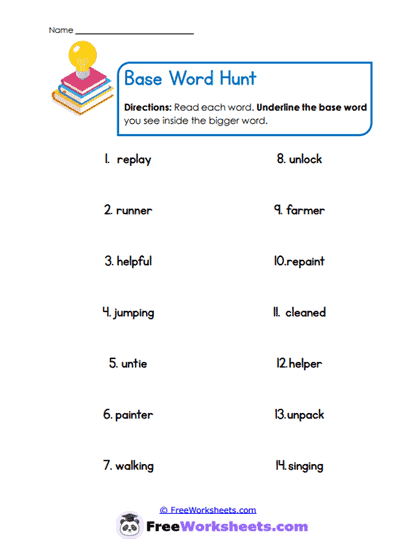
Base Words
- What Kids Do:
Students read larger words such as replay, helper, and repaint, then underline the smaller base word hidden inside each one. Learners carefully separate prefixes and suffixes from the original word while practicing close reading, visual tracking, spelling awareness, and vocabulary recognition skills. - Target Skill:
This worksheet strengthens foundational decoding and word-analysis skills by teaching students to identify root words within larger vocabulary words. Learners develop an understanding of word structure, spelling patterns, and how prefixes and suffixes change meaning in ways aligned with early Common Core literacy expectations.
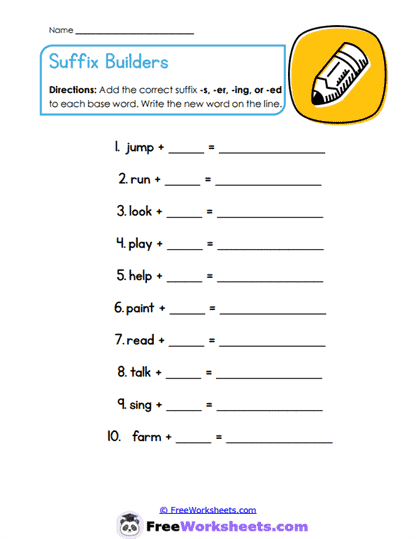
Ending Builders
- What Kids Do:
Students add suffixes such as -s, -er, -ing, and -ed to familiar base words including jump, talk, and paint. Children write completed words on the lines provided, read them aloud, and practice recognizing how word endings affect pronunciation, spelling, and meaning. - Target Skill:
This activity develops phonics and vocabulary skills by helping students recognize and apply common suffix patterns in meaningful contexts. Learners strengthen spelling fluency, decoding accuracy, and understanding of how suffixes change verbs and nouns during foundational literacy instruction.
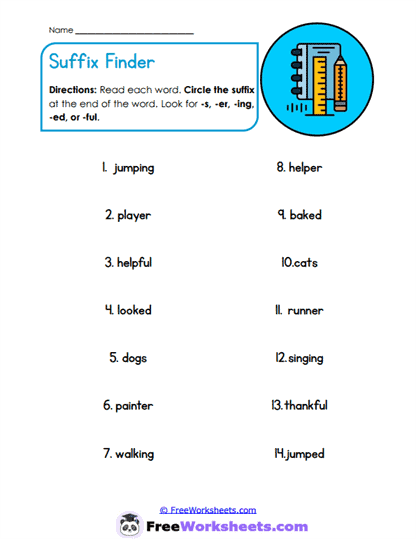
Ending Search
- What Kids Do:
Students read words containing suffixes like -ing, -ed, -er, and -ful, then carefully circle the ending found at the end of each word. Learners practice identifying suffixes within longer vocabulary words while reading aloud and paying close attention to spelling patterns. - Target Skill:
This worksheet supports decoding and word-analysis development by teaching students to identify common suffixes accurately during reading tasks. Learners strengthen vocabulary awareness, spelling recognition, and understanding of how suffixes affect grammar and word meaning in connected literacy instruction.
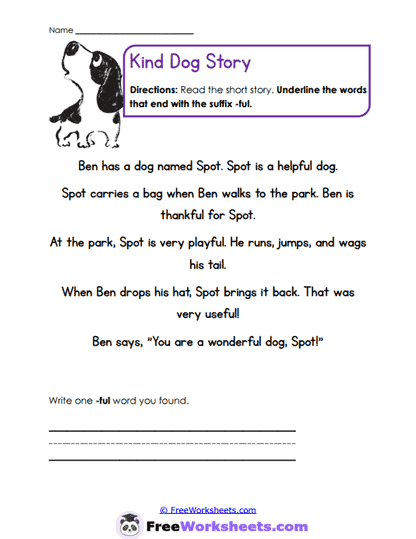
Helpful Words
- What Kids Do:
Students read a short passage about a helpful dog and underline every word ending with the suffix -ful. Learners search for target vocabulary within connected text, reread the story aloud, and write one example word from the passage at the bottom of the page. - Target Skill:
This activity builds reading comprehension and suffix recognition by helping students identify meaningful word endings within authentic text. Learners improve fluency, vocabulary understanding, and close-reading skills while studying how suffixes contribute to descriptive language and word meaning.
Prefix Clues
- What Kids Do:
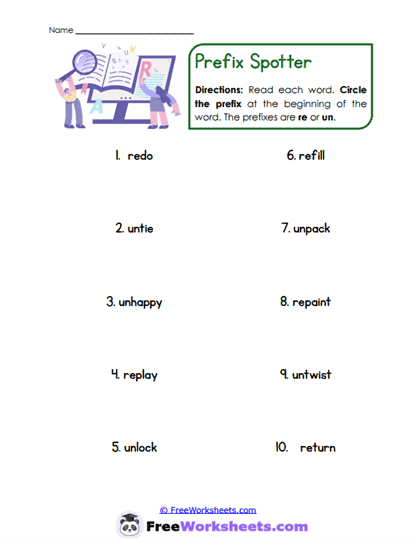
Students read words such as replay, redo, and untwist, then circle the prefix found at the beginning of each word. Learners focus on recognizing prefixes visually while practicing careful reading, vocabulary awareness, and word-part identification skills during literacy instruction. - Target Skill:
This worksheet strengthens early decoding and vocabulary development by teaching students to identify common prefixes accurately. Learners build understanding of how prefixes like re- and un- change word meaning while supporting foundational Common Core phonics and word-analysis standards.
Prefix Groups
- What Kids Do:
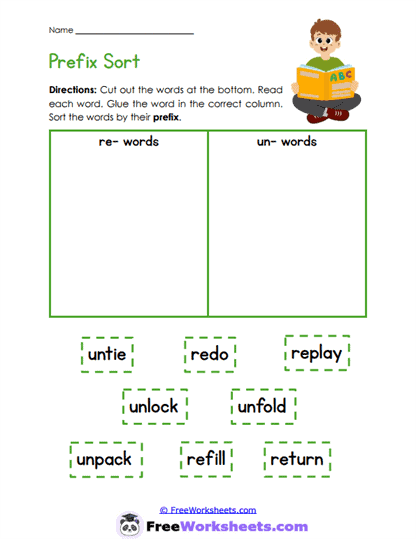
Students cut out vocabulary words and sort them into categories based on whether they begin with re- or un-. Learners glue the words into matching columns while practicing classification, visual discrimination, reading fluency, and hands-on vocabulary-building skills. - Target Skill:
This activity supports phonics and word-analysis development by helping students categorize words according to common prefix patterns. Learners strengthen decoding strategies, spelling recognition, and understanding of how prefixes affect meaning while engaging in interactive literacy practice.
Prefix Practice
- What Kids Do:
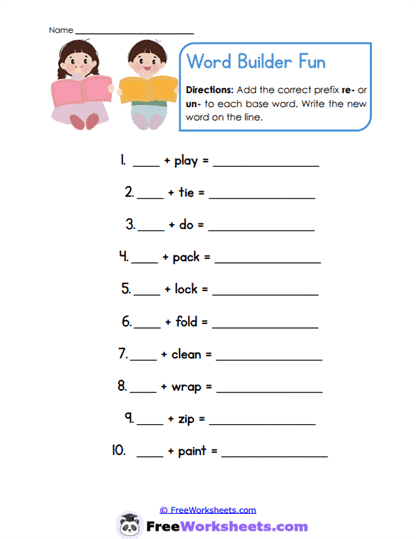
Students choose either re- or un- to complete new words using familiar base words like play, wrap, and zip. Learners write the finished words on the lines provided and read them aloud while thinking carefully about how the meanings change. - Target Skill:
This worksheet develops vocabulary and phonics skills by teaching students how prefixes alter the meaning of base words. Learners strengthen decoding, spelling fluency, and word-building abilities while practicing foundational literacy concepts aligned with Common Core expectations.
Rainy Prefixes
- What Kids Do:
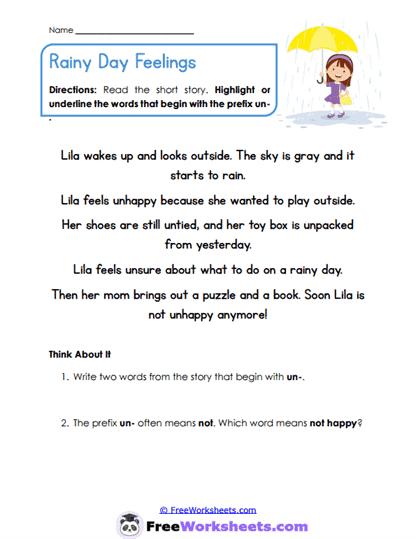
Students read a short rainy-day story and underline or highlight all the words beginning with the prefix un-. Learners answer follow-up questions about the words they found while practicing reading fluency, comprehension, and vocabulary analysis within connected text. - Target Skill:
This activity strengthens reading comprehension and prefix recognition by teaching students to identify meaningful word parts during authentic reading practice. Learners improve vocabulary understanding, decoding strategies, and contextual word-analysis skills while building fluency and confidence.
Suffix Groups
- What Kids Do:
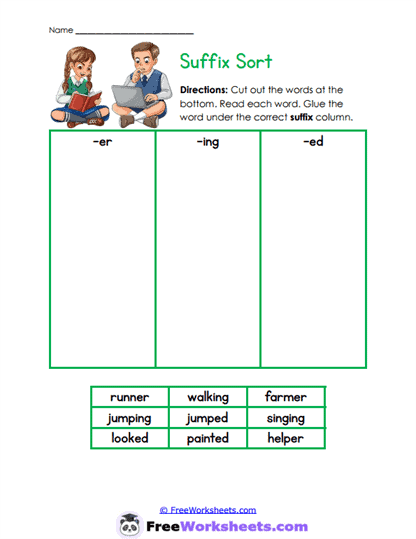
Students cut out words such as runner, painted, and walking, then sort them into the correct suffix categories including -er, -ing, and -ed. Learners organize and glue the words while studying spelling patterns and reading the completed groups aloud. - Target Skill:
This worksheet develops phonics and spelling skills by helping students classify words according to common suffix endings. Learners strengthen vocabulary awareness, decoding fluency, and understanding of how suffixes affect word meaning and grammatical function in literacy instruction.
Un- Words
- What Kids Do:
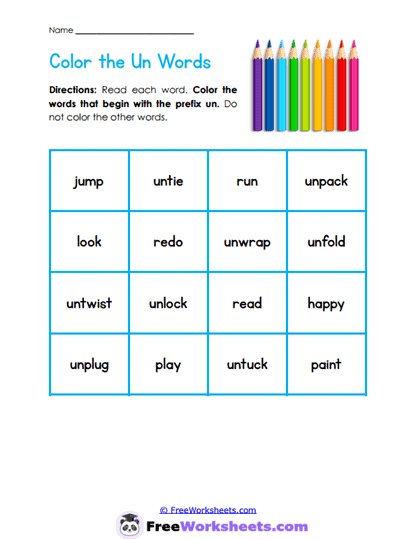
Students read words displayed in a grid and color only the words that begin with the prefix un-. Learners carefully examine each word, distinguish prefixed vocabulary from nonexamples, and practice reading the selected words aloud for additional fluency support. - Target Skill:
This activity supports vocabulary and decoding growth by helping students recognize and interpret the prefix un- accurately. Learners build stronger phonics skills, visual discrimination abilities, and understanding of how prefixes change the meaning of familiar base words.
Word Connections
- What Kids Do:
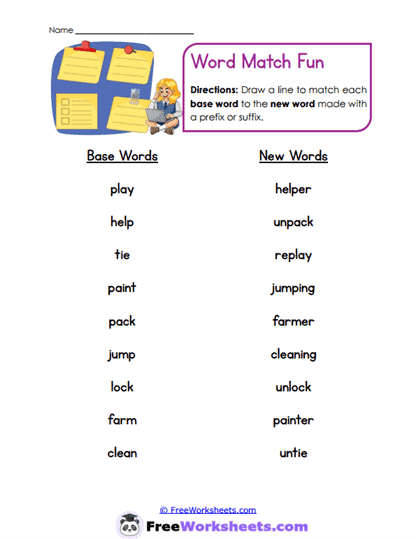
Students match base words to larger words created with prefixes or suffixes by drawing connecting lines across the page. Learners compare spelling patterns, identify shared word parts, and practice understanding how familiar words expand into new vocabulary words. - Target Skill:
This worksheet strengthens word-analysis and vocabulary-development skills by helping students connect root words with derived words containing prefixes and suffixes. Learners improve decoding fluency, spelling recognition, and understanding of meaningful word relationships during literacy instruction.
Word Tracing
- What Kids Do:
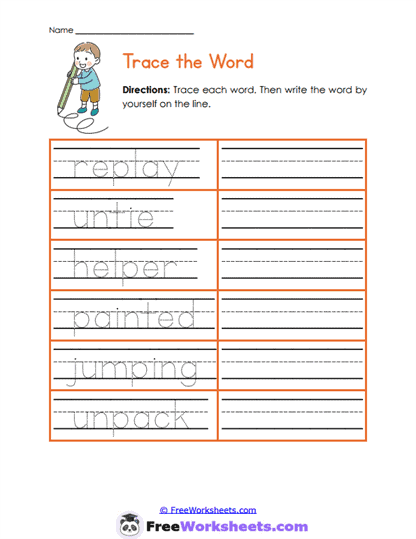
Students trace words such as replay, helper, and unpack before copying each word independently on nearby handwriting lines. Learners practice reading the completed words aloud while focusing on letter formation, spelling patterns, and identifying prefixes and suffixes. - Target Skill:
This activity develops handwriting fluency, spelling accuracy, and word-recognition skills through repeated practice with meaningful vocabulary words. Learners strengthen decoding abilities and understanding of common prefixes and suffixes while building confidence with written language skills.