
About This Worksheet
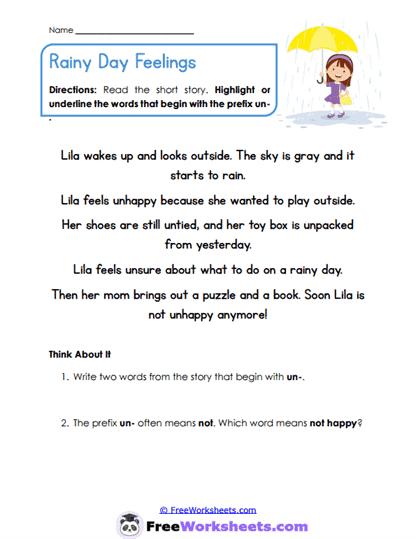
This worksheet helps first grade students identify words that begin with the prefix un- inside a short reading passage. Prefix lessons teach children how word beginnings can change the meaning of familiar base words. Students read a rainy-day story and highlight or underline words that begin with un-. For example, unhappy and untied both contain the prefix un-, which often means “not.” This activity supports reading comprehension, vocabulary development, and word analysis skills.
Curriculum and Grade Alignment
This grade 1 language arts worksheet focuses on prefixes, reading fluency, and vocabulary instruction. Students practice recognizing prefix patterns while reading connected text for meaning. Before beginning this activity, learners should understand common base words and simple sentence structures. Future literacy learning may include using prefixes to determine the meaning of unfamiliar words during independent reading. This worksheet aligns with CCSS.ELA-LITERACY.RF.1.3 and TEKS standards related to phonics and vocabulary development.
Student Tasks
On this worksheet, students will read a short story about a rainy day and a girl named Lila. Learners underline or highlight all the words that begin with the prefix un- while reading through the passage carefully. Children also answer questions at the bottom about the prefix meaning and identify examples from the story. Students strengthen reading comprehension and vocabulary awareness while studying prefixes in context. The activity also encourages close reading and thoughtful word analysis.
Common Challenges and Misconceptions
Some first grade students may confuse un- words with other words that simply begin with the letter u. Children can also miss target words if they focus only on understanding the story instead of looking carefully at word beginnings. A few learners may not yet understand that un- often means “not.” Others may struggle with balancing comprehension and word hunting at the same time. Teachers can help by reviewing several examples of un- words before students begin reading.
Implementation Guidance
Teachers can use this worksheet during phonics lessons, guided reading groups, or vocabulary instruction. Parents may also use the activity at home while practicing reading fluency and decoding together. Encouraging children to explain what each un- word means can strengthen comprehension and oral language skills. Adults can ask questions like “What does unhappy mean?” to deepen understanding of the prefix meaning. This worksheet also works well for intervention review or literacy center practice.
Details and Features
The worksheet includes a short engaging reading passage that keeps first grade learners interested while practicing prefix recognition. Highlighting and underlining tasks provide active reading practice without overwhelming students. Follow-up comprehension questions help connect vocabulary learning to meaning and understanding. Large print and uncluttered spacing support fluency and visual tracking during reading. The worksheet prints clearly for classroom instruction, homeschool learning, or intervention support.