
Silent E Worksheets
These worksheets help young readers recognize how silent e changes short vowels into long vowel sounds. These free, ready-to-print worksheets come in PDF format for immediate classroom use during phonics lessons, literacy centers, or independent review. Students strengthen curriculum aligned skills in decoding, spelling patterns, long vowel recognition, reading fluency, and phonics development.
About This Collection of Worksheets
This collection of silent e worksheets gives first grade students meaningful practice with one of the most important early phonics patterns. Learners discover how adding a silent e at the end of a word changes the vowel sound from short to long in familiar word pairs such as cap and cape or hop and hope. Through sorting, matching, sentence reading, writing, and word-building activities, students strengthen decoding skills while developing confidence with long vowel spelling patterns.
The worksheets provide a wide range of engaging literacy activities designed specifically for beginning readers. Students build silent e words, identify long vowel patterns in sentences, compare word pairs, complete meaningful sentences, and practice using silent e words in their own writing. These activities help children connect phonics instruction to authentic reading and writing experiences while improving spelling, vocabulary, and fluency skills.
Teachers and parents can easily use these printable worksheets for small-group instruction, literacy stations, intervention review, independent practice, homework support, or homeschool learning. The familiar vocabulary and simple layouts help young learners focus clearly on the silent e pattern without becoming overwhelmed. Repeated exposure to long vowel words strengthens automatic word recognition and supports future success with more advanced phonics and decoding concepts.

Paul’s Teacher Tip
When introducing silent e, spend time helping students hear the difference between short and long vowel sounds before focusing heavily on spelling. Reading word pairs aloud together such as cap and cape or kit and kite can make the sound change much easier for young learners to understand. Encourage children to stretch the vowel sound slowly so they notice when the vowel “says its name.” Visual comparisons, word-building cards, and magnetic letters can also help students see how one added letter changes pronunciation and meaning. During reading instruction, pause occasionally to point out silent e words in connected text so children practice applying the pattern naturally. Frequent rereading and oral practice help silent e decoding become more automatic and confident over time.
Worksheet Collection Skill Spotlights
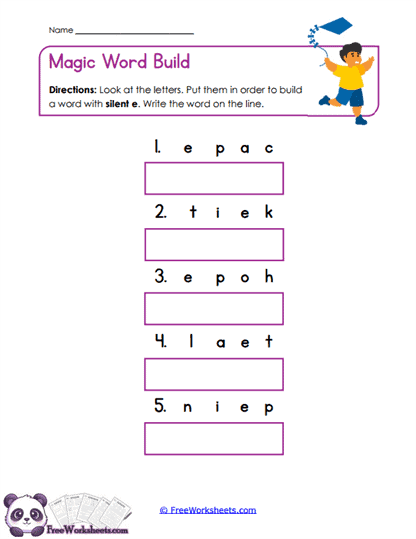
Magic Build
- What Kids Do:
Students rearrange scrambled letters to build real silent e words such as cape and hope. Learners carefully organize the letters, write completed words on the lines provided, and practice sounding out long vowel patterns while strengthening spelling and decoding skills. - Target Skill:
This worksheet develops phonics and word-building skills by helping students recognize silent e spelling patterns and correct letter order. Learners strengthen long vowel decoding, spelling fluency, and understanding of how silent e changes vowel pronunciation in familiar words.
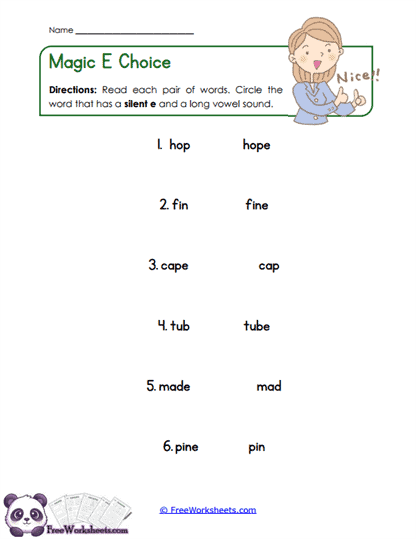
Magic Choice
- What Kids Do:
Students compare pairs of words like hop and hope, then circle the word with the long vowel sound created by silent e. Learners carefully study spelling differences while practicing reading fluency and vowel-sound recognition during phonics instruction. - Target Skill:
This activity strengthens long vowel recognition and phonics understanding by teaching students to identify silent e words accurately. Learners improve decoding confidence, spelling-pattern awareness, and reading fluency while practicing important Common Core phonics skills.
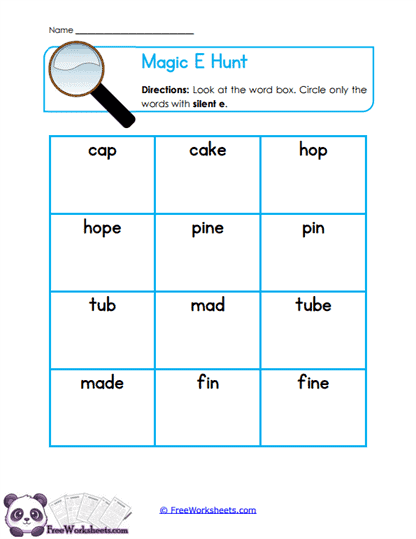
Magic Hunt
- What Kids Do:
Students search through a grid filled with mixed spelling patterns and circle only the silent e words. Learners compare short vowel and long vowel words carefully while practicing scanning, visual discrimination, and decoding fluency during phonics review. - Target Skill:
This worksheet supports phonics development and spelling-pattern recognition by helping students quickly identify silent e words during reading tasks. Learners strengthen long vowel decoding, word-recognition skills, and visual attention to spelling details.
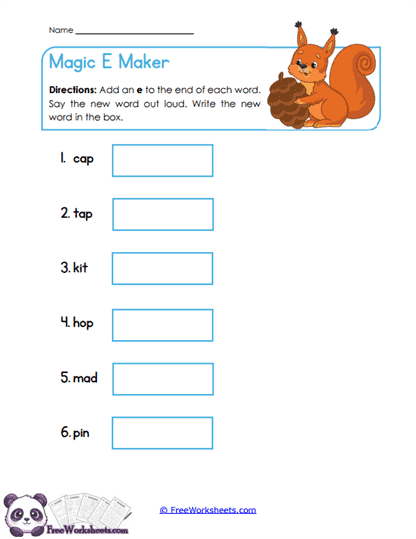
Magic Maker
- What Kids Do:
Students add silent e to short vowel words such as cap, hop, and pin to create new long vowel words. Learners read both versions aloud and compare how the vowel sound changes after adding the final e. - Target Skill:
This activity develops phonics and spelling skills by teaching students how silent e changes short vowel sounds into long vowel sounds. Learners strengthen decoding fluency, word-building abilities, and understanding of important vowel spelling patterns.
Magic Sentences
- What Kids Do:
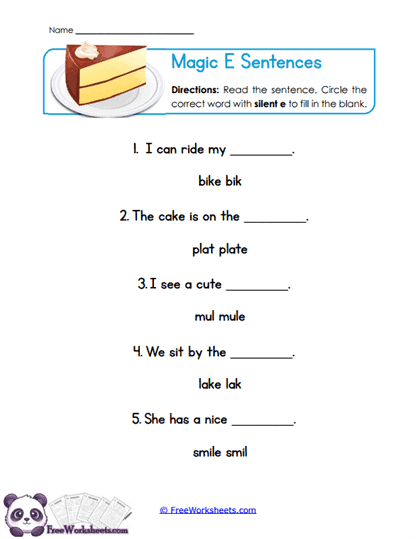
Students read simple sentences with missing words and choose the correct silent e word to complete each sentence meaningfully. Learners think carefully about spelling, pronunciation, and sentence comprehension while practicing long vowel reading skills. - Target Skill:
This worksheet strengthens phonics and sentence-comprehension skills by helping students apply silent e decoding patterns within connected reading. Learners improve vocabulary understanding, reading fluency, and word-recognition accuracy during meaningful sentence practice.
Magic Sort
- What Kids Do:
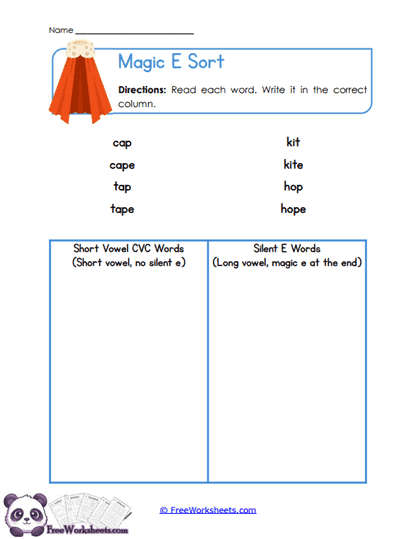
Students sort words into two categories labeled Short Vowel CVC Words and Silent E Words. Learners compare word pairs such as cap and cape while practicing vowel-sound recognition, spelling-pattern analysis, and careful phonics reading skills. - Target Skill:
This activity develops decoding and spelling-pattern understanding by teaching students to distinguish between short vowel and silent e words accurately. Learners strengthen phonics fluency, long vowel recognition, and foundational word-analysis abilities aligned with Common Core standards.
Magic Writing
- What Kids Do:
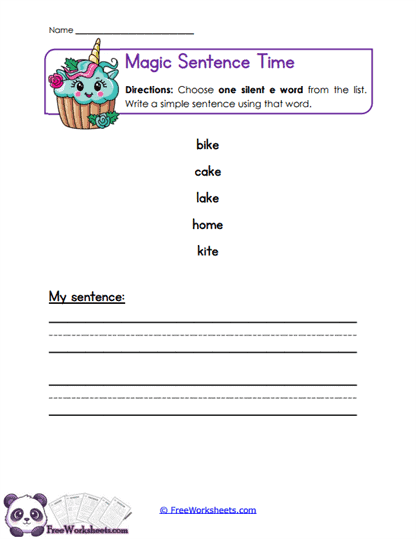
Students choose silent e words from a word bank and write complete original sentences using those words correctly. Learners practice capitalization, punctuation, sentence fluency, and long vowel spelling patterns while creating meaningful written responses independently. - Target Skill:
This worksheet supports phonics and sentence-writing development by helping students apply silent e spelling patterns during authentic writing tasks. Learners strengthen grammar conventions, decoding fluency, and written-language confidence through meaningful sentence construction.
Silent Check
- What Kids Do:
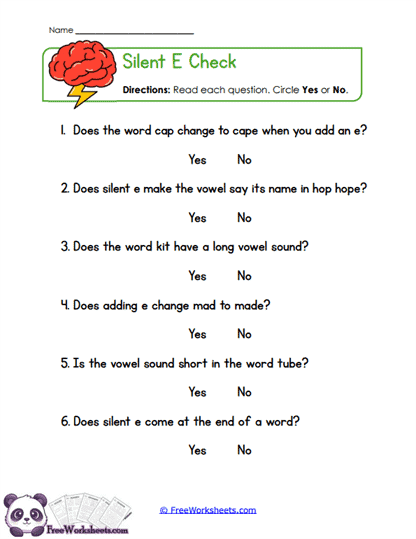
Students read yes-or-no questions about silent e spelling rules and decide whether each statement is correct. Learners think carefully about how silent e changes vowel sounds while practicing phonics review and reading-comprehension strategies. - Target Skill:
This activity strengthens long vowel understanding and phonics-rule application by helping students confirm their knowledge of silent e patterns. Learners improve decoding accuracy, reasoning skills, and spelling-pattern comprehension during structured review practice.
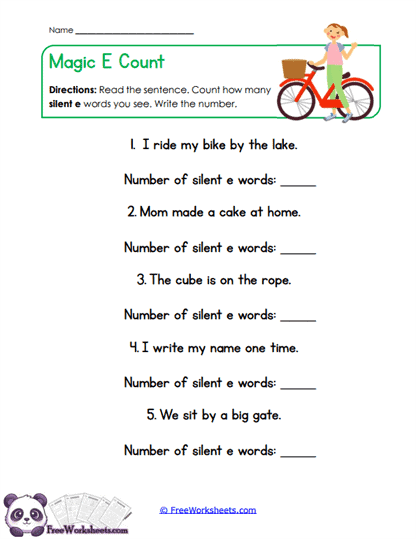
Silent Count
- What Kids Do:
Students read complete sentences and count how many silent e words appear in each one. Learners identify long vowel words during connected reading while practicing careful scanning, decoding, and sentence-level phonics analysis skills. - Target Skill:
This worksheet develops reading fluency and silent e recognition by helping students locate phonics patterns within meaningful sentences. Learners strengthen word-recognition skills, decoding accuracy, and understanding of long vowel spelling patterns in context.
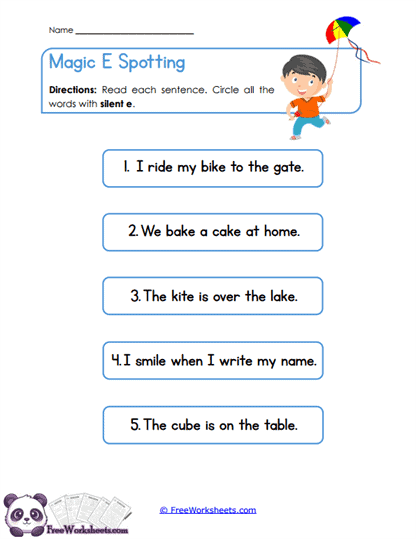
Silent Spotting
- What Kids Do:
Students read sentences carefully and circle every silent e word they can find. Learners practice identifying long vowel spelling patterns during real reading while strengthening visual tracking, decoding fluency, and careful phonics observation skills. - Target Skill:
This activity supports phonics development and reading fluency by teaching students to recognize silent e words quickly within connected text. Learners improve long vowel decoding, spelling awareness, and automatic word-recognition abilities during sentence reading.
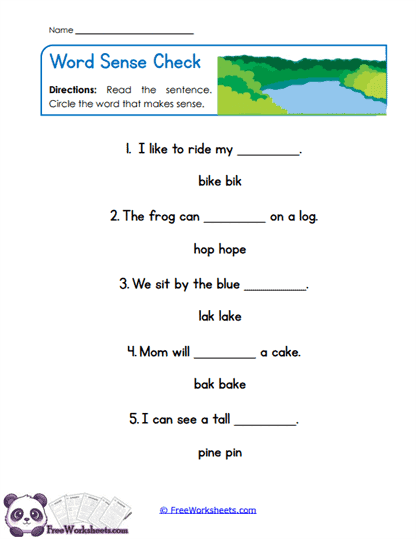
Word Sense
- What Kids Do:
Students read short sentences and choose the correct silent e word from two choices to complete each sentence meaningfully. Learners compare spelling and sentence context while practicing reading comprehension and long vowel recognition skills. - Target Skill:
This worksheet strengthens decoding and sentence-level comprehension by helping students apply silent e spelling patterns within meaningful reading tasks. Learners improve phonics fluency, vocabulary understanding, and word-choice accuracy through repeated practice.
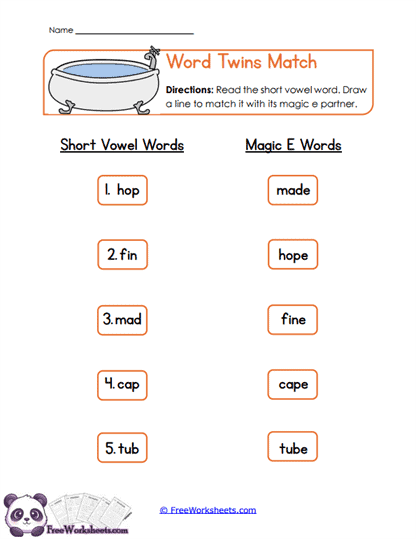
Word Twins
- What Kids Do:
Students match short vowel words with their silent e partner words by drawing connecting lines between related word pairs. Learners compare pronunciation and spelling while practicing long vowel recognition and careful phonics analysis skills. - Target Skill:
This activity develops phonics fluency and spelling-pattern understanding by teaching students how silent e changes vowel sounds in related words. Learners strengthen decoding confidence, long vowel recognition, and foundational word-analysis skills through repeated comparison practice.