
Place Value (Tens and Ones) Worksheets
Grade 1 Math Place Value (Tens and Ones) worksheets help young learners understand how two-digit numbers are built from groups of tens and ones. Free, ready-to-print worksheets in PDF format are designed for immediate classroom use, independent practice, homework, or homeschool lessons. Students strengthen place value understanding, number sense, and mathematical reasoning while developing skills that support curriculum expectations.
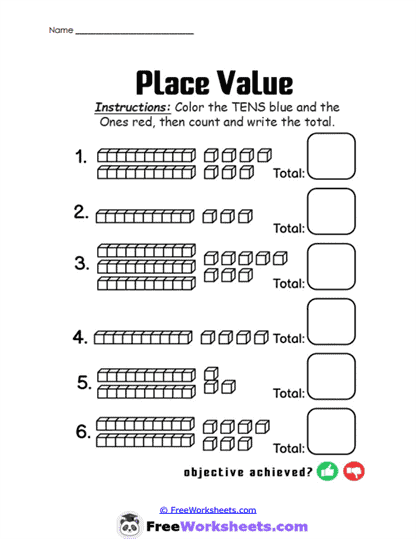
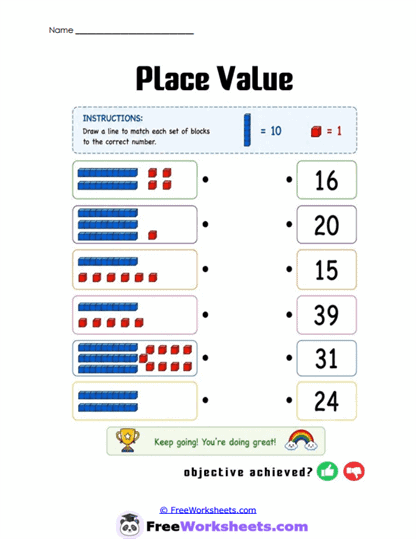
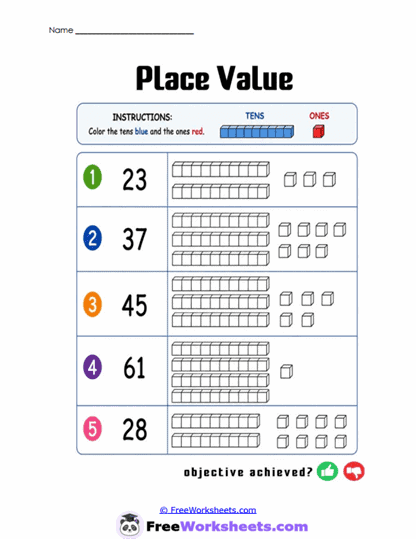
About This Collection of Worksheets
Understanding place value is one of the biggest milestones in first-grade math because it helps children see that numbers are made of groups instead of individual digits. This collection gives students repeated opportunities to work with tens rods, ones cubes, matching activities, coloring exercises, and counting models that make abstract ideas much easier to understand. Rather than memorizing numbers, children learn why a number like 43 means four groups of ten and three extra ones.
Throughout the collection, students move between several different representations of place value. Some worksheets ask children to count base-ten blocks and write the matching number, while others require them to build numbers by coloring the correct groups of tens and ones. Matching activities encourage students to connect visual models with written numerals, helping them recognize two-digit numbers more quickly and accurately. This variety keeps students engaged while reinforcing the same foundational concepts from multiple directions.
These printable worksheets work well during whole-group instruction, guided math lessons, independent practice, math centers, homework assignments, intervention groups, and homeschool learning. Because every activity focuses on visual models and hands-on thinking, students develop the confidence they need before moving on to addition with regrouping, subtraction, mental math, and larger place value concepts in future grades.
Paul’s Teacher Tip
Before handing out these worksheets, spend a few minutes using real base-ten blocks, bundles of craft sticks, or groups of ten objects so students can physically build numbers. Encourage children to always identify the tens first and the ones second, saying their thinking aloud as they work. This simple routine helps prevent common mistakes like reversing digits or counting every cube individually. As students gain confidence, ask them to explain why different models represent the same number, since verbalizing their reasoning strengthens long-term understanding. A little discussion before independent practice often leads to much stronger place value skills.
Worksheet Collection Skill Spotlights
Block Counting
- What Kids Do:
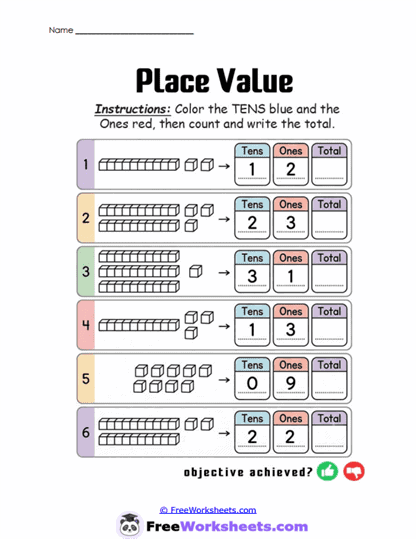
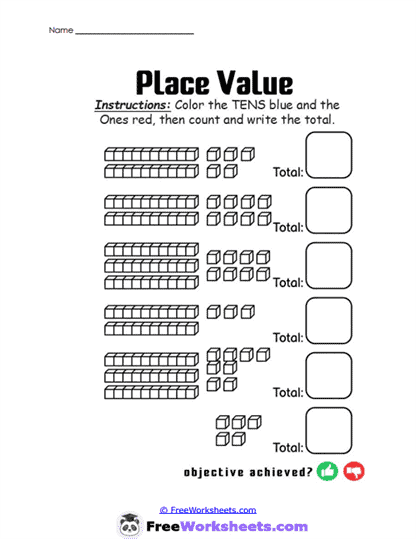
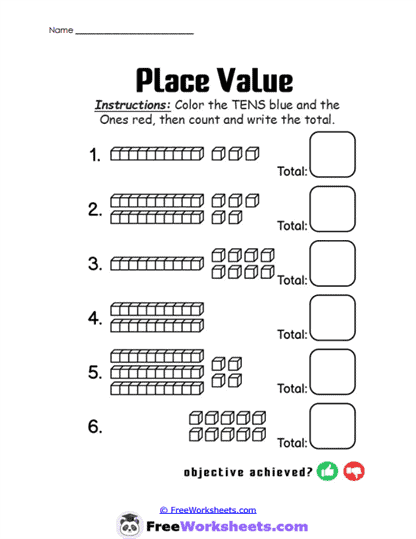
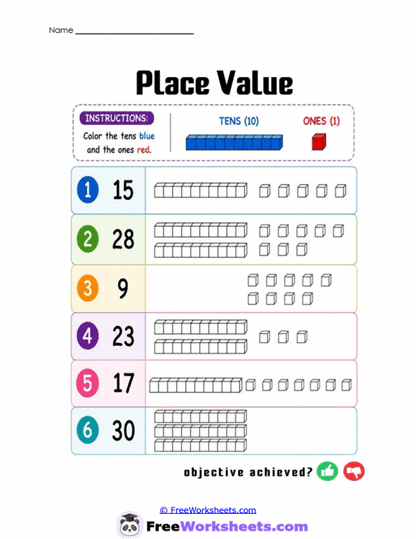
Students color tens rods and ones cubes using different colors before counting each group and writing the complete two-digit number. This hands-on activity helps children recognize that groups of ten should be counted differently from individual ones while reinforcing accurate counting and number writing. - Target Skill:
Students develop a strong understanding that two-digit numbers are composed of tens and ones, directly supporting Grade 1 Common Core place value expectations. They build number sense by connecting concrete visual models with written numerals instead of relying only on memorization.
Block Match
- What Kids Do:
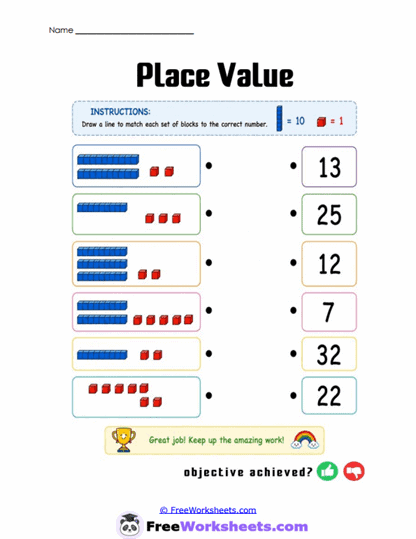
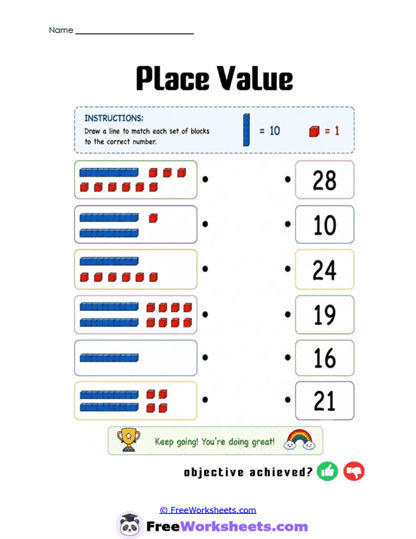
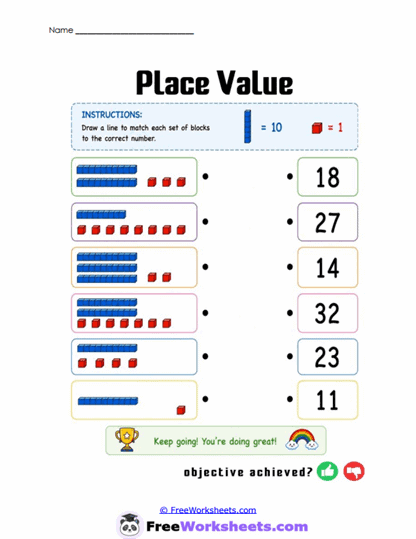
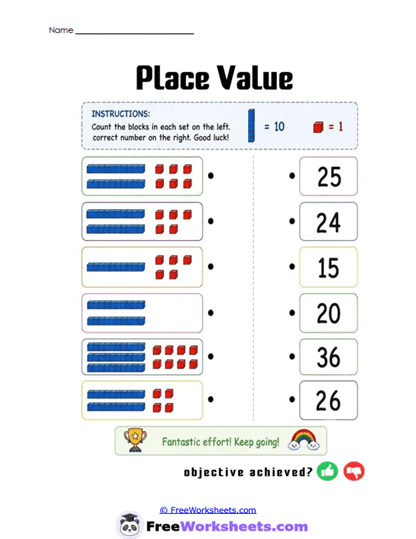
Students study each base-ten block model, count the groups of tens and remaining ones, and draw lines to the matching two-digit numbers. This matching format encourages careful observation while helping students compare visual representations with written numbers. - Target Skill:
Students strengthen place value recognition by identifying how tens and ones combine to create two-digit numbers. The activity reinforces mathematical reasoning, visual discrimination, and accurate number identification using concrete representations.
Block Values
- What Kids Do:
Students examine each picture of base-ten blocks, determine how many tens and ones are shown, and connect each model to its correct number. Repeated matching practice builds speed and confidence while reducing counting errors. - Target Skill:
Students improve their ability to interpret pictorial place value models and relate them to written numerals. This reinforces foundational Common Core expectations while preparing students for addition, subtraction, and regrouping.
Color Values
- What Kids Do:
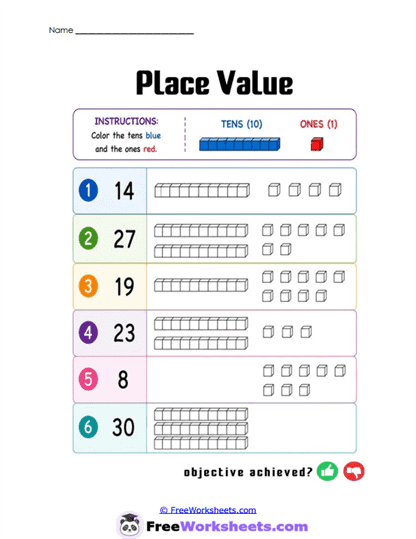
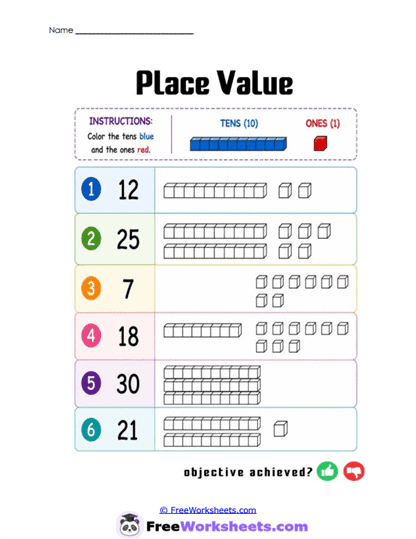
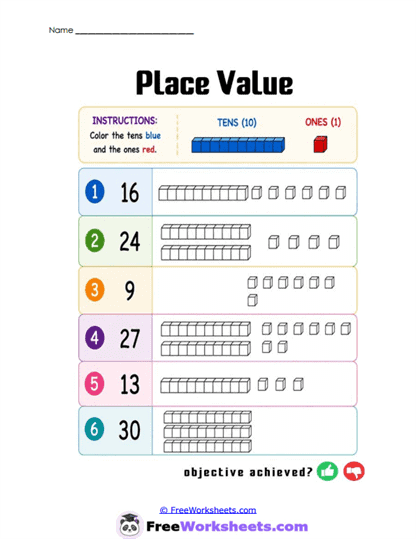
Students read each number and color the correct number of tens rods and ones cubes to build matching place value models. Coloring makes each part of the number easy to distinguish while encouraging careful attention to both digits. - Target Skill:
Students practice representing two-digit numbers with visual models while strengthening their understanding of the value each digit holds. This supports number sense, place value fluency, and mathematical communication.
Count Blocks
- What Kids Do:
Students color base-ten blocks, count the tens first, add the remaining ones, and record the completed two-digit numbers. The step-by-step process encourages organized counting and reinforces efficient strategies. - Target Skill:
Students learn to recognize groups of ten rather than counting every cube individually. This supports Common Core place value concepts while building efficient counting habits and stronger mathematical reasoning.
Count Totals
- What Kids Do:
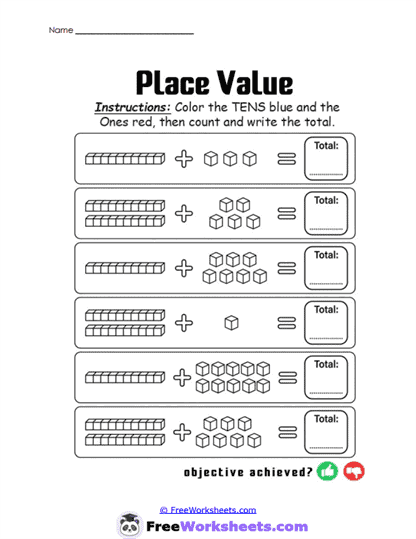
Students distinguish tens from ones using color, count each place value separately, and combine them to determine the total number. Every completed problem reinforces how two-digit numbers are constructed. - Target Skill:
Students develop confidence reading and writing numbers represented by base-ten models. They strengthen number composition skills that serve as an essential foundation for future computation.
Number Match
- What Kids Do:
Students count the tens rods and ones cubes in each model before matching every picture with its correct numeral. The activity encourages careful counting and thoughtful comparison between pictures and numbers. - Target Skill:
Students connect visual place value representations with written numbers while improving number recognition and mathematical reasoning. These experiences reinforce key Grade 1 place value standards.
Number Models
- What Kids Do:
Students read two-digit numbers and color matching groups of tens and ones to create accurate place value models. Each completed model helps students visualize how numbers are built. - Target Skill:
Students strengthen their understanding that each digit has a specific value based on its position. This supports Common Core place value objectives while preparing students for more advanced number concepts.
Place Match
- What Kids Do:
Students analyze base-ten block models and match them with the correct two-digit numbers by counting tens and ones carefully. Multiple examples provide repeated practice with visual number recognition. - Target Skill:
Students reinforce place value understanding by accurately identifying the relationship between concrete models and written numerals. This builds confidence with two-digit numbers and supports future computation.
Place Practice
- What Kids Do:
Students build visual models for given numbers by coloring the correct number of tens rods and ones cubes. The activity encourages thoughtful analysis of each digit before coloring begins. - Target Skill:
Students practice representing numbers through place value models while developing stronger number sense and mathematical vocabulary. These skills align with first-grade Common Core expectations for understanding tens and ones.
Total Blocks
- What Kids Do:
Students color, count, and combine groups of tens and ones before writing each completed two-digit number. The repeated routine reinforces organized counting and careful place value thinking. - Target Skill:
Students improve their ability to compose numbers from groups of tens and individual ones while strengthening visual number recognition and foundational place value understanding.
Value Builder
- What Kids Do:
Students identify the tens digit and ones digit in each number before coloring matching base-ten blocks. Building every number visually helps reinforce how numbers are organized. - Target Skill:
Students deepen their understanding of number composition by representing numerals with place value models. This supports Common Core goals related to interpreting and modeling two-digit numbers.
Value Count
- What Kids Do:
Students color base-ten blocks, count the tens and ones separately, and write the correct totals for every model. Each exercise encourages careful counting and organized mathematical thinking. - Target Skill:
Students strengthen place value fluency by interpreting grouped models accurately and connecting them to written numbers. This builds readiness for future operations involving larger numbers.
Value Matching
- What Kids Do:
Students examine groups of tens and ones, determine the total value, and match each visual model to the correct numeral. The activity reinforces careful observation and accurate counting. - Target Skill:
Students build confidence recognizing place value representations while strengthening number sense and visual reasoning. They develop a deeper understanding that two-digit numbers are composed of tens and ones working together.
Value Models
- What Kids Do:
Students read each two-digit number and color the corresponding tens rods and ones cubes to build matching place value models. Every completed picture reinforces the meaning behind each digit. - Target Skill:
Students connect written numerals with concrete place value representations, supporting Grade 1 Common Core expectations for modeling numbers. The activity develops lasting understanding of how two-digit numbers are structured.