
Consumer Math Worksheets
These worksheets help students strengthen financial literacy, budgeting, percentage reasoning, and real-world money-management skills through engaging practical activities. These free, ready-to-print worksheets are provided in PDF format for immediate classroom use during lessons, homework, review sessions, or intervention support. Students develop curriculum aligned skills including calculating discounts, comparing prices, budgeting money, understanding banking concepts, and solving financial decision-making problems.
About This Collection of Worksheets
This worksheet collection gives 7th Grade students focused practice with consumer math concepts including shopping totals, budgeting, banking, taxes, interest, payment plans, and smart spending decisions. Learners solve real-world financial problems involving discounts, unit prices, savings goals, account balances, installment plans, and financial comparisons while strengthening decimal operations and percentage fluency. The collection gradually increases in complexity so students can build confidence with practical financial reasoning and money-management skills.
Teachers can use these worksheets during financial literacy units, decimal review lessons, percent practice, or real-world math activities. Several activities encourage students to organize calculations carefully, compare financial options, estimate costs, interpret account information, and explain spending decisions clearly. Students also strengthen critical-thinking skills by analyzing the long-term effects of budgeting, installment plans, depreciation, and savings strategies.
The printable format makes these worksheets ideal for classrooms, tutoring programs, homeschool instruction, and enrichment practice. Organized layouts, relatable scenarios, and practical applications help students connect mathematics to everyday financial decisions while building long-term consumer awareness. Across the collection, learners strengthen important Grade 7 skills aligned to Common Core standards involving percentages, decimals, proportional reasoning, and financial literacy applications.
Paul’s Teacher Tip
Students often become more confident with consumer math when they connect calculations to real-life situations they recognize from shopping, saving, or budgeting. Encourage learners to label each step clearly when solving multi-step financial problems involving discounts, taxes, and totals. Estimation is also an important skill because it helps students quickly decide whether an answer seems reasonable before finishing exact calculations. Many students benefit from organizing financial information into tables or charts to avoid confusion between deposits, withdrawals, discounts, and final balances. Realistic examples involving purchases, savings goals, and banking situations help students understand why financial literacy matters in everyday life. Short mixed review activities can improve flexibility and long-term confidence with practical money-management skills.
Worksheet Collection Skill Spotlights
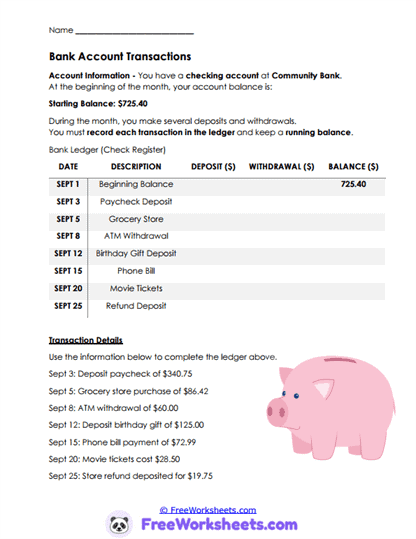
Account Tracker
- What Kids Do:
Students record deposits, withdrawals, and running balances in a bank ledger while organizing financial transactions carefully. Learners update account balances after each transaction using decimal addition and subtraction. - Target Skill:
Students strengthen banking and decimal computation skills aligned to Common Core Grade 7 standards. The worksheet reinforces financial recordkeeping, money-management understanding, and organized mathematical reasoning.
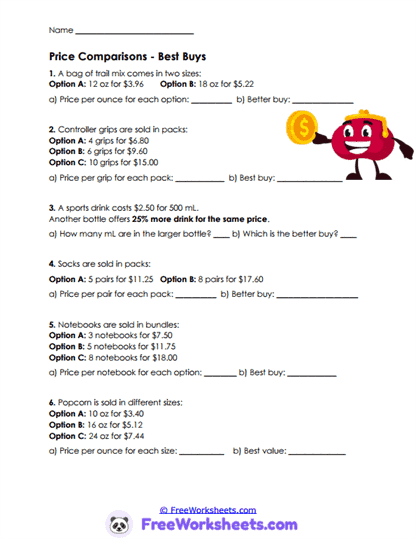
Better Deals
- What Kids Do:
Students calculate unit prices for snacks, drinks, notebooks, socks, and popcorn to determine which product offers the best value. Learners compare costs per item, ounce, or pair carefully. - Target Skill:
Students improve unit price comparison and consumer reasoning skills aligned to Grade 7 financial literacy standards. The worksheet reinforces decimal division, proportional reasoning, and smart shopping strategies.
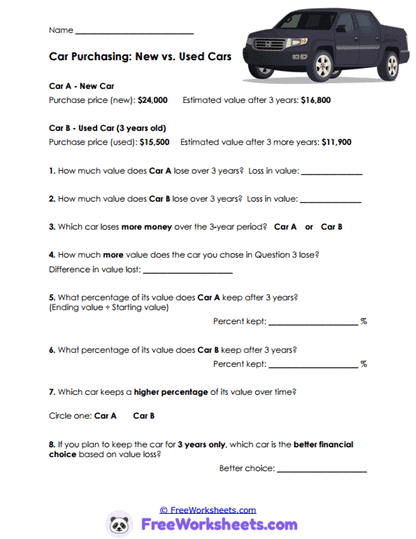
Car Choices
- What Kids Do:
Students compare new and used vehicles by analyzing depreciation, value loss, and retained percentages over time. Learners determine which option keeps more value after several years. - Target Skill:
Students strengthen financial comparison and percentage reasoning skills aligned to Common Core consumer math standards. The worksheet reinforces depreciation understanding and practical decision-making strategies.
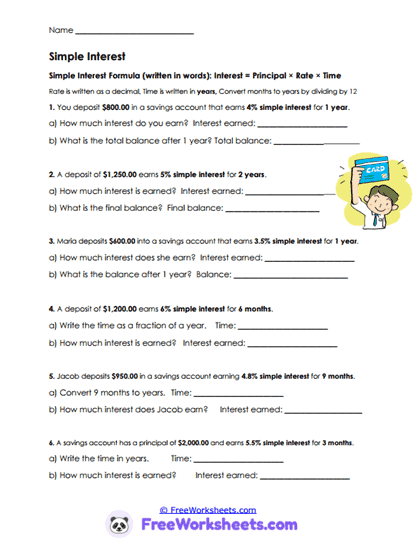
Interest Earnings
- What Kids Do:
Students calculate simple interest earned on savings accounts using principal, rate, and time information. Learners determine both interest earned and final account balances. - Target Skill:
Students build fluency with simple interest calculations aligned to Grade 7 financial literacy standards. The worksheet reinforces percentage reasoning, decimal multiplication, and savings-account understanding.
Money Planning
- What Kids Do:
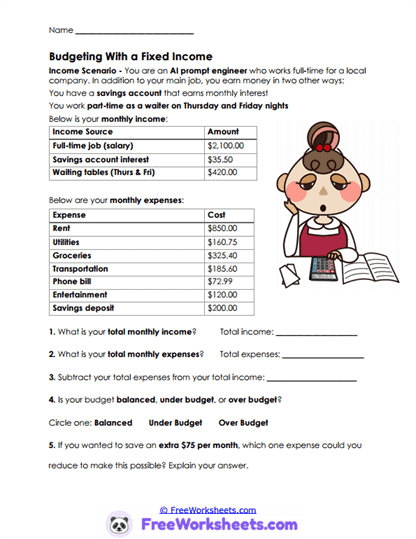
Students analyze monthly income and expenses to determine whether a budget is balanced, under budget, or over budget. Learners compare spending and earnings using decimal operations. - Target Skill:
Students strengthen budgeting and financial planning skills aligned to Common Core consumer math standards. The worksheet reinforces decimal fluency, organization, and practical money-management reasoning.
Money Smarts
- What Kids Do:
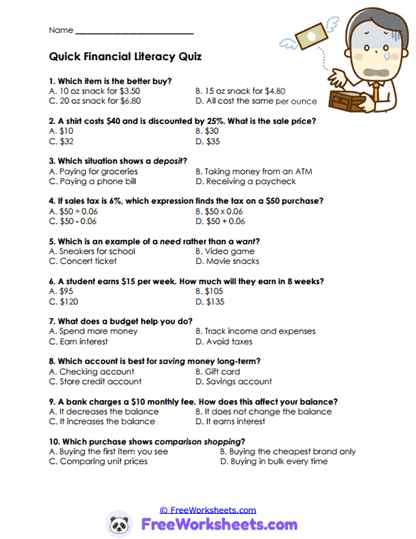
Students complete a mixed financial literacy review involving discounts, taxes, deposits, budgets, shopping comparisons, and savings decisions. Learners apply multiple consumer math strategies within one activity. - Target Skill:
Students reinforce comprehensive financial literacy skills aligned to Grade 7 standards. The worksheet supports flexible thinking, practical reasoning, and long-term money-management confidence.
Payment Plans
- What Kids Do:
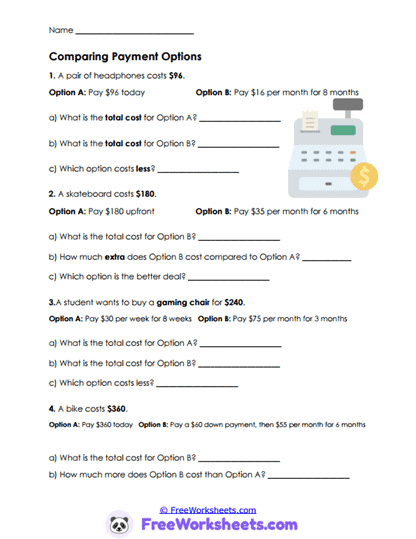
Students compare installment payment plans and upfront payment options for electronics, bikes, and sports equipment. Learners calculate total costs and determine which option costs less overall. - Target Skill:
Students improve financial comparison and multi-step computation skills aligned to Common Core standards. The worksheet reinforces budgeting awareness, decimal reasoning, and practical purchasing decisions.
Sale Savings
- What Kids Do:
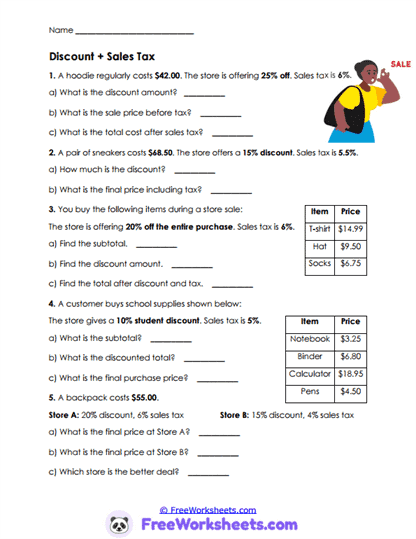
Students solve shopping problems involving discounts, sales tax, and final purchase costs for clothing, backpacks, and school supplies. Learners organize percentage calculations carefully. - Target Skill:
Students strengthen percentage fluency and consumer reasoning aligned to Grade 7 financial literacy standards. The worksheet reinforces multi-step financial problem solving and decimal accuracy.
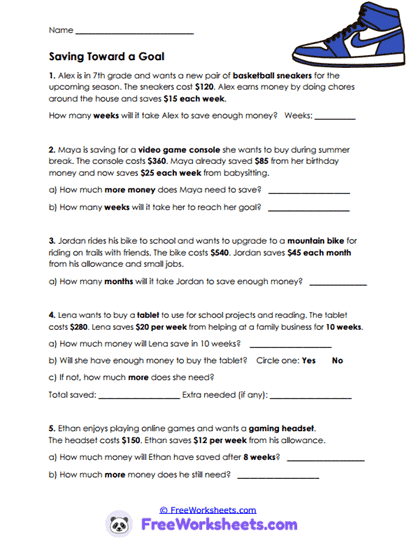
Savings Goals
- What Kids Do:
Students calculate savings progress toward goals involving gaming systems, sneakers, bikes, and tablets. Learners determine how many weeks are needed to reach purchase targets. - Target Skill:
Students build budgeting and savings-planning skills aligned to Common Core consumer math standards. The worksheet reinforces multiplication, division, and practical financial reasoning.
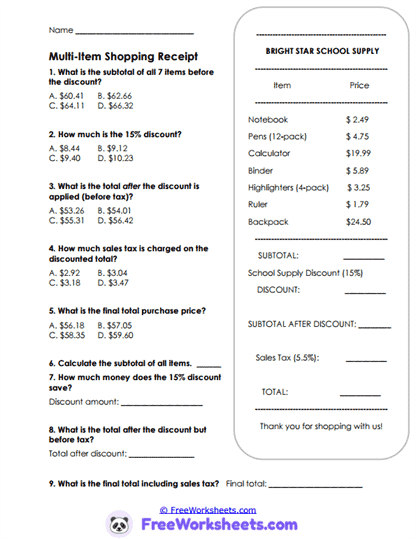
Shopping Totals
- What Kids Do:
Students calculate shopping subtotals, discounts, sales tax, and final totals using realistic receipts. Learners solve multi-step percentage problems involving store purchases. - Target Skill:
Students strengthen percentage application and financial literacy skills aligned to Grade 7 standards. The worksheet reinforces decimal operations, sales tax calculations, and practical shopping math.
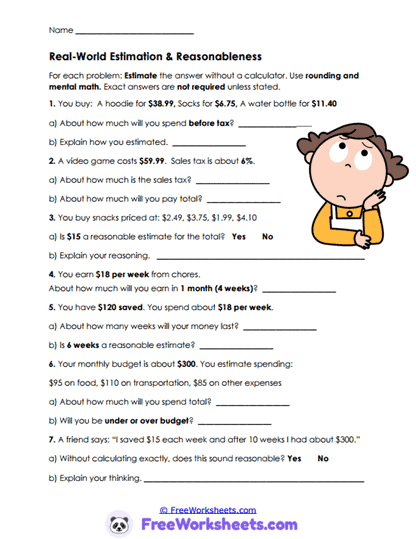
Smart Estimates
- What Kids Do:
Students estimate shopping totals, taxes, savings amounts, and monthly expenses using rounding and mental math strategies. Learners decide whether financial answers are reasonable in context. - Target Skill:
Students improve estimation fluency and practical financial reasoning aligned to Common Core standards. The worksheet reinforces number sense, rounding strategies, and real-world money-management skills.
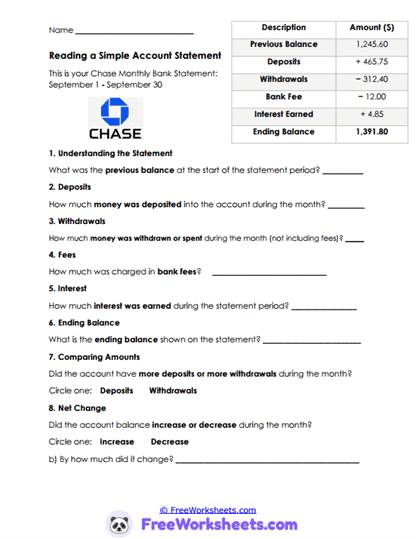
Statement Review
- What Kids Do:
Students analyze monthly bank statements involving deposits, withdrawals, fees, interest, and balances. Learners answer financial questions using account summary information. - Target Skill:
Students strengthen banking literacy and decimal reasoning aligned to Grade 7 financial literacy standards. The worksheet reinforces interpretation of financial records and organized money-management skills.