
Novel Study Worksheets
These 7th Grade Reading Novel Study worksheets give students a structured way to examine characters, conflicts, themes, symbols, plot, and point of view across complete books. Every page is Free, Ready-to-print, offered in PDF format, and suitable for Immediate classroom use. Students practice foundational reading skills such as tracing character development, analyzing story structure, and supporting literary ideas with evidence.
About This Collection of Worksheets
This collection helps seventh graders dig into novels with more purpose than a basic chapter quiz can provide. Students study how characters change, why important decisions matter, how conflicts overlap, and how authors use setting, dialogue, symbols, and foreshadowing to build meaning. The featured titles include The Outsiders, Wonder, Hatchet, Esperanza Rising, The Lightning Thief, The Westing Game, Chains, and several other widely taught novels.
The activities are varied enough to keep a longer book study from feeling repetitive. One worksheet may ask students to compare two narrators, while another focuses on the effects of a single choice or the way courage develops over several chapters. Students also map mystery plots, separate summary from interpretation, connect fictional themes to real history, examine symbolic objects, and study how descriptive language reveals mood or values.
These printable pages work well during whole-class novel units, literature circles, independent reading, tutoring, homework, or essay preparation. They support Common Core expectations for theme, character development, point of view, plot structure, word choice, textual evidence, and connections across literary and historical ideas. Since the work depends on details from the full novel, students must return to the text and think across scenes instead of relying on a quick memory of the story.
Paul’s Teacher Tip
Ask students to mark one or two useful scenes before they begin writing on the worksheet. This small step keeps their answers tied to the novel and makes it easier to include specific evidence. When a response starts turning into plot summary, ask, “What does this event show about the character, theme, or author’s choice?” Encourage students to explain why a detail matters rather than simply naming it. For longer books, keeping a simple page-number log of important scenes can save time and improve the quality of later written responses.
Worksheet Collection Skill Spotlights
Character Growth
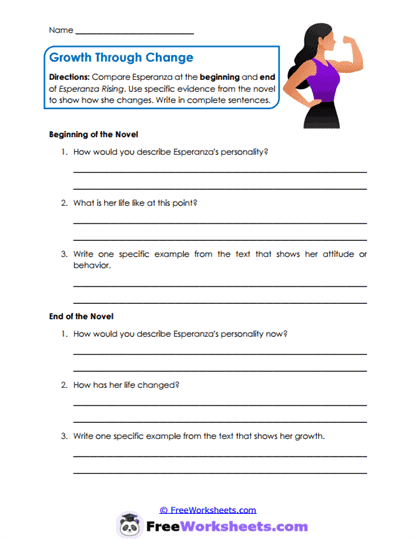
What Kids Do: Students compare Esperanza’s life and personality at the beginning and end of Esperanza Rising. They select traits, locate moments that show those traits, and explain how loss, work, responsibility, and new relationships reshape the way she sees herself and others.
Target Skill: This activity helps students trace character development across an entire novel instead of describing one isolated scene. It supports Common Core analysis of how events, challenges, and changing circumstances influence a character’s behavior, values, and outlook.
Choice Consequences
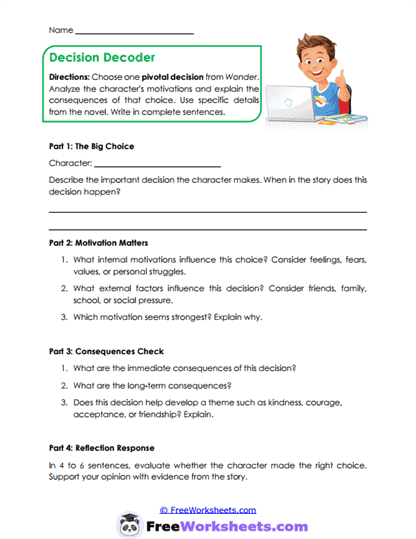
What Kids Do: Students choose one major decision from Wonder and trace what led to it. They examine the character’s fears, values, outside pressure, and strongest motivation before identifying both the immediate results and the longer-term effects of the choice.
Target Skill: Readers analyze the relationship among motivation, action, consequence, and theme. The task supports Common Core work with character and plot by requiring students to explain how one decision grows from several pressures and changes what happens afterward.
Conflict Layers
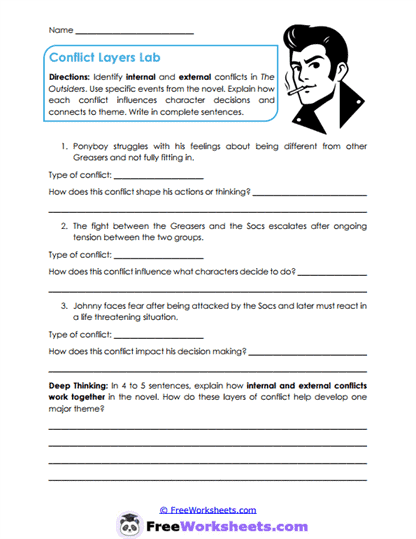
What Kids Do: Students study internal and external conflicts in The Outsiders by examining Ponyboy’s thoughts, group rivalry, and Johnny’s reaction to danger. They explain how outside problems create inner struggles and how those feelings influence what the characters decide to do.
Target Skill: Students move beyond labeling conflict and analyze how different struggles interact. This Common Core-aligned activity develops understanding of how emotional tension, social pressure, and physical danger shape character choices and move the story forward.
Courage Language
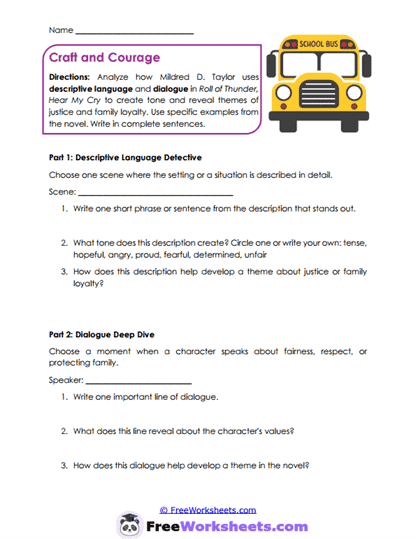
What Kids Do: Students use Roll of Thunder, Hear My Cry to study one descriptive scene and one meaningful line of dialogue. They identify tone, examine the strongest words, and explain how the language reveals values connected with courage, family, justice, loyalty, or respect.
Target Skill: This worksheet develops close reading of author craft. Students analyze how word choice and dialogue contribute to tone and theme, supporting Common Core expectations for explaining how specific language helps communicate a larger message.
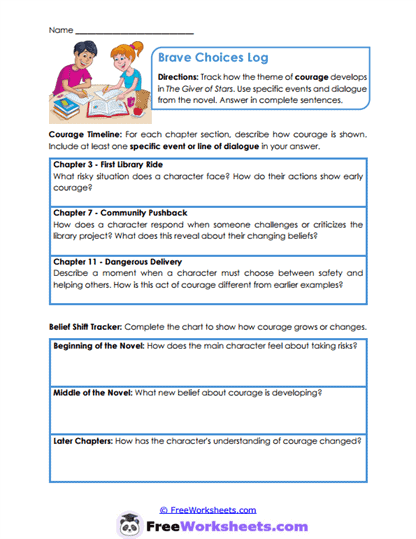
Courage Tracker
What Kids Do: Students follow the development of courage across The Giver of Stars. They examine scenes from different parts of the novel, collect evidence from events or dialogue, and track how a character’s beliefs about risk and bravery change over time.
Target Skill: Learners analyze theme as something that grows through repeated events and changing beliefs. The activity supports Common Core work with theme and character development by asking students to connect several scenes rather than relying on one dramatic moment.
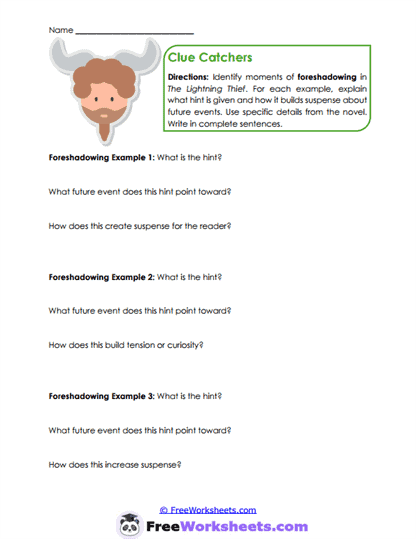
Foreshadowing Clues
What Kids Do: Students locate three early hints in The Lightning Thief and connect each one to an event that happens later. They explain what the clue suggests and how it creates a question, worry, or sense of suspense for the reader.
Target Skill: Readers analyze how early details contribute to plot structure and prepare the audience for later developments. This supports Common Core study of how individual scenes, warnings, dreams, and objects gain meaning as the story unfolds.
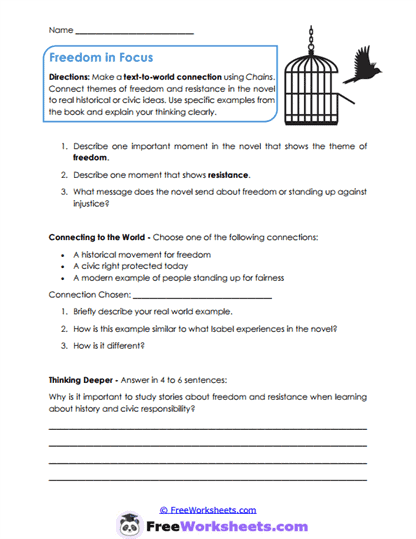
Freedom Connections
What Kids Do: Students examine freedom and resistance in Chains and then connect those ideas to a historical movement, civic right, or modern example of peaceful action. They compare risks, injustice, courage, and the reasons people decide to resist.
Target Skill: This activity strengthens theme analysis and text-to-world comparison. Students use evidence from fiction and history to explain a shared idea, supporting Common Core expectations for connecting literary themes with broader civic and historical contexts.
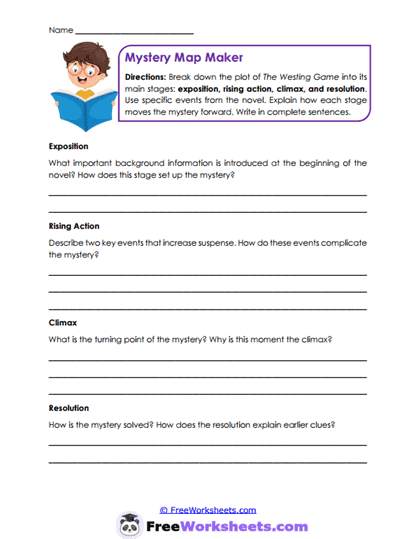
Plot Mapping
What Kids Do: Students organize The Westing Game into exposition, rising action, climax, and resolution. They identify background information, track the events that complicate the mystery, explain the major turning point, and show how the ending makes earlier clues easier to understand.
Target Skill: Students analyze how plot structure builds suspense and leads readers toward a solution. The worksheet supports Common Core work with story organization by requiring them to explain the function of each stage rather than simply naming events.
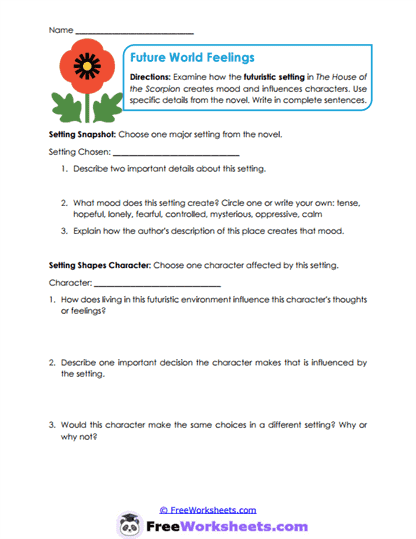
Setting Influence
What Kids Do: Students select one futuristic setting from The House of the Scorpion and study its details, mood, and effect on a character. They connect specific descriptions with feelings such as tension, isolation, hope, or oppression and explain how the environment shapes important decisions.
Target Skill: Learners examine how setting interacts with mood, character, and plot. This Common Core-aligned task helps students explain why a place matters to the story and how environmental details can influence emotions, behavior, and choices.
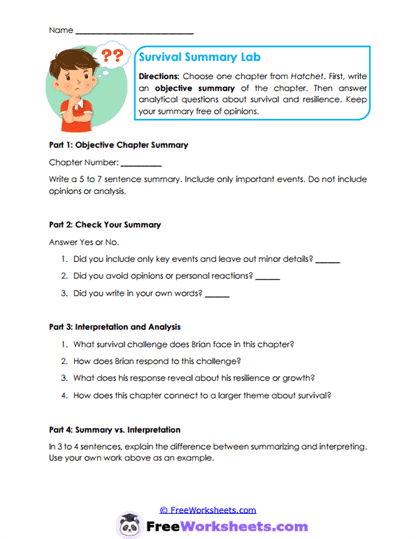
Survival Analysis
What Kids Do: Students write an objective summary of one Hatchet chapter and then shift into analysis. They identify Brian’s main survival challenge, explain his response, and describe what his actions reveal about resilience, independence, or personal growth.
Target Skill: This worksheet teaches the difference between reporting events and interpreting their meaning. It supports Common Core work with objective summary, theme, and character development while helping students keep opinion and analysis out of the summary itself.
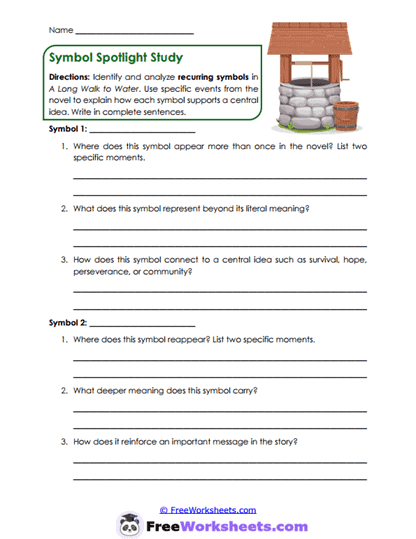
Symbol Meanings
What Kids Do: Students choose two recurring symbols from A Long Walk to Water and locate moments when each one appears. They explain the literal role of the object or image, its deeper meaning, and its connection to ideas such as survival, hope, perseverance, or community.
Target Skill: Readers analyze symbolism as a repeated author choice that reinforces theme. The activity supports Common Core literary analysis by asking students to move beyond identifying an object and explain how its meaning grows across the novel.
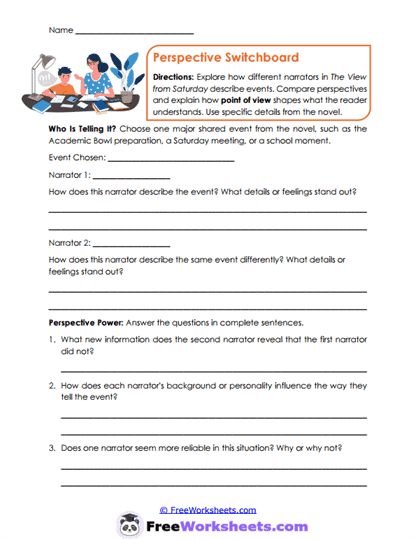
Viewpoint Shift
What Kids Do: Students compare two narrators’ accounts of a shared event in The View from Saturday. They study which details each narrator notices, how emotions and background shape the account, what new information the second voice adds, and whether one perspective seems more reliable.
Target Skill: Students analyze contrasting points of view within one novel. This Common Core-aligned activity develops understanding of perspective, reliability, missing information, and the way a narrator’s experiences influence how an event is presented.