
Theme of Stories Worksheets
7th Grade Reading Theme of Stories worksheets help students move beyond basic comprehension and understand the deeper lessons within a story. These free, ready-to-print PDF format worksheets are designed for immediate classroom use and easy at-home practice. Students build skills in identifying themes, supporting ideas with evidence, and explaining how story elements connect to meaning.
About This Collection of Worksheets
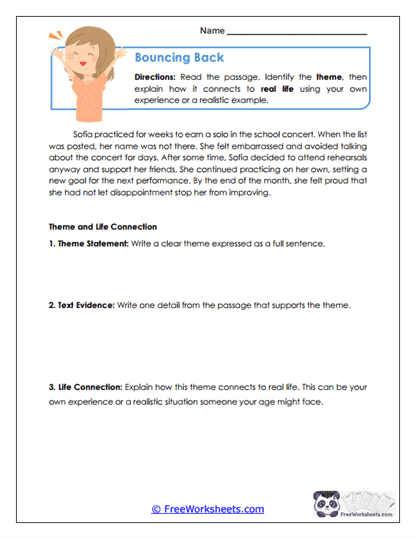
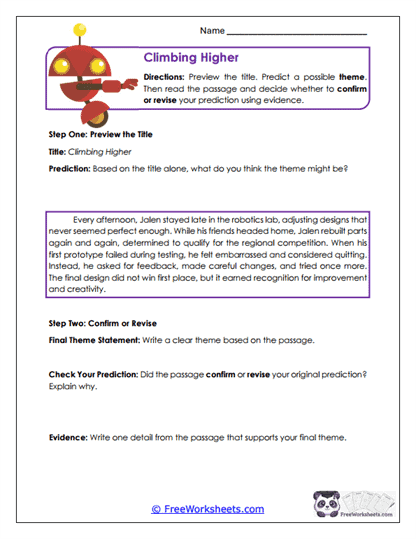
This collection is designed to help students recognize that every story carries a message beyond what happens on the surface. Each worksheet guides students to think about what characters learn, how events unfold, and what lessons can be taken from the text. As they work through the activities, students begin to understand that themes are not just topics, but meaningful statements about life.
Students will explore a variety of engaging stories that focus on real-life challenges, personal growth, and decision-making. They will practice writing theme statements, connecting evidence, and analyzing how character actions and plot events reveal deeper meaning. The variety of tasks helps reinforce the same core idea from multiple angles.
This set is especially helpful for building strong reading and writing connections. As students learn to identify and explain themes, they also become more thoughtful readers and clearer writers. The worksheets are flexible for classroom instruction, small group work, or independent practice.
Paul’s Teacher Tip
Theme can be one of the toughest concepts for students because it requires a bit of abstract thinking. I always remind students to think about what the character learns, not just what they do. A helpful question is, “What lesson could someone take from this story?” It also helps to compare different theme ideas and decide which one is strongest. Over time, students start to see that themes are messages they can apply to their own lives.
Worksheet Collection Skill Spotlights
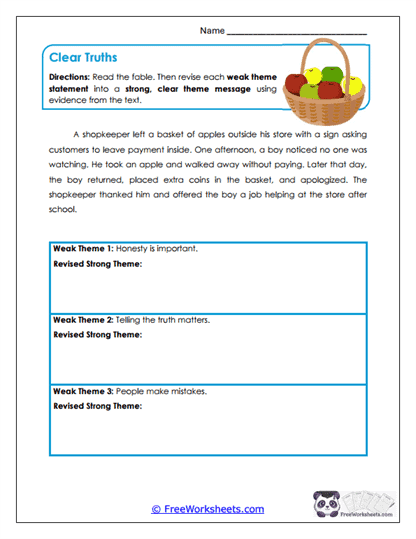
Clear Truths
- What Kids Do:
Students read a story about honesty and review weak theme statements. They rewrite each one to make it clearer, stronger, and more meaningful based on the passage. - Target Skill:
Students build the ability to develop strong theme statements. This helps them move from simple ideas to complete messages that clearly express a lesson.
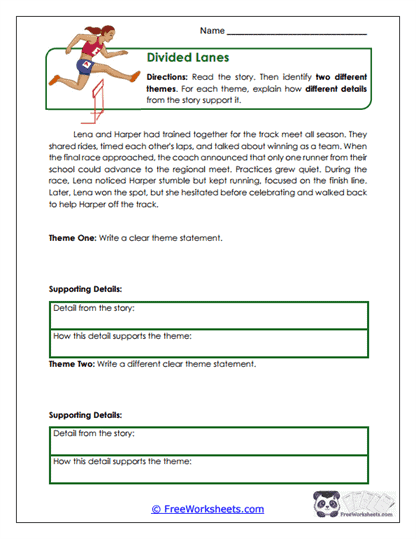
Divided Lanes
- What Kids Do:
Students read a story about two runners and identify more than one theme. They support each theme with details from the passage. - Target Skill:
Students learn that stories can have multiple themes. This strengthens their ability to think more deeply and recognize different layers of meaning.
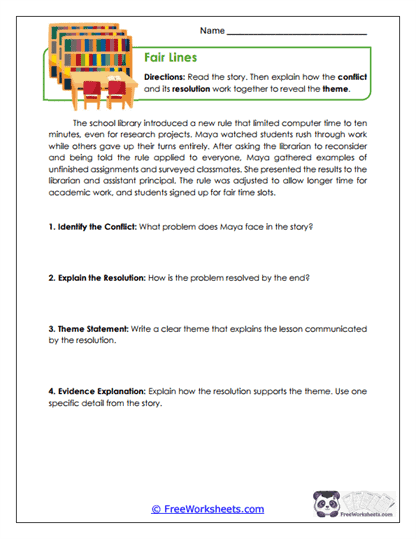
Fair Lines
- What Kids Do:
Students read about a student solving an unfair situation and identify the conflict and resolution. They then connect these events to a theme. - Target Skill:
Students learn how story structure supports theme. This helps them understand how problems and solutions reveal deeper messages.
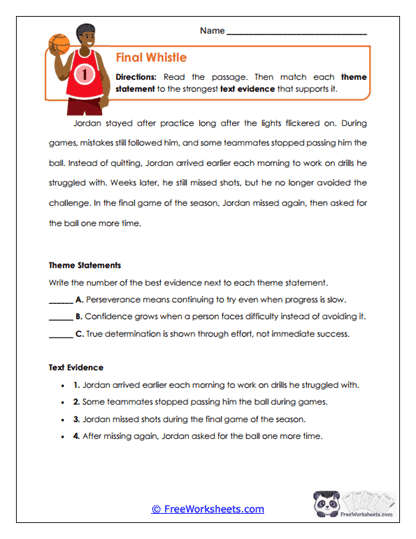
Final Whistle
- What Kids Do:
Students read a passage about perseverance in sports and match theme statements with supporting evidence. They analyze which details best support each idea. - Target Skill:
Students strengthen their ability to connect evidence to theme. This builds better comprehension and supports stronger explanations.
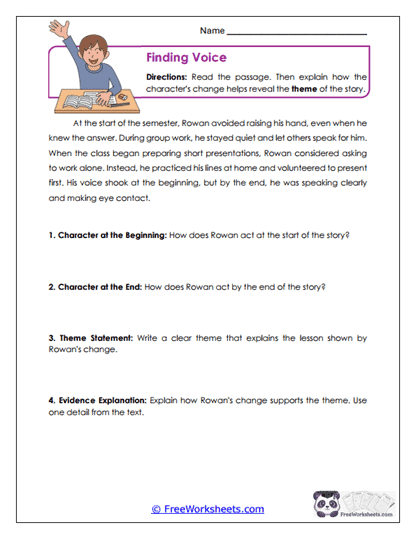
Finding Voice
- What Kids Do:
Students read about a character gaining confidence and track how the character changes over time. They connect this change to a theme. - Target Skill:
Students learn how character development reveals theme. This helps them understand how actions and growth connect to meaning.
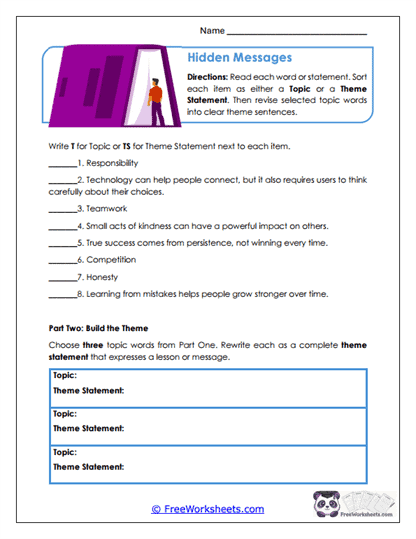
Hidden Messages
- What Kids Do:
Students sort ideas into topic or theme and rewrite topics into full theme statements. They practice turning general ideas into clear lessons. - Target Skill:
Students build the ability to distinguish between topics and themes. This strengthens their understanding of how deeper meaning is expressed.
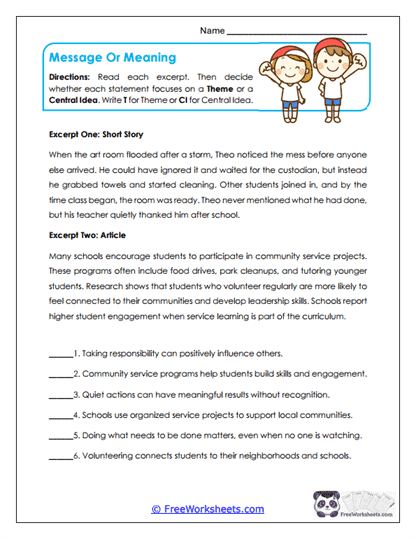
Message Or Meaning
- What Kids Do:
Students read both a story and an informational text and decide whether statements represent a theme or a central idea. They compare how meaning works across text types. - Target Skill:
Students learn the difference between theme and central idea. This helps them analyze both literary and informational texts more effectively.
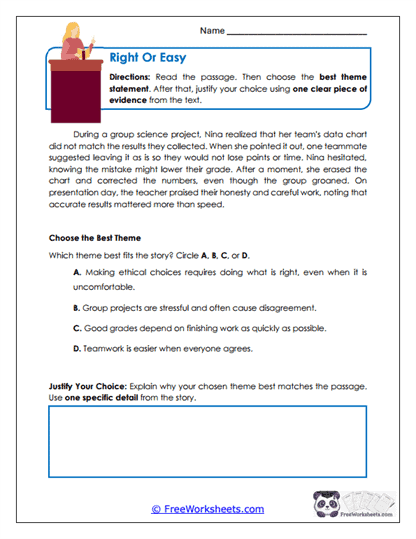
Right Or Easy
- What Kids Do:
Students read a story about making a difficult choice and select the best theme from several options. They support their choice with evidence. - Target Skill:
Students build skills in evaluating and selecting the strongest theme. This improves their ability to justify answers using the text.
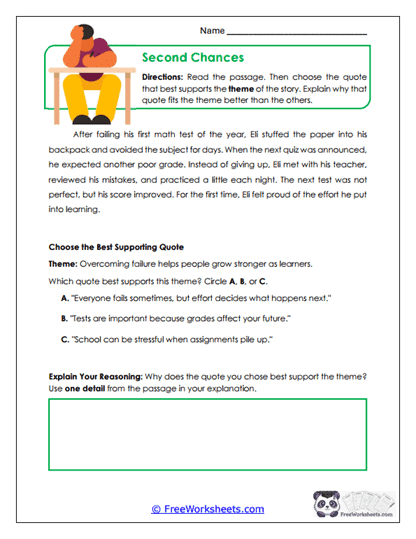
Second Chances
- What Kids Do:
Students read a story about learning from mistakes and choose the quote that best supports a given theme. They explain their reasoning. - Target Skill:
Students strengthen their ability to connect textual evidence to theme. This supports deeper comprehension and clearer explanations.
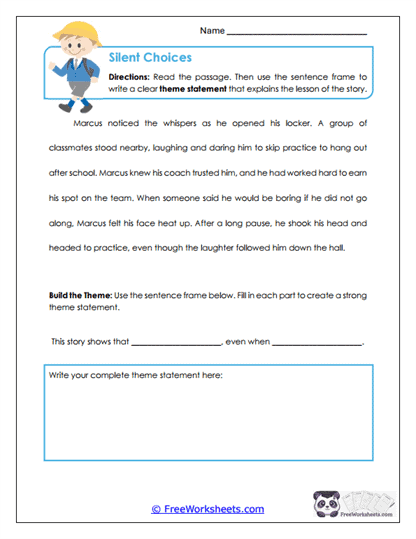
Silent Choices
- What Kids Do:
Students read about a student facing peer pressure and use a sentence frame to write a theme. They then rewrite it in their own words. - Target Skill:
Students practice writing clear and complete theme statements. This helps them express ideas more confidently and accurately.
Turning Point
- What Kids Do:
Students identify a key moment in a story that changes everything. They connect that turning point to the theme. - Target Skill:
Students learn how major events reveal important lessons. This builds stronger connections between plot and meaning.
Unspoken Strength
- What Kids Do:
Students read about a quiet character who helps others and identify a theme based on actions and dialogue. They support their idea with evidence. - Target Skill:
Students develop the ability to find theme in subtle details. This strengthens deeper reading and interpretation skills.