
Analyzing Literature Worksheets
7th Grade Reading Analyzing Literature worksheets help students break down stories and understand how authors build meaning. These free, ready-to-print worksheets come in PDF format and are perfect for immediate classroom use. Students strengthen skills like analyzing plot structure, character development, theme, and word choice aligned to curriculum standards.
About This Collection of Worksheets
This collection is designed to help seventh graders move from basic comprehension into true literary analysis. At this level, students begin to look closely at how stories are built-how characters change, how conflicts develop, and how authors use language to shape meaning. Each worksheet focuses on one key skill so students can build understanding step by step.
The passages are relatable and engaging, often centered around real-life situations students recognize, like friendships, challenges, and personal growth. This makes it easier for students to connect with the text while practicing higher-level thinking. As they work through the collection, they’ll learn to explain their ideas clearly and support their thinking with evidence.
These worksheets are flexible and easy to use in different settings. Teachers can use them for guided lessons, independent work, or small group discussions. Parents can also use them at home to support reading conversations and help students explain their thinking out loud. The goal is to build confident readers who understand not just what happens in a story, but why it matters.
Paul’s Teacher Tip
At this level, I always encourage students to slow down and really think about the story, not just finish it. A great question to ask is, “Why did the author include this part?” That simple shift helps students start analyzing instead of just reading. I also like to have students point to specific evidence before sharing answers-it builds stronger habits. If you can, have short discussions where students compare ideas, because hearing different perspectives deepens understanding. At home, even asking “What changed in the story?” can lead to deeper thinking.
Worksheet Collection Skill Spotlights
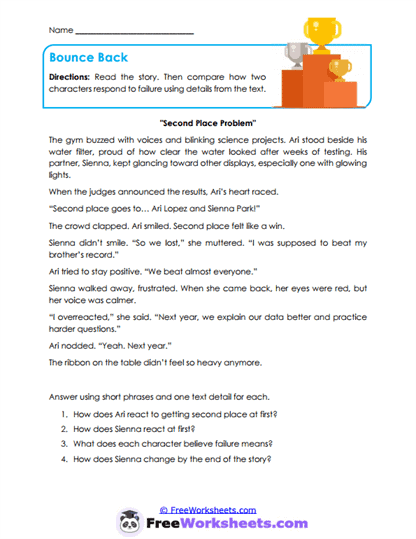
Bounce Back
- What Kids Do:
Students read a story about two characters reacting differently to the same situation. They compare responses, use text evidence, and explain what those reactions reveal about each character. - Target Skill:
Students build comparison skills by analyzing character responses and supporting ideas with evidence. This aligns with Common Core expectations for understanding how characters respond to challenges.
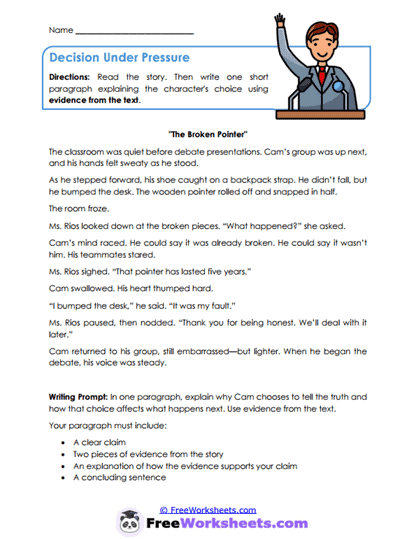
Decision Under Pressure
- What Kids Do:
Students read a narrative about a difficult choice and write a paragraph explaining why the character made that decision. They support their thinking with evidence and explain how the choice affects the story. - Target Skill:
Students strengthen evidence-based writing and analysis of character decisions. This supports Common Core goals for citing textual evidence and analyzing character actions.
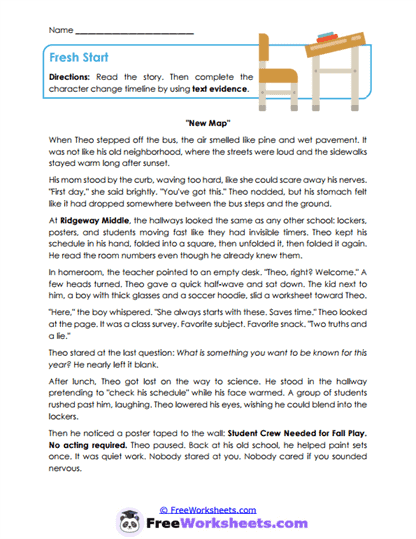
Fresh Start
- What Kids Do:
Students track how a character’s feelings change over time in a new situation. They identify key moments and explain what causes the character’s growth. - Target Skill:
Students develop the ability to analyze character development across a text. This aligns with Common Core standards focused on understanding how characters evolve.
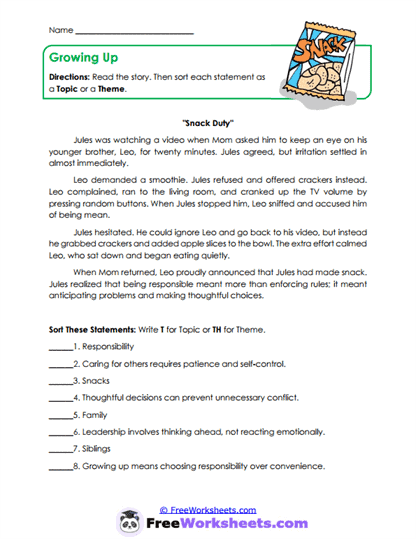
Growing Up
- What Kids Do:
Students read a story and sort ideas into topic or theme. They explore the difference between a general subject and the deeper lesson of the story. - Target Skill:
Students learn to distinguish between topic and theme and identify meaningful messages. This supports Common Core expectations for determining theme.
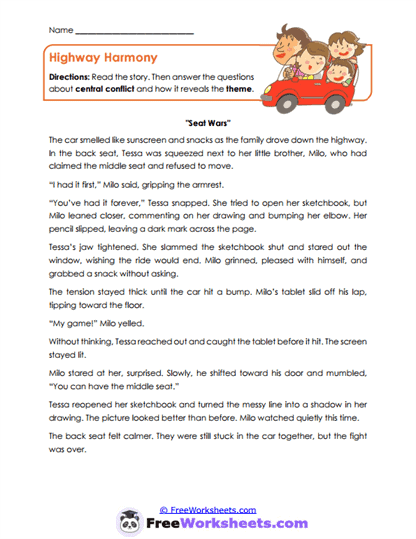
Highway Harmony
- What Kids Do:
Students identify the main conflict in a story and explain how it connects to the theme. They analyze how the problem leads to a deeper lesson. - Target Skill:
Students build skills in connecting conflict to theme. This aligns with Common Core goals for understanding how story elements develop meaning.
Perspective Matters
- What Kids Do:
Students analyze who is telling the story and explain how that point of view shapes understanding. They consider how the story might change from another perspective. - Target Skill:
Students strengthen their ability to analyze point of view and its impact. This supports Common Core standards for understanding perspective in literature.
Quiet Choice
- What Kids Do:
Students explore a character’s internal conflict and identify clues that reveal thoughts and emotions. They explain how these feelings influence decisions. - Target Skill:
Students develop deeper comprehension by analyzing internal conflict. This aligns with Common Core expectations for understanding character responses.
Theme in Action
- What Kids Do:
Students identify the theme of a story and connect it to specific events. They explain how key moments help reveal the story’s message. - Target Skill:
Students build skills in analyzing how theme develops over time. This supports Common Core goals for connecting ideas to evidence.
The Turning Point
- What Kids Do:
Students identify the most important moment in a story-the turning point-and explain why it matters. They connect this moment to the outcome of the story. - Target Skill:
Students strengthen their ability to analyze plot structure and key events. This aligns with Common Core expectations for understanding how stories develop.
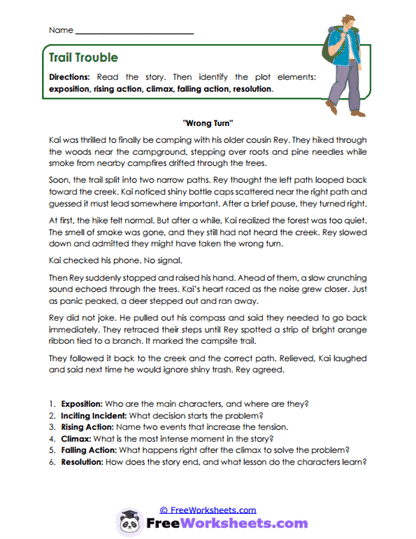
Trail Trouble
- What Kids Do:
Students break down a story into key plot elements, including exposition, rising action, climax, and resolution. They explain how each part contributes to the whole story. - Target Skill:
Students develop a clear understanding of plot structure. This supports Common Core standards for analyzing how story elements interact.
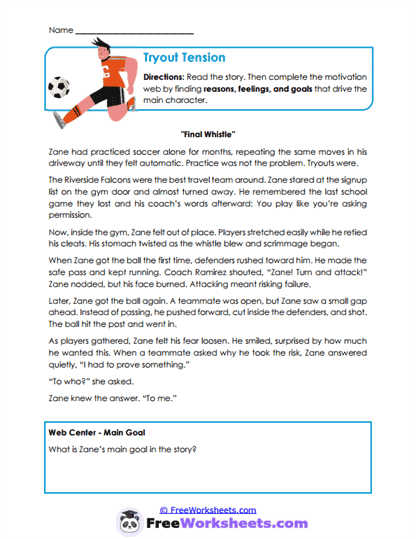
Tryout Tension
- What Kids Do:
Students explore a character’s motivation by identifying goals, challenges, and emotions. They organize their thinking using a visual organizer. - Target Skill:
Students build skills in analyzing character motivation. This aligns with Common Core goals for understanding why characters act the way they do.
Words That Matter
- What Kids Do:
Students identify important words and phrases in a passage and explain how those choices affect tone and meaning. - Target Skill:
Students strengthen their ability to analyze word choice and its impact. This supports Common Core expectations for understanding how language shapes meaning.