
About This Worksheet
This worksheet does a really nice job of helping students look closely at how different characters respond to the same situation. A teacher might explain to a parent, “At this level, we’re not just asking what happened-we’re asking how characters react and what that shows about them.” It’s designed for Grade 7 students to compare character responses, especially when dealing with disappointment or failure. For example, one character may stay positive while another struggles, and students explore why.
Curriculum and Grade Alignment
This activity aligns with CCSS.ELA-LITERACY.RL.7.3, focusing on analyzing how characters respond to challenges. A teacher might say, “We’re helping students understand that characters reveal who they are through their actions and reactions.” This builds deeper comprehension and supports analytical thinking. It also helps students connect literature to real-life emotions and decisions.
Student Tasks
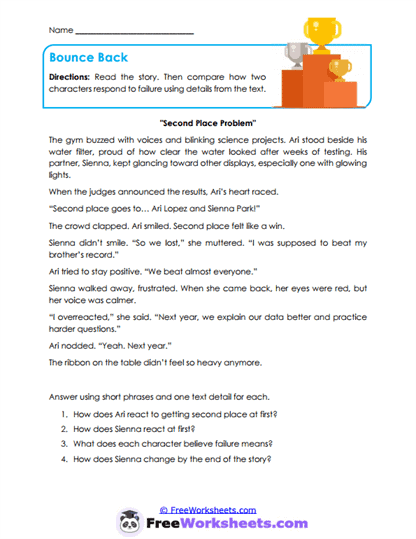
On this worksheet, students will read a story about two students reacting to a competition result. A teacher might explain, “They’ll compare how each character responds and use details from the text to support their answers.” Students also reflect on how one character changes over time. This encourages careful reading and thoughtful comparison.
Common Challenges and Misconceptions
Students may describe each character without actually comparing them. A teacher might note, “They’ll talk about one and then the other, but not connect the two.” Another challenge is using text evidence clearly. Teachers can support students by asking, “What does the story show about each character’s attitude?”
Implementation Guidance
In the classroom, this worksheet works really well as a partner or discussion activity. A teacher might say, “We often have students share how each character handled the situation differently.” At home, parents can support by asking which character they relate to more and why. That builds personal connection and deeper thinking.
Details and Features
The worksheet includes a relatable scenario and focused comparison questions. A teacher might point out, “It’s simple, but it really pushes students to think about character behavior.” The format supports clear, short responses. It is easy to print and use anywhere.