
7th Grade Reading Comprehension Worksheets
These worksheets help middle school readers build strong Reading skills through rigorous passages and text-dependent questions. These free, ready-to-print PDF worksheets are designed for immediate classroom use with clear prompts and organized response space. Students practice citing textual evidence, tracking central ideas, analyzing theme and point of view, and evaluating arguments across fiction and nonfiction.
About This Collection of Worksheets
In 7th Grade, comprehension instruction shifts from “what happened” to “how the text works,” requiring students to support analysis with precise evidence. Students are expected to determine central ideas, trace how ideas develop, interpret word choice and figurative language, and explain how structure shapes meaning across informational and literary texts. This collection supports that progression by guiding students from literal understanding into inference, analysis, and evaluation aligned to middle school standards.
These worksheets are flexible for whole-class close reading, small-group instruction, independent practice, and RTI support. Several pages include scaffolded question levels, matching formats, and structured prompts that help students practice academic responses without guessing. They also work well as formative assessments, discussion starters, or quick checks before extended writing tasks.
Each printable PDF is classroom-ready, ink-friendly, and designed for low-prep teaching. Passages are clearly formatted and paired with questions that require students to quote or paraphrase evidence. With ample space for written responses, students can practice explaining their thinking clearly and completely.
Paul’s Teacher Tip
Grade 7 is where students need to consistently prove their thinking, so build a routine where every answer includes a piece of text evidence. Model how to “zoom in” on a single phrase and explain why it matters instead of summarizing the whole passage. For support, give students sentence frames that guide analysis, not just answers (e.g., “This detail shows…”). You can also turn select questions into short discussions so students hear multiple interpretations before writing. Over time, encourage students to question the text themselves to deepen independence and critical thinking.
Worksheet Collection Skill Spotlights
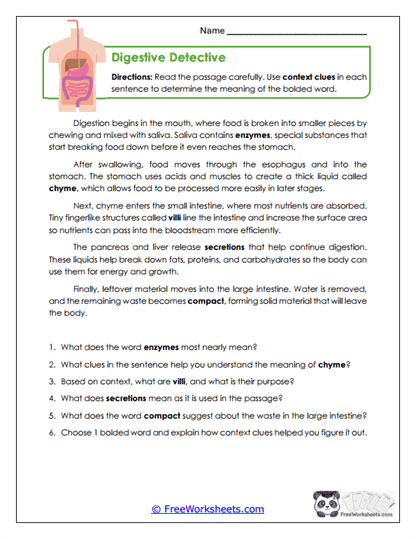
Digestive Detective
• What Kids Do – Students read a science passage and use context clues to define vocabulary, citing evidence from the text.
• Target Skill – Builds context-based vocabulary and evidence-supported reasoning.
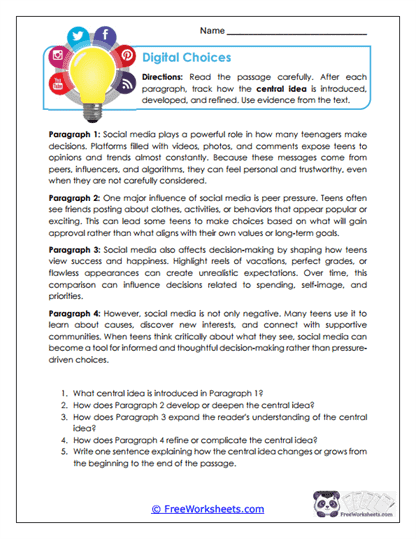
Digital Choices
• What Kids Do – Students identify the central idea and explain how it develops across paragraphs using text evidence.
• Target Skill – Develops analysis of central idea progression.
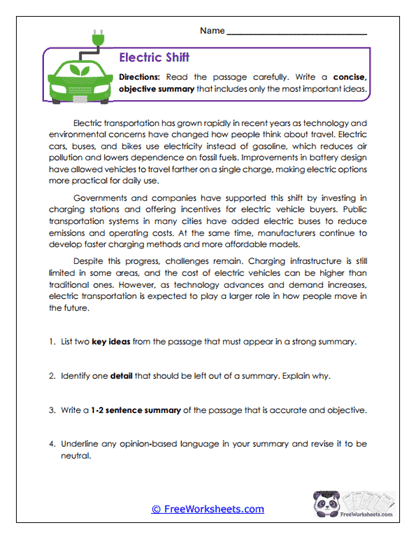
Electric Shift
• What Kids Do – Students select key details and write a short, objective summary without opinions.
• Target Skill – Builds concise summary writing focused on central ideas.
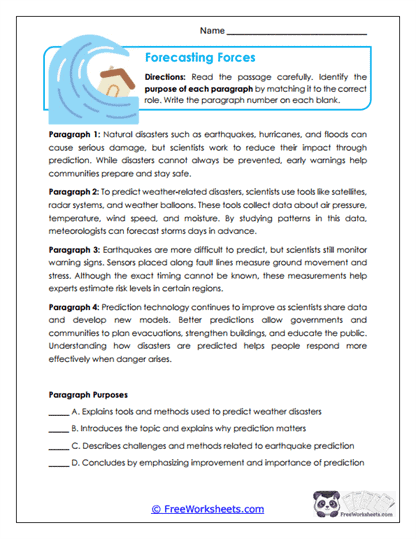
Forecasting Forces
• What Kids Do – Students match each paragraph to its purpose within an informational text.
• Target Skill – Develops understanding of text structure and organization.
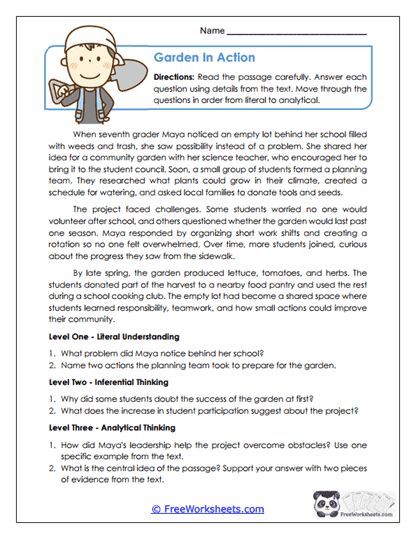
Garden In Action
• What Kids Do – Students answer literal, inferential, and analytical questions using evidence from the text.
• Target Skill – Builds multi-level comprehension and text-based reasoning.
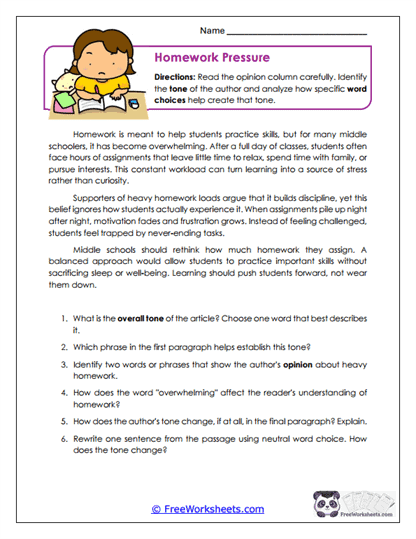
Homework Pressure
• What Kids Do – Students identify tone, highlight key phrases, and revise a sentence to change tone.
• Target Skill – Develops tone analysis and word choice awareness.
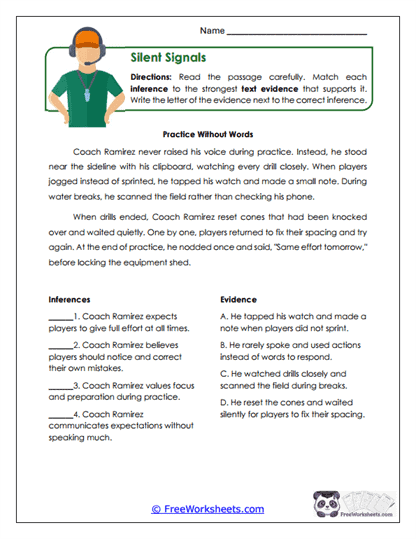
Silent Signals
• What Kids Do – Students match inferences to the strongest supporting evidence from the text.
• Target Skill – Builds precise inference and evidence selection.
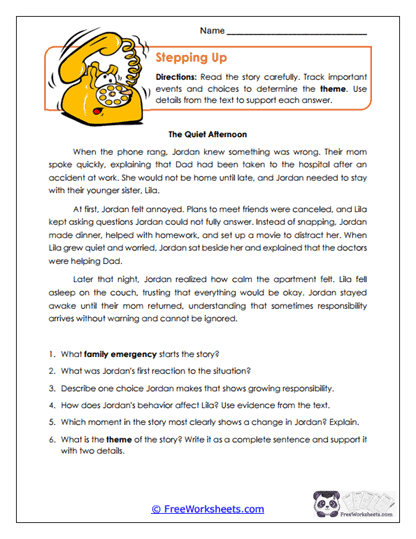
Stepping Up
• What Kids Do – Students identify a theme and support it with details from character actions and events.
• Target Skill – Develops theme analysis and evidence-based explanation.
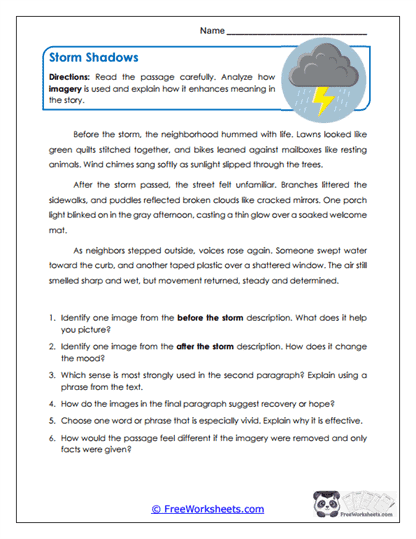
Storm Shadows
• What Kids Do – Students identify imagery and explain how it creates mood and supports meaning.
• Target Skill – Builds analysis of imagery and mood.
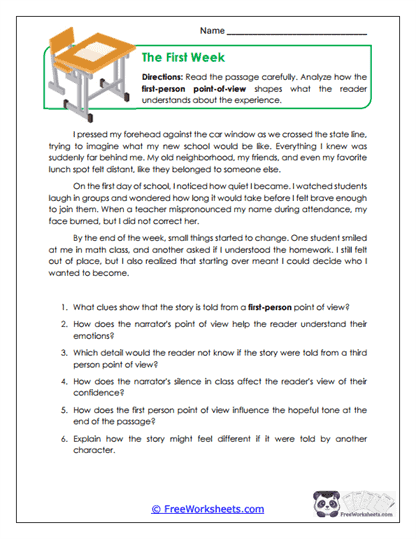
The First Week
• What Kids Do – Students analyze a first-person narrative and explain how the narrator’s thoughts shape understanding.
• Target Skill – Develops point of view analysis.
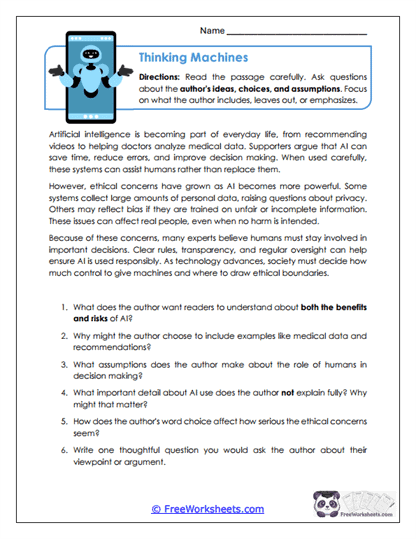
Thinking Machines
• What Kids Do – Students identify the author’s claim, evaluate supporting examples, and ask a question about reasoning.
• Target Skill – Builds argument analysis and critical evaluation.
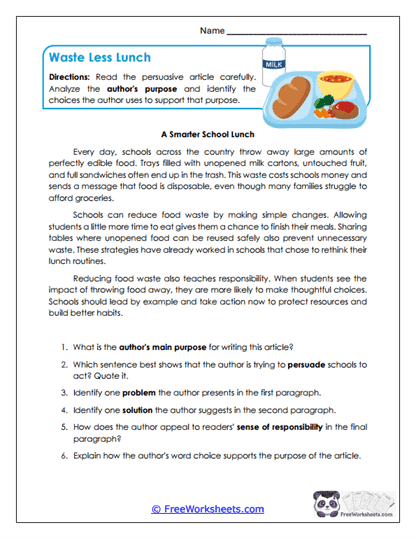
Waste Less Lunch
• What Kids Do – Students determine the author’s purpose and identify evidence that supports persuasion.
• Target Skill – Develops analysis of persuasive purpose and supporting details.