
Literary Devices Worksheets
7th Grade reading literary devices worksheets help students understand how authors use language to create meaning and impact. These free, ready-to-print PDF format worksheets are designed for immediate classroom use and easy at-home practice. Students build key skills like identifying figurative language, analyzing tone, and interpreting symbolism to deepen comprehension.
About This Collection of Worksheets
This collection gives students meaningful practice with the tools authors use to make writing more powerful and engaging. Each worksheet focuses on helping students recognize how language choices shape meaning, whether through imagery, sound, or figurative expressions. As students work through the activities, they begin to see how literary devices are not just decorative, but essential to understanding a text.
Students will explore a variety of genres, including poetry, narrative passages, and persuasive texts. They will identify devices like symbolism, irony, and repetition while also explaining how those choices affect tone, mood, and theme. The range of texts keeps students engaged while reinforcing consistent analysis skills across different types of writing.
This set is especially helpful for building deeper reading and writing skills in middle school. As students become more comfortable identifying literary techniques, they also become stronger readers and more thoughtful writers. The worksheets are flexible for classroom instruction, small group work, or independent practice.
Paul’s Teacher Tip
When teaching literary devices, I always remind students that authors make choices on purpose. Instead of just asking “What device is this?”, try asking “Why did the author use it here?” That simple shift helps students move from labeling to understanding. It also helps to read passages aloud so students can hear how language sounds and feels. Encourage students to explain their thinking, even if they are unsure at first. Over time, they will become more confident in analyzing deeper meaning.
Worksheet Collection Skill Spotlights
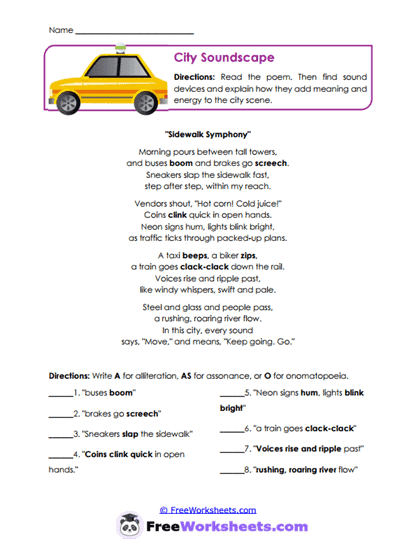
City Soundscape
- What Kids Do:
Students read a poem and identify sound devices like alliteration and onomatopoeia. They listen for repeated sounds and explain how they affect the poem. - Target Skill:
Students develop awareness of how sound patterns influence meaning and rhythm. This supports stronger analysis of poetry and deeper appreciation of language.
City Soundscape (Alt #2)
- What Kids Do:
Students explore a second version of a city-themed poem and identify repeated sounds that create rhythm and energy. They label examples and discuss how they enhance imagery. - Target Skill:
Students continue building skills in analyzing sound devices and understanding their role in shaping tone and meaning. This reinforces close reading and attention to language details.
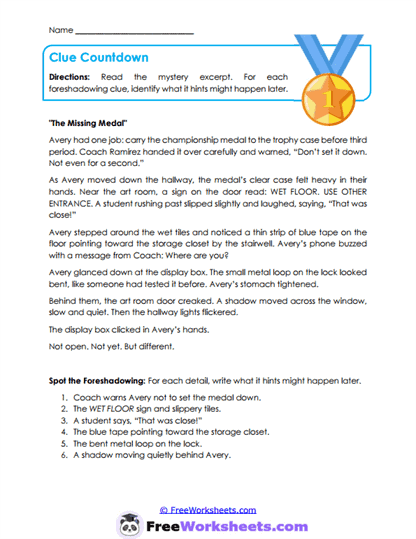
Clue Countdown
- What Kids Do:
Students read a mystery passage and look for clues that hint at what might happen next. They identify moments that suggest future events and explain their predictions using specific details from the text. - Target Skill:
Students build the ability to recognize foreshadowing and use evidence to make logical predictions. This strengthens comprehension by helping them think ahead and understand how authors guide readers through a story.
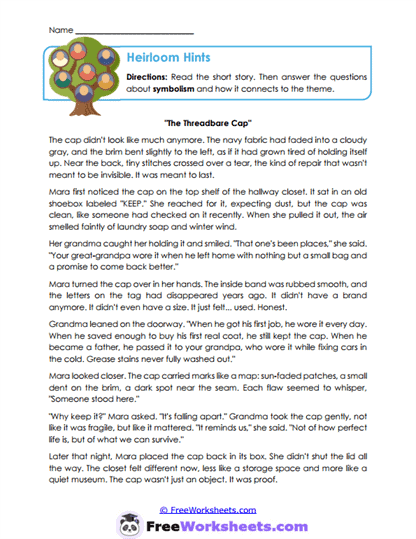
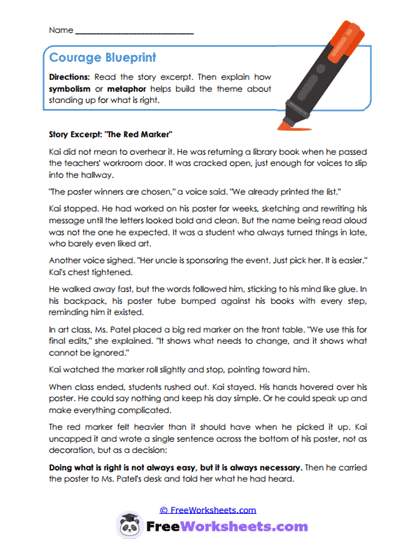
Courage Blueprint
- What Kids Do:
Students read a story about making a difficult choice and identify objects or actions that carry deeper meaning. They explain how these elements connect to the theme of courage. - Target Skill:
Students develop skills in identifying symbolism and connecting it to theme. This helps them move beyond surface-level reading and understand how authors communicate bigger ideas.
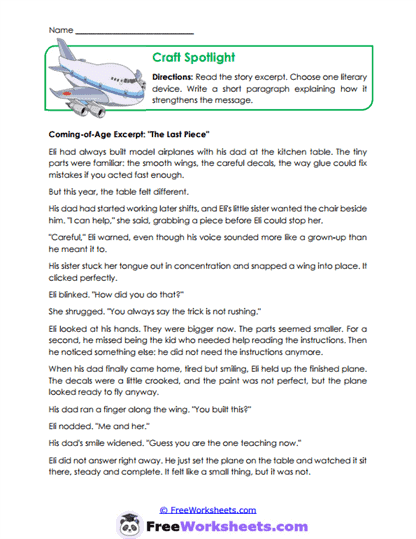
Craft Spotlight
- What Kids Do:
Students read a narrative passage and focus on one literary device used by the author. They write a short explanation describing how that device strengthens the message of the text. - Target Skill:
Students practice analyzing how specific techniques support meaning. This builds stronger connections between author choices and overall theme or message.
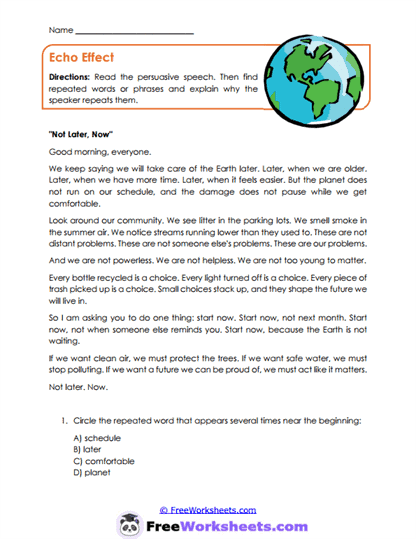
Echo Effect
- What Kids Do:
Students read a persuasive speech and identify repeated words or phrases. They explain how repetition emphasizes important ideas and strengthens the message. - Target Skill:
Students learn how repetition is used as a tool to influence readers. This builds awareness of persuasive techniques and helps students analyze how ideas are reinforced in text.
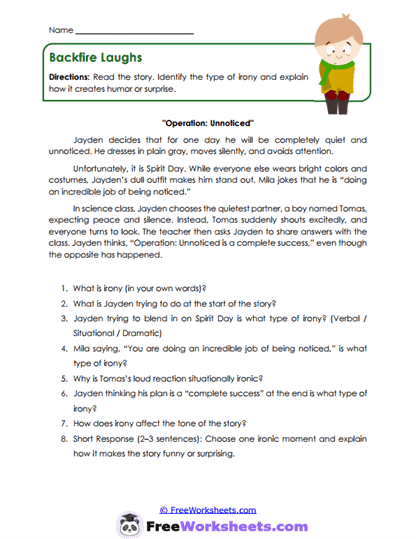
Irony Inspector
- What Kids Do:
Students read short scenarios and determine which type of irony is being used. They explain why each situation is unexpected or surprising. - Target Skill:
Students build understanding of different types of irony and how they create meaning. This strengthens analytical thinking and helps students recognize subtle literary techniques.
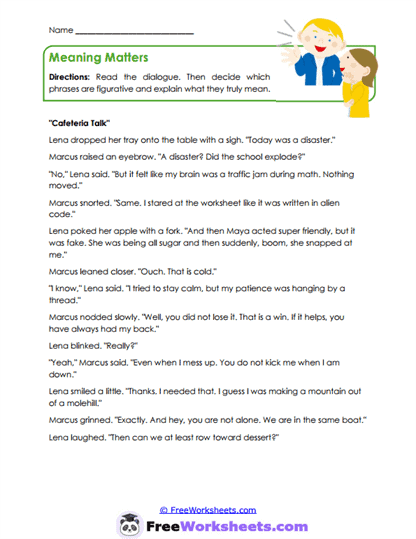
Meaning Matters
- What Kids Do:
Students read a dialogue and identify phrases that are not meant literally. They explain the true meaning of each expression based on context. - Target Skill:
Students improve their ability to interpret figurative language in everyday text. This helps them understand nonliteral meaning and strengthens overall comprehension.
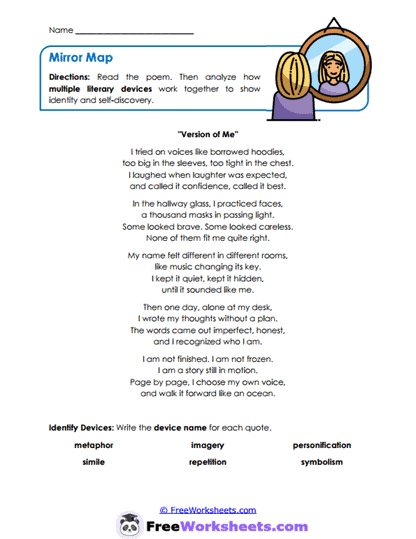
Mirror Map
- What Kids Do:
Students read a poem and identify multiple literary devices used throughout the text. They match each example to the correct type and consider how they work together. - Target Skill:
Students develop the ability to analyze how different devices interact to build meaning. This deepens comprehension and supports more advanced literary analysis.
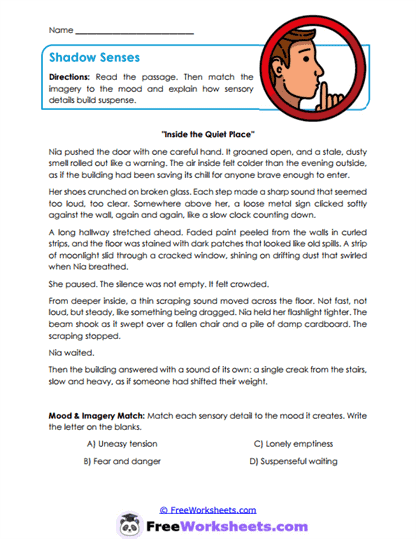
Shadow Senses
- What Kids Do:
Students read a suspenseful passage and identify sensory details that create a specific mood. They connect descriptive language to feelings like tension or fear. - Target Skill:
Students learn how imagery and sensory language shape mood. This builds stronger interpretation skills and helps them understand how authors create emotional impact.
Symbol Signals
- What Kids Do:
Students read a short passage and identify symbols within the text. They explain what each symbol represents and how it connects to the overall message. - Target Skill:
Students strengthen their ability to interpret symbolic meaning and connect it to theme. This encourages deeper thinking and supports more advanced comprehension.
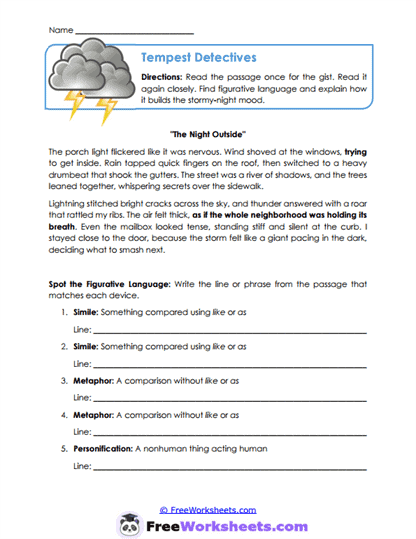
Tempest Detectives
- What Kids Do:
Students read a descriptive passage and identify examples of simile, metaphor, and personification. They explain how these devices contribute to the stormy mood. - Target Skill:
Students build skills in identifying figurative language and explaining its effect. This helps them understand how language shapes tone and imagery.