
7th Grade Reading Passages Worksheets
7th Grade reading passages help students build stronger comprehension through engaging texts and skill-based questions. These free, ready-to-print PDF format worksheets are designed for immediate classroom use and easy at-home support. Students practice key skills like identifying central ideas, making inferences, and analyzing text structure to deepen understanding.
About This Collection of Worksheets
This collection gives students meaningful practice with both literary and informational texts that reflect real-world topics and relatable experiences. Each passage is carefully designed to challenge students while still being accessible, helping them build confidence as readers. The questions guide students to think beyond basic understanding and focus on how texts are constructed and what they truly mean.
Students will work through a wide range of reading skills, including identifying main ideas, analyzing character actions, and evaluating arguments. Many of the worksheets encourage students to cite evidence and explain their thinking clearly, which is essential for middle school reading success. The variety of topics keeps students engaged while reinforcing consistent comprehension strategies.
This set is especially helpful for developing deeper reading habits and preparing students for written responses. As students move through the passages, they learn to connect ideas across paragraphs, interpret tone and mood, and organize information more effectively. These worksheets are flexible for classroom instruction, small group work, or independent practice.
Paul’s Teacher Tip
When working with passages, I always encourage slowing down the reading process just a bit. Many students rush to get answers, but the real growth happens when they pause and think about what the text is actually saying. Try having students underline or highlight key details before answering questions. You can also ask them to explain their thinking out loud, which often reveals deeper understanding. Small group discussions are especially powerful here because students hear different perspectives. Over time, they begin to approach reading with more purpose and confidence.
Worksheet Collection Skill Spotlights
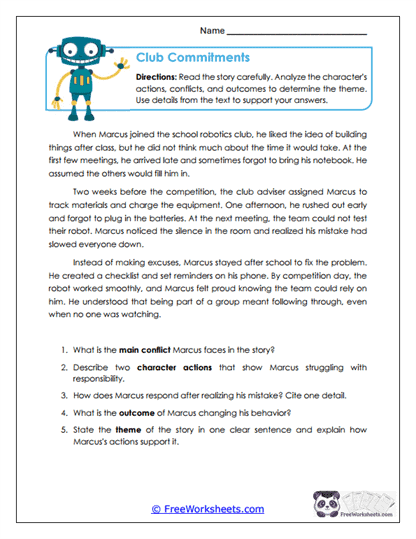
Club Commitments
- What Kids Do:
Students read a short story about a student balancing responsibilities and identify the main conflict. They examine character choices and explain how those actions lead to specific outcomes, using details from the passage to support their thinking. - Target Skill:
Students strengthen their ability to analyze how character actions shape plot and theme. This builds deeper comprehension by helping them connect events, decisions, and outcomes to a larger message in narrative texts.
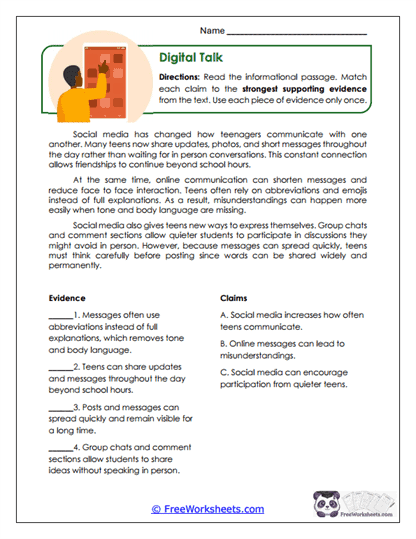
Digital Talk
- What Kids Do:
Students read an informational passage about social media communication and match claims to the best supporting evidence. They carefully compare ideas and ensure each piece of evidence is used correctly. - Target Skill:
This activity builds skills in analyzing arguments and understanding how evidence supports claims. Students learn to evaluate information more carefully and make stronger connections between ideas in informational texts.
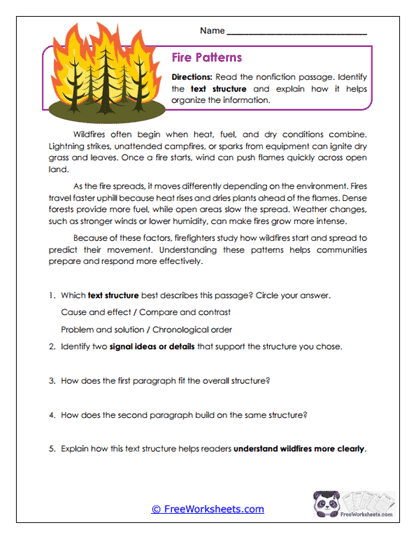
Fire Patterns
- What Kids Do:
Students read a nonfiction passage about wildfires and identify how the information is organized. They explain the structure and support their answers with details from the text. - Target Skill:
Students develop the ability to recognize text structures like cause and effect or sequence. This helps them better understand how information is presented and improves overall comprehension.
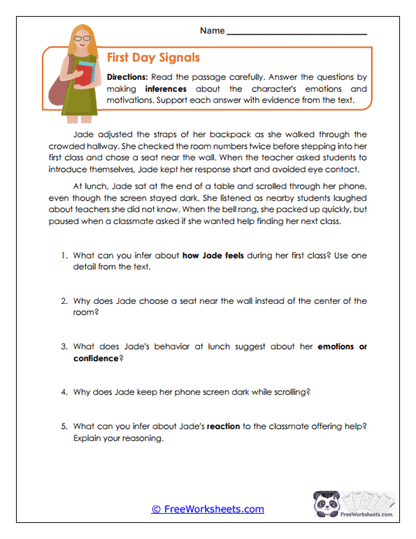
First Day Signals
- What Kids Do:
Students read a narrative about a student’s first day and make inferences about emotions and motivations. They use clues from the text to explain what the character is feeling and why. - Target Skill:
Students build inference skills by connecting details to deeper meaning. They learn to support their ideas with evidence, which strengthens both comprehension and critical thinking.
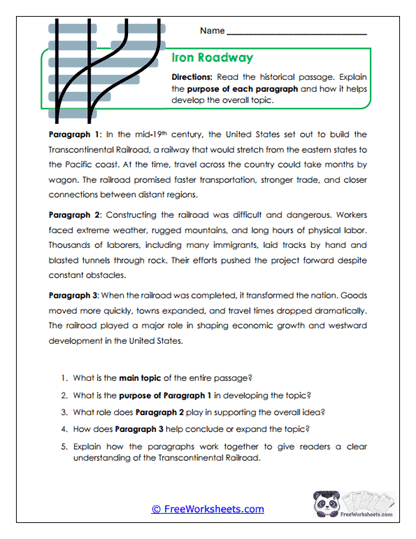
Iron Roadway
- What Kids Do:
Students read a historical passage and identify the main topic of the text. They explain the purpose of each paragraph and how it contributes to the overall meaning. - Target Skill:
This worksheet helps students understand how ideas develop across a text. They learn to connect paragraphs and see how each part supports a larger concept.
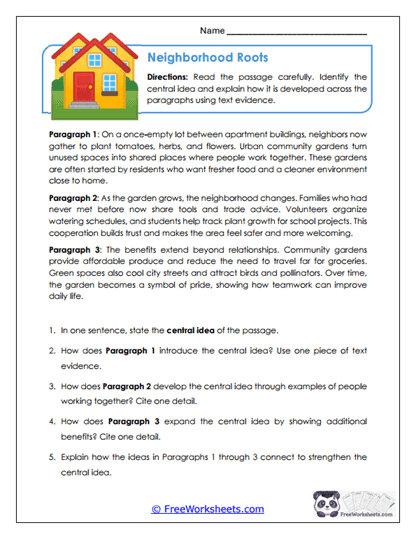
Neighborhood Roots
- What Kids Do:
Students read a multi-paragraph passage about community gardens and track how the central idea develops. They identify supporting details and explain how each paragraph builds meaning. - Target Skill:
Students strengthen their ability to identify central ideas and analyze how they grow across a text. This supports deeper comprehension and better organization of information.
Ocean Layers
- What Kids Do:
Students read a science-based passage about ocean zones and identify key features of each layer. They organize information and explain how the text presents it. - Target Skill:
Students improve their ability to understand and organize informational text. This helps them make sense of complex topics and strengthens both reading and content knowledge.
Quiet Invention
- What Kids Do:
Students read a passage about an inventor and identify challenges faced along the way. They explain how the individual responded and how those actions led to success. - Target Skill:
Students learn to analyze how events and actions connect to outcomes. This builds stronger comprehension and helps them understand cause-and-effect relationships in informational text.
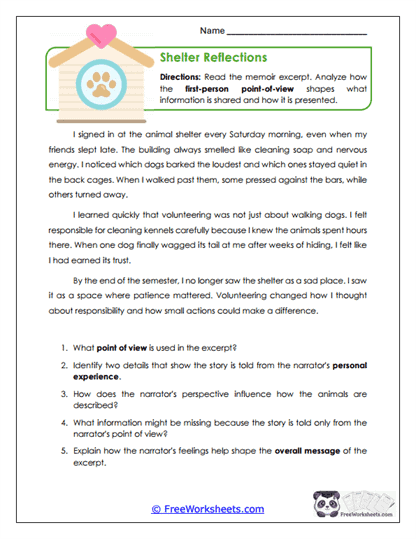
Shelter Reflections
- What Kids Do:
Students read a memoir-style passage and identify the point of view. They explain how the narrator’s personal experiences shape what is shared and how it is described. - Target Skill:
Students develop a deeper understanding of perspective and narrative voice. This helps them see how personal experience influences meaning in literary texts.
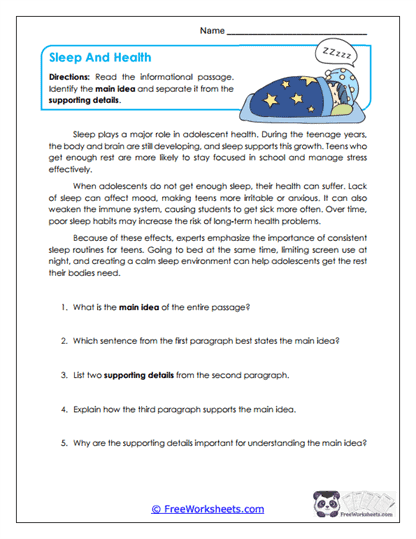
Sleep And Health
- What Kids Do:
Students read an informational passage about sleep and identify the main idea and supporting details. They explain how the author builds an argument using evidence. - Target Skill:
Students strengthen skills in identifying key ideas and analyzing how evidence supports them. This helps improve both comprehension and the ability to evaluate informational text.
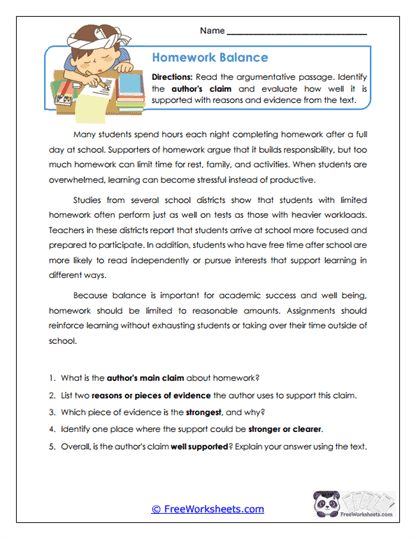
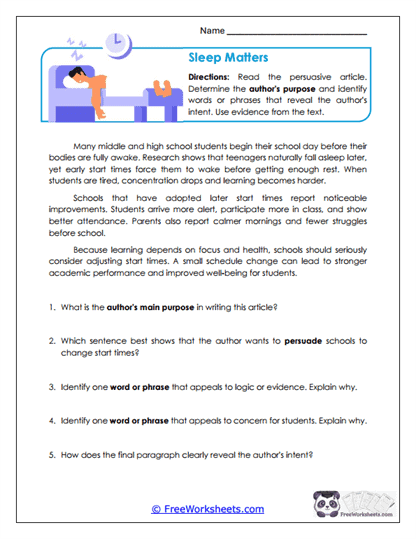
Sleep Matters
- What Kids Do:
Students read a persuasive passage about school start times and determine the author’s purpose. They identify language that reveals intent and explain how it supports the argument. - Target Skill:
Students build skills in analyzing author purpose and recognizing persuasive techniques. This helps them better understand how texts are written to influence readers.
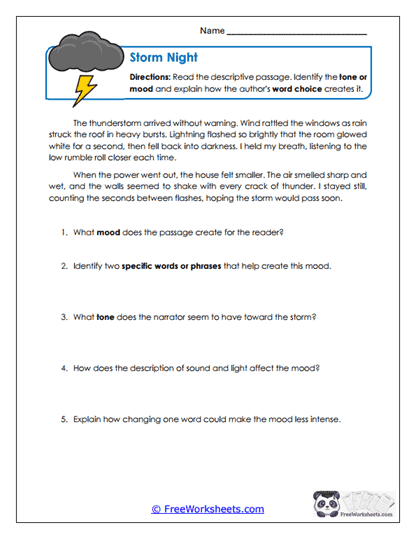
Storm Night
- What Kids Do:
Students read a descriptive passage about a storm and identify the mood created by the text. They highlight words that contribute to the emotional tone. - Target Skill:
Students develop the ability to analyze tone and mood through word choice. This strengthens literary interpretation and helps them understand how language shapes reader experience.