
Comparing Texts Worksheets
These 7th Grade reading comparing texts worksheets help students examine how different authors present similar topics, events, and arguments. Every activity is Free, Ready-to-print, available in PDF format, and prepared for Immediate classroom use. Students strengthen core reading skills in comparing central ideas, analyzing perspective, and evaluating evidence across multiple sources.
About This Collection of Worksheets
This collection gives 7th graders meaningful practice comparing two texts instead of studying each passage by itself. Students examine how authors can write about the same subject while choosing different purposes, structures, details, tones, formats, and points of view. The paired readings cover topics such as climate change, school start times, social media, the Dust Bowl, ocean pollution, civic participation, natural disasters, school lunches, and westward expansion.
Each activity asks students to look beyond basic similarities and explain why the differences matter. One worksheet may compare a textbook account with an emotional eyewitness description, while another pairs a research-based article with a persuasive call to action. Students also compare timelines with cause-and-effect explanations, personal narratives with broad informational overviews, written articles with documentary transcripts, and arguments that rely on different kinds of rhetorical appeals.
These printable worksheets work well during close-reading lessons, social studies integration, science units, writing instruction, homework, intervention, and test preparation. The collection supports Common Core expectations for comparing multiple texts, evaluating arguments, analyzing point of view, studying text structure, examining multimedia formats, and using evidence from more than one source. Because every pairing presents a different kind of comparison, students repeatedly practice the skill without completing the same task in a slightly altered form.
Paul’s Teacher Tip
Before students compare two passages, have them write one short sentence explaining what each text is mostly trying to do. This keeps them from settling for a surface-level answer such as, “Both texts are about turtles.” Next, ask them to mark one important similarity and one meaningful difference in purpose, structure, evidence, tone, or viewpoint. Encourage students to use comparison words such as “both,” “however,” “while,” and “unlike” in their written responses. Most importantly, require evidence from each passage so the comparison does not become two separate summaries or a personal opinion about which topic they prefer.
Worksheet Collection Skill Spotlights
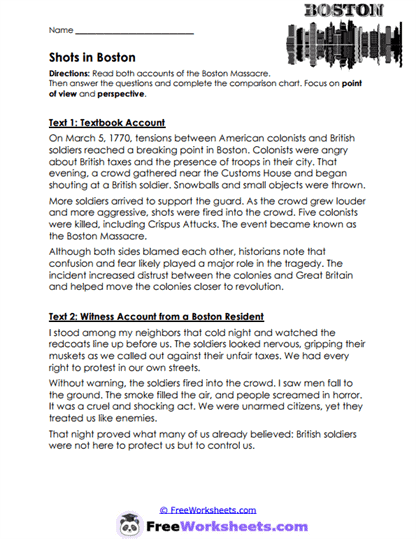
Boston Viewpoints
What Kids Do: Students compare a textbook-style explanation of the Boston Massacre with a first-person account from a Boston resident. They study dates, background details, emotional language, tone, and perspective to determine how each source shapes the reader’s understanding of the conflict.
Target Skill: This activity strengthens analysis of point of view across historical sources. Students practice distinguishing broad contextual information from personal interpretation while using evidence to explain how perspective, word choice, and selected details influence the presentation of the same event.
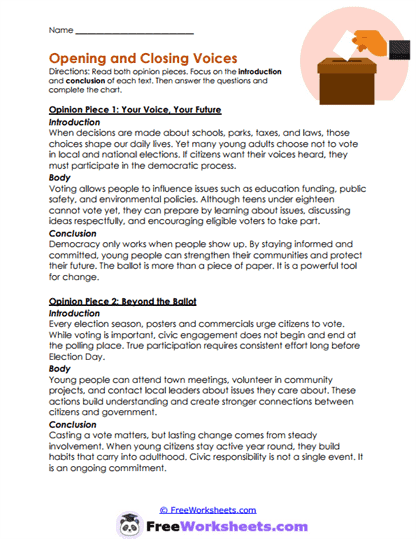
Civic Endings
What Kids Do: Students read two opinion texts about civic participation and focus closely on how each author begins and ends the discussion. They compare an argument centered on voting with one that emphasizes continued community involvement beyond Election Day.
Target Skill: Learners analyze how introductions and conclusions frame an argument and reinforce its central message. The activity supports Common Core work with text structure by asking students to explain how openings prepare readers and how endings shape the final takeaway.
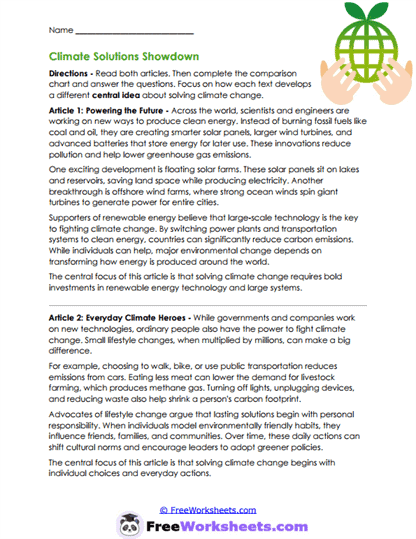
Climate Contrasts
What Kids Do: Students compare one article about large-scale climate solutions with another focused on everyday personal choices. They organize similarities and differences while paying attention to who is responsible for taking action and how widely each solution could affect the problem.
Target Skill: Students compare central ideas and supporting details across two informational texts on the same topic. This Common Core-aligned task develops the ability to explain how authors approach a shared issue from different levels, priorities, and practical viewpoints.
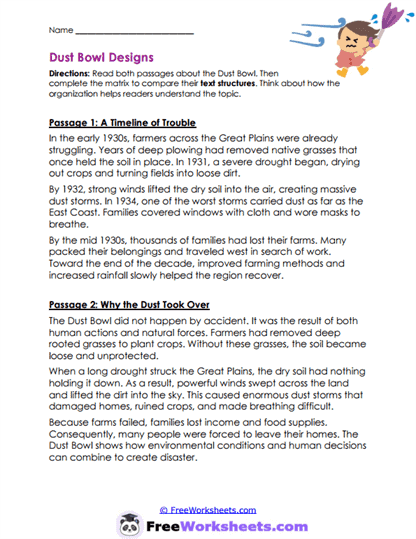
Dust Causes
What Kids Do: Students examine two passages about the Dust Bowl, with one organized in chronological order and the other built around cause and effect. They complete a matrix showing the structure, important details, and purpose of each author’s approach.
Target Skill: This worksheet builds recognition of informational text structures and their effects on understanding. Students distinguish when-and-what-happened organization from why-it-happened reasoning while comparing how both structures contribute useful historical knowledge.
Lunch Appeals
What Kids Do: Students compare two persuasive arguments about school nutrition standards. One relies heavily on health research and academic benefits, while the other emphasizes student choice, cultural foods, family concerns, and personal freedom.
Target Skill: Readers identify and compare logos, pathos, and ethos across competing arguments. The task supports Common Core evaluation of persuasion by asking students to explain how facts, credibility, and emotional language shape each author’s position and influence the audience.
Media Arguments
What Kids Do: Students read two editorials about teenage social media use and compare each author’s claim, reasons, evidence, recommendations, and treatment of the opposing side. They then decide which argument is stronger and defend that judgment with details from both texts.
Target Skill: Students evaluate the quality of competing arguments rather than choosing the side they personally prefer. This activity develops analysis of relevance, logical reasoning, counterclaims, and sufficiency of evidence across two texts addressing the same issue.
Mill Perspectives
What Kids Do: Students compare a broad historical overview of child labor with a personal account from a twelve-year-old mill worker. They examine differences in tone, emotional effect, scope, word choice, and the kinds of information each source provides.
Target Skill: Learners compare objective and first-person presentations of a historical topic. The worksheet supports analysis of perspective by showing how one source explains widespread conditions while another helps readers understand the lived experience of an individual.
Plastic Evidence
What Kids Do: Students study two texts about ocean plastic pollution, one built around statistics and research and the other using vivid scenes and urgent language. They sort details by type and explain how each author makes readers think or feel.
Target Skill: This page develops the ability to compare statistical, descriptive, and emotional evidence. Students evaluate how different forms of support affect credibility, clarity, urgency, and persuasiveness while recognizing that dramatic examples are strongest when backed by reliable facts.
Recovery Views
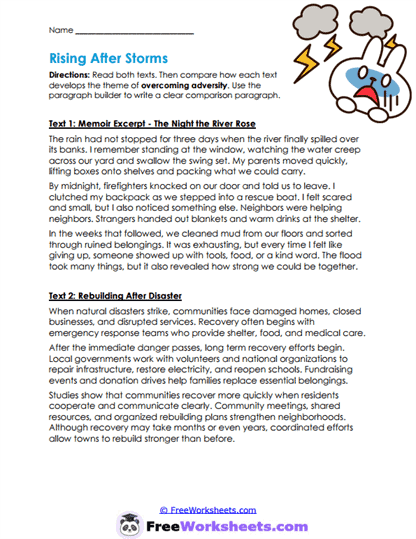
What Kids Do: Students compare a personal account of a family rebuilding after a flood with an informational text about how communities recover from disasters. They explore hardship, teamwork, resilience, emotional recovery, and practical rebuilding strategies before writing a comparison paragraph.
Target Skill: Students connect theme in a narrative with central idea in informational writing. The activity supports cross-genre comparison by asking how two different forms of writing develop a shared message about adversity, support, recovery, and moving forward.
Schedule Perspectives
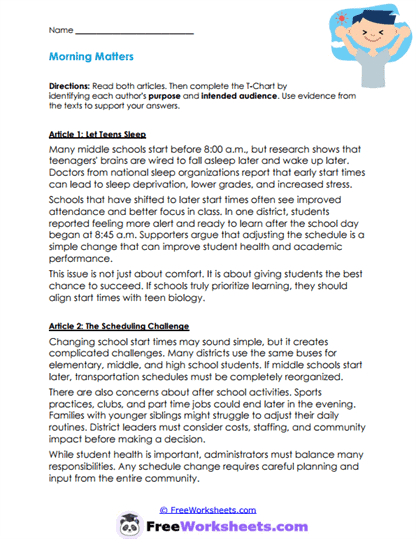
What Kids Do: Students compare two articles about later school start times, with one focusing on sleep, health, and academic performance and the other emphasizing transportation, staffing, sports, and community planning. They identify each author’s purpose and likely audience.
Target Skill: Readers analyze how purpose and audience influence the details an author chooses to include. This worksheet supports Common Core comparison of texts by requiring students to connect health evidence and scheduling concerns with the readers each author hopes to reach.
Turtle Formats
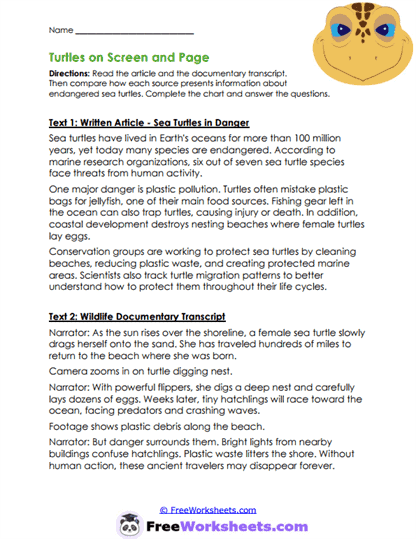
What Kids Do: Students compare a written article about endangered sea turtles with a documentary transcript containing narration, camera directions, and visual scenes. They identify shared information and explain how images, sound, and dramatic moments change the impact of the message.
Target Skill: This activity develops multimedia literacy by comparing print and documentary-style presentation. Students examine what each format communicates clearly, what receives greater emphasis, and how visual or audio elements can strengthen understanding and emotional response.
Western Perspectives
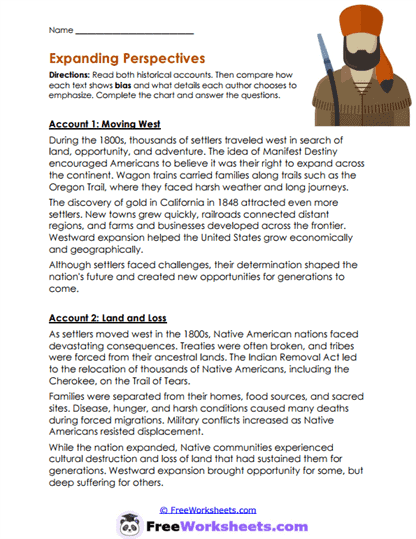
What Kids Do: Students read two historical accounts of westward expansion, one centered on opportunity and national growth and the other on Native American displacement and loss. They compare tone, word choice, included experiences, omitted viewpoints, and signs of bias.
Target Skill: Students analyze how perspective shapes historical writing and determines which experiences receive attention. The task supports Common Core work with viewpoint, bias, emphasis, and source comparison while encouraging readers to consider whose story is centered and whose is missing.