
About This Worksheet
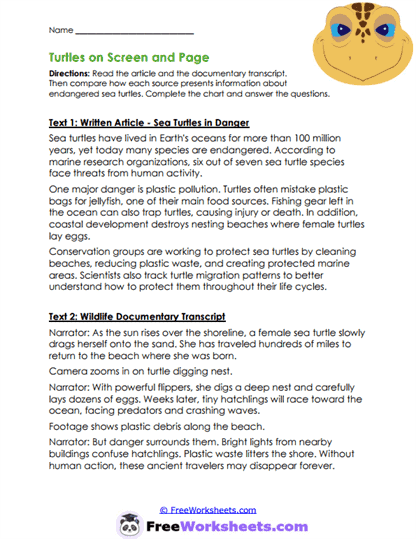
This Grade 7 reading worksheet helps students compare how the same topic is presented in two different formats. The written article explains why sea turtles are endangered, while the documentary transcript uses narration, camera directions, and visual scenes to show the danger more dramatically. Students study what each source does well and how format changes the reader’s experience. For example, the article gives broad facts about threats, while the documentary shows a hatchling struggling near plastic and bright city lights.
Learning Goals
The main goal is to help students understand that information can change in impact depending on how it is presented. Students should already know how to identify central ideas and supporting details in nonfiction. This activity moves them toward comparing print and multimedia sources for emphasis, clarity, and emotional effect. It supports CCSS.ELA-LITERACY.RI.7.7 and CCSS.ELA-LITERACY.RI.7.9, which ask students to compare information across different media and texts.
Student Tasks
On this worksheet, students will read a written article and a wildlife documentary transcript about sea turtles. They will compare the information, visuals, narration, and emphasis found in each source. Students must explain which details appear in both and which are made stronger by the documentary format. Their answers should show how words, images, and sound can work together to shape understanding.
Common Challenges
Some students may compare only the facts and overlook the effect of camera directions and narration. Others may assume the documentary is automatically better because it includes pictures. Remind them that each format has strengths, and the best comparison explains what each one helps the audience understand. Ask students, “What can the viewer experience here that the reader must imagine?”
Teaching Suggestions
A teacher can read the documentary transcript aloud while students picture the camera shots described in the text. The class can then compare those scenes with the broader facts in the written article. At home, a parent can ask which source teaches more background information and which creates a stronger emotional response. This conversation makes the role of format clear and practical.
Worksheet Features
The worksheet pairs a standard informational article with a documentary-style transcript. Both sources cover sea turtle dangers, but they use noticeably different methods to present the topic. The comparison questions encourage students to think about information, presentation, and audience impact. The page works well for multimedia literacy, environmental science, close reading, or test preparation.