
Ratios, Rates, and Proportions Worksheets
These worksheets help students strengthen proportional reasoning, unit-rate fluency, and real-world problem-solving skills through engaging mathematical activities. These free, ready-to-print worksheets are provided in PDF format for immediate classroom use during lessons, homework, review sessions, or intervention support. Students develop curriculum aligned skills including simplifying ratios, identifying proportional relationships, solving missing-value proportions, scaling quantities, and comparing rates.
About This Collection of Worksheets
This worksheet collection gives 7th Grade students comprehensive practice with ratios, rates, proportions, scaling, and proportional reasoning strategies. Learners explore unit rates, proportional tables, visual models, equivalent relationships, real-world comparisons, scaling problems, and missing-value equations while strengthening algebra readiness and analytical thinking skills. The collection gradually increases in complexity so students can build confidence with identifying proportional situations, organizing relationships, and applying proportional reasoning to practical contexts.
Teachers can use these worksheets during ratio and proportional reasoning units, guided math instruction, intervention lessons, or independent review practice. Several activities encourage students to simplify relationships carefully, compare unit prices, analyze scaling patterns, explain mathematical reasoning, and verify whether relationships remain proportional. Students also strengthen problem-solving flexibility by working with tables, diagrams, visual models, and real-world applications involving recipes, travel, shopping, construction, and measurement.
The printable format makes these worksheets ideal for classrooms, tutoring programs, homeschool instruction, and enrichment practice. Organized layouts, visual supports, and practical examples help learners focus on one proportional reasoning skill at a time while building long-term mathematical confidence. Across the collection, students strengthen important Grade 7 skills aligned to Common Core standards involving ratios, unit rates, proportions, equivalent relationships, and algebraic reasoning.
Paul’s Teacher Tip
Students often become more successful with proportional reasoning when they focus on multiplicative relationships instead of additive thinking. Encourage learners to compare how quantities scale together rather than simply finding differences between numbers. Ratio tables, visual models, and color coding can help students organize relationships and identify patterns more clearly. Unit rates are especially useful because they help students compare situations fairly using “per one” thinking. Many learners benefit from labeling units carefully during calculations to avoid confusion when solving real-world problems. Frequent mixed-review activities involving rates, tables, scaling, and visual comparisons can improve long-term flexibility and confidence with proportional reasoning.
Worksheet Collection Skill Spotlights
Better Choices
- What Kids Do:
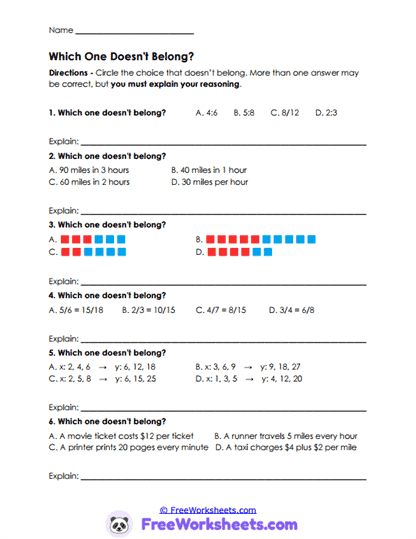
Students analyze groups of proportional relationships, visual models, and rate examples to determine which item does not belong. Learners justify answers using mathematical evidence and proportional reasoning. - Target Skill:
Students strengthen analytical thinking and proportional reasoning aligned to Common Core Grade 7 standards. The worksheet reinforces equivalent relationships, unit-rate comparisons, and mathematical communication skills.
Error Detective
- What Kids Do:
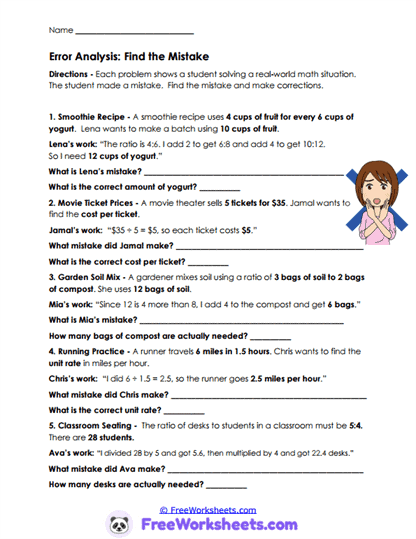
Students review incorrect solutions involving recipes, ticket pricing, gardening comparisons, and running pace situations. Learners identify errors, explain incorrect reasoning, and solve problems correctly. - Target Skill:
Students improve conceptual understanding of proportional relationships aligned to Grade 7 standards. The worksheet reinforces multiplicative reasoning, error analysis, and mathematical explanation skills.
Missing Values
- What Kids Do:
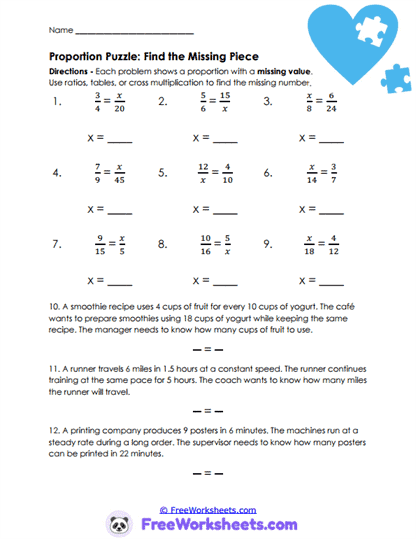
Students solve proportion equations with missing values using ratios, tables, and cross multiplication strategies. Learners determine unknown quantities in practical situations involving travel, recipes, and production rates. - Target Skill:
Students strengthen equation-solving and proportional reasoning fluency aligned to Common Core ratio standards. The worksheet reinforces equivalent relationships and algebra readiness skills.
Real Connections
- What Kids Do:
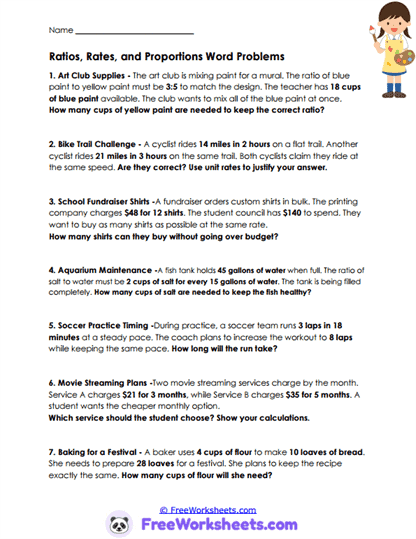
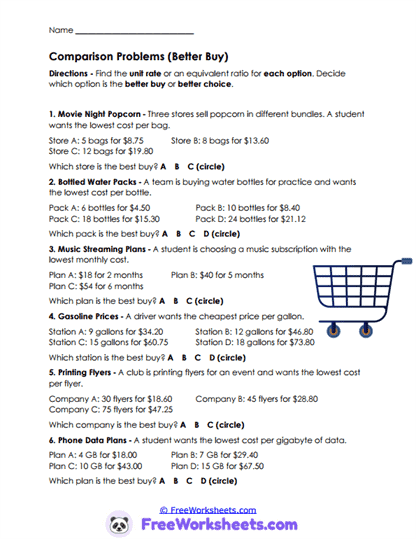
Students solve real-world proportional reasoning problems involving subscriptions, recipes, shopping, sports, travel, and production schedules. Learners compare rates and determine reasonable solutions. - Target Skill:
Students build practical proportional reasoning skills aligned to Grade 7 standards. The worksheet reinforces unit rates, equivalent relationships, and real-world mathematical applications.
Relationship Basics
- What Kids Do:
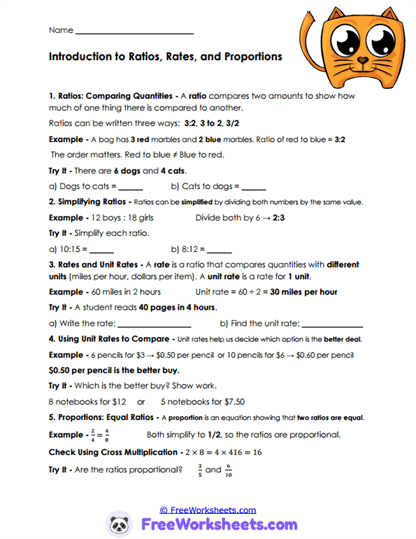
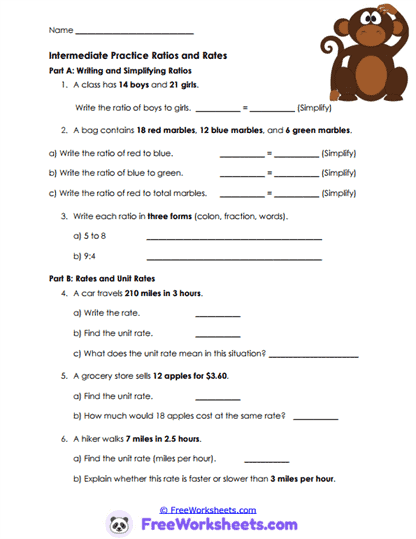
Students compare quantities, simplify ratios, calculate unit rates, and determine whether relationships are proportional. Learners solve practical examples involving marbles, notebook prices, and reading speed. - Target Skill:
Students develop foundational proportional reasoning aligned to Common Core standards. The worksheet reinforces ratio notation, simplification, and unit-rate understanding.
Relationship Quiz
- What Kids Do:
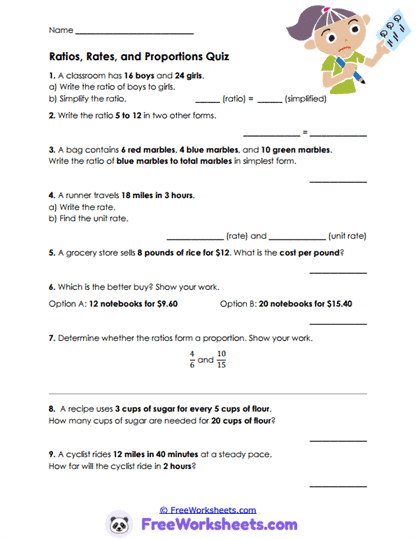
Students complete mixed review problems involving rates, equivalent relationships, recipe scaling, travel comparisons, and unit pricing. Learners solve practical proportional reasoning tasks and explain reasoning. - Target Skill:
Students reinforce cumulative proportional reasoning skills aligned to Grade 7 standards. The worksheet supports long-term retention, flexible thinking, and mathematical fluency.
Scale Reasoning
- What Kids Do:
Students solve enlargement and reduction problems involving recipes, map scales, dimensions, and measurement conversions. Learners determine unknown values using proportional scaling strategies. - Target Skill:
Students strengthen scaling and proportional problem-solving fluency aligned to Common Core standards. The worksheet reinforces multiplicative reasoning and practical scaling applications.
Scaling Practice
- What Kids Do:
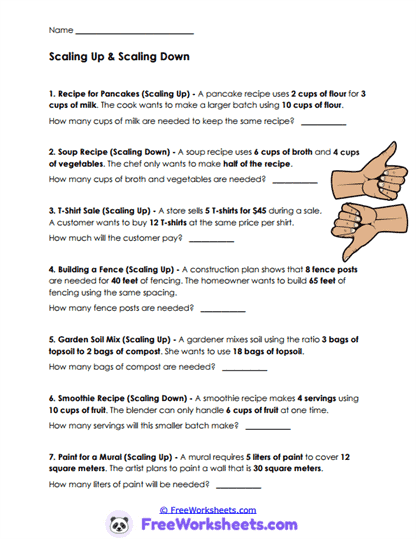
Students solve practical scaling problems involving smoothies, paint coverage, construction projects, recipes, and garden mixtures. Learners enlarge and reduce quantities proportionally. - Target Skill:
Students improve proportional scaling fluency aligned to Grade 7 standards. The worksheet reinforces equivalent relationships, scaling strategies, and real-world reasoning skills.
Table Logic
- What Kids Do:
Students analyze and complete proportional relationship tables involving travel distances, ticket prices, and ingredient scaling. Learners identify multiplicative patterns and determine missing values. - Target Skill:
Students strengthen table interpretation and proportional reasoning aligned to Common Core standards. The worksheet reinforces pattern recognition and multiplicative thinking skills.
Table Patterns
- What Kids Do:
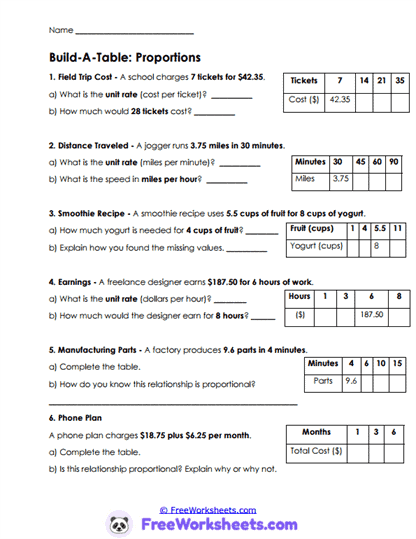
Students complete proportional tables involving tickets, smoothie recipes, manufacturing output, earnings, and travel distances. Learners identify scaling patterns and calculate unit rates. - Target Skill:
Students improve proportional table fluency aligned to Grade 7 standards. The worksheet reinforces scaling relationships, unit-rate reasoning, and algebra readiness skills.
Visual Comparisons
- What Kids Do:
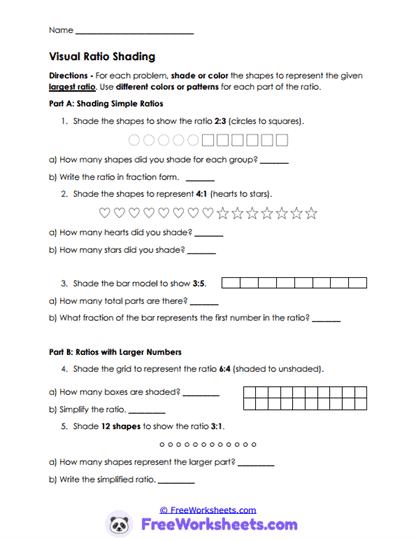
Students use grids, bars, and shaded diagrams to represent and simplify proportional relationships visually. Learners connect symbolic relationships to visual models. - Target Skill:
Students strengthen conceptual understanding of ratios and proportions aligned to Common Core standards. The worksheet reinforces visual reasoning and equivalent relationship fluency.
Visual Models
- What Kids Do:
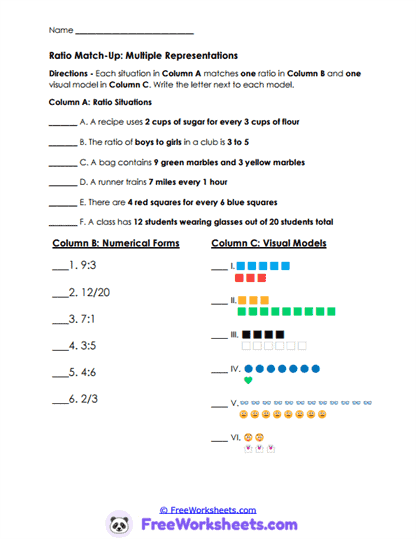
Students analyze shaded models, diagrams, and object groups to identify equivalent proportional relationships and simplify visual comparisons. - Target Skill:
Students build visual proportional reasoning skills aligned to Grade 7 standards. The worksheet reinforces diagram interpretation, comparison strategies, and mathematical communication.