
Text Structure Worksheets
7th Grade Reading Text Structure worksheets help students recognize how authors organize ideas in informational texts. These free, ready-to-print PDF format worksheets are designed for immediate classroom use and easy at-home practice. Students build skills in identifying patterns like cause and effect, compare and contrast, and chronological order to improve understanding.
About This Collection of Worksheets
This collection is designed to help students see how the way a text is organized affects meaning. Instead of just focusing on what a passage says, students learn to pay attention to how it is put together. Each worksheet gives students a chance to identify patterns in writing and understand why authors choose certain structures.
Students will work with engaging topics like technology, health, school life, and real-world issues. They will practice identifying signal words, analyzing how ideas connect, and explaining how structure supports meaning. These activities encourage deeper thinking and help students become more strategic readers.
This set is especially helpful for building strong comprehension skills across subjects. When students understand structure, they can better follow complex ideas and organize their own writing more clearly. The worksheets are flexible for classroom instruction, small group work, or independent practice.
Paul’s Teacher Tip
Text structure can feel tricky at first, especially when signal words are not obvious. I always tell students to think about how the ideas are connected instead of just looking for keywords. Ask questions like, “Is this explaining a problem?” or “Are these steps in order?” That kind of thinking helps them figure it out more reliably. It also helps to compare two passages on the same topic but with different structures. Over time, students start to recognize patterns more naturally.
Worksheet Collection Skill Spotlights
AI And Jobs
- What Kids Do:
Students read a passage about artificial intelligence and how it can both replace and create jobs. They identify how the ideas are presented side by side and look for words that show contrast. - Target Skill:
Students build the ability to recognize when a text is comparing two ideas. This helps them better understand how authors present balanced viewpoints and different perspectives.
City Without Cars
- What Kids Do:
Students read about what might happen if cities reduce car use and identify how actions lead to specific outcomes. They look for clues that show how one idea causes another. - Target Skill:
Students learn to recognize cause-and-effect relationships in text. This strengthens their ability to follow how ideas connect and influence each other.
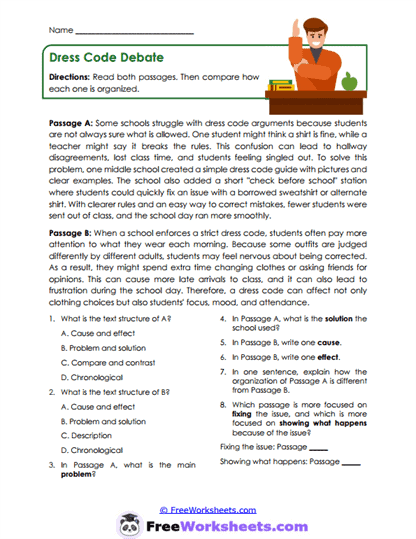
Dress Code Debate
- What Kids Do:
Students read two passages about school dress codes and identify how each one is organized. They compare the structures and explain how the ideas are presented differently. - Target Skill:
Students develop skills in comparing how different texts are structured. This helps them understand that the same topic can be explained in multiple ways.
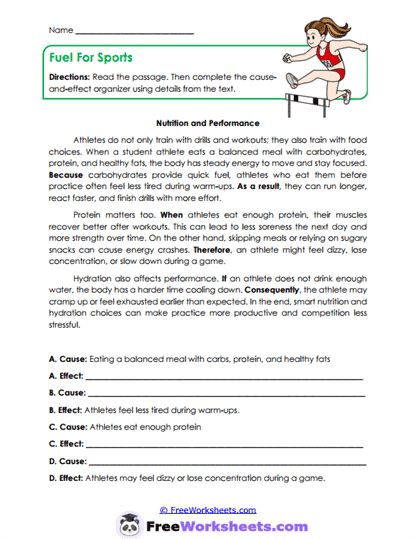
Fuel For Sports
- What Kids Do:
Students read about how nutrition affects athletic performance and match causes with their effects. They use details from the text to complete a cause-and-effect organizer. - Target Skill:
Students strengthen their understanding of cause-and-effect relationships. This helps them better interpret informational texts and connect ideas logically.
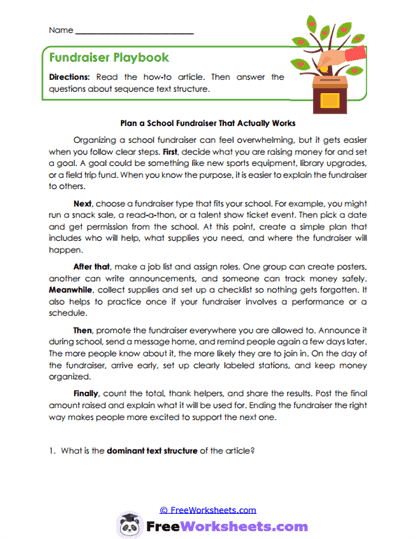
Fundraiser Playbook
- What Kids Do:
Students read a step-by-step passage about planning a fundraiser and identify how the information is organized. They focus on the order of events and how each step builds on the next. - Target Skill:
Students learn to recognize chronological structure and sequencing. This improves their ability to follow directions and understand procedural texts.
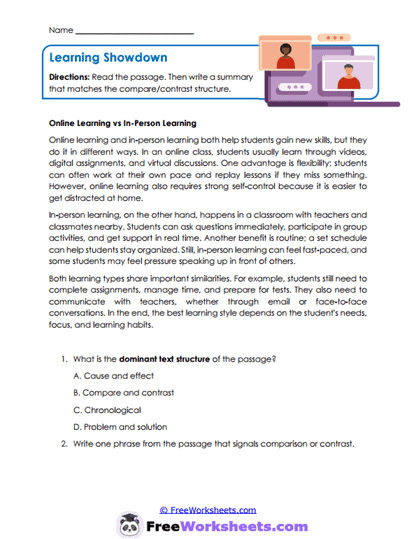
Learning Showdown
- What Kids Do:
Students read a passage comparing online and in-person learning. They identify how similarities and differences are presented and look for signal words that show comparison. - Target Skill:
Students build skills in identifying compare-and-contrast structure. This helps them analyze how ideas are grouped and explained in informational texts.
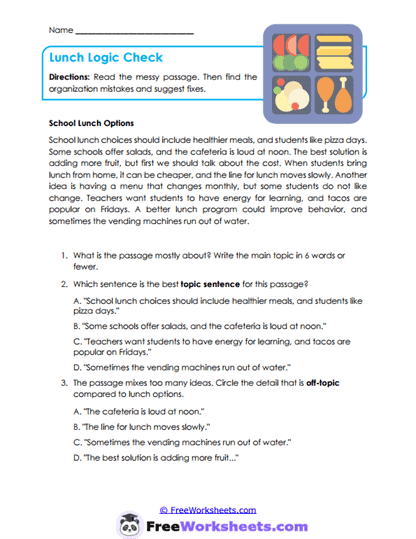
Lunch Logic Check
- What Kids Do:
Students read a passage about school lunches and evaluate which details belong and which do not. They identify the best topic sentence and remove irrelevant information. - Target Skill:
Students learn how to keep ideas focused and organized. This strengthens their understanding of how structure supports clarity in writing.
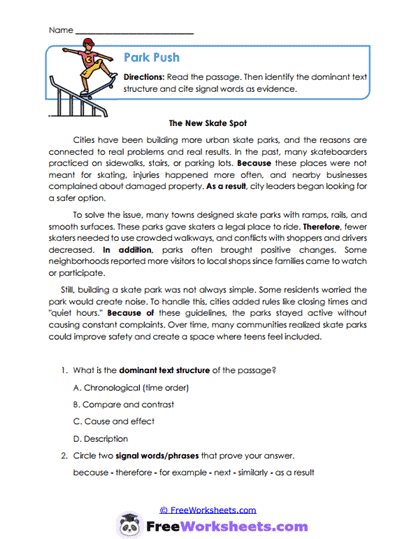
Park Push
- What Kids Do:
Students read about the development of skate parks and determine the dominant structure of the passage. They use evidence like signal words to support their answer. - Target Skill:
Students practice identifying the main organizational pattern in a text. This helps them analyze how authors connect ideas to build meaning.
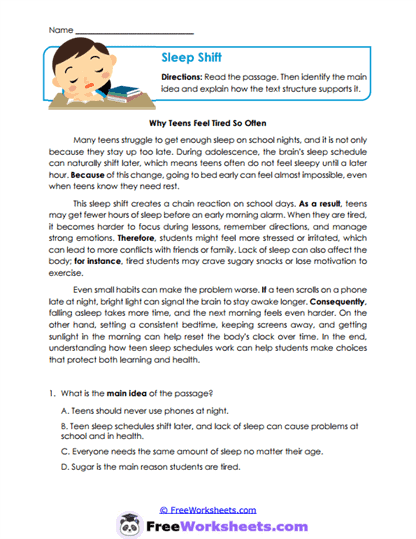
Sleep Shift
- What Kids Do:
Students read a passage about teen sleep patterns and identify the main idea. They also analyze how cause-and-effect relationships support that idea. - Target Skill:
Students learn to connect structure with meaning. This helps them understand how organization supports the main message of a text.
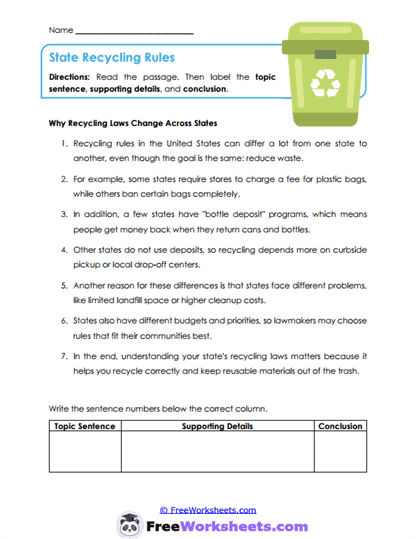
State Recycling Rules
- What Kids Do:
Students read about recycling rules and sort sentences into categories like topic sentence, supporting details, and conclusion. They organize information into clear parts. - Target Skill:
Students build skills in understanding how informational texts are structured. This helps them break down passages into meaningful sections.
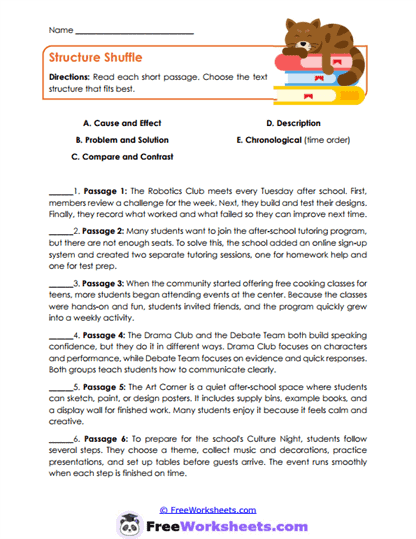
Structure Shuffle
- What Kids Do:
Students read short passages and identify the structure used in each one. They choose from options like cause and effect, problem and solution, or chronological order. - Target Skill:
Students develop the ability to recognize different text structures. This strengthens comprehension by helping them see how ideas are organized.
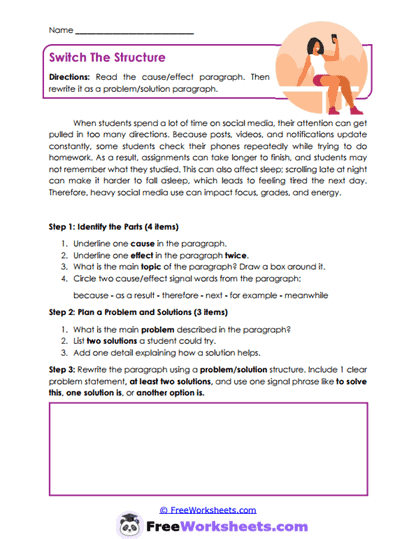
Switch The Structure
- What Kids Do:
Students read a paragraph about social media and identify its structure. They then rewrite it using a different structure, such as turning cause and effect into problem and solution. - Target Skill:
Students deepen their understanding of how structure shapes meaning. This also builds writing skills by helping them reorganize ideas in new ways.