
Author's Perspective Worksheets
Build critical thinking with 7th Grade reading author's perspective worksheets. Free worksheets in ready-to-print PDF format for immediate classroom use. Develop skills in analyzing point of view, identifying bias, and evaluating tone aligned to curriculum standards.
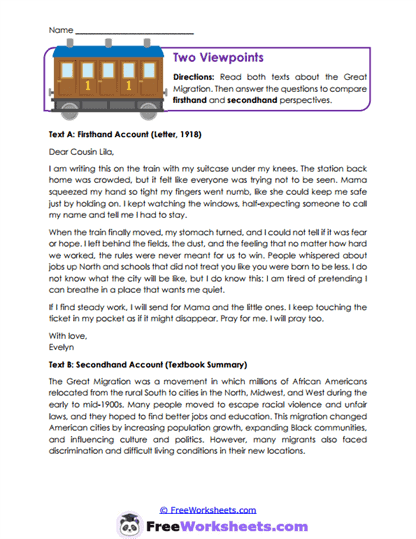
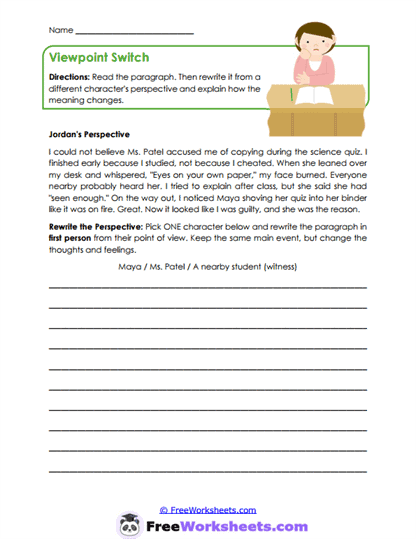
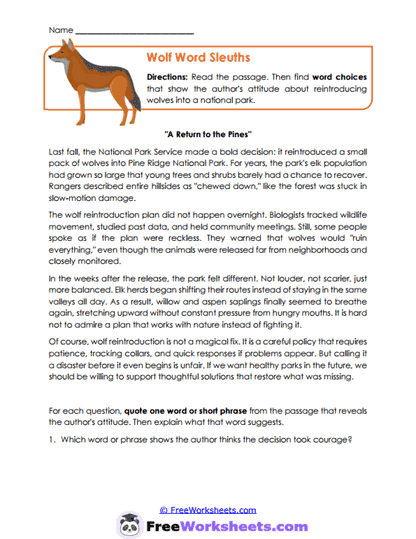
About This Collection of Worksheets
This collection focuses on helping students truly understand how perspective shapes meaning in both literary and informational texts. Each worksheet guides learners to think beyond surface-level comprehension and dig into how authors and narrators influence what we read. By working through a variety of engaging passages, students begin to recognize how voice, experience, and purpose affect interpretation.
Students are asked to analyze real-world topics, personal narratives, and historical events through the lens of perspective. These activities encourage them to question what they read, notice word choice, and support their thinking with clear evidence. The variety of formats keeps learning fresh while reinforcing the same essential skill from multiple angles.
This set is especially helpful for building the deeper reading skills expected in middle school. Whether students are identifying tone, spotting bias, or comparing viewpoints, they are practicing the kind of thinking required for strong comprehension and written responses. The worksheets are designed to support both guided instruction and independent practice.
Paul’s Teacher Tip
When teaching perspective, I always remind students that reading is a conversation between the author and the reader. Encourage your students to ask, “Why did the author choose these words?” or “What might someone else say about this?” This simple shift gets them thinking more critically right away. Try modeling your thinking out loud using a short passage before assigning independent work. You can also have students compare answers in small groups to hear different interpretations. Over time, this builds confidence and shows them that perspective is not just about answers-it’s about reasoning.
Worksheet Collection Skill Spotlights
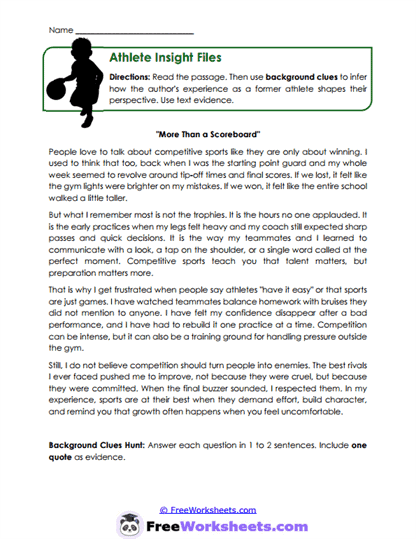
Athlete Insight Files
- What Kids Do:
Students read a reflective passage from a former athlete and dig into how real-life experiences shape the way ideas are expressed. They look closely at how the author describes competition and teamwork, then answer questions using direct evidence to explain their thinking. - Target Skill:
This activity helps students connect an author’s background to their viewpoint. Learners practice explaining how experiences influence ideas, while strengthening their ability to support answers with clear and relevant text evidence.
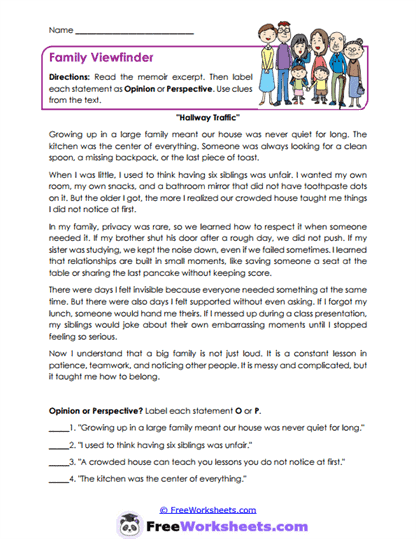
Family Viewfinder
- What Kids Do:
Students read a personal story about growing up in a busy household and sort statements based on whether they reflect opinion or deeper perspective. They think carefully about how the narrator’s experiences shape what is said and how it is said. - Target Skill:
Students learn to distinguish between surface-level opinions and perspective shaped by personal experience. This builds stronger comprehension of narrative voice and helps students explain how meaning is influenced by lived experiences.
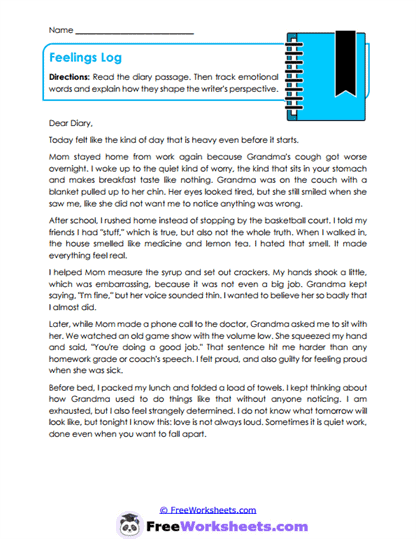
Feelings Log
- What Kids Do:
Students read a diary-style passage and track how the writer’s emotions shift from beginning to end. They connect specific moments to feelings and explain how those emotions change the way events are understood. - Target Skill:
This worksheet builds the ability to connect tone and emotion to perspective. Students learn how feelings influence meaning and practice explaining how emotional changes affect the overall message of a text.
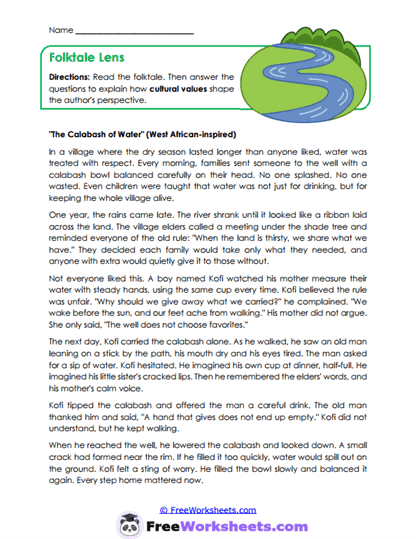
Folktale Lens
- What Kids Do:
Students explore a folktale and look closely at how cultural traditions shape the story. They answer questions that connect character choices to values like sharing, fairness, and community responsibility. - Target Skill:
Students develop an understanding of how culture influences storytelling and perspective. They learn to connect actions and themes to deeper values, strengthening their ability to interpret meaning in diverse texts.
History Angle Analyzer
- What Kids Do:
Students read a historical passage and identify words that show how the author feels about the events. They think about how different descriptions can change the way readers understand the same situation. - Target Skill:
This activity builds awareness that history can be presented in different ways depending on the writer. Students practice analyzing how language shapes interpretation and develop stronger critical reading habits.
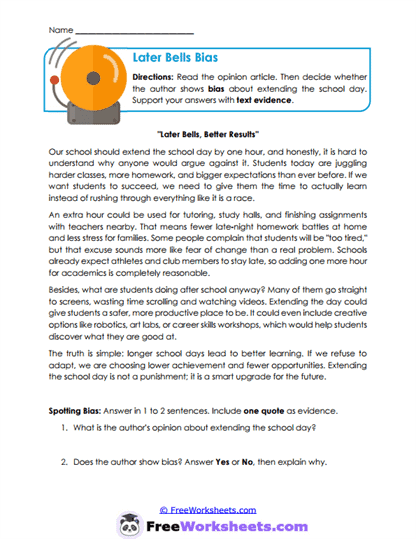
Later Bells Bias
- What Kids Do:
Students read an opinion piece about extending the school day and examine how the argument is presented. They identify persuasive language and decide whether the author shows a one-sided viewpoint. - Target Skill:
Students learn to recognize bias and evaluate arguments more carefully. They practice identifying persuasive techniques and supporting their ideas with evidence from the text.
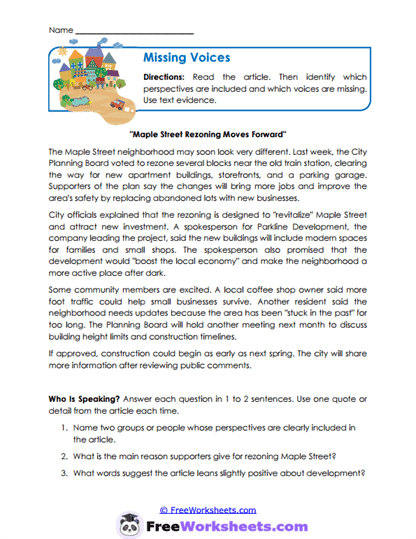
Missing Voices
- What Kids Do:
Students read an article about a community issue and identify which perspectives are included and which are missing. They reflect on how leaving out certain voices can change the reader’s understanding. - Target Skill:
This worksheet builds critical thinking about fairness and representation in texts. Students learn to question what they read and consider how missing viewpoints can shape meaning.
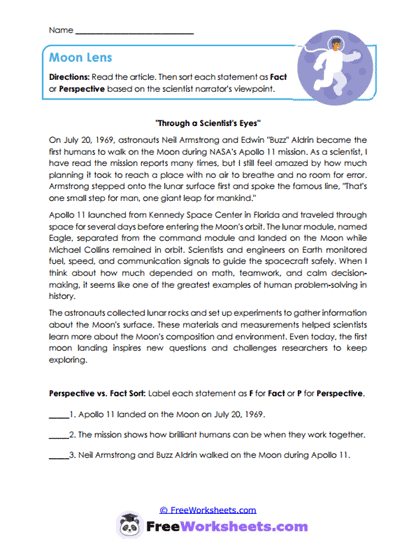
Moon Lens
- What Kids Do:
Students read about the moon landing and sort statements into fact or perspective categories. They must carefully analyze wording and return to the text to justify each decision. - Target Skill:
Students strengthen their ability to tell the difference between factual information and interpretation. This helps them become more careful readers who can evaluate how information is presented.
Perspective Detectives
- What Kids Do:
Students read a passage about adapting to a new culture and answer questions about the author’s viewpoint. They look closely at tone and word choice to understand how experiences shape meaning. - Target Skill:
This activity helps students use evidence to explain perspective. They learn to connect details, language, and context to better understand how an author’s viewpoint develops.
Tech Tone Tracker
- What Kids Do:
Students analyze a passage about screen time and highlight words that reveal the author’s attitude. They explain how those words shape the overall tone of the text. - Target Skill:
Students build skills in identifying tone and understanding how language reflects opinion. They practice explaining how specific word choices influence the reader’s interpretation.
Viewpoint Switch
- What Kids Do:
Students rewrite a short passage from a new character’s point of view while keeping the same events. They adjust feelings, thoughts, and tone to match the new narrator. - Target Skill:
This task strengthens understanding of how perspective changes storytelling. Students practice writing from different viewpoints, improving both comprehension and narrative writing skills.
Wolf Word Sleuths
- What Kids Do:
Students read a passage about wildlife and identify words that reveal the author’s opinion. They explain how those words influence how the topic is presented. - Target Skill:
Students learn how word choice shapes meaning and reveals perspective. This builds stronger close reading skills and helps students interpret how authors guide reader thinking.