
About This Worksheet
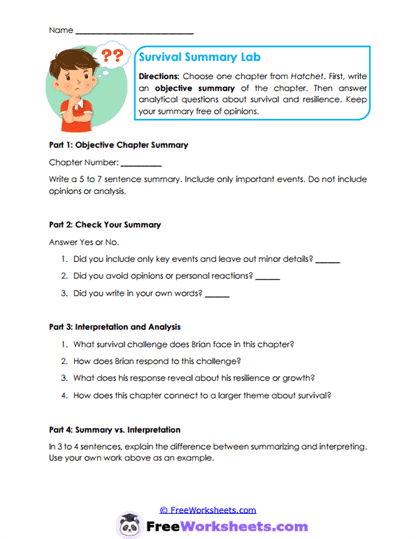
This Grade 7 reading worksheet helps students separate objective summary from literary interpretation in Hatchet by Gary Paulsen. Students first summarize one chapter using only the most important events and then analyze Brian’s challenges, responses, and growth. An objective summary reports what happens without adding personal opinions, while interpretation explains what those events reveal. For example, stating that Brian builds a shelter belongs in a summary, while explaining that the act shows growing independence belongs in the analysis.
Learning Goals
The main goal is to help students understand that summarizing and interpreting are related but different reading skills. Students should already be able to identify major events and write in their own words. This activity moves them toward explaining how Brian’s experiences develop themes of survival, resilience, and personal growth. It supports CCSS.ELA-LITERACY.RL.7.2 and CCSS.ELA-LITERACY.RL.7.3, which focus on objective summary, theme, and character development.
Student Tasks
On this worksheet, students will select one chapter from Hatchet and write a five- to seven-sentence objective summary. They will use a checklist to confirm that they included only major events, avoided opinions, and wrote in their own words. Students then answer questions about the chapter’s survival challenge, Brian’s response, and what his actions reveal about his development. The final section asks them to explain the difference between summary and interpretation using their own work as an example.
Common Challenges
Some students may include analysis inside the summary by calling Brian brave, foolish, or determined. Others may retell every small event instead of choosing only the details needed to understand the chapter. In the analysis section, students may repeat the plot without explaining what it reveals about Brian. Remind them that the summary answers “What happened?” while interpretation answers “What does it show or mean?”
Teaching Suggestions
A teacher can place one factual sentence and one interpretive sentence side by side and ask students to explain the difference. Before writing, students can list five essential events and cross out anything that feels minor or repetitive. At home, a parent can ask the child to tell the chapter once like a reporter and then again like a reader explaining Brian’s growth. Hearing the difference aloud makes the two kinds of writing easier to separate.
Worksheet Features
The worksheet guides students through four connected stages: summary writing, self-checking, analysis, and reflection. A short checklist helps students review their own work before moving into deeper questions. The analytical prompts connect one chapter to the larger themes of survival and resilience. This page is useful for guided novel study, assessment, independent practice, or preparation for a longer literary response.