
About This Worksheet
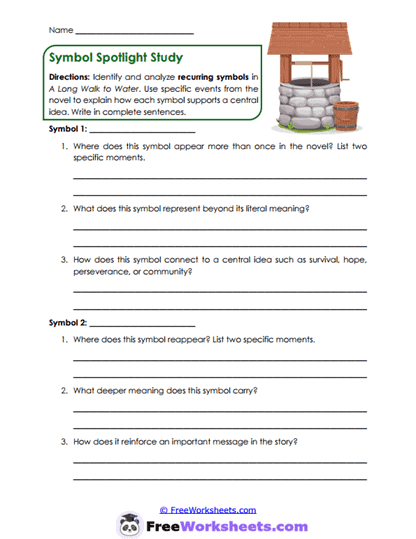
This Grade 7 reading worksheet helps students study recurring symbols in A Long Walk to Water by Linda Sue Park. A symbol is an object, place, or image that carries a deeper meaning beyond what it literally is. Students choose two symbols from the novel and explain where they appear, what they represent, and how they support the book’s larger ideas. For example, a well is more than a water source because it can also represent hope, survival, and positive change for a community.
Learning Goals
The main goal is to help students understand how authors use repeated images to strengthen a story’s central ideas. Readers should already be able to identify important objects and describe major events from the novel. This activity moves them toward explaining why a symbol matters and how its meaning develops across several scenes. It supports CCSS.ELA-LITERACY.RL.7.2 and CCSS.ELA-LITERACY.RL.7.4, which focus on theme development and the effect of language and meaning in literature.
Student Tasks
On this worksheet, students will choose two recurring symbols from A Long Walk to Water. For each one, they will list two moments when the symbol appears and explain what it represents beyond its literal meaning. Students must then connect the symbol to a central idea such as survival, hope, perseverance, or community. Their answers should use specific events from the novel instead of broad statements.
Common Challenges
Some students may choose an important object that appears only once and call it a symbol. Others may explain only what the object is used for without discussing its deeper meaning. Remind them that a strong symbol usually appears more than once and connects to an important message in the story. A helpful question is, “What idea does this object make the reader think about each time it returns?”
Teaching Suggestions
A teacher can model the process with one shared example, beginning with the object’s literal purpose and then moving to its deeper meaning. Students can work in pairs to locate repeated scenes before writing their own explanations. At home, a parent can ask why the author keeps bringing the same object or image back into the story. That simple question helps students move from noticing repetition to understanding symbolism.
Worksheet Features
The page is divided into matching sections for two different symbols. Each section guides students through appearance, meaning, and connection to a central message. The repeated structure makes the task easier to follow while still allowing students to choose their own evidence. This worksheet works well for theme study, literary analysis, partner discussion, or essay preparation.