
About This Worksheet
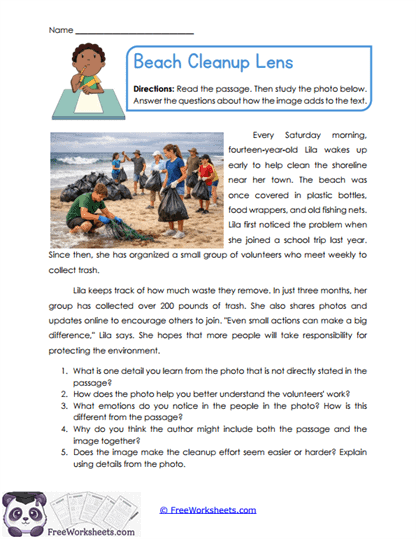
This Grade 7 reading worksheet helps students understand how a photograph can add useful information to a written passage. The text tells about Lila and a group of volunteers who clean trash from a beach every week, while the photograph shows what that work actually looks like. Students compare the details they read with the details they can see, then explain how the two sources work together. For example, the passage says volunteers collect trash, while the image shows several people carrying bags and searching along a rocky shoreline.
Learning Goals
The main goal is to help students explain how a visual element strengthens and expands a written text. Students should already know how to find important details in a short passage and describe what they observe in an image. This activity moves them toward combining information from both sources to form a fuller understanding. It supports CCSS.ELA-LITERACY.RI.7.7, which asks seventh graders to compare written information with information presented visually or through other media.
Student Tasks
On this worksheet, students will read a short passage about a teenager who organizes weekly beach cleanups. They will study the accompanying photograph and identify a detail that the text does not directly state. Students then explain how the image helps them understand the volunteers’ work, notice the mood shown in the photograph, and compare that mood with the tone of the passage. The final questions ask why the author may have included both sources and whether the cleanup appears easier or more difficult after seeing the image.
Common Challenges
Some students may simply repeat a sentence from the passage instead of noticing new visual information. Others may describe everything in the photograph without explaining how those details affect their understanding. Mood can also be difficult because the volunteers may look serious while still appearing hopeful and determined. Encourage students to finish the thought, “The image adds to the text by showing…”
Teaching Suggestions
A teacher can first cover the passage and ask students what they learn from the photograph alone. After reading, the class can compare which facts came from the words and which came from the image. At home, a parent can ask the child what the cleanup might have felt like based on the volunteers’ expressions, the weather, and the amount of trash. This keeps the conversation focused on visual evidence rather than guesses.
Worksheet Features
The worksheet pairs a short informational passage with a clear, realistic photograph of a community cleanup effort. Five open-ended questions move from basic observation to deeper thinking about mood, purpose, and difficulty. The familiar environmental topic gives students an easy entry point into visual-text analysis. Its single-page format works well for close reading, independent practice, homework, or environmental studies.