
About This Worksheet
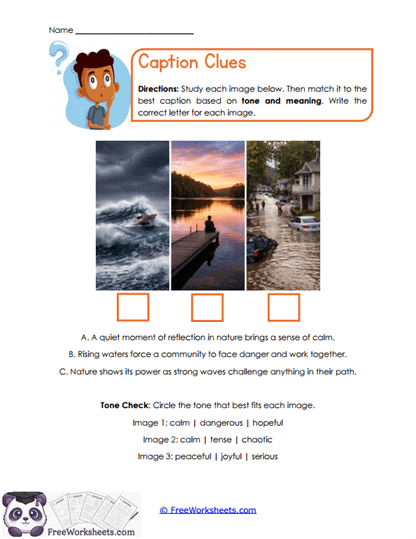
This Grade 7 reading worksheet helps students match photographs with captions by studying tone and meaning. The three images show a stormy ocean, a quiet sunset by a lake, and a flooded neighborhood. Students must decide which caption best fits each scene and then identify the tone created by the visual details. For example, calm water and warm sunset colors fit a caption about peaceful reflection, while rising floodwater supports a caption about danger and community action.
Learning Goals
The main goal is to help students see how a strong caption should match both what an image shows and how the image feels. Students should already be able to identify obvious objects, people, and settings in a picture. This activity moves them toward connecting visual details with tone words such as calm, dangerous, hopeful, joyful, serious, and chaotic. It supports CCSS.ELA-LITERACY.RI.7.4 and CCSS.ELA-LITERACY.RI.7.7, which address word meaning, tone, and visual information.
Student Tasks
On this worksheet, students will examine three different photographs and read three possible captions. They will match each image with the caption that best reflects its subject and overall feeling. Students then choose the tone word that fits each photograph most closely. Their decisions should be based on details such as weather, color, movement, setting, and the situation shown.
Common Challenges
Some students may match captions by looking for one shared object instead of considering the whole image. Others may confuse tone with topic, such as calling an ocean image “stormy” rather than naming the feeling it creates. The peaceful lake may also appear lonely to some readers, so students should be ready to explain their choice. Encourage them to ask, “What feeling do the colors and action create?”
Teaching Suggestions
A teacher can discuss one image as a class and list the details that create its tone before students complete the remaining matches. Reading each caption aloud can help students hear whether its language fits the visual mood. At home, a parent can cover the captions and ask the child to write one short caption for each photograph first. Comparing those ideas with the provided choices can sharpen the student’s reasoning.
Worksheet Features
The page includes three clearly different images, making comparisons of mood and tone easier to recognize. Three concise captions give students practice connecting language with visual meaning. A separate tone check adds another layer of analysis after the matching task. The worksheet is useful for visual literacy, caption writing, tone review, or independent reading practice.