
About This Worksheet
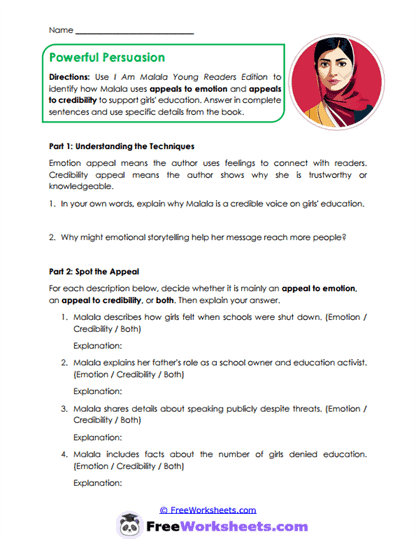
This Grade 7 reading activity helps students study how Malala Yousafzai uses emotion and credibility to support girls’ education. Students work with I Am Malala Young Readers Edition and examine both personal storytelling and trustworthy experience. The worksheet shows that emotional appeal connects with the reader’s feelings, while credibility helps the audience trust the speaker. For example, Malala’s experience attending school under threat creates emotion, while her firsthand knowledge of the issue builds credibility.
Learning Goals
The main goal is to help students identify how a nonfiction author strengthens a message through rhetorical appeals. Students should already understand that writers use different methods to persuade an audience. This activity moves them toward explaining why a detail works as emotion, credibility, or both. It supports CCSS.ELA-LITERACY.RI.7.8 and CCSS.ELA-LITERACY.RI.7.6, which focus on argument, evidence, purpose, and point of view.
Student Tasks
On this worksheet, students will explain why Malala is a credible voice on girls’ education. They will also discuss why emotional storytelling can help her message reach more people. In the second section, students examine four details from the book and decide whether each one appeals mainly to emotion, credibility, or both. Every answer must include a brief explanation showing how the detail affects the reader.
Common Challenges
Students may think every sad or dangerous event is only an emotional appeal. Some details also build credibility because Malala personally experienced the events she describes. Others may say she is trustworthy simply because she is famous. Remind students that credibility comes from firsthand knowledge, experience, honesty, and a clear connection to the issue.
Teaching Suggestions
A teacher can model one example by asking what the detail makes the reader feel and why it makes Malala believable. Students can then use those two questions for the remaining items. At home, a parent can ask whether each example mainly touches the heart, builds trust, or does both jobs at once. This plain-language approach makes rhetorical appeals easier to understand.
Worksheet Features
The worksheet begins with short definitions of emotional appeal and credibility appeal. Four examples from the book give students repeated practice with the same important skill. The answer choices stay simple, but the explanations require thoughtful evidence-based reasoning. This page fits memoir study, argument lessons, women’s history, human-rights discussions, or independent reading work.