
About This Worksheet
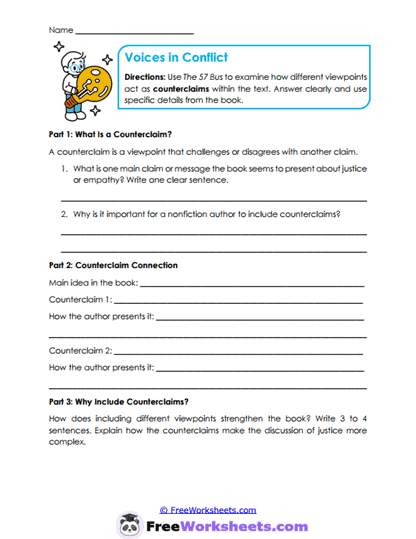
This Grade 7 reading worksheet helps students examine how different viewpoints function as counterclaims in The 57 Bus. A counterclaim is an idea that challenges or disagrees with another claim. Students look for places where people in the book understand justice, harm, punishment, or empathy in different ways. For example, one person may support a harsh punishment, while another may argue that understanding Richard’s age and background is also important.
Learning Goals
The main goal is to help students understand why nonfiction authors include conflicting viewpoints. Readers should already know how to identify a main claim or central message. This activity moves them toward finding counterclaims and explaining how those voices make a difficult issue more complete. It supports CCSS.ELA-LITERACY.RI.7.8 and CCSS.ELA-LITERACY.RI.7.6, which involve tracing arguments and analyzing how perspective shapes a text.
Student Tasks
On this worksheet, students will state one main claim or message from The 57 Bus about justice or empathy. They will explain why nonfiction writers may include people who disagree with that message. Students then identify two counterclaims from the book and describe how the author presents each one. The final response asks them to explain how conflicting viewpoints strengthen the discussion of justice and difficult social issues.
Common Challenges
Some students may choose two different supporting details instead of true counterclaims. Others may assume that including an opposing view means the author agrees with it. Remind them that a counterclaim must challenge or complicate the main message in some way. A helpful sentence starter is, “Some people in the book believe ___, but others believe ___.”
Teaching Suggestions
A teacher can model the difference between another detail and an actual opposing viewpoint. The class can then discuss how hearing only one side would change the book’s message. At home, a parent can ask the child to explain the disagreement without deciding immediately who is right. This helps students focus on how the author presents the conflict.
Worksheet Features
The worksheet moves from defining counterclaims to finding two full examples in the book. Separate lines for the claim, counterclaims, and author presentation keep the thinking organized. The final paragraph connects the reading skill to larger questions about fairness and justice. This page works well for book clubs, argument study, class discussion, or preparation for analytical writing.