
Describe Flat Shapes Worksheets
These preschool early math worksheets help children describe flat shapes by noticing sides, corners, curves, orientation, and other visible features. Every activity is free, ready-to-print, available in PDF format, and designed for immediate classroom use. Children strengthen shape recognition, comparison, sorting, spatial reasoning, and early geometry language aligned with beginning common core geometry concepts.
-
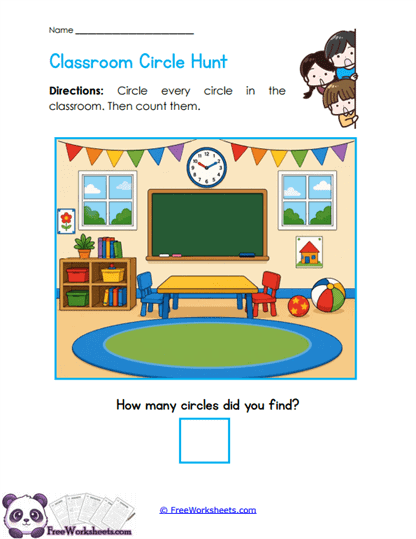
Circle Search
-
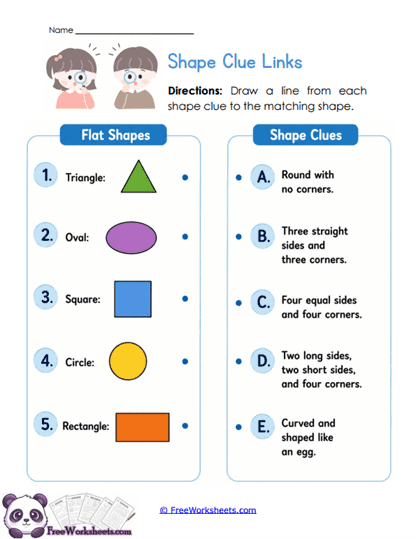
Clue Matches
-
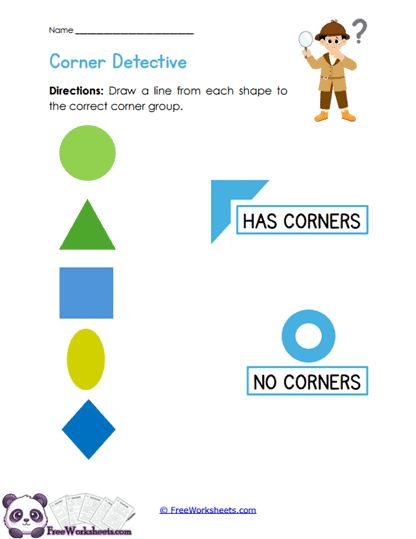
Corner Sort
-
-
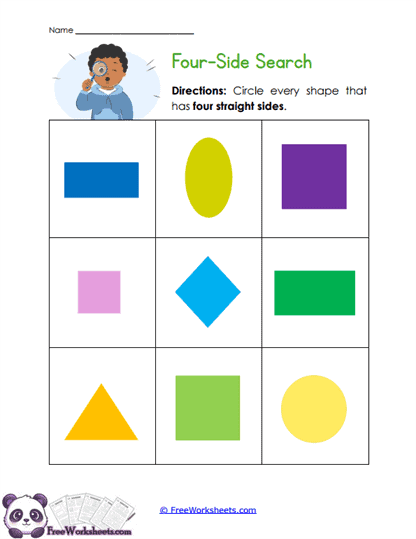
Four Sides
-
Mystery Shapes
-
Object Clues
-
Pattern Shapes
-
Picture Shapes
-
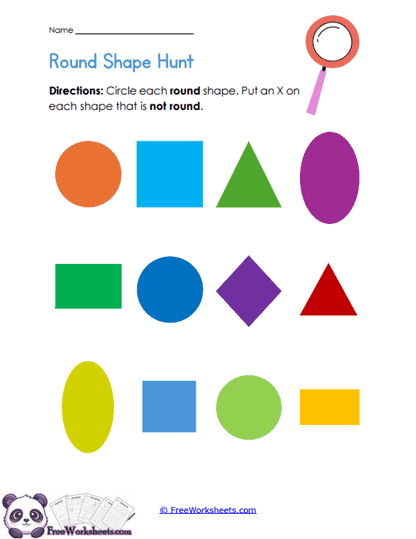
Round Shapes
-
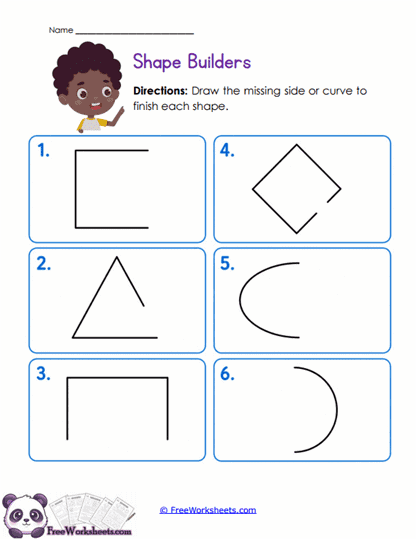
Shape Builders
-
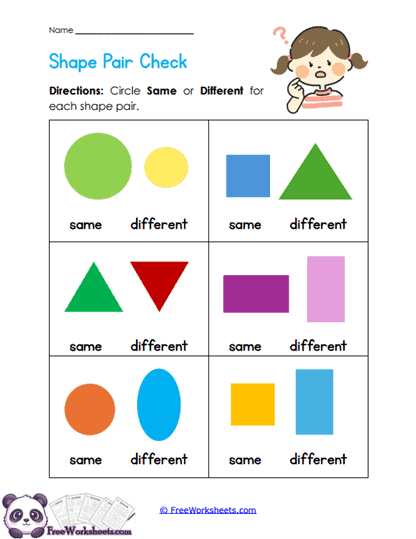
Shape Check
-
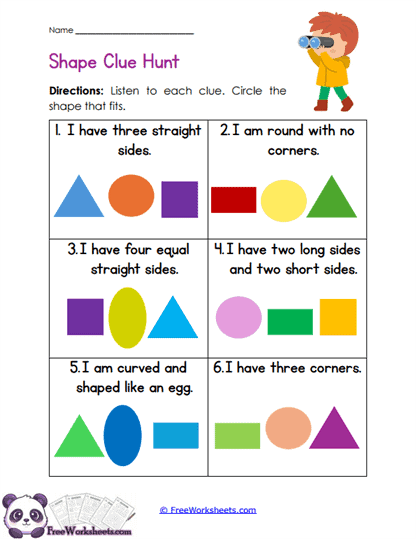
Shape Clues
-
Shape Colors
-
Shape Compare
-
Shape Objects
-
Shape Oddity
-
Shape Pairs
-
Shape Partners
-
Shape Rules
-
Shape Sorting
-
Shape Tracing
-
Shape Turns
-
Side Types
-
Triangle Hunt
About This Collection of Worksheets
This collection helps preschool children move beyond simply naming circles, squares, triangles, rectangles, and ovals. Learners look closely at straight sides, curved edges, corners, roundness, and other features that make shapes alike or different. They also discover that changing a shape’s color, size, or direction does not necessarily change what shape it is.
The worksheets use sorting, tracing, matching, coloring, clue solving, picture hunts, odd-one-out tasks, patterns, and drawing activities. Children may identify shapes with four sides, match shapes after they are turned, connect real objects with their shapes, finish incomplete figures, or decide which shape follows a shared rule. These different formats keep geometry practice fresh while returning to the same important shape ideas.
These printable activities work well during math centers, small-group lessons, homeschool practice, shape units, and early intervention. The collection supports beginning Common Core geometry concepts connected with K.G.A.1, K.G.A.2, K.G.B.4, and K.G.B.5. As children learn to describe why shapes are alike or different, they build a stronger foundation for later work with sides, vertices, shape categories, spatial relationships, and composing figures.

Paul’s Teacher Tip
Let children trace shapes with a finger before asking them to describe what they see. Moving around the edge makes straight sides, curves, and corners much easier to notice. Change the size, color, and direction of familiar shapes so children learn that those details do not change the shape itself. Ask questions such as, “How do you know this is a triangle?” instead of only asking for the shape name. Encourage short answers like, “It has three straight sides,” because using feature words is what moves children from simple recognition into real geometry thinking.
Worksheet Collection Skill Spotlights
Circle Search
What Kids Do: Children search a busy classroom scene for objects with circular shapes, circle each one they find, and then count the total. Familiar items such as clocks and balls help connect geometry with everyday surroundings.
Target Skill: This activity strengthens circle recognition in a real-world setting instead of showing only plain shape drawings. Learners practice visual scanning, counting, and recognizing the same geometric form inside more detailed objects.
Clue Matches
What Kids Do: Children look at common flat shapes on one side of the page and listen to or read clues about sides, corners, and curves on the other. They draw lines between each shape and the description that matches it.
Target Skill: Learners connect shape names with defining features. Instead of relying only on memory of what a shape looks like, children practice explaining shapes through straight sides, curved edges, and corners.
Corner Sort
What Kids Do: Children examine circles, triangles, squares, ovals, diamonds, and other familiar shapes and decide whether each one has corners. They draw a line to either HAS CORNERS or NO CORNERS.
Target Skill: This page introduces corners as a useful geometry feature. Children learn to focus on changes in direction around an outline rather than sorting by color, size, or shape name alone.
Four Sides
What Kids Do: Children inspect a mixed grid of shapes and circle every figure that has four straight sides. Squares, rectangles, diamonds, circles, ovals, and triangles require them to check each outline carefully.
Target Skill: Learners discover that several different-looking shapes can share the same feature. The activity builds side counting and helps children understand that squares and rectangles both belong among four-sided shapes.
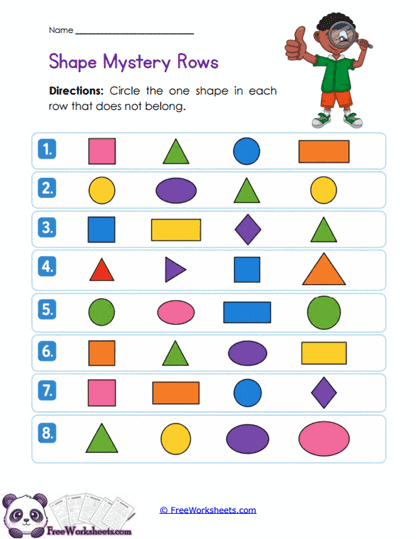
Mystery Shapes
What Kids Do: Children study rows of four shapes and figure out which three share an important feature. They circle the one shape that breaks the hidden rule in each row.
Target Skill: This activity combines geometry with early logical reasoning. Learners must identify the shared feature first, then use that rule to explain why another shape does not belong.
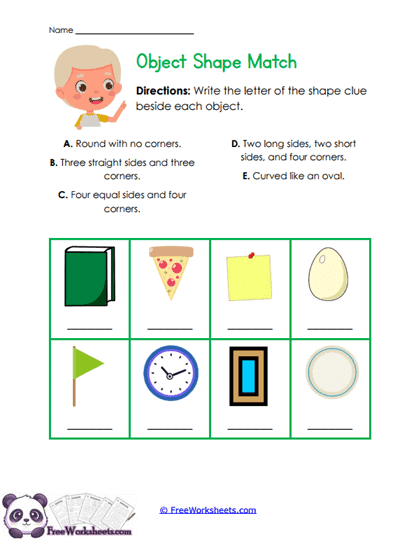
Object Clues
What Kids Do: Children read or listen to shape-feature clues and then match those clues with familiar objects such as clocks, plates, books, pizza slices, eggs, flags, and frames.
Target Skill: Learners connect geometry vocabulary with real-world objects. The page encourages children to look past what an item is used for and focus on its sides, corners, curves, and overall outline.
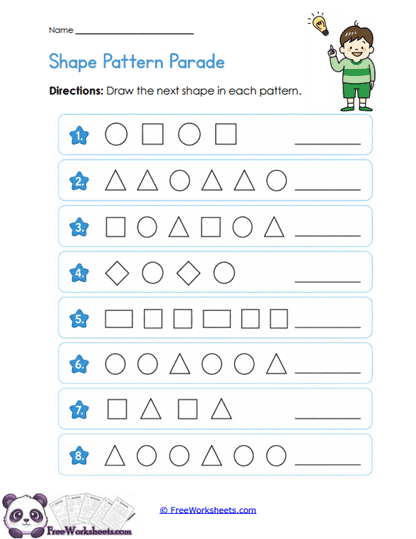
Pattern Shapes
What Kids Do: Children study rows of repeating circles, squares, triangles, rectangles, diamonds, and other flat shapes. They find the repeating rule and draw the shape that should come next.
Target Skill: This worksheet blends shape recognition with sequencing and pattern reasoning. Children learn to notice repeated order instead of simply copying the final shape they see.
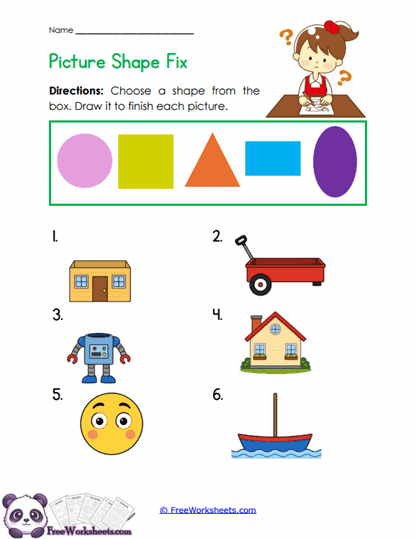
Picture Shapes
What Kids Do: Children use a shape bank containing circles, squares, triangles, rectangles, and ovals to complete unfinished pictures. They decide which shape is missing and draw it into the correct place.
Target Skill: Learners see how simple flat shapes can be used as parts of larger pictures and objects. The activity strengthens shape recognition, visual reasoning, drawing, and early shape composition.
Round Shapes
What Kids Do: Children examine a mixed group of circles, ovals, squares, rectangles, triangles, and diamonds. They circle the round figures and mark shapes with straight sides and corners using an X.
Target Skill: This activity introduces roundness as a visible shape feature. Children practice tracing outlines mentally or physically and distinguishing continuous curves from straight-sided figures.
Shape Builders
What Kids Do: Children study unfinished flat shapes and decide which line or curve is missing. They draw the missing part to complete figures such as circles, squares, triangles, diamonds, and ovals.
Target Skill: Learners begin thinking about how individual sides and curves work together to form a complete shape. The activity also strengthens fine-motor control and early shape construction.
Shape Check
What Kids Do: Children compare pairs of colorful shapes and decide whether they show the same basic shape or different shapes. They circle the correct comparison word under each pair.
Target Skill: This page teaches children to ignore changes in color, size, or position when deciding shape identity. Learners focus instead on the basic outline and defining features.
Shape Clues
What Kids Do: Children listen to or read descriptions such as having three straight sides, no corners, four equal sides, or long and short sides. They choose the shape that best fits each clue.
Target Skill: Learners use geometry vocabulary as evidence for identifying shapes. This builds deeper understanding than simple memorization because children must connect words about features with the correct figure.
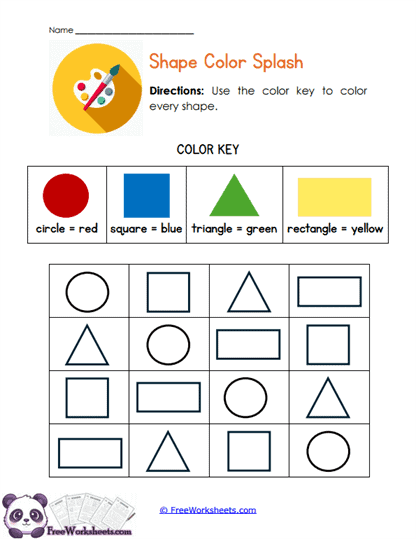
Shape Colors
What Kids Do: Children use a color key to identify circles, squares, triangles, and rectangles in a grid. They color each figure according to the rule assigned to that shape.
Target Skill: This activity strengthens shape recognition while requiring children to remember and follow a simple key. It also gives extra practice distinguishing squares from rectangles and triangles from other straight-sided shapes.
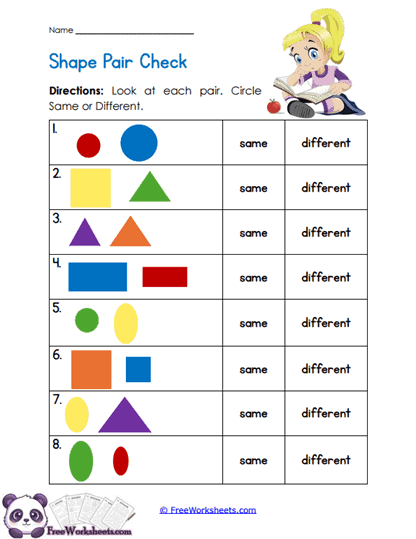
Shape Compare
What Kids Do: Children look at shape pairs that may vary in size, color, or form and decide whether the two figures are the same shape or different. They circle the correct word in each row.
Target Skill: Learners practice recognizing which details matter when comparing shapes. Color and size may change, but the important features of the shape determine whether the figures match.
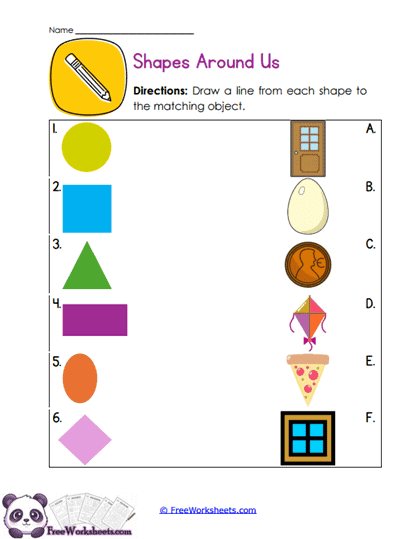
Shape Objects
What Kids Do: Children match circles, squares, triangles, rectangles, ovals, and diamonds with familiar objects such as coins, windows, pizza slices, doors, eggs, and kites.
Target Skill: This worksheet helps children recognize geometry in everyday life. Learners focus on the basic outer shape of an object instead of becoming distracted by decorations or smaller details.
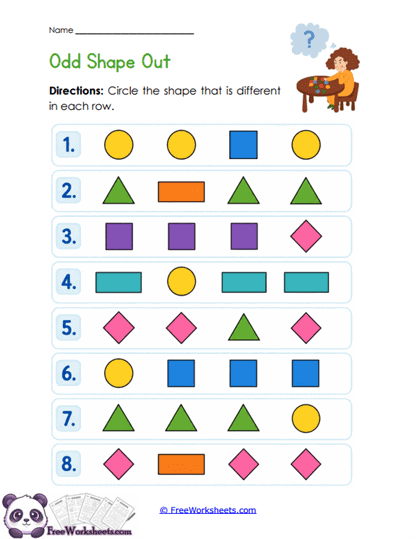
Shape Oddity
What Kids Do: Children examine rows of four shapes and circle the one whose basic form is different from the other three. Color and size may change, so careful comparison is needed.
Target Skill: This page strengthens shape discrimination and classification. Children learn to identify a common shape group and recognize which figure does not share the same form.
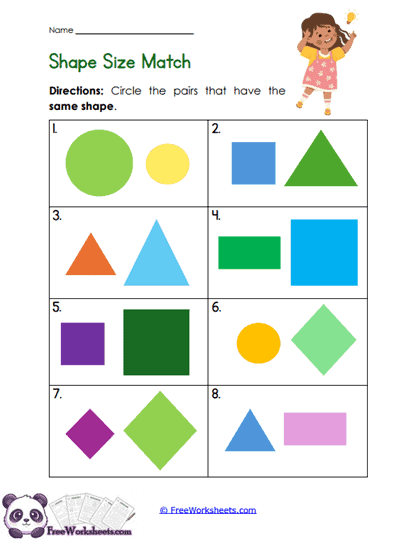
Shape Pairs
What Kids Do: Children compare pairs of shapes that may have different colors or sizes and circle the pairs showing the same basic shape. Circles, squares, triangles, rectangles, and diamonds appear in several forms.
Target Skill: Learners discover that shape identity stays the same even when surface details change. This supports flexible recognition and prepares children to compare figures using features instead of appearance alone.
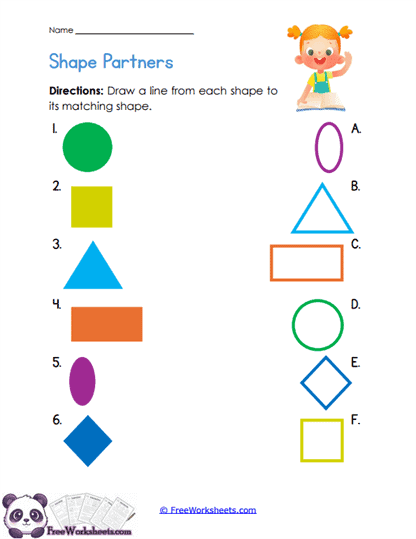
Shape Partners
What Kids Do: Children match solid-colored shapes with corresponding outline versions on the other side of the page. They draw connecting lines between circles, squares, triangles, rectangles, ovals, and diamonds that share the same form.
Target Skill: This activity strengthens visual shape recognition while removing color as a matching clue. Learners focus on the outside boundary and overall form of each figure.
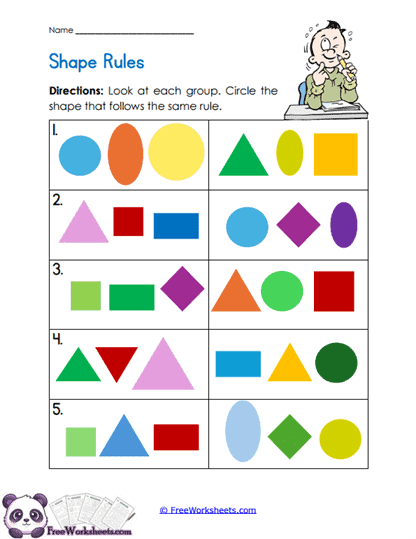
Shape Rules
What Kids Do: Children study small groups of example shapes, decide what feature they share, and then choose another shape that follows the same hidden rule. Each row presents a new reasoning challenge.
Target Skill: Learners compare several shapes at once and identify a common attribute such as roundness or straight sides. The page develops classification and more advanced feature-based reasoning.
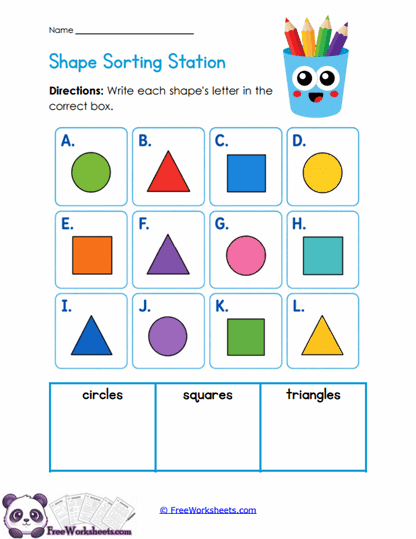
Shape Sorting
What Kids Do: Children identify lettered circles, squares, and triangles in different colors and sizes. They write each letter in the sorting box for the correct shape group.
Target Skill: This worksheet builds classification by shape name while teaching children to ignore color and size. It reinforces consistent recognition of circles, squares, and triangles across varied examples.
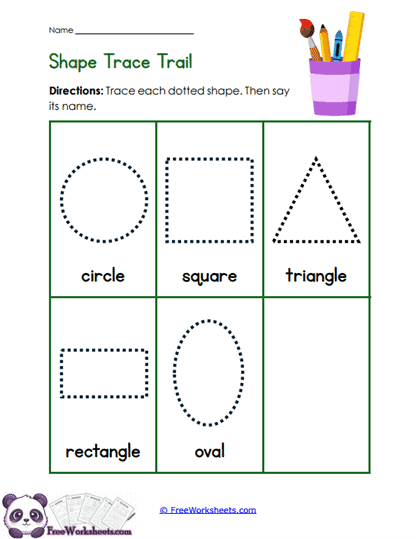
Shape Tracing
What Kids Do: Children trace large dotted outlines of a circle, square, triangle, rectangle, and oval, then say or read each shape name. The spacious format gives young hands room to follow the lines carefully.
Target Skill: Learners connect the movement of drawing a shape with its visual form and name. The activity strengthens recognition, geometry vocabulary, and fine-motor control at the same time.
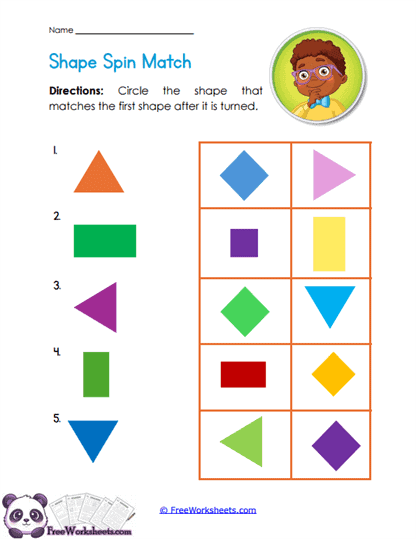
Shape Turns
What Kids Do: Children look at a starting shape and search for the same figure after it has been rotated into a different position. They circle the matching choice for each problem.
Target Skill: This activity develops spatial awareness and teaches that turning a shape does not change its identity. Children rely on sides, corners, and outline rather than the direction the figure points.
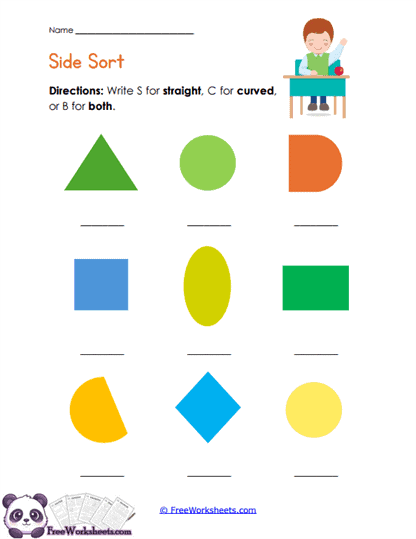
Side Types
What Kids Do: Children inspect the edges of nine flat shapes and label each one S for straight, C for curved, or B for both. Common and less familiar figures require careful tracing and observation.
Target Skill: Learners focus directly on the kinds of edges that form shapes. This strengthens geometry vocabulary and prepares children to describe figures using several features together.
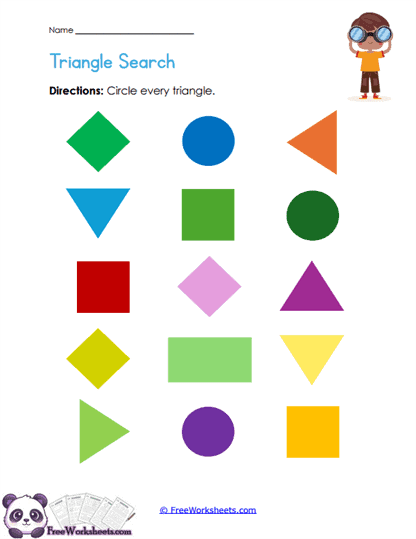
Triangle Hunt
What Kids Do: Children scan a mixed collection of circles, squares, rectangles, diamonds, and triangles and circle every triangle they find. The triangles appear in different sizes, colors, and directions.
Target Skill: Learners practice flexible triangle recognition by using the rule of three straight sides and three corners. The page helps prevent the common idea that a triangle only counts when its point faces upward.