
Listening and Speaking Worksheets
These worksheets help young learners build communication, vocabulary, and comprehension skills through interactive activities. Free, ready-to-print worksheets come in PDF format for immediate classroom use during oral language lessons, literacy centers, or homeschool practice. Students strengthen listening comprehension, speaking confidence, sequencing, phonological awareness, and expressive language through engaging picture-based tasks.
About This Collection of Worksheets
This collection of preschool listening and speaking worksheets helps young learners develop the communication skills they need for future reading and classroom success. Children practice listening carefully, following oral directions, answering questions, describing pictures, identifying sounds, retelling stories, and speaking in complete thoughts. Each activity encourages active participation while helping preschool students build confidence using spoken language in meaningful ways.
The worksheets use familiar objects, simple picture scenes, rhyming activities, beginning sounds, sequencing tasks, and guided sentence frames to make oral language practice approachable for young learners. Students strengthen vocabulary and comprehension while learning how to organize thoughts, respond to questions, compare ideas, and explain observations clearly. The combination of listening and speaking tasks helps children connect spoken language to literacy development in a natural and engaging way.
Teachers and parents can easily use these printable worksheets during circle time, literacy stations, small-group instruction, speech support activities, or homeschool lessons. Large visuals, uncluttered layouts, and flexible oral response formats make the activities developmentally appropriate for preschool learners. Together, these worksheets create strong opportunities for children to practice communication, attention, comprehension, and confidence through structured conversation and listening experiences.
Paul’s Teacher Tip
Preschool students often need extra wait time before responding to oral questions or directions, especially during group lessons. Encourage children to repeat key words or sentence starters aloud before answering so they feel more comfortable organizing their thoughts. Modeling complete responses helps learners hear how strong speaking sounds in real conversation. Many young children also benefit from pointing to pictures while talking because it supports focus and vocabulary recall at the same time. Keep speaking activities positive and conversational so children feel safe taking risks with language and sharing their ideas aloud. Frequent short oral language activities throughout the day usually build stronger confidence than one long lesson.
Worksheet Collection Skill Spotlights
Action Listening
- What Kids Do:
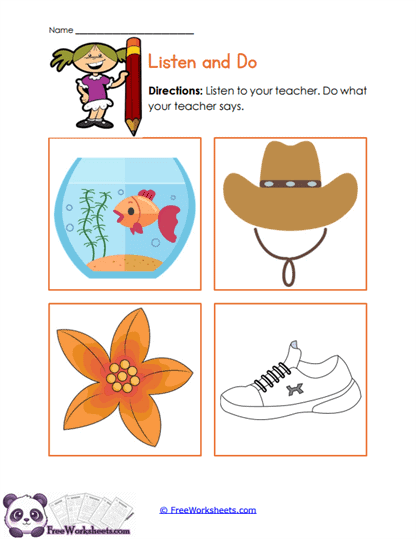
Children listen carefully while a teacher or parent gives spoken directions connected to pictures like a flower, fish bowl, shoe, or hat. Learners practice pointing, identifying, and discussing the correct object while focusing closely on oral instructions and visual details. - Target Skill:
Students strengthen listening comprehension and oral direction-following skills by responding accurately to spoken language connected to familiar pictures. The activity also supports vocabulary development, attention skills, and classroom readiness for multi-step instruction.
Balloon Compare
- What Kids Do:
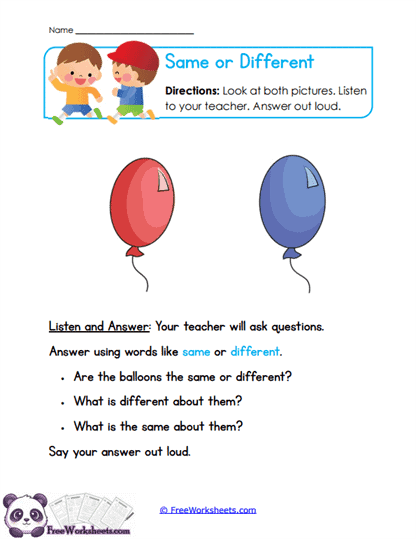
Students study two balloon pictures and talk about how the balloons are alike and different using guided oral discussion prompts. Learners practice describing colors, shapes, and features while speaking in fuller ideas and sharing observations aloud. - Target Skill:
Children build comparison and descriptive language skills by using words like same and different to explain visual observations clearly. The worksheet also strengthens speaking confidence, vocabulary growth, listening comprehension, and oral reasoning abilities.
Picture Choices
- What Kids Do:
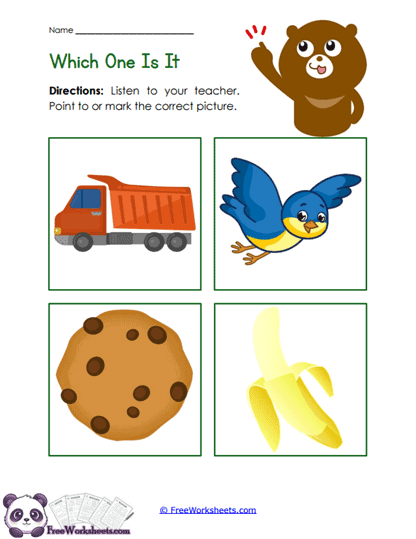
Children listen as an adult names an object and then identify the correct picture from a group of visual choices on the page. Learners practice careful listening while comparing images like birds, cookies, trucks, and bananas before selecting answers. - Target Skill:
This activity strengthens listening discrimination and vocabulary comprehension by helping students connect spoken words to matching visual representations. Learners also develop attention skills, oral language understanding, and confidence following spoken directions.
Picture Points
- What Kids Do:
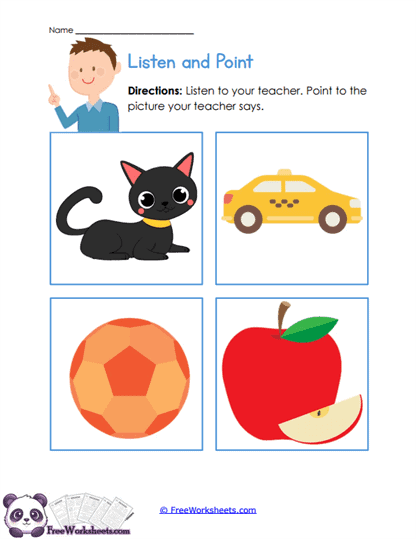
Students hear vocabulary words spoken aloud and point to the matching picture on the worksheet after carefully listening to the direction given. Learners practice identifying familiar objects quickly while strengthening focus and participation during oral language activities. - Target Skill:
Children develop listening comprehension and picture-word recognition by connecting spoken vocabulary to visual images accurately. The worksheet also supports vocabulary growth, attention control, auditory processing, and early language development skills.
Picture Talks
- What Kids Do:
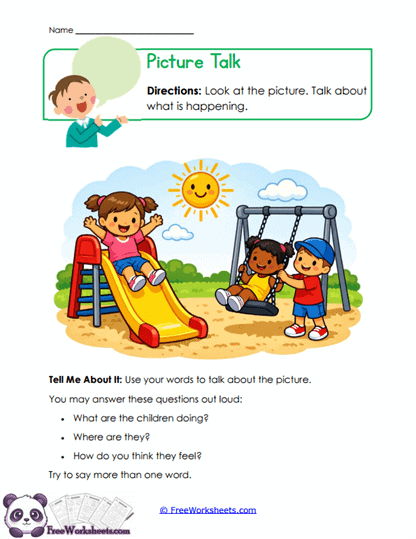
Children study a detailed playground scene and answer oral questions about what they notice happening in the picture. Learners describe actions, emotions, and settings while practicing speaking clearly and sharing observations in complete ideas. - Target Skill:
Students strengthen expressive language and observation skills by discussing visual details and answering open-ended oral questions thoughtfully. The activity also supports vocabulary development, speaking fluency, comprehension, and conversational communication abilities.
Picture Words
- What Kids Do:
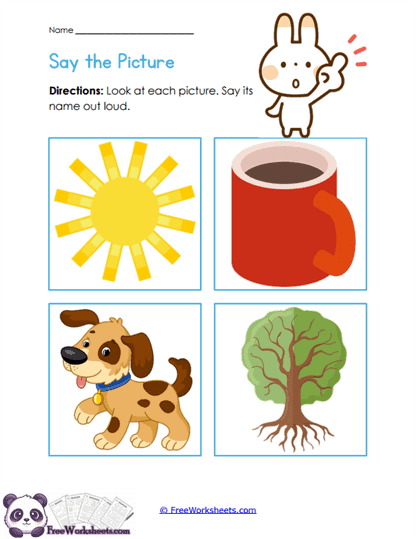
Students look at familiar object pictures like a tree, mug, dog, or sun and say each vocabulary word aloud clearly. Learners practice pronunciation, word recall, and speaking confidence while interacting with everyday picture vocabulary during oral language lessons. - Target Skill:
Children develop expressive vocabulary and speaking readiness by connecting pictures to spoken words during structured oral practice. The worksheet also strengthens memory, articulation, oral communication skills, and confidence using spoken language in group settings.
Rhyme Picks
- What Kids Do:
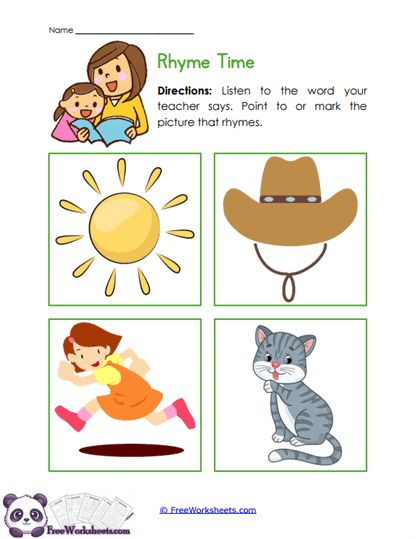
Children listen to a target word spoken aloud and choose the picture that rhymes with it by comparing ending sound patterns carefully. Learners point to or mark rhyming images while practicing active listening and oral participation during literacy instruction. - Target Skill:
This activity strengthens phonological awareness and rhyme recognition by helping students hear matching ending sounds in spoken words. Learners also develop listening discrimination, vocabulary understanding, and foundational sound awareness skills needed for future reading success.
Sentence Starters
- What Kids Do:
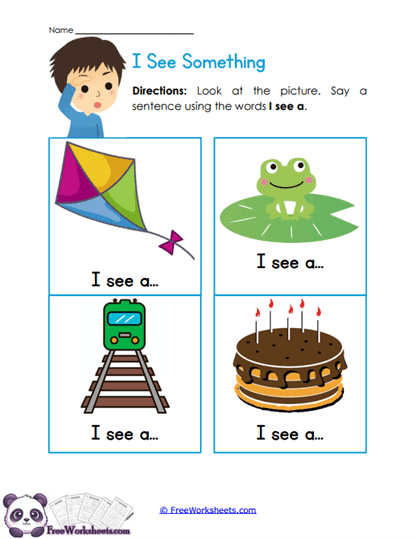
Students look at pictures like a kite, train, frog, or cake and practice saying complete sentences aloud using the phrase “I see a…” Learners repeat sentence frames while building confidence speaking in longer and more organized thoughts. - Target Skill:
Children strengthen expressive language and sentence-building skills by practicing complete spoken responses connected to picture vocabulary. The worksheet also supports oral fluency, vocabulary growth, grammar awareness, and speaking confidence during classroom discussions.
Sound Clues
- What Kids Do:
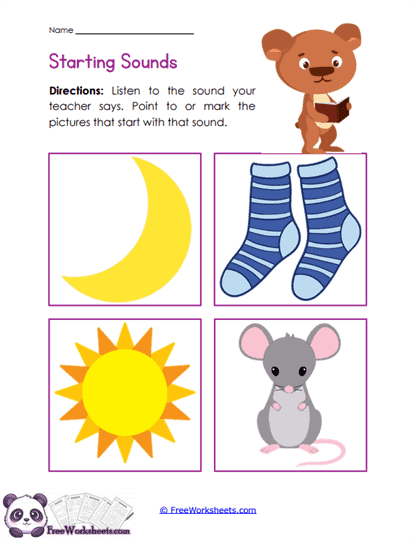
Children listen to a target beginning sound and identify pictures that start with that sound from a group of familiar images. Learners compare vocabulary words carefully while pointing to or marking matching pictures during phonics and listening practice. - Target Skill:
Students build phonological awareness and beginning sound recognition by connecting spoken sounds to familiar picture vocabulary. The activity also strengthens listening accuracy, sound discrimination, vocabulary development, and readiness for phonics instruction.
Sound Pictures
- What Kids Do:
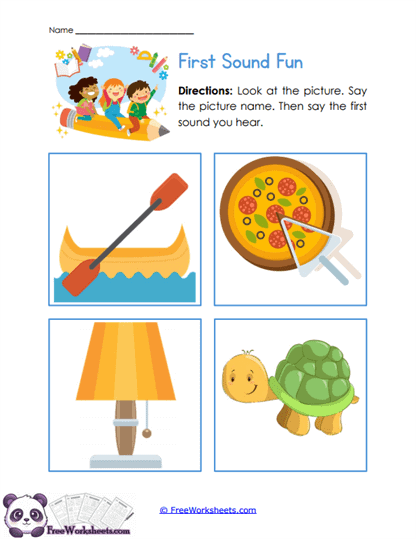
Students look at pictures like pizza, lamp, boat, and turtle, say each vocabulary word aloud, and identify the first sound they hear. Learners participate in oral discussion and sound practice while strengthening listening and vocabulary recognition skills. - Target Skill:
Children strengthen beginning phonics and sound awareness by isolating initial sounds in familiar picture vocabulary words. The worksheet also develops oral language, phonological awareness, sound discrimination, and readiness for reading instruction.
Story Steps
- What Kids Do:
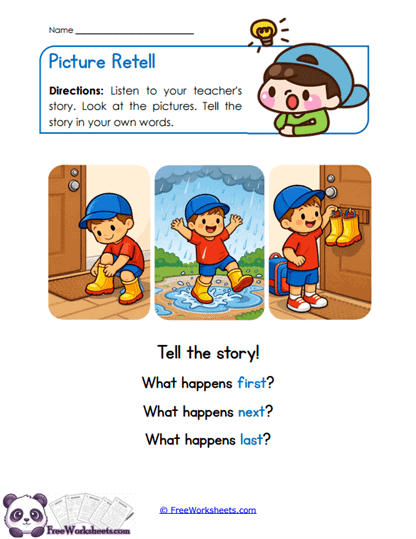
Children study picture sequences showing events in order and retell the story aloud using their own words and observations. Learners practice explaining what happened first, next, and last while organizing details into one connected sequence. - Target Skill:
Students strengthen sequencing and oral storytelling skills by retelling events in logical order using picture clues and transition language. The activity also supports comprehension development, speaking fluency, vocabulary use, and organized communication skills.
Yes Answers
- What Kids Do:
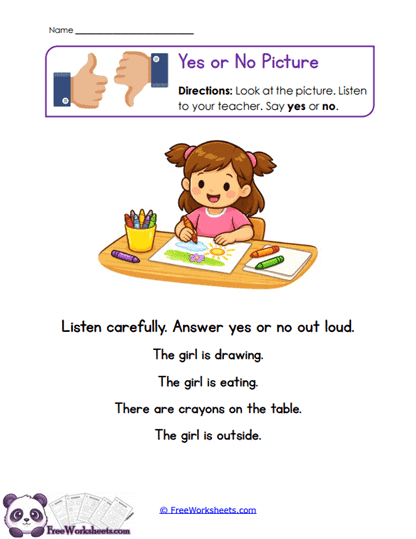
Students examine a picture scene carefully while listening to spoken statements about what is happening in the image. Learners answer yes or no aloud based on whether each sentence matches the details shown in the picture. - Target Skill:
Children strengthen listening comprehension and observation skills by responding accurately to oral questions connected to visual information. The worksheet also supports attention to detail, oral response confidence, vocabulary understanding, and early reasoning abilities.