
About This Worksheet
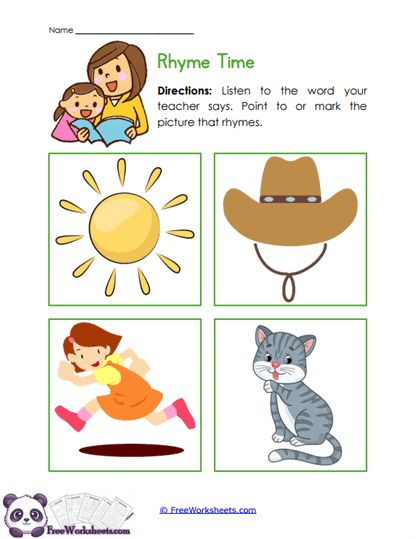
This worksheet helps preschool students hear and recognize rhyming words through picture matching activities. Rhyming is an early phonological awareness skill where children notice that words end with the same sound pattern. Students listen to a word spoken by the teacher and then choose the picture that rhymes with it. For example, hearing the word sun becomes choosing the picture of the running child because sun and run rhyme. This activity supports listening skills, vocabulary growth, and early reading readiness.
Curriculum and Grade Alignment
This preschool literacy worksheet focuses on phonological awareness and rhyme recognition. Children practice hearing sound patterns in spoken language and connecting them to familiar vocabulary words. Before beginning this activity, students should recognize common everyday objects and participate in simple oral language activities. Later literacy learning may include generating rhyming words independently and identifying word families while reading. This worksheet aligns with CCSS.ELA-LITERACY.RF.K.2.A and TEKS standards related to rhyming and phonological awareness.
Student Tasks
On this worksheet, students will listen carefully as a teacher or parent says a target word aloud. Learners study pictures like a sun, hat, cat, and running child before deciding which image rhymes with the spoken word. Children point to or mark the matching rhyming picture after comparing the ending sounds carefully. Students practice listening closely and thinking about how words sound instead of how they look. The activity also encourages active participation and speaking during early literacy lessons.
Common Challenges and Misconceptions
Some preschool students may choose pictures based on meaning instead of focusing on the rhyming sounds. Children can also confuse words that begin with the same sound but do not rhyme. A few learners may struggle to hear ending sound patterns clearly when words are spoken too quickly. Others may guess randomly if they are unsure how rhyming works. Teachers can support understanding by saying rhyming word pairs slowly and emphasizing the ending sounds together.
Implementation Guidance
Teachers can use this worksheet during phonological awareness lessons, circle time, or literacy centers focused on rhyming skills. Parents may also use the activity at home while playing rhyming games during story time or conversation. Reading rhyming books aloud before completing the worksheet can help children hear sound patterns more confidently. Adults can encourage students to repeat both words aloud before choosing a picture. This worksheet also works well for small-group intervention or independent listening practice.
Details and Features
The worksheet includes large colorful pictures that are familiar and engaging for preschool learners. The simple picture-choice format keeps the activity approachable for children who are still developing oral language skills. Wide picture spacing supports visual focus and makes pointing or marking answers easier. Familiar vocabulary words help children concentrate on rhyming sounds instead of difficult language. The worksheet prints clearly for classroom instruction, homeschool learning, or intervention support.