
Text Features Worksheets
These worksheets help young learners build print awareness, vocabulary, and book-handling skills through engaging literacy activities. Free, ready-to-print worksheets come in PDF format for immediate classroom use during literacy centers, guided reading, or homeschool learning. Students strengthen understanding of titles, authors, captions, diagrams, reading direction, and other foundational text features while developing early comprehension skills.
About This Collection of Worksheets
This collection of preschool text features worksheets introduces young learners to the important parts of books and printed materials in fun, approachable ways. Children practice identifying titles, authors, covers, captions, labels, diagrams, and reading direction while learning how books and pages are organized. Each activity helps students build confidence interacting with printed text while strengthening foundational literacy concepts needed for future reading success.
The worksheets use colorful book covers, nature diagrams, simple sentences, nonfiction pages, and matching activities to help children connect text features to real reading experiences. Students learn where reading begins, how words move across a page, how captions explain pictures, and how labels organize information. These hands-on literacy activities encourage careful observation, vocabulary growth, and early comprehension through tracing, matching, sorting, coloring, and creative book-making tasks.
Teachers and parents can easily use these printable worksheets during print awareness lessons, literacy stations, guided reading warm-ups, library themes, or homeschool instruction. Large visuals, uncluttered layouts, and developmentally appropriate tasks help preschool learners stay focused and engaged while practicing foundational reading concepts. Together, the worksheets provide repeated opportunities for children to explore how books and informational texts work in meaningful and interactive ways.
Paul’s Teacher Tip
Young learners understand text features best when adults connect worksheet practice to real books during reading time. Encourage children to point to titles, authors, covers, captions, and labels whenever you read together so they begin noticing these features naturally. Preschool students also benefit from hearing adults model print tracking with a finger while reading aloud across the page. Keep discussions simple and conversational by asking questions like “Where do we start reading?” or “What does this caption tell us?” Repeated exposure to books, diagrams, and nonfiction pages helps children become more comfortable navigating printed text independently. Most importantly, let children explore books often so literacy concepts feel exciting and familiar instead of overly formal.
Worksheet Collection Skill Spotlights
Book Jobs
- What Kids Do:
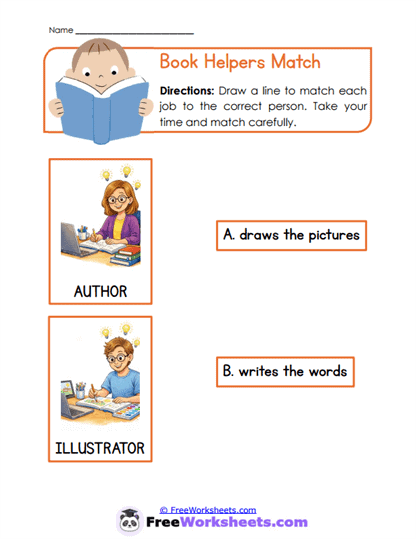
Children match the labels AUTHOR and ILLUSTRATOR to the correct book-making jobs by drawing connecting lines between pictures and descriptions. Learners discuss who writes story words and who creates the illustrations while practicing vocabulary and comprehension skills together. - Target Skill:
Students strengthen text feature understanding by learning the different roles authors and illustrators play in creating books. The activity also supports vocabulary development, comprehension growth, oral language practice, and understanding of how stories and pictures work together.
Caption Connections
- What Kids Do:
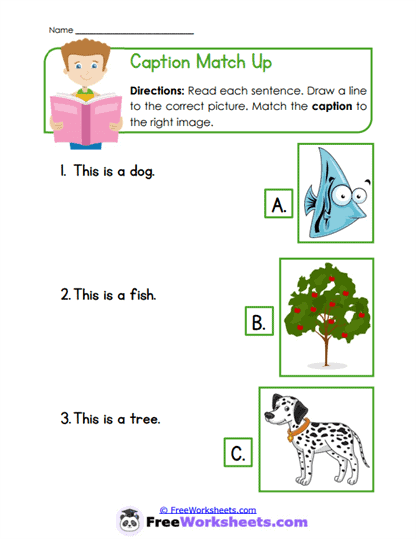
Students read or listen to simple captions and draw lines connecting each sentence to the matching picture on the page. Learners compare familiar objects and animals carefully while practicing picture-to-text matching and visual comprehension skills during literacy instruction. - Target Skill:
Children strengthen comprehension and text feature awareness by understanding how captions provide information about pictures. The worksheet also supports vocabulary growth, sentence comprehension, observation skills, and early nonfiction reading readiness.
Cover Clues
- What Kids Do:
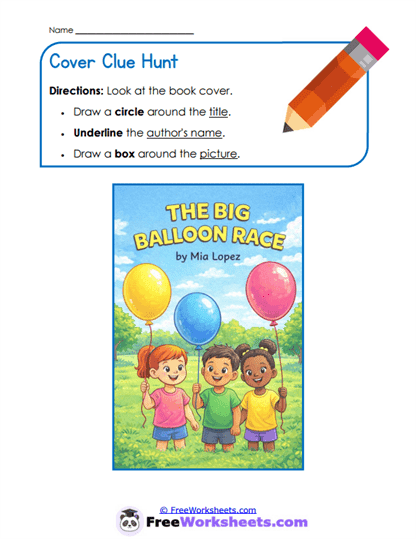
Children study a colorful book cover and complete tasks like circling the title, underlining the author’s name, and boxing the illustration. Learners carefully examine printed words and visual clues while exploring how information is organized on a book cover. - Target Skill:
Students strengthen print awareness and text feature recognition by identifying titles, authors, and illustrations on book covers. The activity also supports vocabulary understanding, visual discrimination, comprehension development, and careful observation skills.
Cover Creations
- What Kids Do:
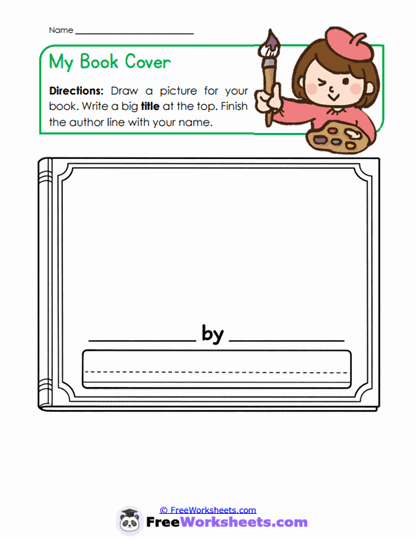
Students create their own pretend book cover by drawing a story picture, writing a title, and adding their names on the author line. Learners use creativity and oral storytelling while practicing how real book covers are organized and designed. - Target Skill:
Children build text feature awareness and early writing confidence by creating titles, author names, and illustrations for original book covers. The worksheet also supports creativity, print awareness, fine motor development, and comprehension through storytelling.
Cover Clues
- What Kids Do:
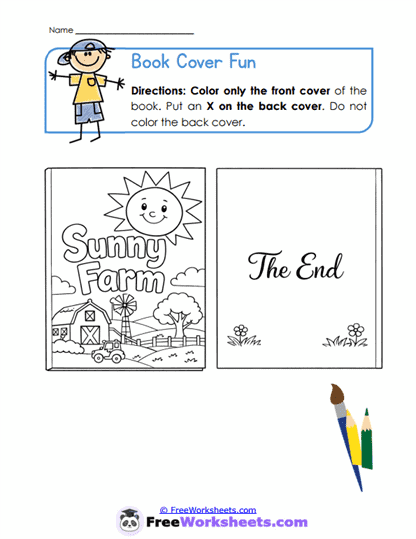
Children compare the front and back covers of a book and color only the front cover while marking an X on the back cover. Learners discuss clues like titles, pictures, and “The End” while practicing early book-handling and print awareness skills. - Target Skill:
Students strengthen understanding of book organization by identifying front and back covers using visual and print clues. The activity also supports print awareness, comprehension development, vocabulary growth, and familiarity with book structure.
Diagram Labels
- What Kids Do:
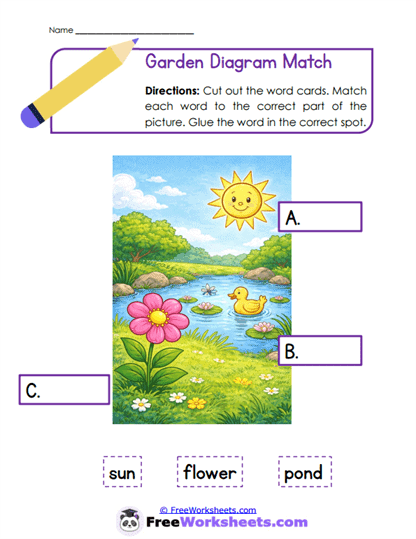
Students cut out words like pond, flower, and sun before gluing them beside the correct parts of a nature diagram. Learners compare picture details carefully while practicing vocabulary recognition and understanding how labels explain information visually. - Target Skill:
Children strengthen nonfiction text feature understanding by matching labels to picture diagrams accurately. The worksheet also supports vocabulary growth, comprehension skills, visual organization, and fine motor development through hands-on practice.
Fact Features
- What Kids Do:
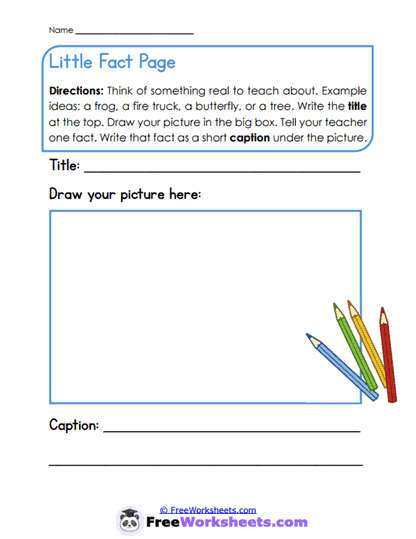
Children create a simple nonfiction fact page by drawing a real object, writing a title, and adding one factual caption underneath the picture. Learners practice sharing information while combining creativity, comprehension, and early informational writing skills. - Target Skill:
Students strengthen understanding of nonfiction text features by creating titles, captions, and informational pictures on their own pages. The activity also supports vocabulary development, oral language growth, print awareness, and comprehension skills.
Parts Practice
- What Kids Do:
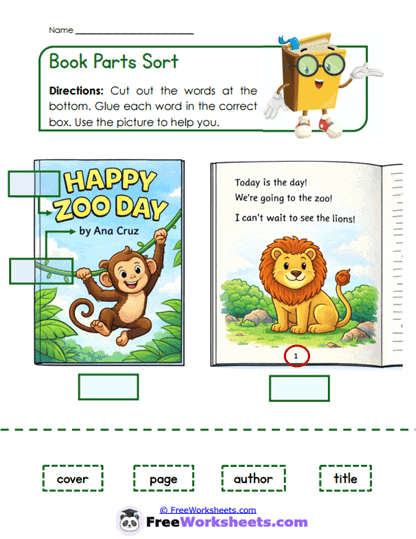
Students cut out labels like title, cover, page, and author before gluing them beside the matching parts of a book illustration. Learners compare book features carefully while practicing vocabulary, matching, and fine motor skills during literacy instruction. - Target Skill:
Children build text feature understanding by identifying important parts of books and connecting vocabulary words to visual examples. The worksheet also supports print awareness, comprehension development, observation skills, and early reading readiness.
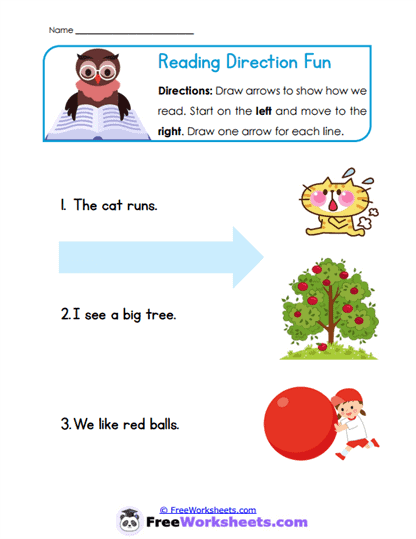
Reading Paths
- What Kids Do:
Students look at short sentences and draw arrows showing how reading moves from left to right across the page. Learners practice tracking print direction carefully while connecting spoken language to printed text during literacy activities. - Target Skill:
Students strengthen print awareness and tracking skills by understanding the correct reading direction in English text. The activity also supports visual tracking, comprehension readiness, foundational reading habits, and page navigation skills.
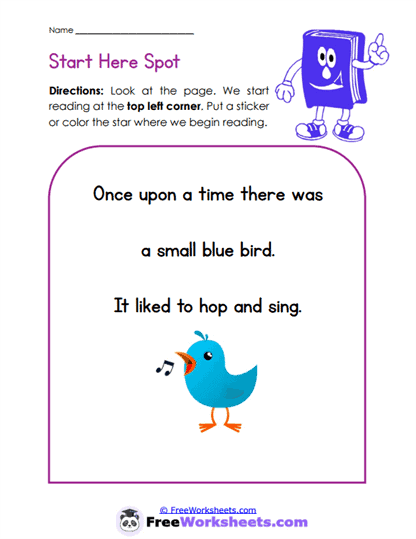
Starting Spot
- What Kids Do:
Children study a page with short sentences and identify the top-left corner where reading begins by marking the correct spot. Learners practice understanding where readers start before moving across and down the page while exploring print concepts. - Target Skill:
Children strengthen print awareness and page organization skills by identifying where reading begins on a page. The worksheet also supports tracking development, comprehension readiness, visual observation, and foundational literacy understanding.
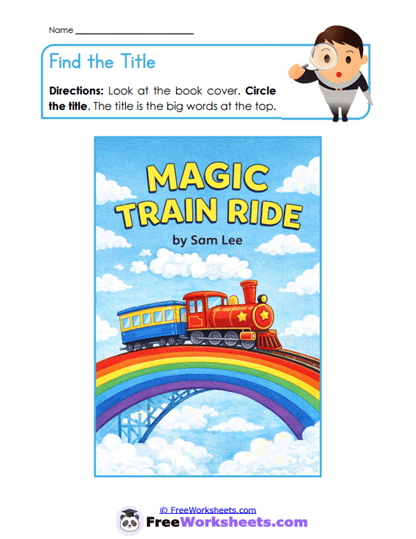
Title Search
- What Kids Do:
Students examine a colorful book cover and circle the title written in large words at the top of the page. Learners compare the title to other text on the cover while discussing how book names help readers understand stories. - Target Skill:
Students strengthen text feature recognition and print awareness by identifying titles on book covers accurately. The activity also supports vocabulary development, comprehension skills, visual discrimination, and understanding of book organization.
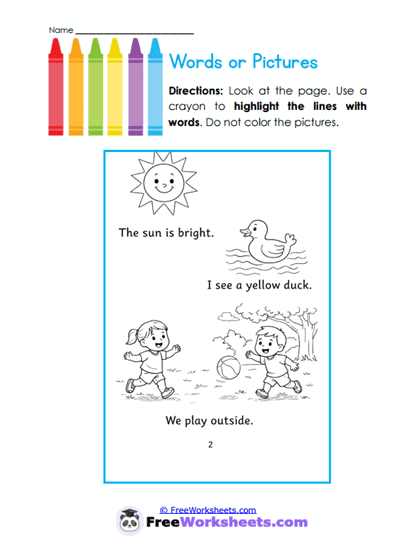
Word Spotting
- What Kids Do:
Children study pages containing both pictures and sentences and highlight only the lines made of printed words. Learners compare illustrations and text carefully while practicing visual recognition and understanding that words carry meaning during reading. - Target Skill:
Students strengthen print awareness and visual discrimination by identifying printed words separately from pictures and decorations. The worksheet also supports comprehension readiness, tracking skills, vocabulary development, and understanding how text functions on a page.