
Inference and Analysis Worksheets
These worksheets help young learners build reasoning, comprehension, and prediction skills through engaging stories. Free, ready-to-print activities come in PDF format for immediate classroom use during literacy centers, guided reading, or homeschool practice. Students strengthen critical thinking, listening comprehension, sequencing, and evidence-based reasoning while practicing foundational literacy skills.
About This Collection of Worksheets
This collection of preschool inference and analysis worksheets gives young learners meaningful opportunities to think beyond simple recall and begin understanding how clues work inside stories. Children practice using pictures, actions, sounds, weather details, and character behaviors to make predictions, identify causes and effects, explain feelings, and understand story events. Each activity introduces comprehension skills in a way that feels playful, approachable, and developmentally appropriate for early learners.
The worksheets use familiar preschool experiences like playgrounds, snack time, rainy days, birthday surprises, planting seeds, and classroom routines to help children connect literacy learning to real life. Because the situations are relatable, students can focus more confidently on thinking skills such as sequencing, drawing conclusions, recognizing emotions, and identifying logical outcomes. The activities encourage children to listen carefully, notice important details, and explain their thinking aloud during discussions.
Teachers and parents will appreciate the simple formats, large visuals, and flexible classroom applications included throughout this collection. These printable activities work well for literacy centers, small groups, morning work, intervention lessons, guided reading practice, and independent review. The variety of inference, sequencing, and problem-solving tasks helps children gradually build stronger comprehension habits that prepare them for future reading success.
Paul’s Teacher Tip
Young learners benefit most from inference practice when adults model their thinking aloud during reading. Pause often and ask simple questions like “What clues helped us figure that out?” or “What do you think will happen next?” Encourage children to point to details in the story or pictures before answering so they learn to support their ideas with evidence. Many preschool students need repeated exposure to the same thinking process before they begin making logical connections independently. Acting out short scenarios, using expressive read-aloud voices, and discussing everyday cause-and-effect situations can make these skills much easier for young learners to understand. Keep conversations relaxed and encouraging so children feel confident sharing their ideas, even when their first answers are not quite correct.
Worksheet Collection Skill Spotlights
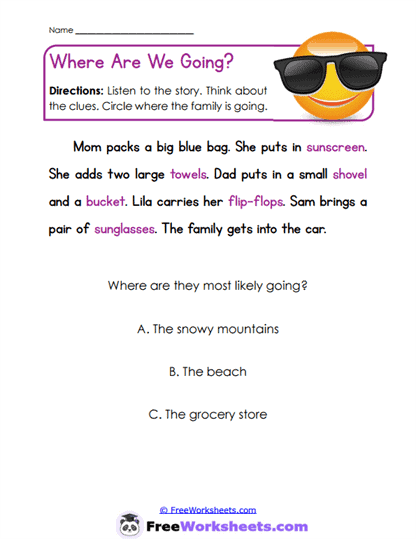
Beach Clues
- What Kids Do:
Children listen to a short story about a family packing for a trip and study clues like towels, sunscreen, flip-flops, and buckets to decide where the family is going. Learners compare picture and answer choices carefully before circling the setting that best matches the details from the passage. - Target Skill:
Students strengthen early inference and listening comprehension skills by using multiple story clues together instead of relying on one detail alone. The activity also supports vocabulary development, reasoning, prediction skills, and understanding how details reveal setting and context in a passage.
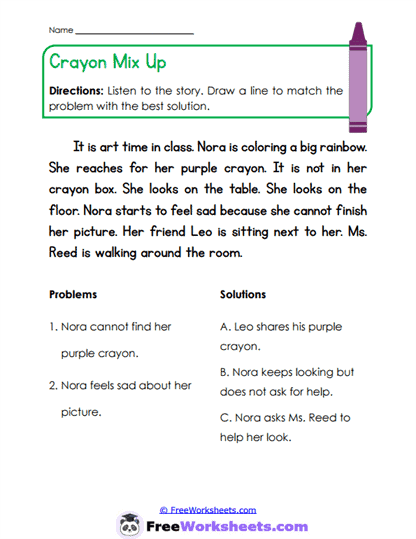
Crayon Trouble
- What Kids Do:
Students hear a classroom story about a missing crayon and connect each problem to the most helpful solution by drawing matching lines across the page. Children think about realistic classroom behaviors while discussing kindness, teamwork, and how characters solve everyday problems. - Target Skill:
Learners build comprehension and story structure skills by identifying relationships between challenges and solutions within a simple narrative. The worksheet also develops sequencing, social reasoning, and the ability to recognize appropriate responses to common classroom situations.
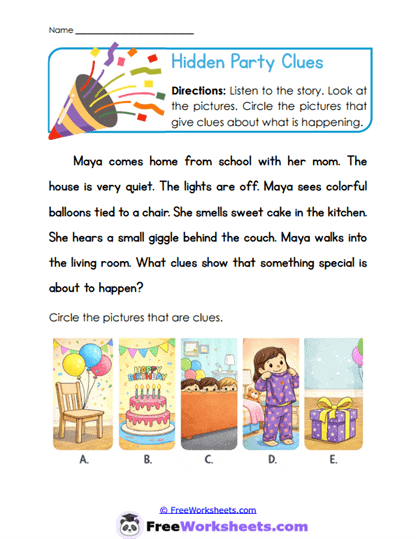
Party Hints
- What Kids Do:
Children listen to a story about unusual clues around a house, including balloons, cake, and wrapped presents, then decide what special event may happen next. Students carefully examine pictures and circle the clues that connect best to the story details they heard. - Target Skill:
This activity develops inference and prediction skills by encouraging students to combine several details into one logical conclusion. Learners also strengthen listening comprehension, observation skills, and early evidence-based reasoning during guided discussion and independent practice.
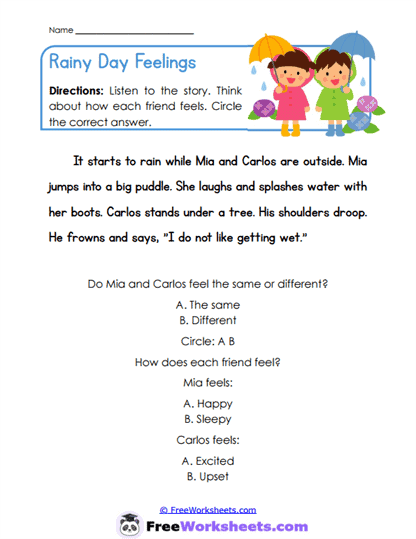
Puddle Feelings
- What Kids Do:
Students compare how two children react differently to rainy weather by listening to clues about splashing, smiling, frowning, and hiding from puddles. Learners decide whether the characters feel the same or differently and choose emotions that match each child’s actions. - Target Skill:
Children practice identifying character emotions and making simple emotional inferences using dialogue, actions, and story context. The worksheet also supports social-emotional learning, comprehension development, and understanding that people can react differently to similar experiences.
Seed Sprouts
- What Kids Do:
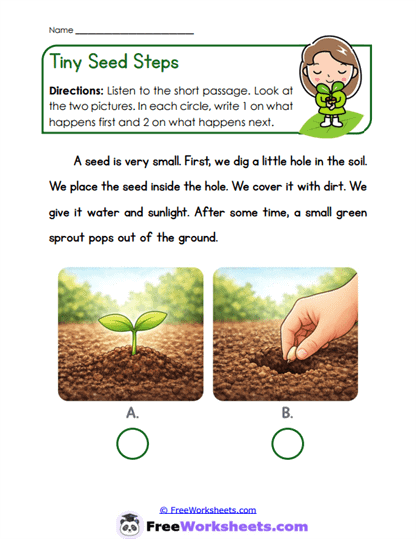
Children listen to a simple story about planting a seed and then look at two pictures to decide what happened first and what happened next. Students write numbers inside circles to show the correct order of events while discussing plant growth and change over time. - Target Skill:
Learners strengthen sequencing and comprehension skills by organizing story events into logical order using picture clues and spoken details. The activity also builds early science vocabulary, process understanding, and awareness that stories and real-life events follow clear sequences.
Sharing Turns
- What Kids Do:
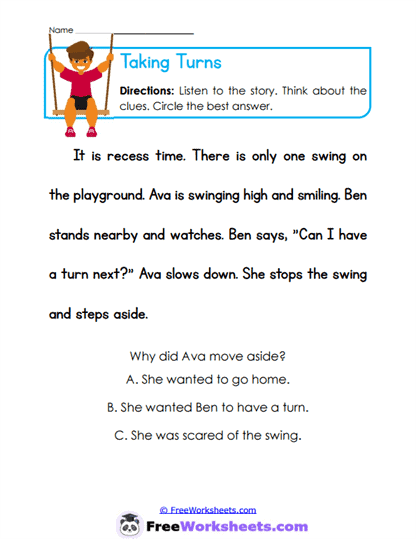
Students hear a playground story about children taking turns on a swing and decide why one child moved aside after another child asked politely for a turn. Learners examine answer choices closely before circling the explanation that best fits the clues from the passage. - Target Skill:
This worksheet supports inference and comprehension development by helping children connect dialogue, actions, and social situations to character motivations. Students also practice reasoning, listening skills, and understanding positive social behaviors like patience and sharing.
Siren Sounds
- What Kids Do:
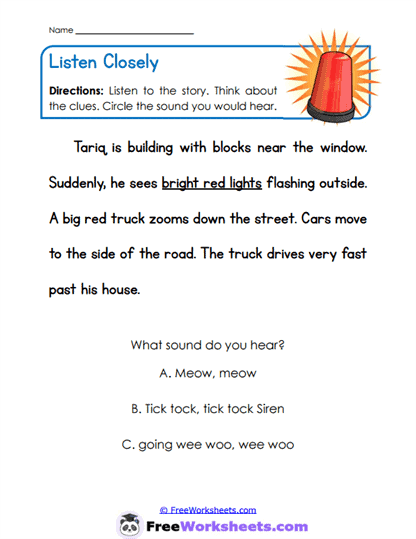
Children listen to clues about flashing lights, fast-moving trucks, and cars pulling aside on the road before choosing which sound would most likely be heard. Students compare answer choices and connect the story details to familiar community helper vehicles. - Target Skill:
Learners develop inference and listening comprehension skills by identifying how story details point toward a logical conclusion. The activity also strengthens reasoning, vocabulary development, and understanding of community helper sounds and transportation clues.
Snack Spill
- What Kids Do:
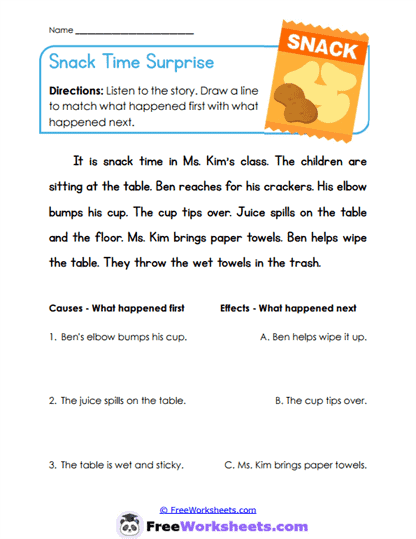
Students listen to a classroom snack-time story and match causes to effects by drawing lines between connected events on the page. Children think carefully about what happened first and what happened immediately afterward while discussing everyday classroom situations. - Target Skill:
This activity strengthens cause-and-effect understanding by helping learners recognize how one event leads to another within a story. Students also practice sequencing, comprehension, logical thinking, and identifying relationships between actions and outcomes.
Storm Signals
- What Kids Do:
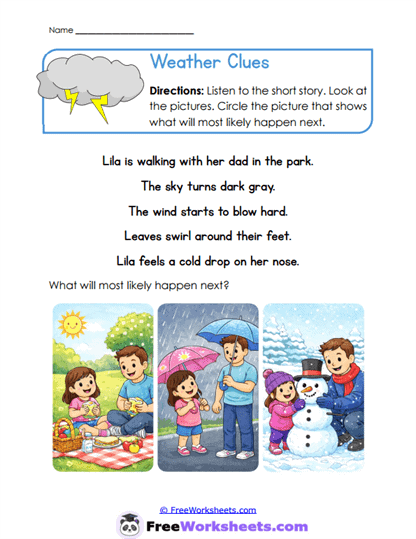
Children hear a short weather story describing dark clouds, cold raindrops, and strong winds before choosing what will most likely happen next. Learners study picture clues and circle the image that best matches the information provided in the story. - Target Skill:
Students practice drawing conclusions from details by combining weather clues to make predictions about future events in a story. The worksheet also supports listening comprehension, critical thinking, and understanding how descriptive clues guide reader understanding.
Windy Picnic
- What Kids Do:
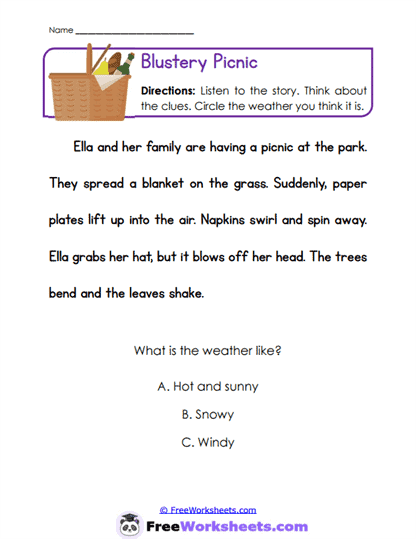
Students listen to a picnic story featuring blowing napkins, shaking trees, and flying plates before deciding what the weather is like outside. Children review multiple-choice options and select the answer that best fits the clues from the passage. - Target Skill:
Learners strengthen inference and comprehension skills by connecting environmental details and actions to weather conditions described indirectly in the text. The activity also builds vocabulary knowledge, reasoning abilities, and evidence-based thinking habits.
Winter Bundles
- What Kids Do:
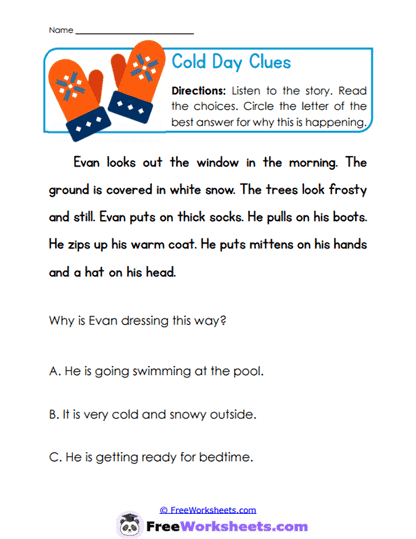
Children hear clues about snowy weather, heavy coats, scarves, and boots before deciding why a boy is dressing warmly. Students examine answer choices and circle the explanation that makes the most sense based on the winter details in the story. - Target Skill:
This worksheet develops inference and reasoning skills by encouraging students to connect seasonal clues with logical conclusions about character actions. Learners also strengthen listening comprehension, vocabulary development, and understanding of weather-related situations.
Zoo Journey
- What Kids Do:
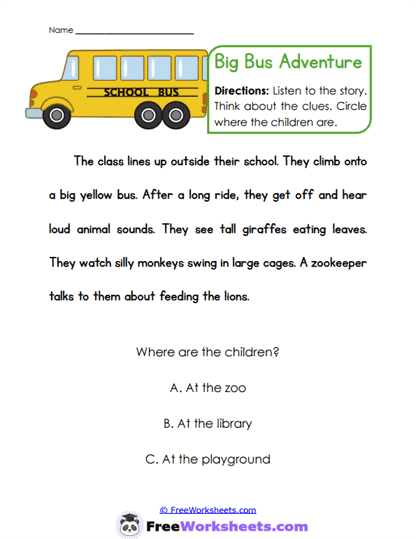
Students listen to a story about children riding a school bus and seeing giraffes, monkeys, and zookeepers during a class trip. Learners compare possible settings and circle the location that best matches all the clues provided in the passage. - Target Skill:
Children build comprehension and inference skills by combining several story details to identify setting and context accurately. The activity also strengthens reasoning, listening comprehension, vocabulary development, and understanding of how clues reveal important information in stories.