
Patterns Worksheets
This collection of worksheets help children recognize, repeat, and extend simple sequences. These free, ready-to-print PDF format resources are perfect for classroom or at-home use. Students build pattern recognition, logical thinking, and early problem-solving skills aligned to foundational math standards.
About This Collection of Worksheets
This collection is designed to help preschool learners notice and understand patterns in a simple, engaging way. Patterns are an important early math skill because they teach children to recognize order, repetition, and what comes next. These skills support later learning in math, reading, and problem-solving.
The worksheets use a variety of fun themes like food, animals, colors, and shapes to keep children interested. Activities include drawing, coloring, matching, and even cutting and pasting, so kids stay active while they learn. As students move through the collection, they progress from simple repeating patterns to slightly more complex ones.
These worksheets are easy to use in both classroom and home settings. Teachers can include them in math centers or guided lessons, while parents can use them for extra practice. The goal is to build confidence so children begin to recognize patterns naturally in everyday life.
Paul’s Teacher Tip
When teaching patterns, encourage children to say the pattern out loud as they work. This helps them hear the repetition and understand what comes next. If a child gets stuck, point to each item and ask, “What is repeating?” You can also build patterns with toys, snacks, or blocks to make learning more hands-on. Keep it playful and give lots of chances to practice so children feel confident.
Worksheet Collection Skill Spotlights
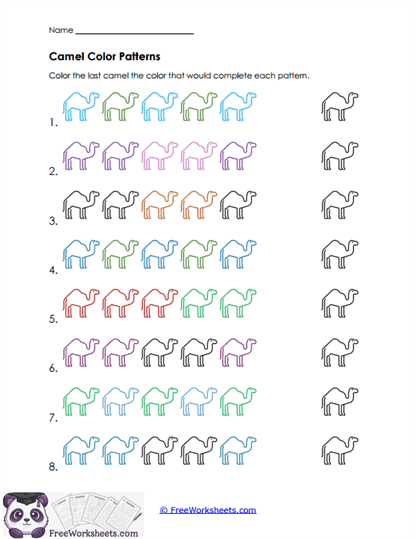
Camel Colors
- What Kids Do:
Children look at rows of colored camels, identify the repeating color pattern, and color the final camel to complete the sequence. This helps them focus on order and repetition while staying engaged with fun visuals. - Target Skill:
Students build pattern recognition by identifying and extending repeating color sequences. This supports early math standards focused on recognizing and continuing patterns.
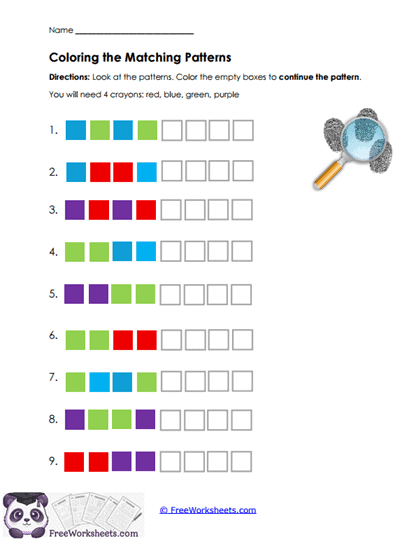
Color Patterns
- What Kids Do:
Children study rows of colored boxes and continue the pattern by coloring the empty spaces correctly. They repeat this process across multiple examples, reinforcing careful observation and pattern continuation. - Target Skill:
Students strengthen their ability to recognize and extend simple repeating patterns. This aligns with foundational standards focused on identifying and continuing sequences.
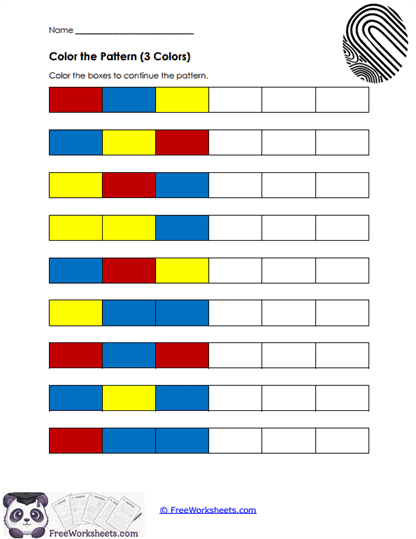
Color Rows
- What Kids Do:
Children examine longer color sequences that include three colors, then continue the pattern in the empty boxes. This challenges them to remember and repeat the full sequence instead of just part of it. - Target Skill:
Students develop advanced pattern skills by working with multi-step sequences. This supports early learning standards focused on recognizing more complex patterns.
Cut Patterns
- What Kids Do:
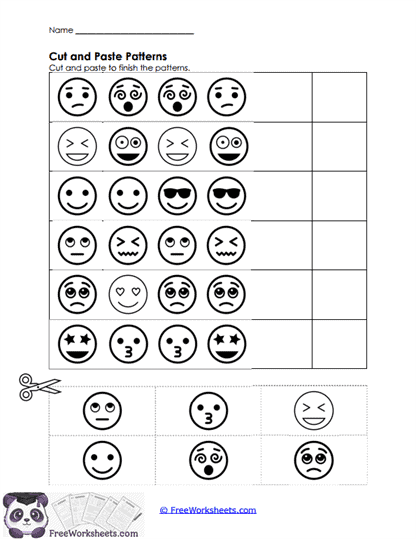
Children identify a pattern in a row of faces, cut out the correct image, and paste it into the empty space to complete the sequence. This hands-on activity combines pattern recognition with fine motor practice. - Target Skill:
Students build pattern completion skills through active problem-solving and manipulation. This aligns with standards focused on recognizing and extending repeating sequences.
Letter Patterns
- What Kids Do:
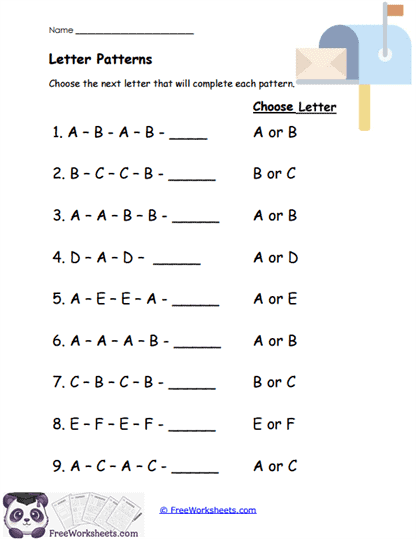
Children look at simple letter patterns like A, B, A, B and choose the letter that comes next. This activity connects pattern skills with early literacy. - Target Skill:
Students strengthen pattern recognition while building familiarity with letters. This supports both math and early reading development through sequence recognition.
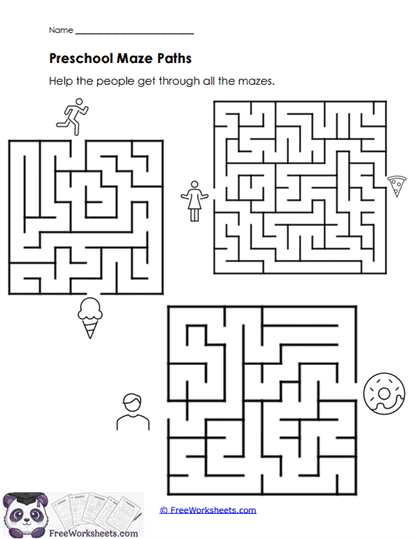
Maze Paths
- What Kids Do:
Children solve simple mazes by tracing a path from start to finish. While not a traditional pattern task, it encourages sequencing and logical thinking. - Target Skill:
Students develop problem-solving and sequencing skills that support pattern recognition. This aligns with early math practices focused on reasoning and persistence.
Number Colors
- What Kids Do:
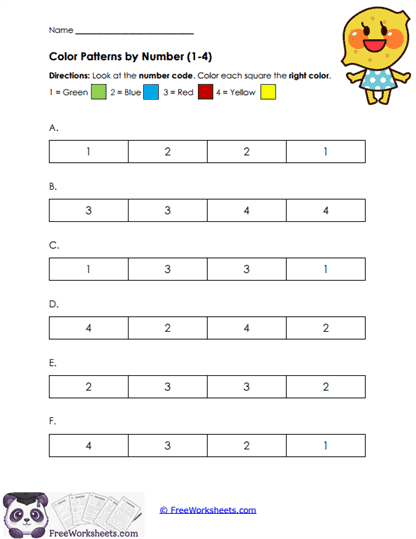
Children use a number-color key to color boxes and complete a pattern. They follow a coded sequence, combining number recognition with pattern thinking. - Target Skill:
Students build pattern skills by applying rules and codes to complete sequences. This supports early math standards focused on structured pattern recognition.
Number Patterns
- What Kids Do:
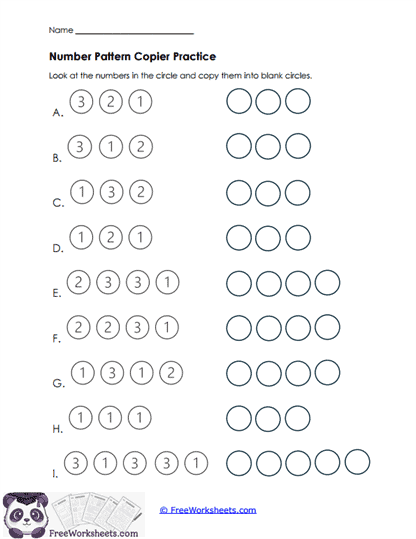
Children study number sequences and copy the same pattern into empty spaces. This helps them recognize patterns using numbers instead of pictures. - Target Skill:
Students connect counting skills with pattern recognition by identifying and repeating number sequences. This aligns with foundational math standards.
Pattern Match
- What Kids Do:
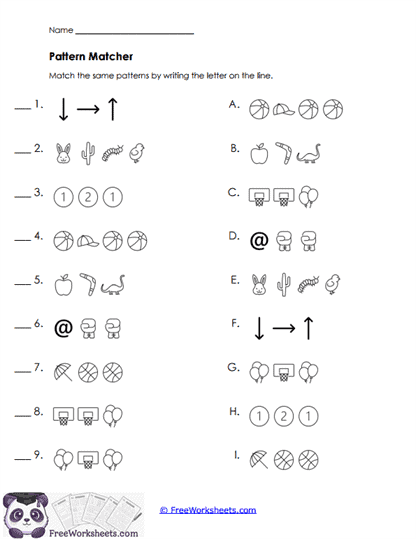
Children compare a given pattern with several options and choose the one that matches exactly. This requires careful observation and comparison. - Target Skill:
Students strengthen analytical thinking by identifying matching patterns. This supports early standards focused on comparing and recognizing sequences.
Size Patterns
- What Kids Do:
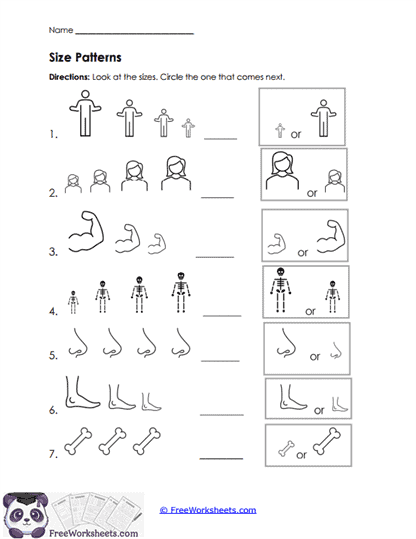
Children look at patterns based on size changes, such as big, small, big, and choose what comes next. This introduces a new type of pattern beyond color or shape. - Target Skill:
Students expand pattern recognition skills by identifying patterns based on size. This aligns with standards focused on recognizing different pattern types.
Snack Patterns
- What Kids Do:
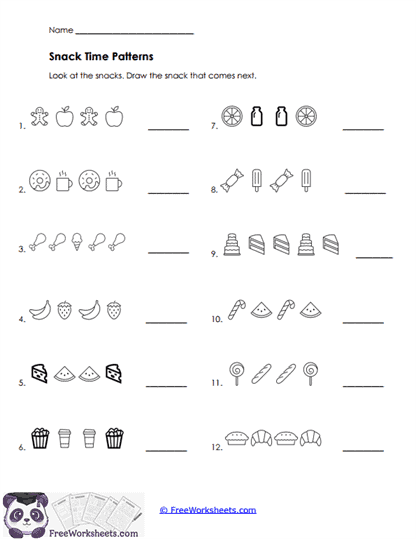
Children examine rows of snack images and draw the item that comes next in the pattern. This keeps learning fun and relatable. - Target Skill:
Students build early pattern skills by identifying and continuing simple repeating sequences. This supports foundational math learning.
Train Patterns
- What Kids Do:
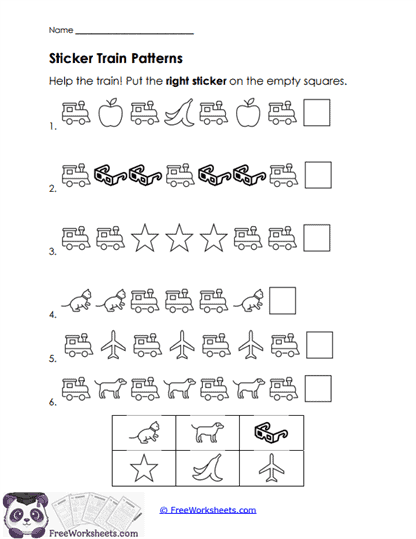
Children identify picture patterns in train-themed rows and complete the sequence by choosing or drawing the correct item. This adds a playful element to learning. - Target Skill:
Students develop pattern recognition and completion skills through visual sequences. This aligns with early math standards focused on identifying and extending patterns.