
Reality vs. Fiction Worksheets
These worksheets help young learners build comprehension, reasoning, and classification skills through engaging literacy activities. Free, ready-to-print worksheets come in PDF format for immediate classroom use during literacy centers, guided discussions, or homeschool learning. Students strengthen critical thinking, vocabulary development, fiction understanding, and real-world reasoning while practicing early comprehension skills.
About This Collection of Worksheets
This collection of preschool reality versus fiction worksheets helps young learners understand the difference between things that are real and things that belong in imagination or fantasy stories. Children practice sorting, comparing, coloring, circling, matching, drawing, and discussing pictures and events while learning how to identify realistic ideas versus make-believe concepts. Each activity introduces early comprehension and reasoning skills in playful, age-appropriate ways that connect literacy learning to everyday experiences.
The worksheets include familiar animals, community helpers, fantasy creatures, magical scenes, and everyday situations that encourage children to think carefully about what can happen in real life. Students build vocabulary and comprehension while comparing real-world objects to pretend characters from books, cartoons, and stories. These engaging classification tasks help preschool learners strengthen observation, oral language, and critical thinking skills through meaningful literacy conversations.
Teachers and parents can easily use these printable worksheets during fiction versus nonfiction lessons, literacy stations, oral language practice, intervention activities, or homeschool instruction. Large visuals, simple response formats, and interactive tasks help preschool learners stay focused and confident while working independently or in small groups. Together, the worksheets create strong opportunities for children to practice thoughtful reasoning, comprehension, and speaking skills while exploring the difference between fantasy and reality.
Paul’s Teacher Tip
Preschool students often need repeated conversations about fantasy and reality because many favorite cartoons, movies, and books blend the two together. Encourage children to explain their thinking aloud whenever they sort or classify pictures so they practice reasoning instead of only guessing. Real-life examples work especially well, so connect activities to places children know like farms, zoos, playgrounds, and community helpers. When discussing pretend ideas, remind students that imagination and make-believe stories are fun even though they are not real. Pairing these worksheets with storybooks can help children notice realistic and fantasy elements more naturally during reading. Most importantly, keep discussions playful and positive so children feel excited about sharing ideas and asking questions.
Worksheet Collection Skill Spotlights
Animal Sorting
- What Kids Do:
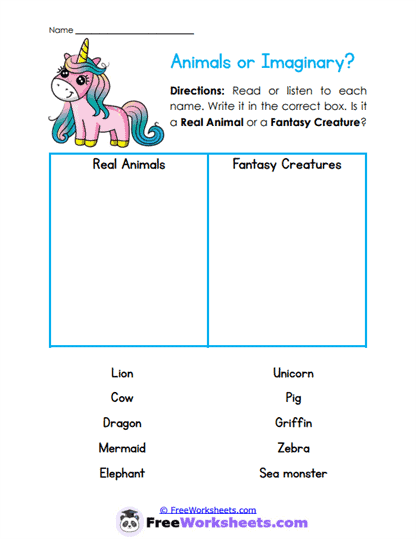
Children listen to or read animal names and decide whether each creature belongs in the Real Animals group or the Fantasy Creatures group. Learners sort animals like zebras and unicorns into categories while discussing nature, imagination, and storybook creatures during literacy practice. - Target Skill:
Students strengthen comprehension and classification skills by comparing real-world animals to fantasy creatures from make-believe stories. The activity also supports vocabulary development, reasoning abilities, oral language growth, and understanding of fiction versus nonfiction ideas.
Circle Truths
- What Kids Do:
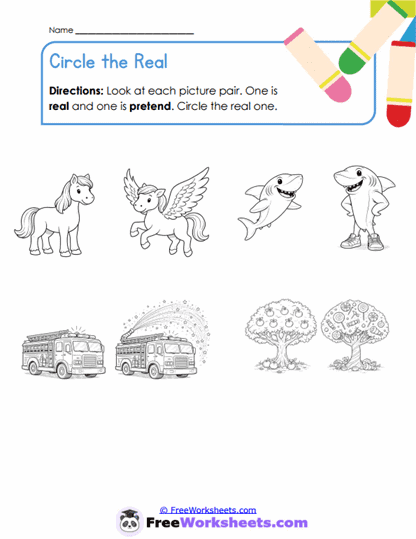
Students compare side-by-side picture pairs and circle the object that exists in real life instead of the fantasy version beside it. Learners carefully study details while discussing why one picture is realistic and the other belongs in pretend stories. - Target Skill:
Children develop observation and reasoning skills by distinguishing between realistic objects and imaginative fantasy versions of those objects. The worksheet also supports comprehension growth, visual comparison abilities, vocabulary understanding, and critical thinking practice.
Color Categories
- What Kids Do:
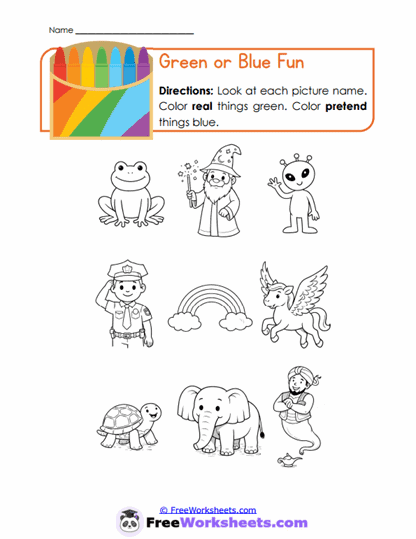
Children examine pictures like frogs, elephants, wizards, and unicorns before coloring real objects green and pretend objects blue. Learners combine classification and coloring practice while discussing which pictures belong in real life and which belong in fantasy stories. - Target Skill:
Students strengthen fiction versus nonfiction understanding by identifying and categorizing realistic and imaginary pictures accurately. The activity also supports vocabulary growth, observation skills, comprehension development, and fine motor practice through coloring tasks.
Helper Sort
- What Kids Do:
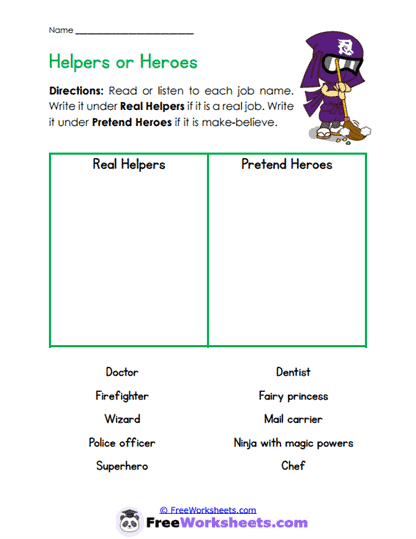
Students sort community helper jobs and fantasy hero titles into the categories Real Helpers and Pretend Heroes. Learners discuss occupations like firefighters and compare them to imaginary characters like wizards while practicing vocabulary and comprehension skills. - Target Skill:
Children strengthen classification and comprehension skills by identifying which roles exist in everyday life and which belong in fantasy stories. The worksheet also supports oral language development, reasoning skills, vocabulary recognition, and critical thinking abilities.
Imagine Drawings
- What Kids Do:
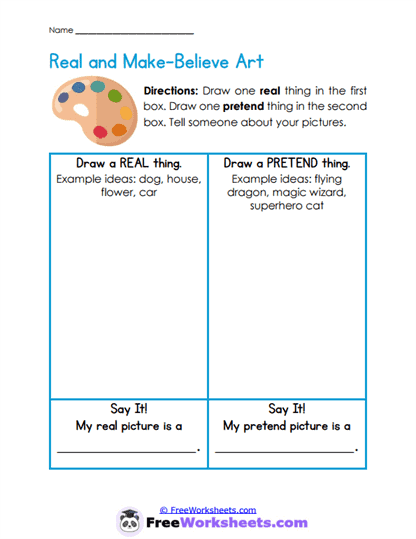
Children draw one real object and one pretend object inside labeled boxes before explaining their ideas aloud using sentence starters. Learners practice creativity, speaking confidence, and thoughtful discussion while comparing reality and imagination through drawing activities. - Target Skill:
Students strengthen oral language and comprehension skills by identifying and discussing real-world objects versus fantasy ideas. The activity also supports creativity, vocabulary growth, reasoning development, and speaking fluency during literacy conversations.
Pretend Search
- What Kids Do:
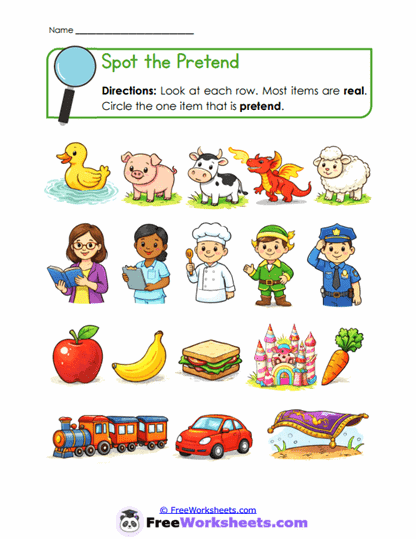
Students study rows of pictures and circle the one pretend item hidden among groups of real-world objects. Learners compare animals, vehicles, and fantasy creatures carefully while discussing why some items belong only in imaginary stories. - Target Skill:
Children strengthen observation and comprehension skills by identifying fantasy pictures among realistic objects and scenes. The worksheet also supports classification abilities, reasoning skills, visual comparison, and understanding of fiction versus reality concepts.
Pretend Sorting
- What Kids Do:
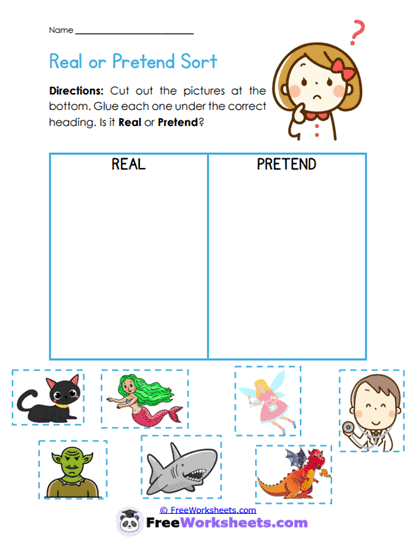
Children cut out picture cards and sort them into the categories REAL and PRETEND by gluing them into the correct columns. Learners compare animals, fantasy creatures, and story characters while practicing hands-on classification and oral discussion skills. - Target Skill:
Students develop comprehension and categorization skills by grouping pictures according to whether they exist in real life or imagination. The activity also supports vocabulary development, fine motor control, reasoning practice, and fiction understanding.
Real Choices
- What Kids Do:
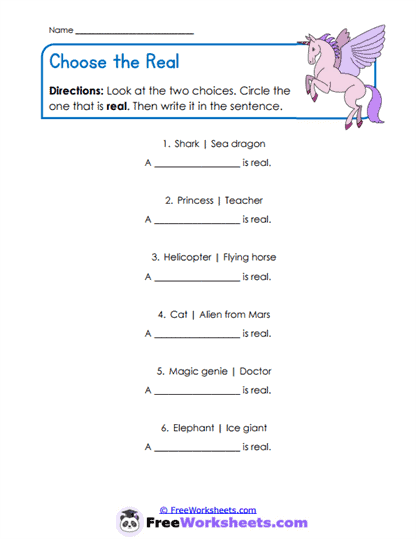
Students compare pairs of choices like shark or sea dragon and circle the object or person that is real before writing it below. Learners think carefully about what exists in everyday life while discussing fantasy ideas and realistic examples. - Target Skill:
Children strengthen reasoning and comprehension skills by comparing realistic objects to fantasy characters and imaginary ideas. The worksheet also supports vocabulary growth, classification understanding, critical thinking, and early writing practice.
Reality Check
- What Kids Do:
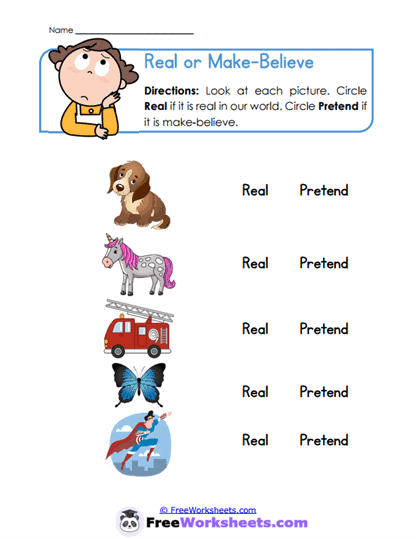
Children look at pictures like butterflies, unicorns, dogs, and superheroes before deciding whether each image is real or pretend. Learners circle the correct category while discussing why some things exist in nature and others belong in imagination. - Target Skill:
Students strengthen comprehension and critical thinking skills by identifying real-life objects and separating them from make-believe fantasy ideas. The activity also supports vocabulary development, oral reasoning, and understanding of fiction versus nonfiction concepts.
Reality Choices
- What Kids Do:
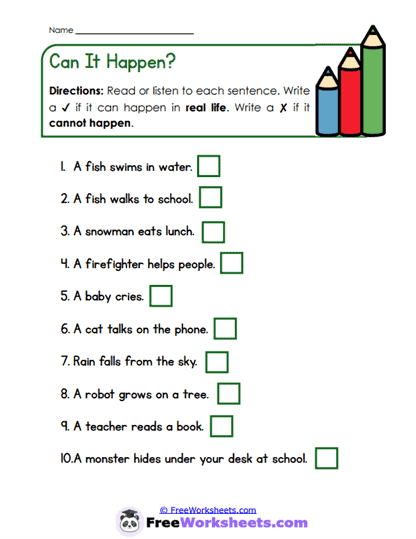
Students listen to or read short sentences describing different actions and events before deciding whether each one could really happen. Learners mark real situations with a check mark and pretend situations with an X after careful discussion and reasoning. - Target Skill:
Children strengthen reasoning and listening comprehension skills by deciding whether events are realistic or imaginary based on everyday experiences. The worksheet also supports vocabulary understanding, critical thinking, and comprehension development through sentence analysis.
Scene Detectives
- What Kids Do:
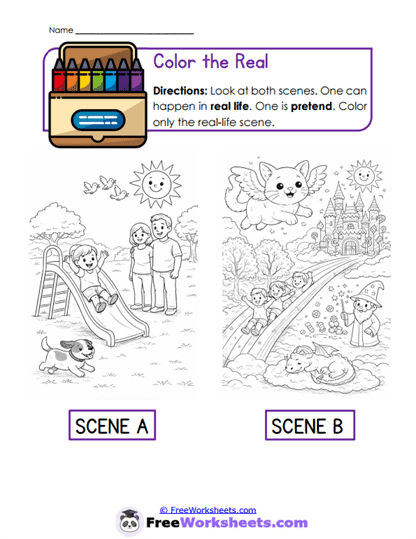
Children compare two detailed scenes and color only the picture that could happen in real life instead of the fantasy scene. Learners study visual clues carefully while discussing playgrounds, magical castles, flying animals, and everyday activities. - Target Skill:
Students build comprehension and observation skills by identifying realistic scenes and distinguishing them from fantasy story settings. The activity also supports visual reasoning, classification abilities, oral language growth, and critical thinking development.
Word Connections
- What Kids Do:
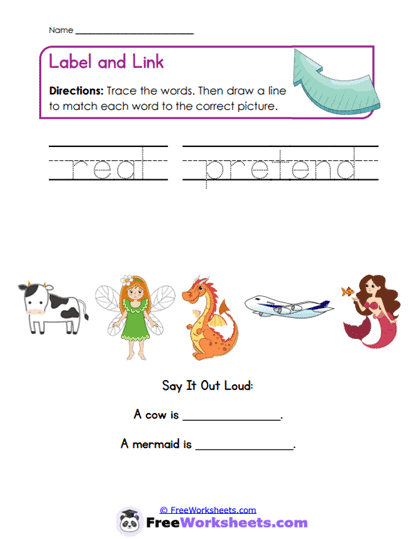
Students trace the words real and pretend, then match pictures to the correct category labels using connecting lines. Learners compare objects like cows and mermaids while practicing vocabulary recognition, handwriting, and comprehension during one literacy activity. - Target Skill:
Children strengthen vocabulary and classification skills by connecting pictures to printed category words representing reality and fantasy. The worksheet also supports comprehension growth, handwriting development, reasoning abilities, and fiction versus nonfiction understanding.