
Comparing Groups Worksheets
These worksheets help children count, compare, and understand more, less, and same. These free, ready-to-print PDF format resources are perfect for immediate classroom or at-home use. Students build number sense, counting accuracy, and comparison skills aligned to early learning standards.
About This Collection of Worksheets
This collection is designed to help young learners take an important step in early math: moving from counting to comparing. Each worksheet gives children the chance to look at two groups of objects and decide which has more, which has less, or if they are the same. These simple activities build strong number sense and help children understand how numbers relate to each other.
The worksheets use familiar and fun themes like animals, food, and everyday objects to keep children engaged. Clear pictures and simple directions make it easy for preschoolers to focus on counting and comparing without feeling overwhelmed. Repetition across different pages helps reinforce the same skill in new and interesting ways.
These activities work well in both classroom and home settings. Teachers can use them during math centers or small group instruction, while parents can use them for extra practice at home. The goal is to build confidence through practice, helping children feel comfortable with early math concepts.
Paul’s Teacher Tip
At this stage, the most important thing is helping children slow down and count carefully. Encourage them to point to each object as they count to avoid skipping items. If they are unsure, have them count both groups again and say the numbers out loud before comparing. You can also ask simple questions like “Which has more?” or “Which is bigger?” to guide their thinking. Using real objects like snacks or toys can make the learning even more meaningful. Keep it fun and low-pressure so children build confidence as they learn.
Worksheet Collection Skill Spotlights
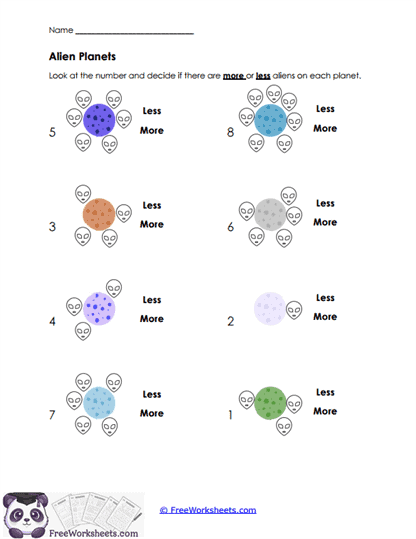
Alien Planets
- What Kids Do:
Children look at a number and a group of playful alien pictures, then count carefully to decide if the group is more or less than the number shown. They repeat this process across multiple problems, building confidence as they compare quantities and circle the correct answer. - Target Skill:
Students develop early number comparison skills by connecting numerals to quantities and determining greater or lesser values. This aligns with foundational math standards focused on counting, number relationships, and comparing sets with accuracy and understanding.
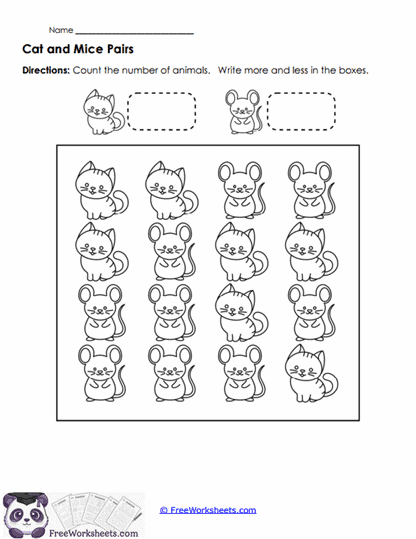
Cat and Mice Pairs
- What Kids Do:
Children count groups of cats and mice, then compare the totals to decide which group has more or less. They write or say their answers, practicing both counting and using comparison words while building comfort with small number sets. - Target Skill:
Students strengthen counting accuracy and comparison skills by evaluating two groups side by side. This supports early math development by reinforcing number sense and helping learners understand relationships between quantities.
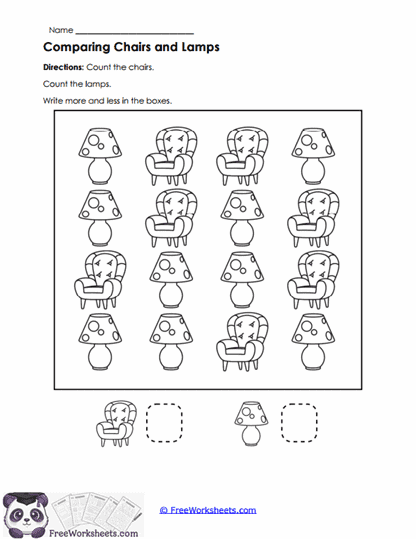
Comparing Chairs and Lamps
- What Kids Do:
Children count two groups of everyday objects, chairs and lamps, and decide which group is larger or smaller. They write their answers in provided spaces, combining counting, comparison, and early writing practice in one activity. - Target Skill:
Students build foundational comparison skills by identifying which of two groups has more or fewer items. This aligns with early math standards focused on comparing numbers and understanding quantity relationships through hands-on practice.
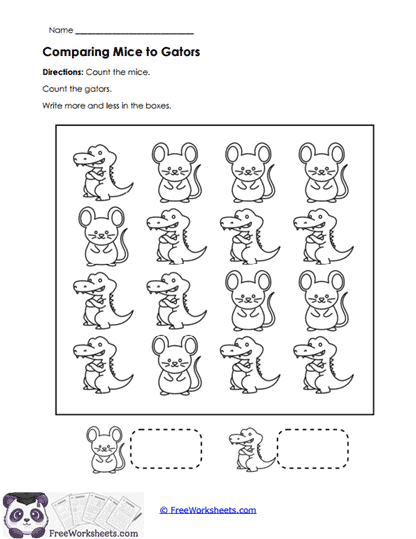
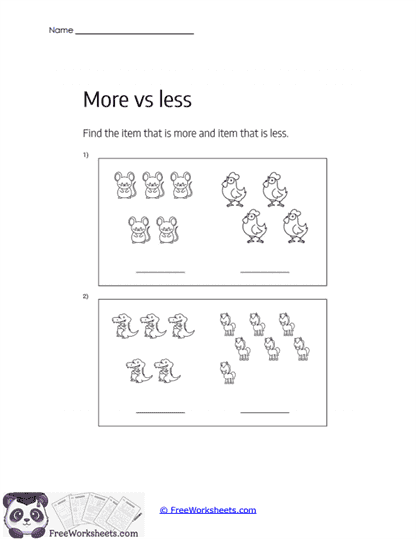
Comparing Mice to Gators
- What Kids Do:
Children count two groups of animals and compare them to determine which has more and which has less. They then write their answers, helping them connect counting with decision-making and reinforcing understanding through repetition. - Target Skill:
Students develop number sense by comparing quantities and identifying greater and lesser values. This supports early learning standards that emphasize counting accuracy and the ability to compare sets using clear mathematical language.
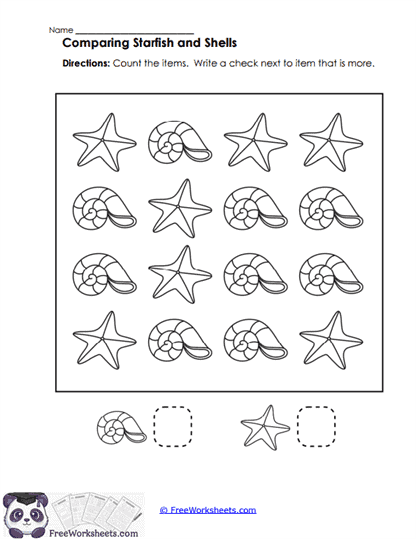
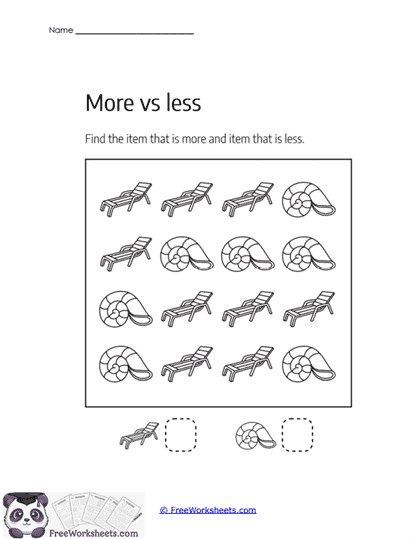
Comparing Starfish and Shells
- What Kids Do:
Children count ocean-themed objects like starfish and shells, then decide which group has more. They mark their answers, practicing careful counting and making comparisons in a fun, engaging way that keeps them interested. - Target Skill:
Students strengthen their ability to compare quantities by counting and evaluating groups. This aligns with early math standards focused on understanding greater and lesser values through visual and hands-on learning experiences.
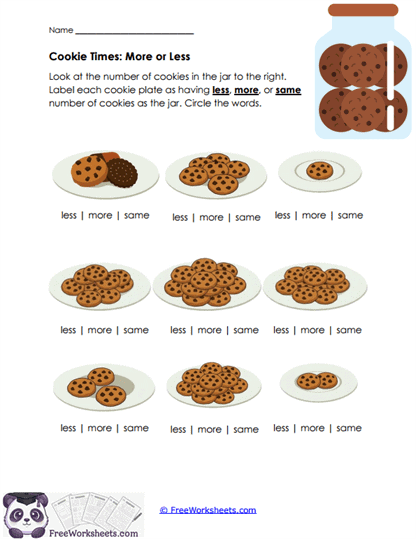
Cookie Times: More or Less
- What Kids Do:
Children compare cookies on plates to a cookie jar by counting each group and deciding if it has more, less, or the same amount. They circle the correct answer, building confidence through repeated practice with familiar objects. - Target Skill:
Students learn to compare sets and understand the concepts of more, less, and equal. This supports early number sense development and aligns with foundational standards for counting and comparing quantities.
Feast of the Most
- What Kids Do:
Children count groups of animals and compare them to decide which group is larger. They mark or write their answers, practicing counting carefully and making decisions based on numbers rather than guessing. - Target Skill:
Students build comparison skills by identifying which group has the greatest quantity. This supports early math learning by reinforcing counting accuracy and helping learners understand number relationships.
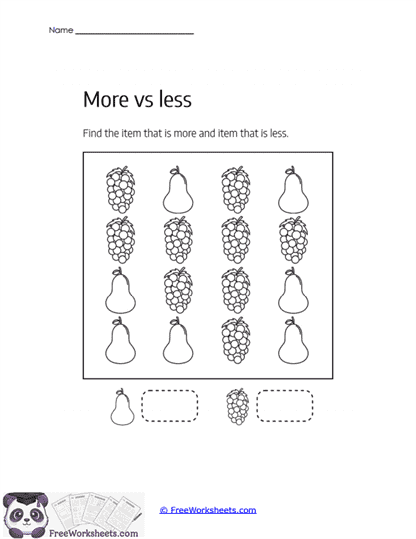
Fruity More/Less
- What Kids Do:
Children count groups of fruit and compare them to decide which has more or less. They mark their answers after counting both groups, helping them practice careful observation and decision-making with visual sets. - Target Skill:
Students develop early comparison skills by counting and evaluating quantities. This aligns with foundational standards that emphasize understanding greater and lesser values through repeated, hands-on practice.
More or Less
- What Kids Do:
Children count groups of animals and decide which group has more or less. They repeat this process across several problems, building confidence as they practice identifying larger and smaller groups. - Target Skill:
Students strengthen their understanding of quantity comparison by identifying greater and lesser groups. This supports early math standards focused on counting accuracy and number relationships.
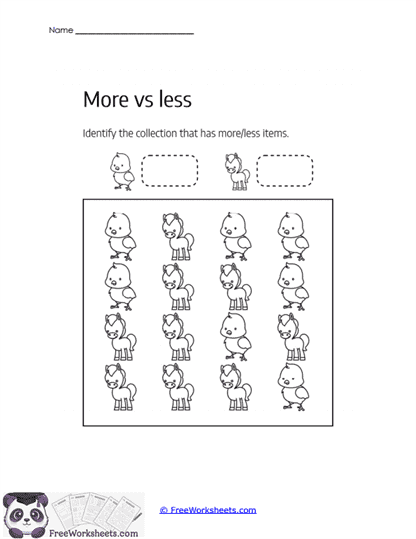
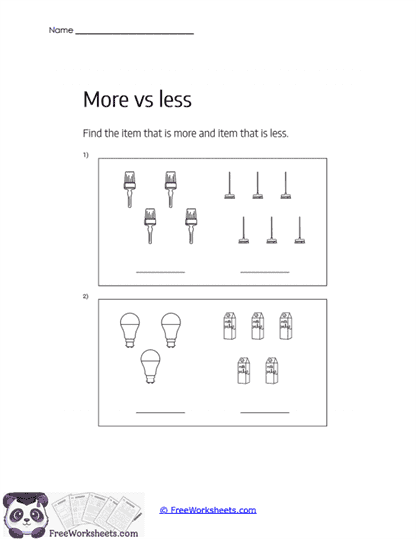
More vs less
- What Kids Do:
Children count two groups of everyday objects and determine which group is bigger or smaller. They point, say, or write their answers, reinforcing their understanding through active participation and repetition. - Target Skill:
Students build foundational math skills by comparing quantities and identifying which group has more or less. This aligns with early standards focused on developing number sense and comparison abilities.
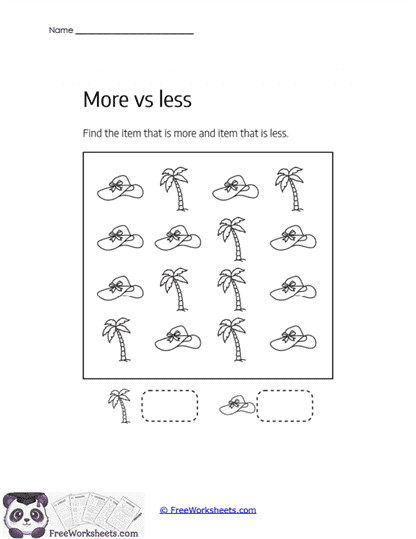
The Great Quantity
- What Kids Do:
Children count beach-themed items and compare two groups to decide which is greater or smaller. They mark their answers, practicing counting and comparison in a fun and visually engaging setting. - Target Skill:
Students develop comparison skills by identifying greater and lesser quantities in visual groups. This supports early math learning by reinforcing counting and understanding number relationships.
Winning Side
- What Kids Do:
Children count two groups of objects and decide which group has more or less. They then record their answers, practicing both counting and comparison skills in a structured and easy-to-follow format. - Target Skill:
Students strengthen number sense by comparing quantities and identifying larger and smaller groups. This aligns with early math standards focused on counting, comparison, and understanding relationships between numbers.