
One More and One Less Worksheets
These worksheets help children explore simple addition and subtraction by adding or taking away one. These free, ready-to-print PDF format resources are perfect for immediate classroom or home use. Students develop number sense, counting fluency, and understanding of number relationships aligned to early learning standards.
About This Collection of Worksheets
This collection is designed to help young learners understand how numbers change in simple, meaningful ways. By focusing on “one more” and “one less,” children begin to see that numbers are connected and can grow or shrink step by step. These early concepts lay the groundwork for addition and subtraction in later grades.
The worksheets use fun and familiar themes like animals, food, and everyday objects to make learning engaging and approachable. Many activities include drawing, circling, or writing, which keeps children actively involved in the learning process. Repetition across different formats helps reinforce understanding while keeping each activity fresh and interesting.
These resources are easy to use in both classroom and home settings. Teachers can include them in math centers, small group instruction, or independent work time, while parents can use them for extra practice. The goal is to build confidence so children begin to recognize number changes quickly and naturally.
Paul’s Teacher Tip
When introducing “one more” and “one less,” it helps to make the idea as visual and hands-on as possible. Encourage children to count a group first, then physically add one more item or imagine taking one away. Using fingers, toys, or snacks can make the concept much easier to understand. If a child struggles, practice counting forward and backward slowly together. Keep the focus on understanding rather than speed so children build strong, lasting number sense.
Worksheet Collection Skill Spotlights
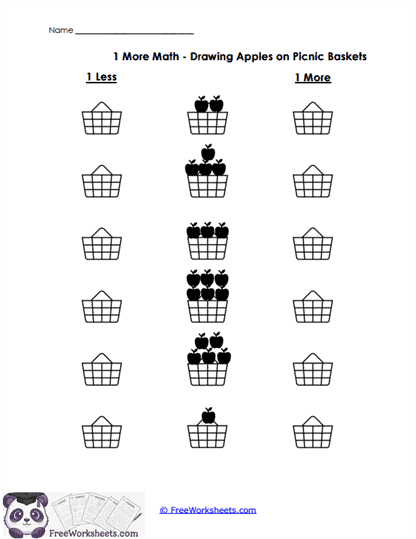
1 More Math – Drawing Apples on Picnic Baskets
- What Kids Do:
Children look at baskets with apples, count how many are already there, and then draw one more apple to show the new total. They repeat this across several examples, helping them clearly see how adding one changes a group in a simple and visual way. - Target Skill:
Students develop early addition skills by understanding that adding one increases a number by exactly one. This supports foundational math standards focused on building number relationships and connecting counting with simple operations.
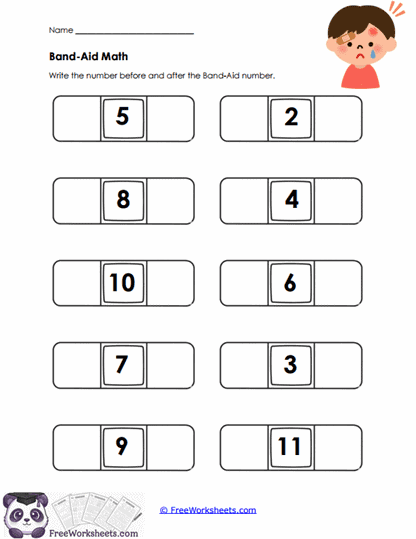
Band Aid
- What Kids Do:
Children look at a number in the center and write the number that comes before and after it. They practice moving forward and backward by one, helping them understand how numbers are ordered and connected in a sequence. - Target Skill:
Students strengthen number order and sequencing skills by identifying numbers before and after a given value. This aligns with early math standards that emphasize counting forward and backward and understanding number relationships.
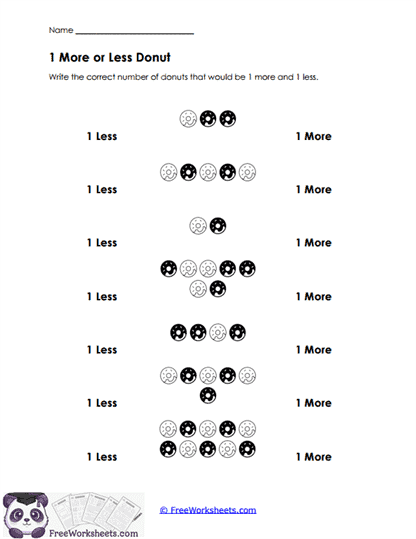
Donut Math
- What Kids Do:
Children count a group of donuts and determine what one more and one less would be. They then write or identify the correct numbers, practicing how groups grow or shrink by one in a visual and engaging way. - Target Skill:
Students build number sense by exploring how quantities change when one is added or removed. This supports foundational standards focused on early addition and subtraction concepts.
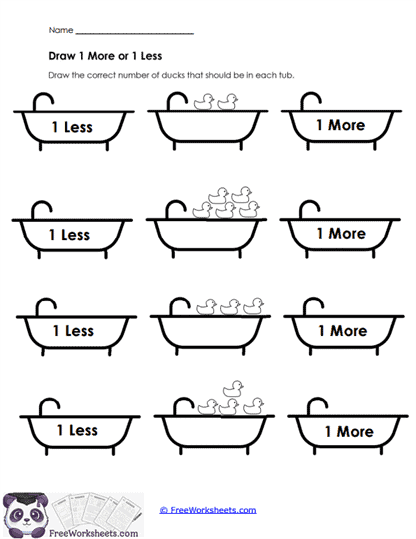
Duck Tubs
- What Kids Do:
Children count ducks in a tub and then draw one more duck in one space and one less duck in another. This hands-on activity helps them see how numbers change while practicing both counting and drawing. - Target Skill:
Students develop an understanding of number changes through visual representation. This aligns with early math standards by reinforcing the concept of adding and subtracting one from a group.
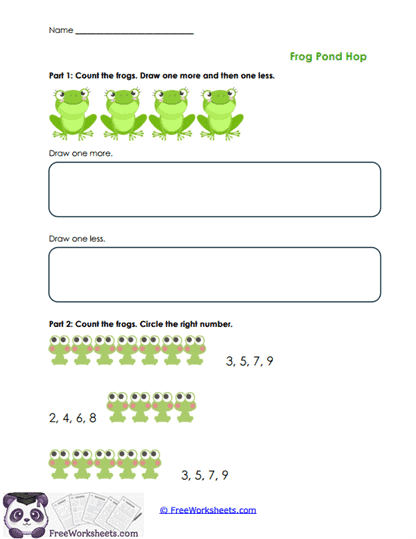
Frog Pond Hop
- What Kids Do:
Children count frogs in a pond and then draw one more and one less in separate boxes. They also complete follow-up questions by selecting correct answers, reinforcing the concept through both drawing and recognition. - Target Skill:
Students strengthen early addition and subtraction skills by practicing how numbers increase or decrease by one. This supports foundational standards focused on understanding simple operations.
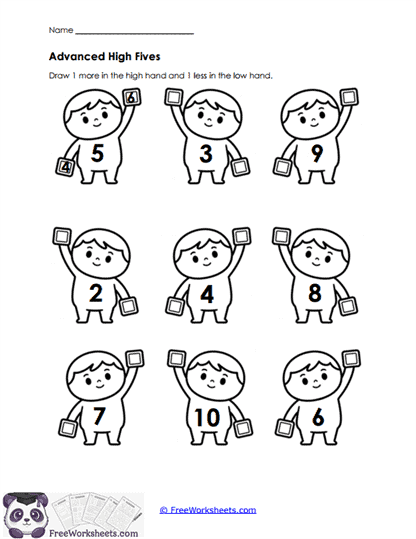
High Fives
- What Kids Do:
Children look at numbers held by characters and determine what one more and one less would be. They respond by writing or saying the answers, practicing quick thinking about number changes. - Target Skill:
Students build fluency with number relationships by identifying adjacent numbers. This aligns with early math standards that emphasize understanding how numbers connect in sequence.
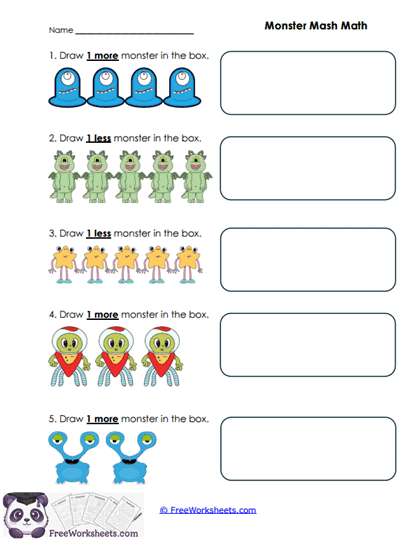
Monster Math
- What Kids Do:
Children count a group of monsters and then draw one more or one less monster in a nearby space. This creative task helps them stay engaged while practicing how numbers change in a visual way. - Target Skill:
Students develop early operation skills by applying the concept of adding or subtracting one. This supports foundational standards focused on building number sense through hands-on activities.
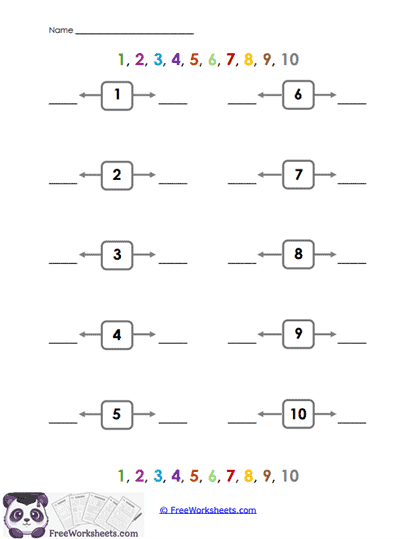
Number Steps
- What Kids Do:
Children look at a number and write the number that comes before and after it, using a number line as a guide. They repeat this across several examples to practice moving forward and backward by one. - Target Skill:
Students strengthen sequencing and number line skills by identifying numbers in order. This aligns with early math standards focused on counting progression and understanding numerical relationships.
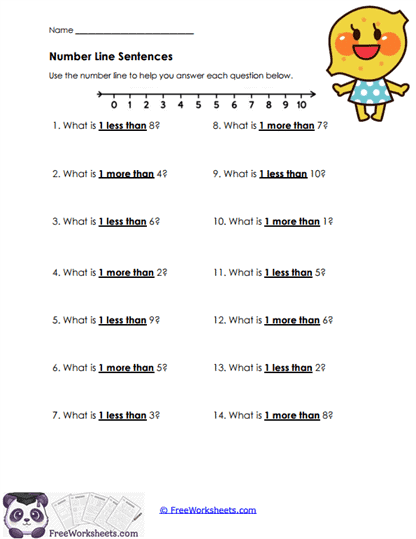
Number Stories
- What Kids Do:
Children answer simple questions about numbers using a number line, such as finding one more or one less than a given number. This encourages them to think through small number problems step by step. - Target Skill:
Students build problem-solving skills by applying number relationships in context. This supports early math standards focused on understanding addition and subtraction through reasoning.
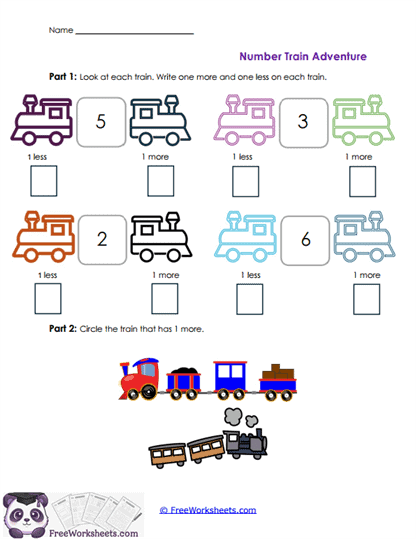
Number Train Adventure
- What Kids Do:
Children look at numbers on trains and write one more and one less in designated boxes. They also compare trains to determine which has more, combining number change and comparison skills in one activity. - Target Skill:
Students develop fluency with number changes and comparison by practicing adjacent numbers and evaluating quantities. This aligns with foundational standards for early number sense and operations.
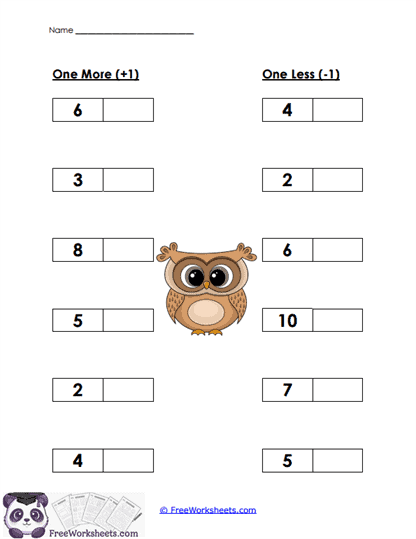
Owl Numbers
- What Kids Do:
Children look at a number and write one more or one less in a nearby box. They repeat this for several examples, building confidence with moving forward and backward by one. - Target Skill:
Students strengthen understanding of number relationships by identifying adjacent values. This supports early math standards focused on counting and simple operations.
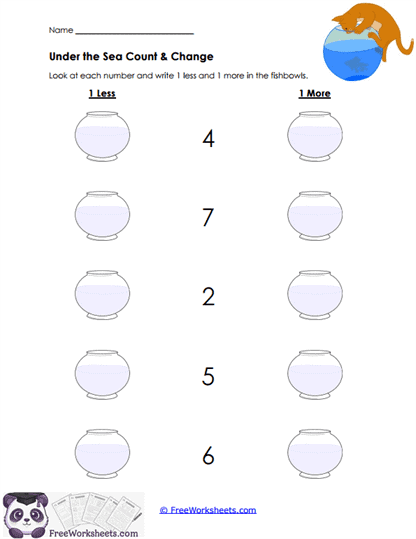
Sea Numbers
- What Kids Do:
Children look at a number and fill in one less on one side and one more on the other. They repeat this process across the worksheet, reinforcing the idea that numbers are connected in a sequence. - Target Skill:
Students build number sense by understanding how values change incrementally. This aligns with foundational standards focused on early addition and subtraction concepts.