
Spelling Foundations Worksheets
These worksheets help young learners build early phonics, sound recognition, and handwriting confidence through engaging activities. Free, ready-to-print worksheets come in PDF format for immediate classroom use during literacy centers, guided practice, or homeschool learning. Students strengthen phonemic awareness, letter-sound correspondence, beginning sound identification, and early spelling readiness through hands-on literacy tasks.
About This Collection of Worksheets
This collection of preschool spelling foundations worksheets introduces young learners to the important relationship between spoken sounds and printed letters. Children practice hearing beginning sounds, identifying matching letters, tracing alphabet forms, comparing sounds, sorting words, and building confidence with early handwriting skills. Each activity is designed to support foundational literacy development while keeping learning approachable and engaging for preschool students.
The worksheets use familiar vocabulary words, simple directions, and developmentally appropriate formats that help children focus on one skill at a time. Learners interact with beginning sounds through tracing, circling, matching, sorting, labeling, and writing activities that encourage active participation and careful listening. These early phonics experiences help children develop stronger sound awareness while preparing them for future reading and spelling instruction.
Teachers and parents can easily use these printable worksheets during literacy rotations, small-group instruction, morning work, intervention practice, or homeschool lessons. The clean layouts, large writing spaces, and repeated phonics review make the activities especially supportive for beginning learners who are still developing confidence with letters and sounds. Together, the worksheets provide consistent practice with foundational literacy concepts that support long-term reading success.
Paul’s Teacher Tip
Young learners benefit most from phonics practice when they can hear, say, see, and write sounds during the same lesson. Encourage children to stretch beginning sounds aloud before answering so they learn to slow down and listen carefully to spoken language. Repeating sounds together several times can help students feel more confident when identifying letters independently. Many preschoolers also need direct modeling for proper letter formation, so demonstrate tracing and writing motions slowly before independent practice begins. Pairing sound activities with movement, picture cards, or oral repetition can make learning feel more interactive and memorable. Most importantly, keep early spelling practice encouraging and low-pressure so children build positive feelings about reading and writing.
Worksheet Collection Skill Spotlights
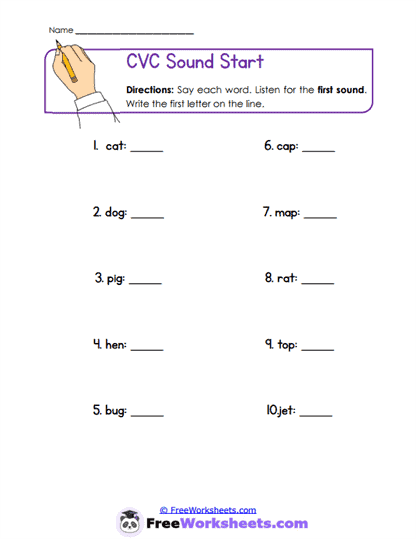
CVC Starters
- What Kids Do:
Children say simple CVC words like cat, bug, rat, and top aloud before listening carefully for the beginning sound in each word. Learners write the matching beginning letter on the line beside each word while practicing sound recognition, handwriting, and careful listening skills together. - Target Skill:
Students strengthen beginning phonics and early spelling readiness by identifying initial consonant sounds in simple consonant-vowel-consonant words. The activity also supports phonemic awareness, letter-sound correspondence, listening discrimination, and independent letter writing practice.
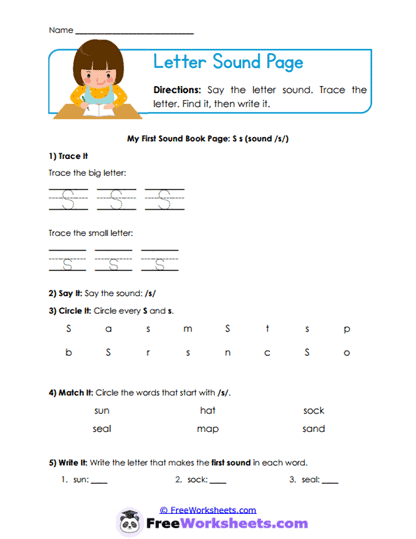
Letter Sounds
- What Kids Do:
Students trace uppercase and lowercase letter forms, repeat the target sound aloud, circle matching letters, and identify words that begin with the same sound. Children practice multiple phonics tasks on one page while strengthening handwriting and alphabet familiarity through repeated review. - Target Skill:
Learners build strong sound-letter connections by hearing, tracing, recognizing, and applying one target sound throughout the activity. The worksheet also develops phonemic awareness, alphabet knowledge, beginning sound recognition, and early reading readiness skills.
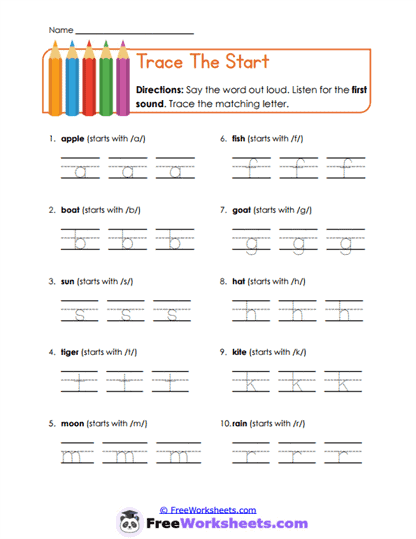
Letter Tracing
- What Kids Do:
Children say familiar words aloud, identify the beginning sound they hear, and trace the matching letter several times on handwriting lines. Learners practice proper pencil movement and repeated tracing patterns while connecting spoken language directly to printed symbols. - Target Skill:
This activity strengthens handwriting development and phonics understanding by combining sound identification with guided tracing practice. Students also improve fine motor control, alphabet recognition, sound-letter correspondence, and early spelling confidence during literacy instruction.
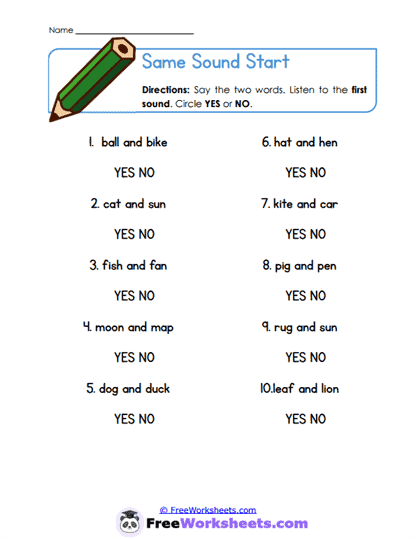
Matching Sounds
- What Kids Do:
Students compare pairs of words like fish and fan or dog and duck by listening closely to the first sound in each word. Learners decide whether the beginning sounds match and circle YES or NO after carefully saying both words aloud together. - Target Skill:
Children strengthen phonemic awareness and listening discrimination by comparing and identifying matching beginning sounds in spoken word pairs. The worksheet also supports careful listening habits, sound analysis skills, and understanding of sound similarities and differences.
Picture Labels
- What Kids Do:
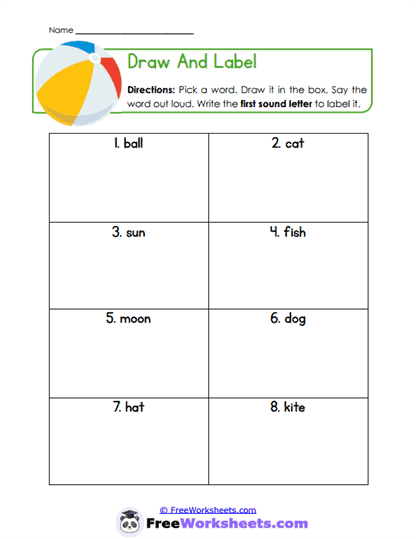
Children draw simple pictures to match familiar words and then write the beginning sound letter beside each illustration. Learners combine drawing, listening, and handwriting skills while practicing sound recognition in a creative and interactive literacy activity. - Target Skill:
Students build phonics and early writing readiness by connecting spoken beginning sounds to matching alphabet letters through labeling practice. The activity also strengthens vocabulary development, fine motor coordination, sound-letter correspondence, and independent letter writing.
Sound Circles
- What Kids Do:
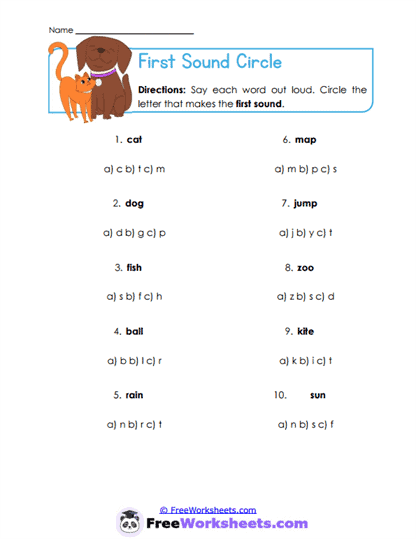
Students say simple words like dog, fish, ball, and zoo aloud before listening carefully for the first sound in each word. Learners compare letter choices and circle the one that correctly matches the beginning sound they hear during phonics practice. - Target Skill:
This worksheet develops beginning sound recognition and phonological awareness by helping students connect spoken sounds to printed letters. Children also strengthen careful listening, alphabet familiarity, sound discrimination, and early reading readiness skills.
Sound Hunt
- What Kids Do:
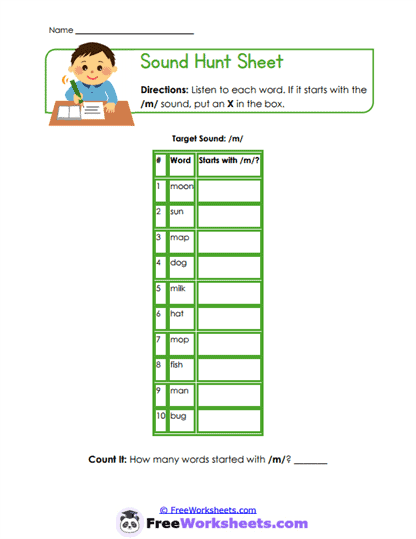
Children listen to groups of words and decide which ones begin with the target /m/ sound by marking boxes on a chart. Learners carefully compare words, repeat sounds aloud, and count how many words match the target sound at the end. - Target Skill:
Students strengthen sound discrimination and beginning phonics skills by identifying and categorizing words with matching initial sounds. The worksheet also supports listening comprehension, alphabet review, sound awareness, and attention to spoken language patterns.
Sound Matchers
- What Kids Do:
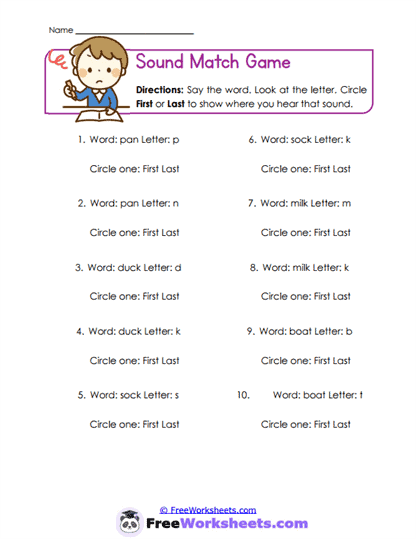
Students say words like pan, duck, and milk aloud while focusing on whether the target sound comes first or last in the word. Learners circle “First” or “Last” after carefully stretching and listening to each spoken example. - Target Skill:
Children build phonemic awareness by identifying sound placement within simple words and recognizing how sounds appear in different positions. The activity also strengthens listening discrimination, word analysis, and foundational spelling and decoding readiness.
Sound Sorting
- What Kids Do:
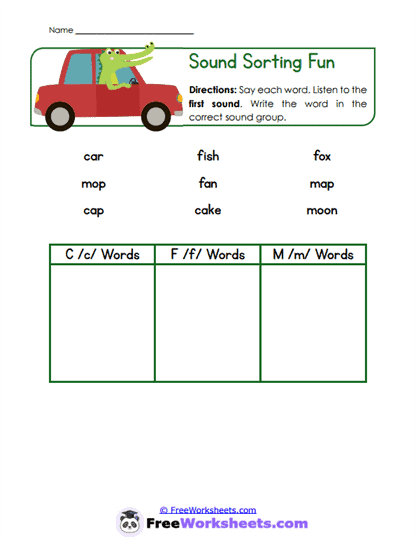
Children read or listen to simple vocabulary words and sort them into groups based on matching beginning sounds. Learners place words into labeled sound columns while comparing sounds carefully and organizing words into correct phonics categories. - Target Skill:
This activity supports phonological awareness and sound categorization by helping students recognize shared beginning consonant sounds across multiple words. Learners also strengthen sorting skills, sound discrimination, and early spelling organization strategies.
Sound Starters
- What Kids Do:
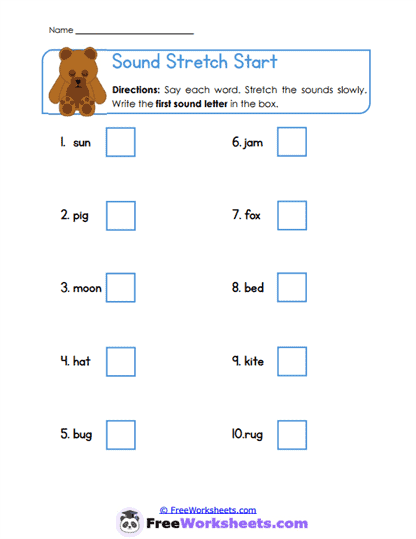
Students slowly say words like pig, moon, fox, and rug aloud before writing the first sound letter inside a box beside each picture word. Learners practice stretching sounds and carefully listening for the beginning consonant in spoken language. - Target Skill:
Students strengthen phonemic awareness and early spelling readiness by isolating beginning sounds and matching them to printed letters. The worksheet also develops sound-letter correspondence, listening comprehension, alphabet recognition, and independent writing confidence.
Sound Writers
- What Kids Do:
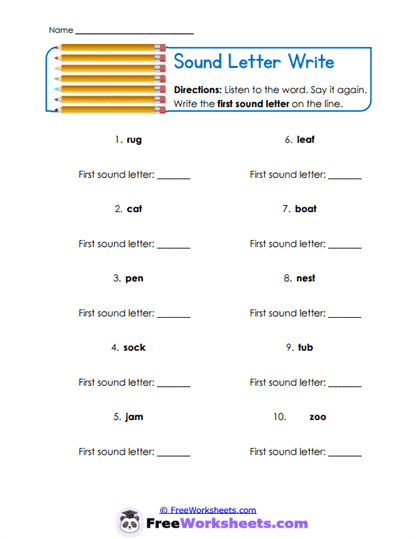
Children listen to familiar words like rug, leaf, boat, and pen before independently writing the matching beginning sound letter on the provided lines. Learners practice careful sound analysis while improving letter formation and handwriting control through repeated practice. - Target Skill:
This worksheet supports phonics and handwriting development by encouraging students to hear beginning sounds and write letters independently without tracing support. Children also strengthen phonemic awareness, sound discrimination, and early spelling skills.
Trace Writing
- What Kids Do:
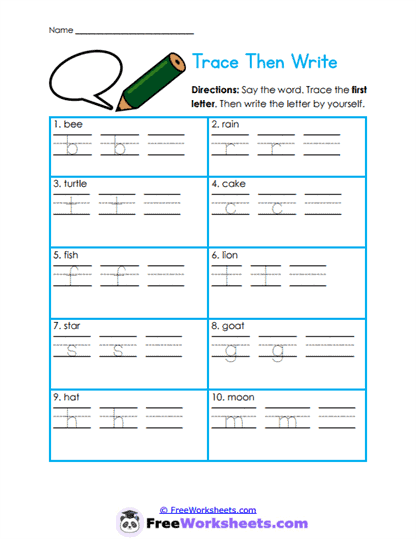
Students say simple words aloud, trace the beginning sound letter beside each word, and then practice writing the same letter independently on handwriting lines. Learners repeat tracing and writing motions while building confidence with letter formation and sound recognition. - Target Skill:
Learners develop handwriting fluency and beginning phonics understanding by combining tracing practice with independent letter writing. The activity also strengthens fine motor skills, alphabet recognition, sound-letter correspondence, and early literacy readiness.