
About This Worksheet
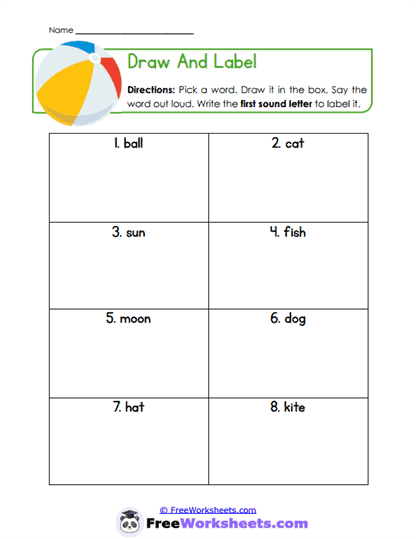
This worksheet helps preschool students connect spoken words to beginning letters through drawing and labeling activities. Beginning sound recognition is an early literacy skill where children listen to the first sound in a word and match it to the correct letter. Students draw simple pictures for words like ball, cat, fish, and kite, then write the beginning sound letter beside each drawing. For example, the word dog begins with the /d/ sound, so students write the letter D. This activity strengthens phonics, vocabulary, fine motor control, and early writing confidence.
Curriculum and Grade Alignment
This preschool literacy worksheet focuses on phonemic awareness, sound-letter correspondence, and creative expression. Children practice hearing beginning sounds while also building drawing and handwriting skills. Before using this worksheet, students should recognize several common letters and understand simple vocabulary words. Future literacy learning may include spelling short CVC words independently and labeling pictures with complete words. This worksheet aligns with CCSS.ELA-LITERACY.RF.K.2.D and TEKS standards related to phonics and early writing development.
Student Tasks
On this worksheet, students will read or listen to simple words like moon, hat, and fish before drawing matching pictures inside the boxes. Learners think carefully about the first sound in each word and write the correct beginning letter beneath their drawings. Children practice combining listening, drawing, and writing skills during one activity. Students also strengthen hand control while sketching familiar objects and forming letters. The worksheet encourages preschool learners to express understanding in a creative and interactive way.
Common Challenges and Misconceptions
Some preschool students may focus more on drawing details than listening carefully to the beginning sound. Children can also confuse letters that make similar sounds, especially when working quickly. A few learners may know the picture but forget how to write the matching beginning letter correctly. Others may struggle with fine motor control when drawing or writing inside the boxes. Teachers can help by saying the words aloud slowly and modeling the beginning sound together before students begin.
Implementation Guidance
Teachers can use this worksheet during phonics instruction, literacy centers, or creative writing activities. Parents may also use the activity at home as a fun way to combine art and reading readiness practice. Encouraging children to say the word aloud several times before writing the letter can improve sound recognition skills. Adults can ask students questions like “What sound do you hear first?” to guide thinking during the activity. This worksheet also works well for independent review after introducing beginning consonant sounds.
Details and Features
The worksheet includes large drawing boxes that give preschool students enough room to create simple illustrations comfortably. Familiar vocabulary words help children stay focused on phonics skills instead of difficult decoding tasks. Wide writing spaces support early handwriting development and fine motor practice. The clean page design keeps the activity organized and easy for young learners to follow independently. The worksheet prints clearly for classroom instruction, homeschool use, or literacy intervention support.