
Preschool Reading Passages Worksheets
These passages introduce young learners to short, simple stories that build listening comprehension, vocabulary, and early literacy confidence. These printable worksheets focus on read-aloud support, picture cues, tracing key words, sequencing events, identifying emotions, and distinguishing real from make-believe. Each passage is designed for interactive learning and repeated exposure to strengthen understanding.
About This Collection of Worksheets
Preschool is a critical stage for developing listening comprehension, oral language, and foundational literacy skills that align with early Common Core readiness standards. At this level, students learn to attend to short texts, identify key details, recognize repeated words, and begin distinguishing between real and imaginary events. These Preschool Reading Passages support developmental progression toward Kindergarten expectations such as answering questions about text, retelling events, and identifying main topics.
This collection is designed for flexible classroom use, including circle time read-alouds, literacy centers, small-group instruction, RTI support, morning work, and informal comprehension checks. The passages also work well for guided listening practice and parent-supported learning at home. Teachers can easily incorporate these worksheets into thematic units, social-emotional lessons, or early fluency practice.
Each worksheet features clean layouts, clear spacing, and developmentally appropriate text to ensure accessibility for young learners. The ink-friendly, printable PDF format makes preparation simple and efficient. With minimal prep and clear student directions, educators can focus on modeling, discussion, and skill reinforcement rather than materials management.
Paul’s Teacher Tip
Before starting these passages, do a quick oral warm-up by previewing key vocabulary or repeating a simple phrase students will hear in the story. During the read-aloud, pause briefly and have students echo important lines to keep them actively engaged. For differentiation, let some students respond verbally while others draw or point, depending on their comfort level. After each activity, invite a few students to explain their thinking to build language and confidence. Over time, you’ll notice which students recall details easily and which need more support-use that insight to guide small-group instruction.
Worksheet Collection Skill Spotlights
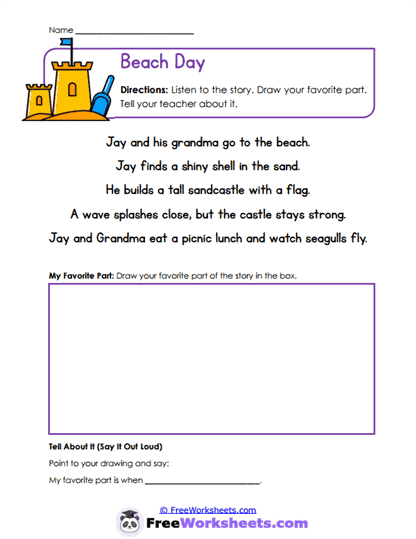
Beach Day
• What Kids Do – Students listen to a short story, choose a favorite event, draw it, and share their idea using a sentence stem.
• Target Skill – Builds recall of key details and supports oral language expression.
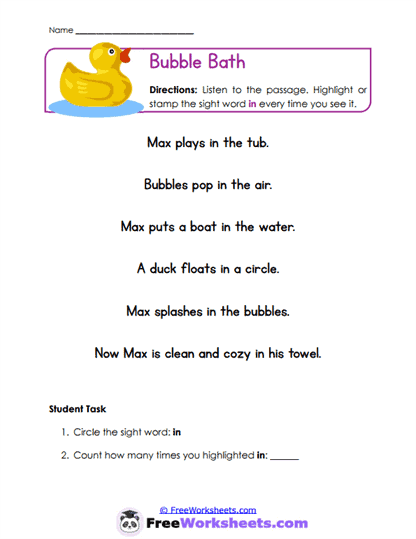
Bubble Bath
• What Kids Do – Students find, highlight, or stamp the word “in” throughout the passage and count how many times it appears.
• Target Skill – Strengthens sight word recognition and visual tracking in context.
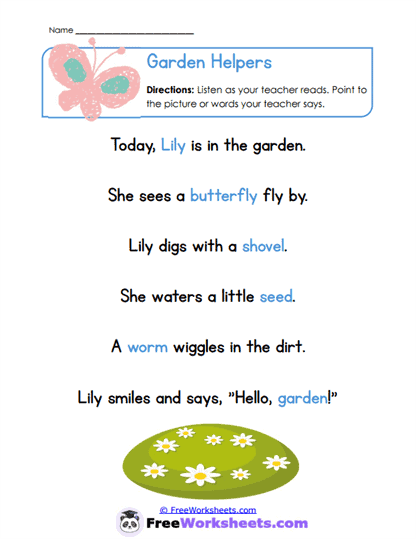
Garden Helpers
• What Kids Do – Students listen to a read-aloud and point to or match key vocabulary words with the correct pictures.
• Target Skill – Develops listening comprehension and vocabulary recognition.
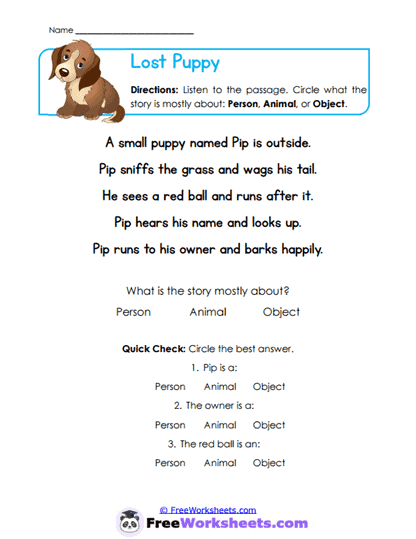
Lost Puppy
• What Kids Do – Students listen to a story and decide whether it is mainly about a person, animal, or object, then check a detail.
• Target Skill – Supports main topic identification and early comprehension skills.
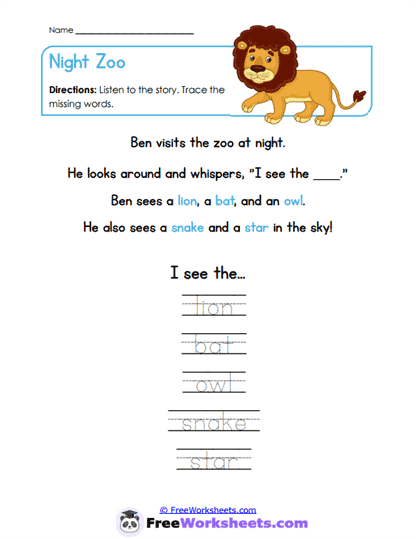
Night Zoo
• What Kids Do – Students repeat a patterned sentence and trace missing animal words within the passage.
• Target Skill – Builds vocabulary recognition while strengthening fine motor control.
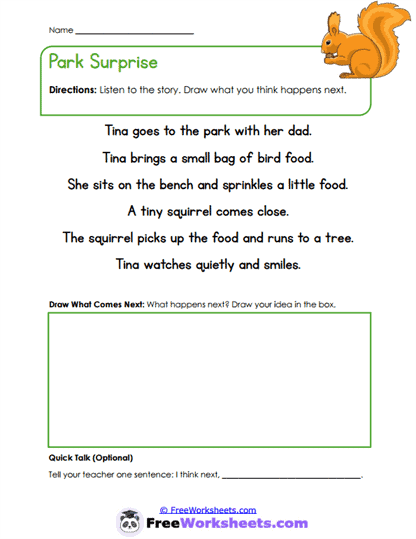
Park Surprise
• What Kids Do – Students listen to a story, draw what they think will happen next, and share their prediction.
• Target Skill – Develops prediction skills using story clues and prior events.
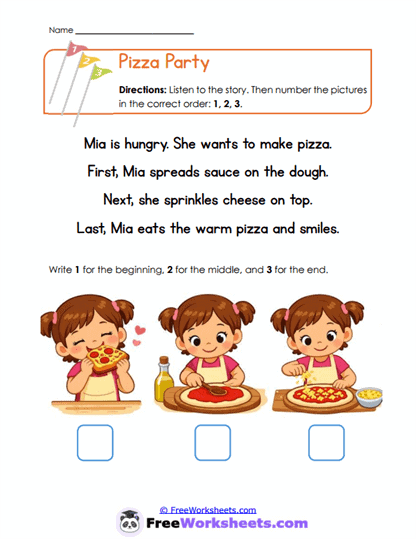
Pizza Party
• What Kids Do – Students listen to a sequence of events and number pictures to show beginning, middle, and end.
• Target Skill – Strengthens sequencing and understanding of time-order concepts.
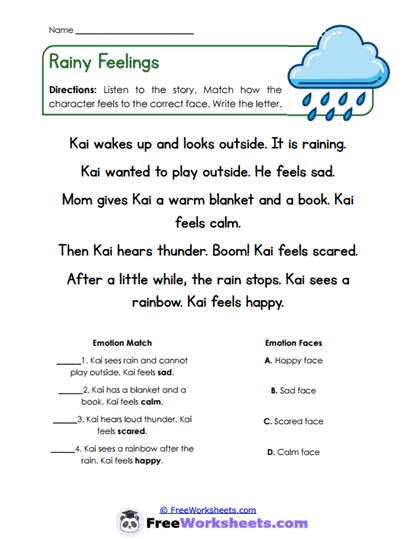
Rainy Feelings
• What Kids Do – Students listen to situations from the story and match each one to the correct emotion.
• Target Skill – Builds emotional recognition and understanding of cause-and-effect relationships.
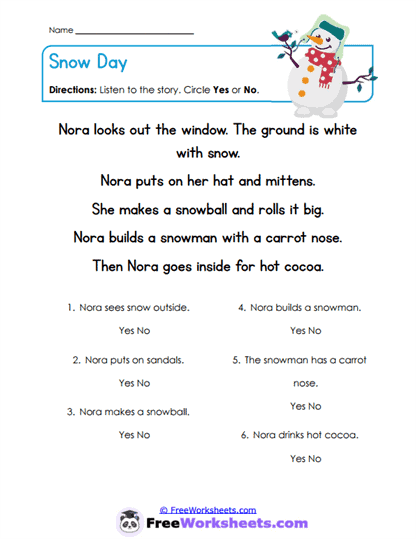
Snow Day
• What Kids Do – Students listen to a story and answer yes-or-no questions based only on what they heard.
• Target Skill – Develops listening comprehension and detail verification.
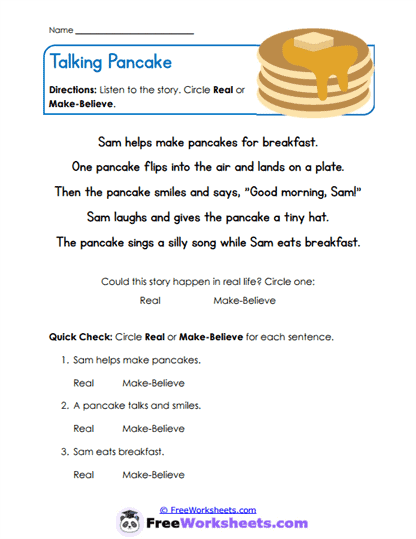
Talking Pancake
• What Kids Do – Students listen to a story and decide if events are real or make-believe, then sort or evaluate examples.
• Target Skill – Strengthens critical thinking and real vs. fantasy discrimination.
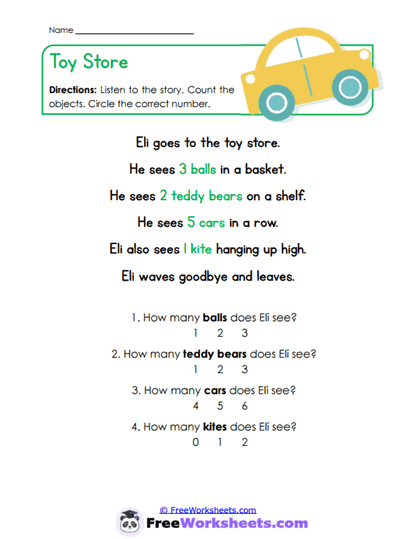
Toy Store
• What Kids Do – Students listen for number details in the story and circle the correct quantity for each item.
• Target Skill – Builds listening recall and number-object association.
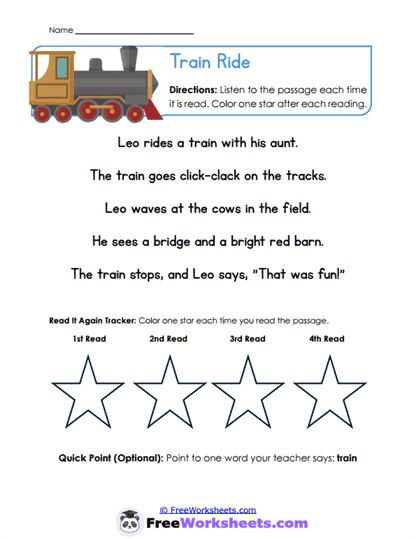
Train Ride
• What Kids Do – Students reread a short, repetitive passage multiple times and track progress by coloring stars.
• Target Skill – Supports early reading fluency, repetition, and confidence with text.